Artwork
Titian and His Mistress
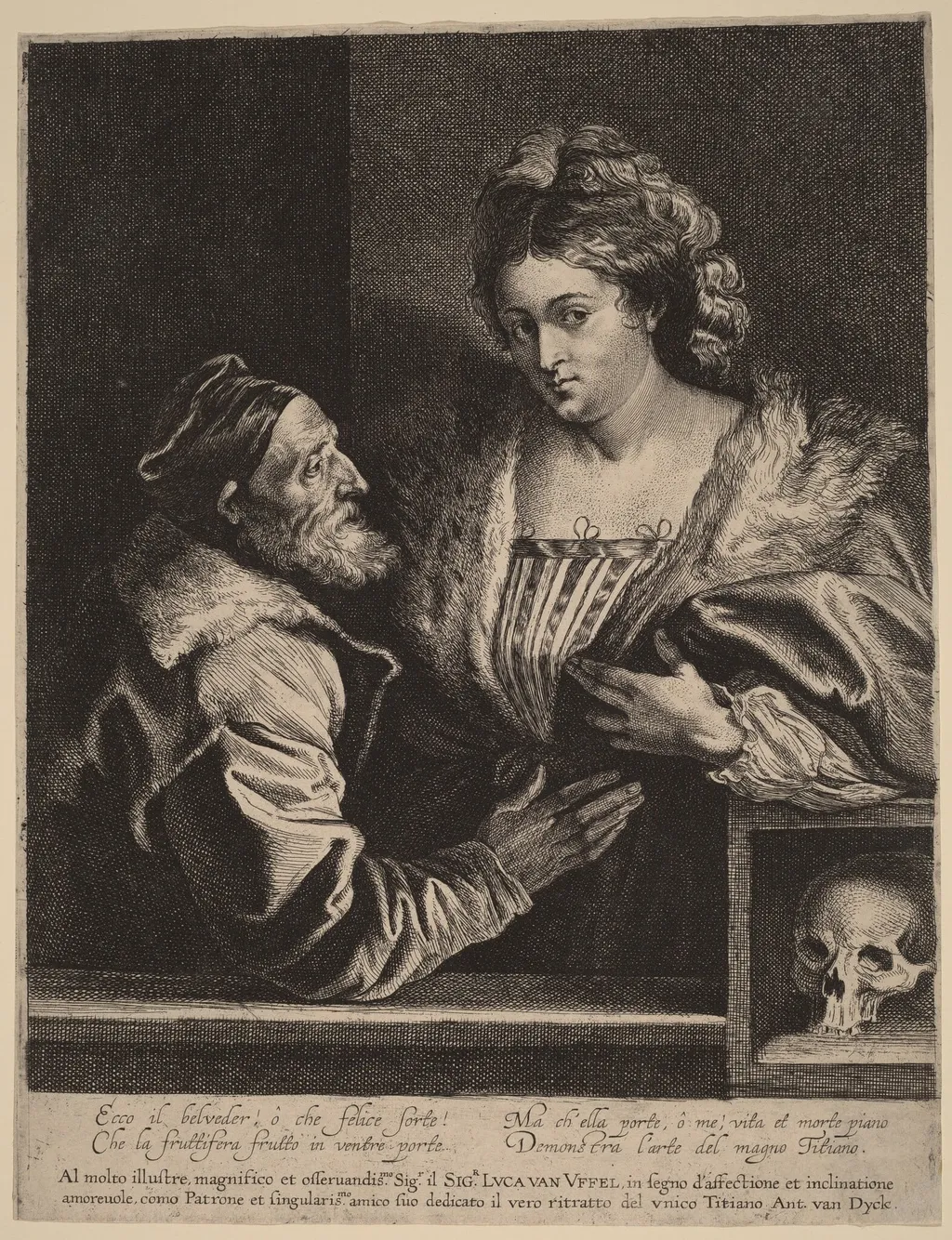
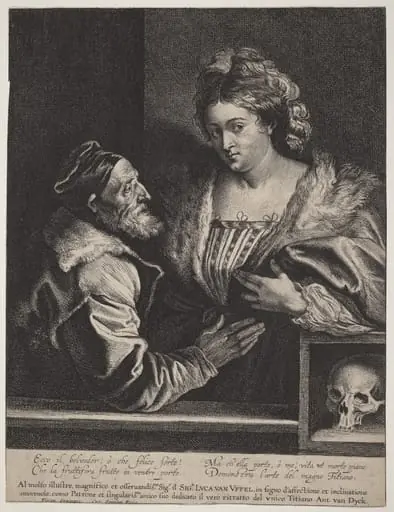
Titian and His Mistress is an ink print by the Baroque artist Anthony van Dyck. It dates from 1630 and is held in the collection of the National Gallery of Art.
About this work
Overview
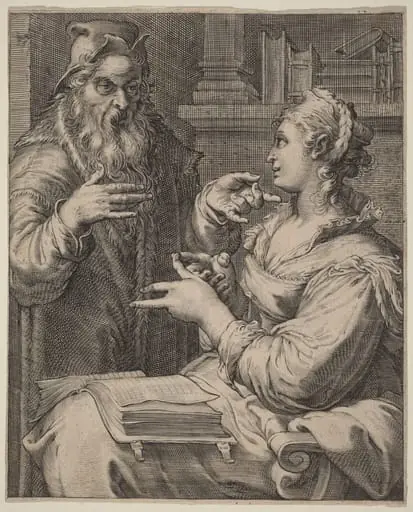
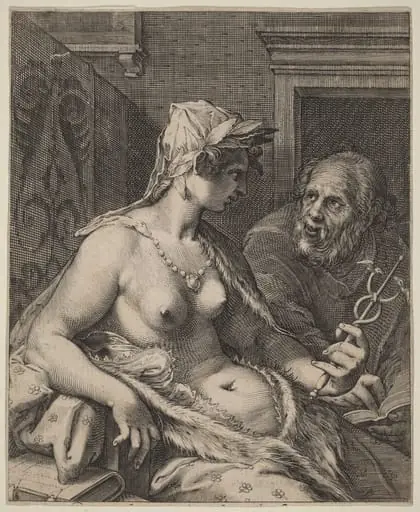
Titian and His Mistress is a black‑and‑white print executed in both etching and engraving around 1630. Attributed to Sir Anthony van Dyck, the work presents a bearded older man and a young woman in close, intimate pose, accompanied by symbolic objects that suggest contemplation of mortality and the passage of time.
Subject & Meaning
The male figure, rendered with a long beard and fur‑trimmed collar, is identified as the Venetian painter Titian, while the female companion, dressed in a draped robe and holding a scroll, is presented as his mistress. A diminutive sketch of a skull and an hourglass placed on a ledge introduces a memento mori element, linking the scene to reflections on life, art, and the inevitability of death.
Technique & Style
Combining etching’s fine line work with the deeper tonal possibilities of engraving, the print achieves a contrast between delicate details—such as the scroll’s script—and the broader, darker areas of the figures’ clothing. Van Dyck’s handling of light and shadow creates a three‑dimensional presence within the flat medium, characteristic of his portraiture approach.
History & Provenance
Created circa 1630, the print belongs to the early period of van Dyck’s printmaking, a time when he produced a series of portraits of historic artists. Its attribution to van Dyck has been affirmed by stylistic analysis and documented references in early catalogues of his prints, though the original owner remains unidentified.
Context
The work reflects a 17th‑century fascination with venerating past masters, positioning Titian as a cultural ancestor. By pairing him with a youthful lover and memento mori symbols, van Dyck engages contemporary debates about the relationship between artistic genius, sensuality, and the transience of human existence.
Legacy
Although not as widely reproduced as van Dyck’s paintings, this print illustrates his skill in translating painterly qualities to the graphic medium. It continues to serve as a reference point for scholars studying the interplay of portraiture, allegory, and print techniques in early modern art.
Artist & collection
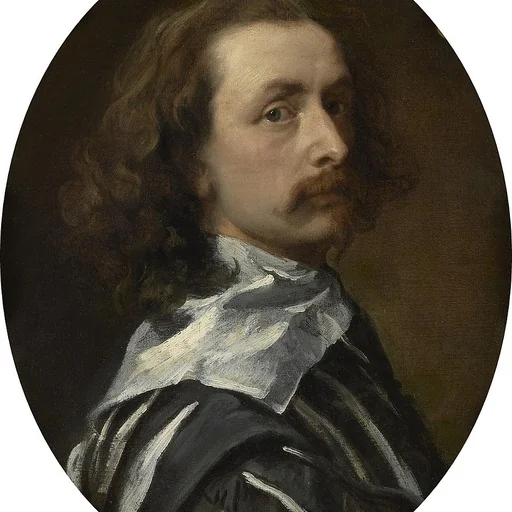
Artist
Sir Anthony van Dyck (; Dutch: Antoon van Dijck ; 22 March 1599 – 9 December 1641) was a Flemish Baroque artist, who became the leading court painter in England after success in the Spanish Netherlands and Italy.