Artwork
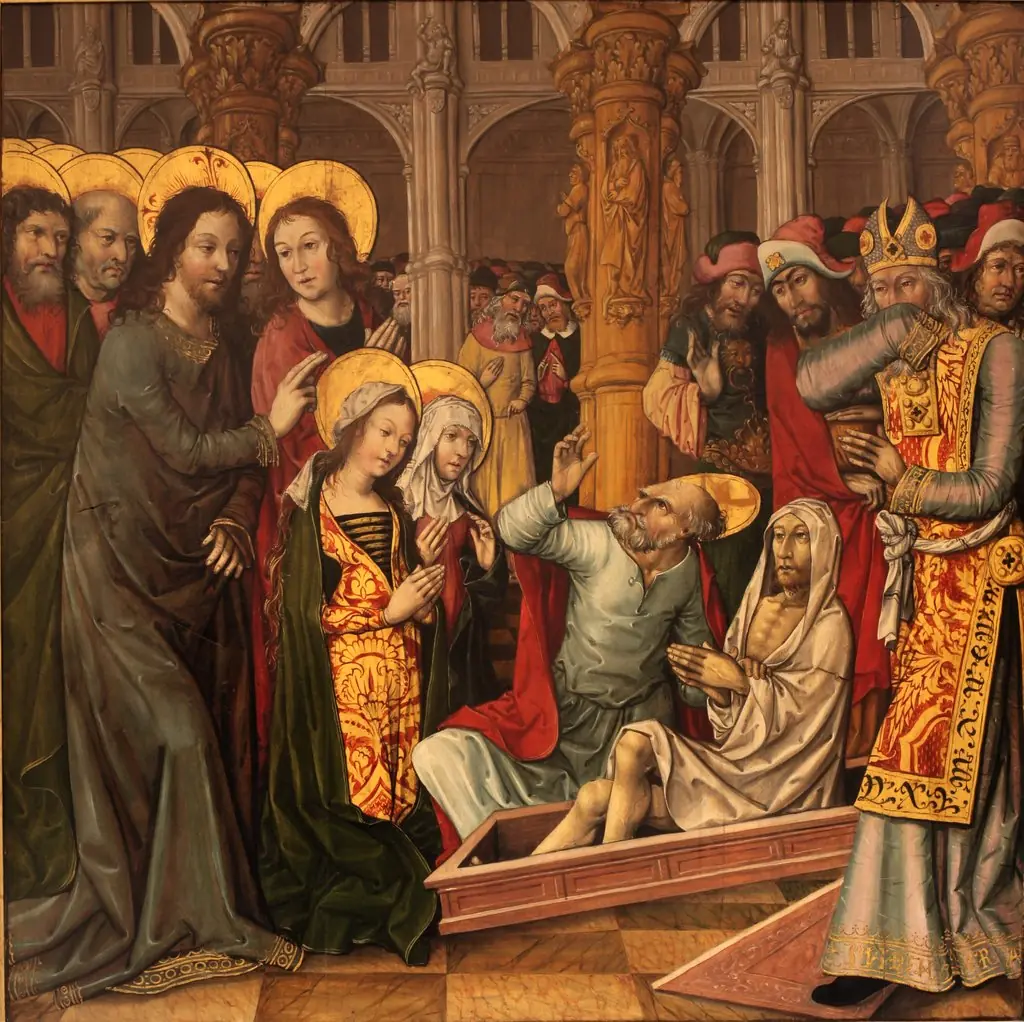
The Raising of Lazarus
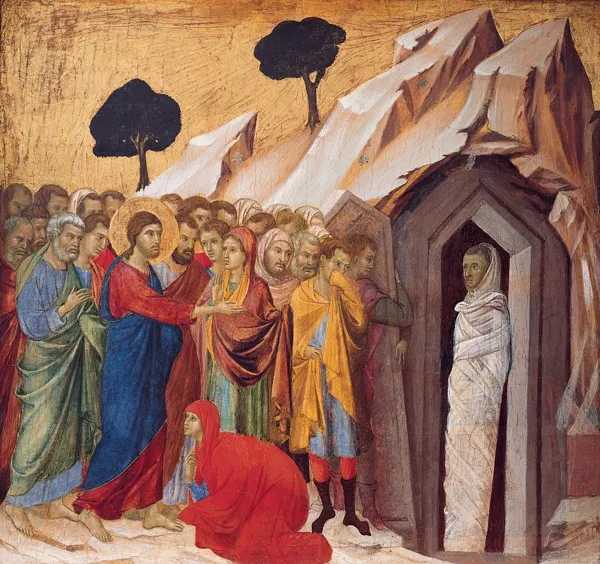
The Raising of Lazarus is a tempera painting by the Byzantine icon painting artist Duccio di Buoninsegna. It dates from 1310 and is held in the collection of the Kimbell Art Museum.
About this work
Overview
Duccio di Buoninsegna’s tempera panel, dated to around 1310, portrays the biblical episode of Lazarus’s resurrection. The work is part of the collection at the Kimbell Art Museum, where it is displayed as an example of early Italian religious painting.
Subject & Meaning
The composition centers on the moment Lazarus emerges from his tomb, shrouded in a white cloth, while a gathering of onlookers in richly colored garments watches with a mixture of awe and solemnity. The scene reflects the theological emphasis on Christ’s power over death and the promise of salvation.
Technique & Style
Executed in egg tempera, the painting achieves a delicate surface texture and subtle modeling of forms. Duccio employs a restrained palette of muted reds, blues, and greens, allowing the pale figure of Lazarus and the dark, Gothic‑style tomb to stand out against a luminous yellow sky and distant trees.
History & Provenance
Created in the early fourteenth century, the panel eventually entered the holdings of the Kimbell Art Museum in Fort Worth, Texas. Its provenance traces a path from medieval Italian workshops to modern institutional collections, illustrating the enduring interest in Duccio’s contributions to Italian devotional art.
Artist & collection