Artwork
CompГавр
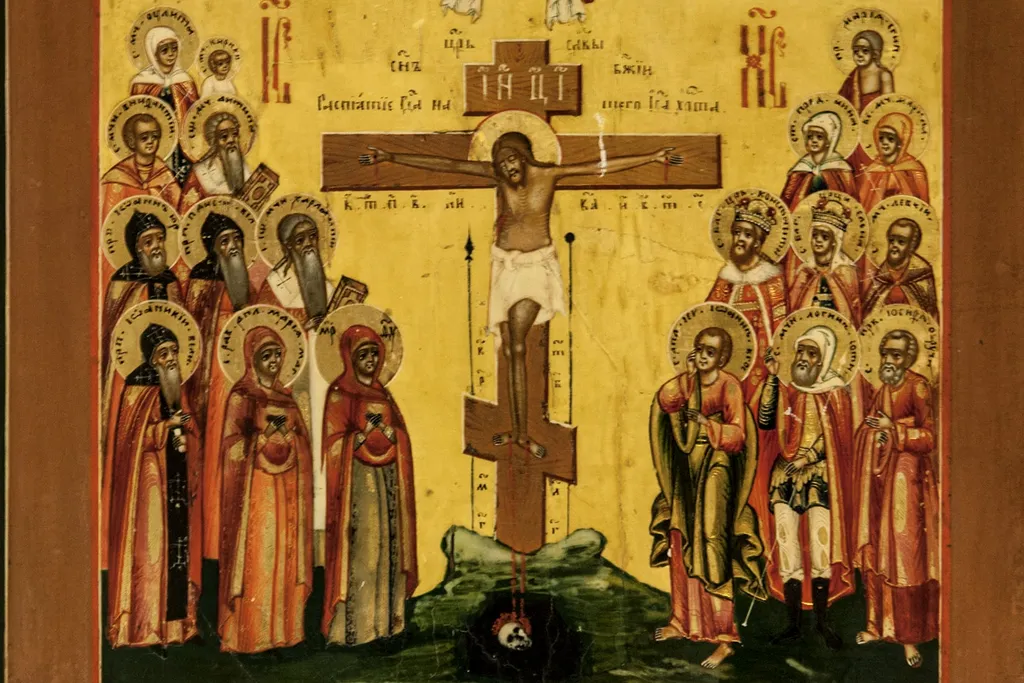
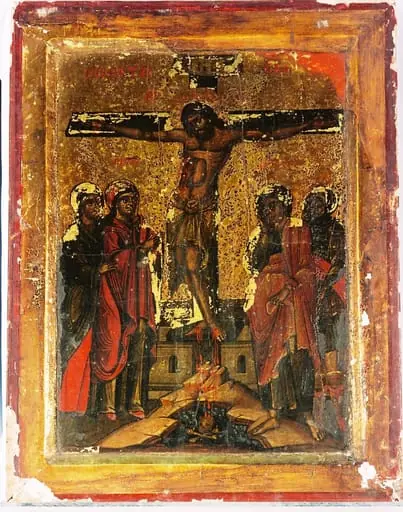
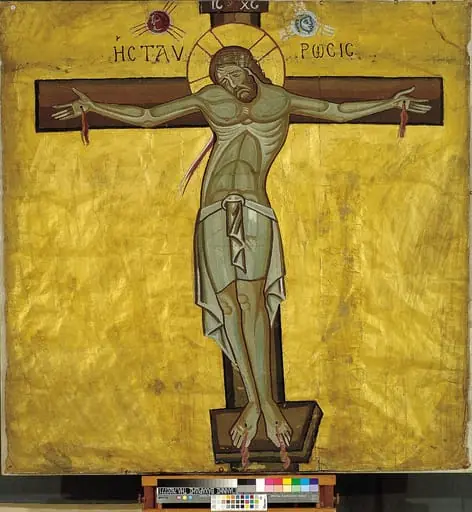
CompГавр is a drawing by Unknown. It dates from 1850 and is held in the collection of the "Dimitrie Gusti" National Village Museum. The work depicts a crucifixion scene with the central figure of Jesus on the cross, encircled by a congregation of individuals.
About this work
Overview
Some hold books or scrolls, while others point toward the crucified figure, set against a gold‑toned background bearing faint, indecipherable script.
The work depicts a crucifixion scene with the central figure of Jesus on the cross, encircled by a congregation of individuals. The surrounding figures are arrayed in two orderly ranks, each clothed in vivid red, blue, or gold garments and marked by halos. Some hold books or scrolls, while others point toward the crucified figure, set against a gold‑toned background bearing faint, indecipherable script.
Subject & Meaning
The composition emphasizes the theological significance of the crucifixion, presenting Jesus as the focal point of devotion. The attendant crowd, identifiable by their liturgical attire and symbolic objects, suggests a gathering of witnesses—perhaps saints, apostles, or patrons—who acknowledge the salvific act. The halos reinforce the sanctity of each participant, underscoring a collective reverence for the central event.
Technique & Style
The image employs a flat, decorative palette with bold, unmodulated colors that lack chiaroscuro, creating a two‑dimensional effect. Figures are rendered in a stylized manner, their outlines defined by clear contours rather than modeling. The arrangement into parallel rows recalls formal portraiture, while the gold background and script evoke illuminated manuscript traditions, linking the work to a decorative, symbolic visual language.
Context
The use of bright primary hues, haloed figures, and a gold field aligns the piece with Byzantine‑influenced iconography, where spiritual narrative often supersedes naturalistic representation. The inclusion of books and scrolls points to a didactic function, possibly intended for liturgical or instructional settings within a church or monastic environment.
Legacy
While the work’s precise origin remains unidentified, its stylistic traits reflect a broader tradition of Eastern Christian visual culture that persisted across centuries. The emphasis on symbolic color, hierarchical composition, and textual background continues to inform contemporary studies of devotional art and its role in communal religious experience.
Artist & collection
Museum
"Dimitrie Gusti" National Village Museum
Continue through works from the same source collection.
 Domestic Scene
 Giacomo and Cardinal Marco, investing Andrea, Abbot of San Zeno, with his Benefice
 The Nymph of Fontainebleau
 Portrait of a Woman
 Madonna and Child with Saints in the Enclosed Garden
 Venus and Minerva
 Family Group of Four on Sofa
 Wall painting from Room H of the Villa of P. Fannius Synistor at Boscoreale
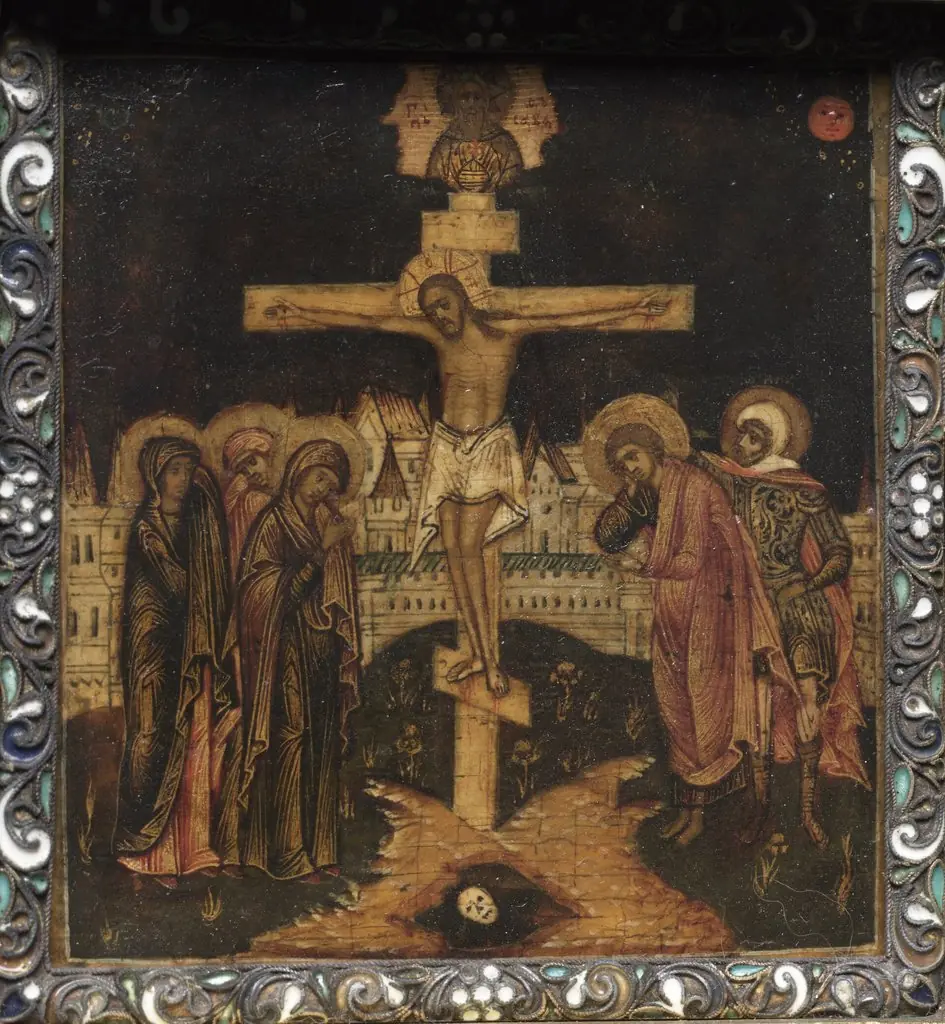 Portable Triptych Icon: The Crucifixion
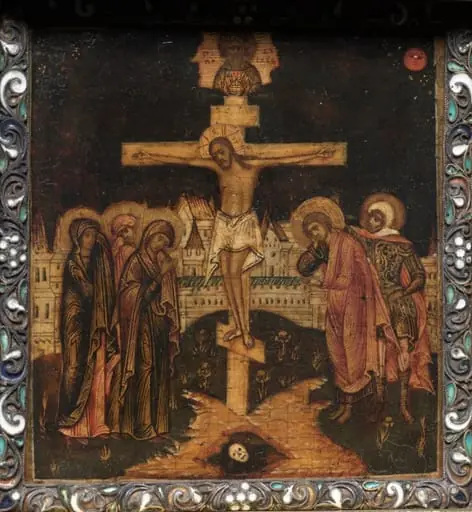 Portable Triptych Icon: The Crucifixion
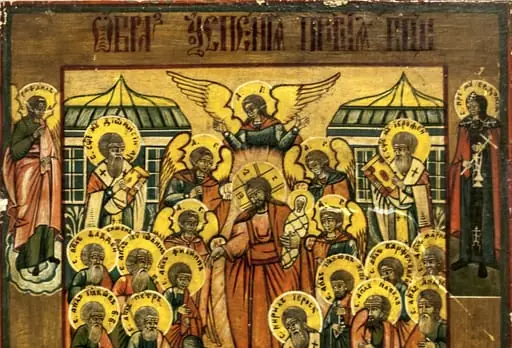 Maica Domului, întinsă pe catafalcul drapat cu material verde, deasupra Iisus Hristos, înconjurat de 5 îngeri(inscripția A:G.pe nimb, ține sufletul Maicii(în fomră de prunc înfășat)pe mâna stângă, iar cu dreapta binecuvântează. Maica are mâinile împreunate pe piept,stola verde cu falduri albe, marforion roșu cu stelele Fecioriei. În jurul catafalcului: Sfântul Kiril Ierosa și sfântul apostol Petru cădelnițând, la picioare Sf. Pavel cu veșmântul stergându-și ocii, Sf. Andrei, alături de alți sfinți ierarhi și apostoli: Sf.Vartolomei, Sf. apostol, ,Sf. Apostol Iakov Zevedei, , Filip, Sf. Apostol Ioan, Simon, Tadei. Îm planul următor, pe fundalul unor clădiri cu arhitectură ipic rusească, Sf. Mucenic Dionisii, și Ierotei, în veșminte argierești, cu Evanghelia în mână. În fața catafalcului redată scena apocrifă, Arhanghelul Mihail taindu-i mâinile cu sabia evreului fanatic Atonie pentru că a îndrăznit să batjocorească patul funerar al Maicii Domnului. Pe chenarul lat 4 sfinți : Sf. Arhanghel Rafail pe nori, Sf. Muceniță Evdochia și sfântul Feodor, în veșminte monahale, cu mătăniile în mână, Sf. Fotinia .Cromatica: Fondul galben ocru, chenar în nuanță mai închisă, colțurile de jos verde, marginal verde și roșu, benzi înguste.Veșminte: roșu cărămiziu, albastru, verde, galben, alb, negru. Linia desenului groasă, culorile tari.
 Răstrile
 Răstshka
 RASTIGNIREA
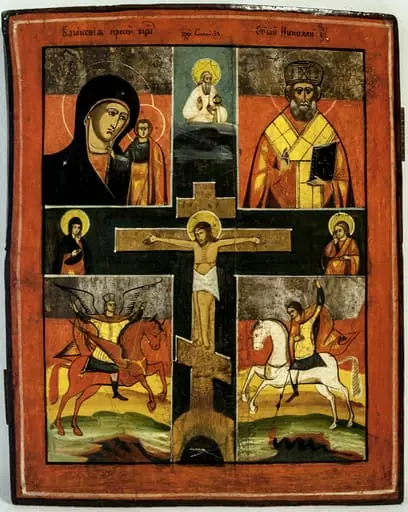
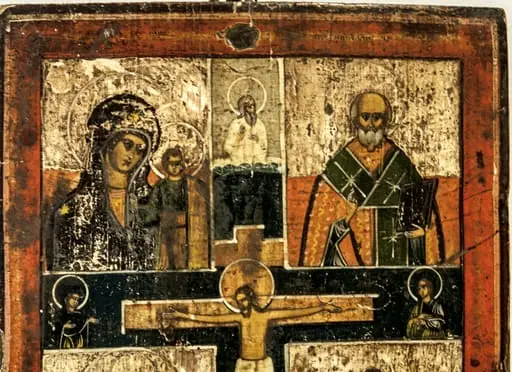
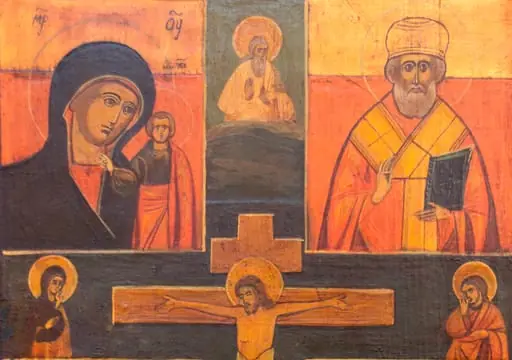 Piesă de cult, de formă dreptunghiulară, alcătuită dintr-o bucată de lemn pictată pe una dintre suprafețe. Icoana este împărțită în patru registre de axul crucii, prezentând un decor antropomorf, dispus astfel: central - Isus Christos răstignit pe cruce, Fecioara Maria și Maria Magdalena în stânga și în dreapta Mântuitorului, pe brațele crucii, iar la partea superioară a crucii Tatăl Ceresc; stânga sus - Maica cu pruncul; dreapta sus - Sfântul Nicolae; stânga jos - Sfântul Dumitru călare pe un cal roșu; dreapta jos - Sfântul Gheorghe călare pe un cal alb (ambii ucigând câte un șarpe, care întruchipează răul). Cromatică: fond verde, decor relizat cu alb, roșu, crem, negru, maro.
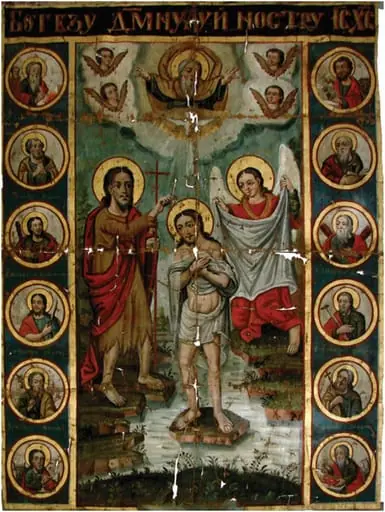 Botezul lui Iisus
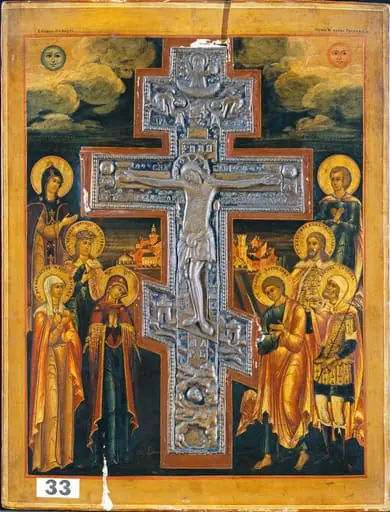 The Crucifixion
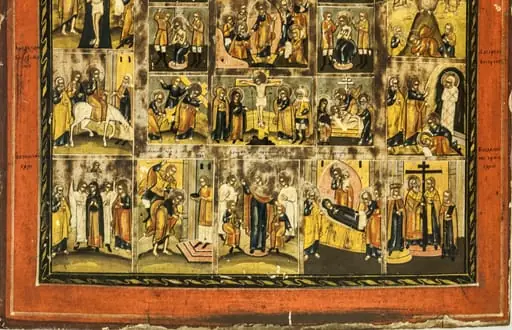 Dubl al
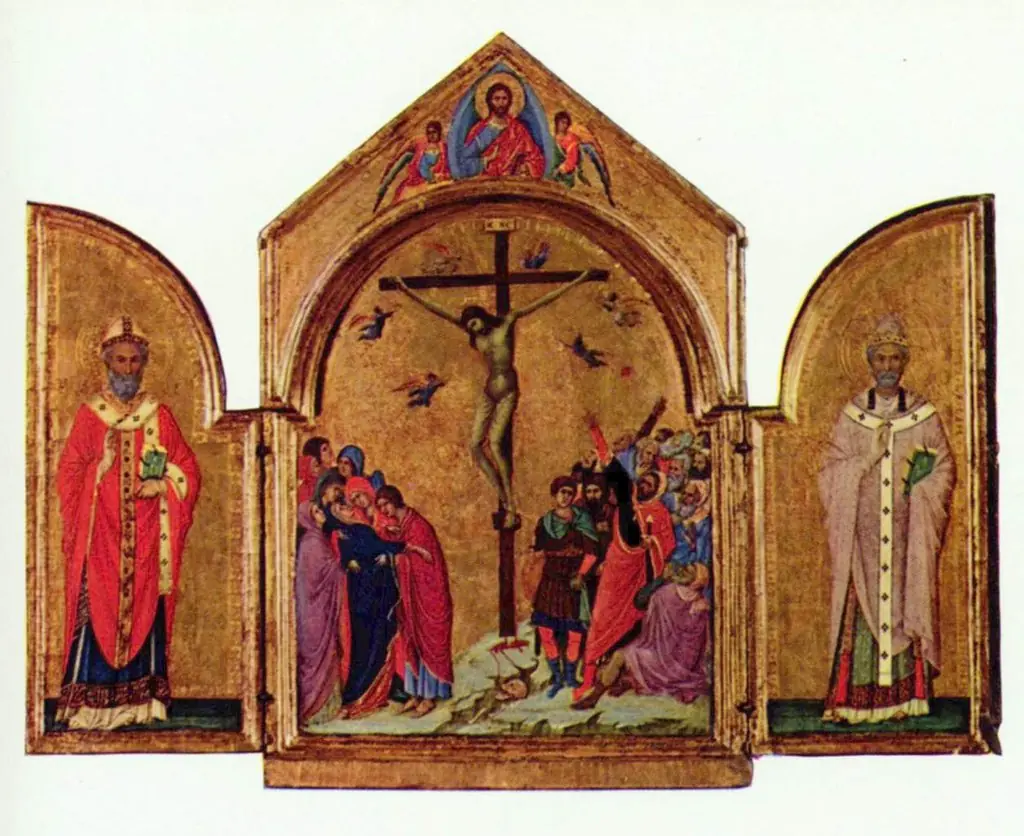 Triptych: the Crucifixion; the Redeemer with Angels; Saint Nicholas; Saint Gregory
 O Εσταυρωμένος Χριστός