Artwork
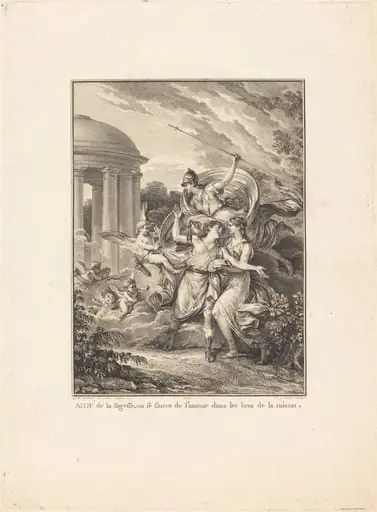
Frontispiece: Aidé de la sagesse, on se sauve de l'amour dans les bras de la raison
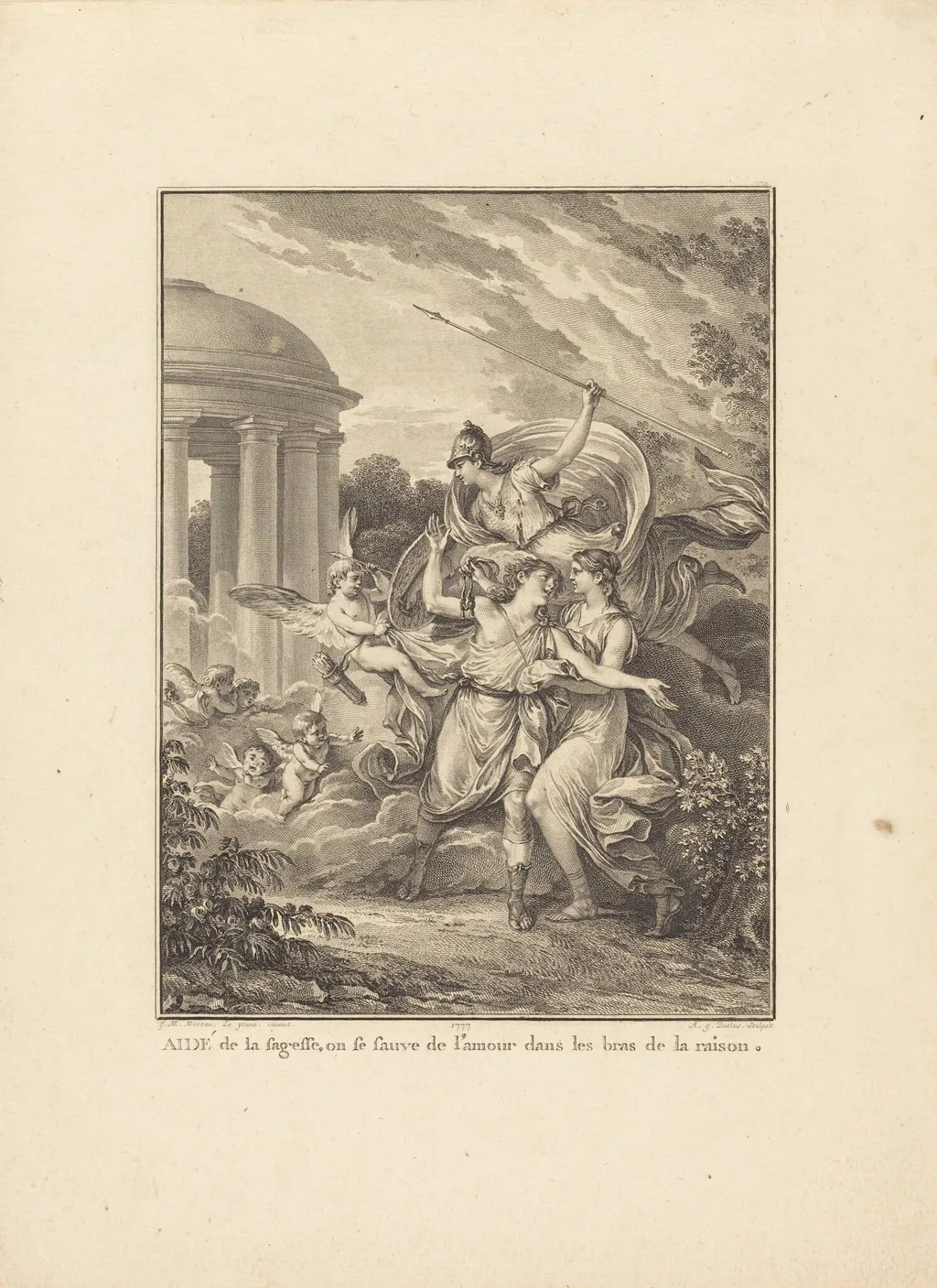
Frontispiece: Aidé de la sagesse, on se sauve de l'amour dans les bras de la raison is an ink print by the Romanticist artist Antoine-Jean Duclos. It dates from 1777 and is held in the collection of the National Gallery of Art.
About this work
Overview
The composition centers on a dramatic confrontation between emotional and intellectual forces, framed by classical architecture and atmospheric skies.
Created in 1777 by Antoine-Jean Duclos, this print combines etching and engraving to illustrate an allegorical scene. The composition centers on a dramatic confrontation between emotional and intellectual forces, framed by classical architecture and atmospheric skies. As a frontispiece, it was likely intended to introduce a philosophical or literary work, guiding the viewer toward its thematic concerns through visual symbolism.
Subject & Meaning
The imagery depicts wisdom, personified as a winged figure with a spear and bow, intervening between two women representing love and reason. One woman holds a scroll, suggesting knowledge, while the other reaches toward the figure of reason, symbolizing a retreat from passion toward rationality. Floating cherubs and a distant temple reinforce the mythological tone, framing the scene as a moral choice between emotional impulse and enlightened judgment.
Technique & Style
Duclos employed fine, controlled lines typical of 18th-century engraving to render texture and depth. Etching allowed for fluid contours in the figures and drapery, while engraving added sharp, precise shadows to the rocky path and architectural elements. The contrast between the stormy sky and the calm temple reflects a deliberate use of chiaroscuro to heighten the emotional tension and spatial hierarchy within the composition.
History & Provenance
The print was produced during a period when allegorical imagery was widely used in Enlightenment-era publications. Though its original publication context remains unconfirmed, its style aligns with illustrated philosophical texts of the time. Duclos, known for his work in book illustration, likely created this as part of a larger volume, though no surviving editions with this frontispiece have been definitively identified.
Context
In late 18th-century France, visual allegories of reason overcoming passion were common in intellectual circles, reflecting Enlightenment ideals. This print echoes contemporary literary and philosophical discourse that positioned rational thought as a refuge from the chaos of emotion. Similar motifs appear in works by artists like Boucher and Fragonard, though Duclos’s approach is more austere and structurally formal.
Legacy
While not widely reproduced or studied today, the print exemplifies the visual language of moral allegory in pre-Revolutionary France. Its precise technique and thematic clarity reflect the period’s belief in art’s capacity to convey philosophical ideas. It remains a quiet testament to the role of printmaking in disseminating Enlightenment values through accessible, image-based narratives.
Artist & collection


![L'Espagne Cintre du Salon de la Guerre en face de la Galerie (Spain, Center of the Salon of War Opposite the Gallery) [pl. 38], by Jean-Baptiste Massé](https://artifactworldgallery.com/img/jean-baptiste-masse--l-espagne-cintre-du-salon-de-la-guerre-en-face-de-la-galerie--d829189dd221d18c-w320.webp) L'Espagne Cintre du Salon de la Guerre en face de la Galerie (Spain, Center of the Salon of War Opposite the Gallery) [pl. 38]
L'Espagne Cintre du Salon de la Guerre en face de la Galerie (Spain, Center of the Salon of War Opposite the Gallery) [pl. 38]![La Hollande accepte la paix et se détache de l'Allemagne et de l'Espagne 1678 Cintre de la Galerie du côté du Salon de la Paix (Holland Accepts Peace and Detaches Itself from Germany and Spain 1678, Center of the Gallery next to the Salon of Peace) [pl. 33], by Jean-Baptiste Massé](https://artifactworldgallery.com/img/jean-baptiste-masse--la-hollande-accepte-la-paix-et-se-detache-de-l-allemagne-et--21582d3cc94c3d89-w320.webp) La Hollande accepte la paix et se détache de l'Allemagne et de l'Espagne 1678 Cintre de la Galerie du côté du Salon de la Paix (Holland Accepts Peace and Detaches Itself from Germany and Spain 1678, Center of the Gallery next to the Salon of Peace) [pl. 33]
La Hollande accepte la paix et se détache de l'Allemagne et de l'Espagne 1678 Cintre de la Galerie du côté du Salon de la Paix (Holland Accepts Peace and Detaches Itself from Germany and Spain 1678, Center of the Gallery next to the Salon of Peace) [pl. 33] Les Suites de la Guerre
 In the Grotto of Merlin, the Magician
 Allegorical Scene: Couple before a Statue
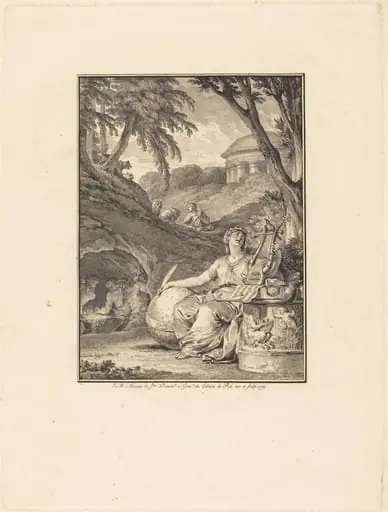 Frontispiece: Dictionnaire de musique
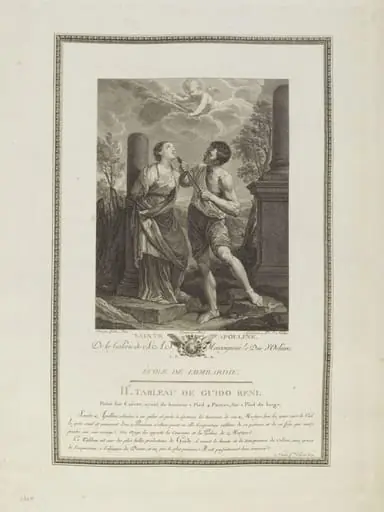 The Martyrdom of St. Apollonia
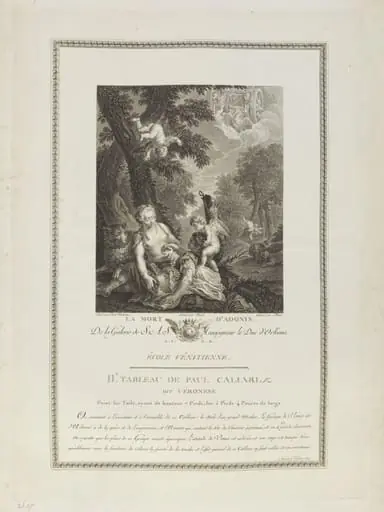 Death of Adonis
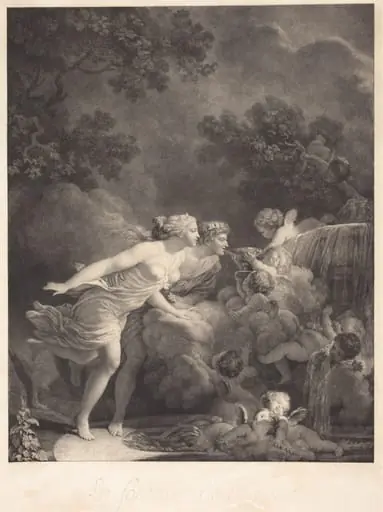 La Fontaine d'Amour (The Fountain of Love)
 Allegorical Portrait of Pierre Buirette de Belloy
 La mort de Germanicus
 Frontispiece: Aidé de la sagesse, on se sauve de l'amour dans les bras de la raison