Artwork
La Hollande accepte la paix et se détache de l'Allemagne et de l'Espagne 1678 Cintre de la Galerie du côté du Salon de la Paix (Holland Accepts Peace and Detaches Itself from Germany and Spain 1678, Center of the Gallery next to the Salon of Peace) [pl. 33]
![La Hollande accepte la paix et se détache de l'Allemagne et de l'Espagne 1678 Cintre de la Galerie du côté du Salon de la Paix (Holland Accepts Peace and Detaches Itself from Germany and Spain 1678, Center of the Gallery next to the Salon of Peace) [pl. 33], by Jean-Baptiste Massé, ink, 1752](https://artifactworldgallery.com/img/jean-baptiste-masse--la-hollande-accepte-la-paix-et-se-detache-de-l-allemagne-et--21582d3cc94c3d89-w1024.webp)
La Hollande accepte la paix et se détache de l'Allemagne et de l'Espagne 1678 Cintre de la Galerie du côté du Salon de la Paix (Holland Accepts Peace and Detaches Itself from Germany and Spain 1678, Center of the Gallery next to the Salon of Peace) [pl. 33] is an ink print by the Romanticist artist Jean-Baptiste Massé. It dates from 1752 and is held in the collection of the National Gallery of Art.
About this work
A woman in the center kneels, holding a child, while others around her react with fear or anger.
This engraving shows a chaotic scene with people in dramatic poses. A woman in the center kneels, holding a child, while others around her react with fear or anger. Some figures are on the ground, weapons scattered nearby. A building burns in the background, with dark smoke swirling above.
The title hints this scene marks a historic moment—Holland breaking away in 1678. The artist used fine lines to create shadows and texture, giving the image depth.
Try looking up engraving to see how artists like this made detailed prints.
Overview
This 1752 engraving on laid paper, 'La Hollande accepte la paix et se détache de l'Allemagne et de l'Espagne 1678,' is the work of French artist Jean-Baptiste Massé, who served as court painter to Louis XV and trained notable artists.
Subject & Meaning
The engraving depicts a dramatic scene set in the Gallery of the Peace, likely symbolizing Holland's separation from Germany and Spain in 1678. The chaotic composition features figures in emotional poses, with a kneeling woman at its center, amidst scattered weapons and a burning building.
Technique & Style
Massé employed fine lines to achieve a range of shadows and textures, creating depth in the image. The engraving is part of a series related to the Galerie de Versailles, published between 1732 and 1753, showcasing the artist's skill in printmaking.
History & Provenance
The engraving is now held by the National Gallery of Art in Washington, exemplifying Massé's work as a printmaker and his connection to the French royal court.
Artist & collection
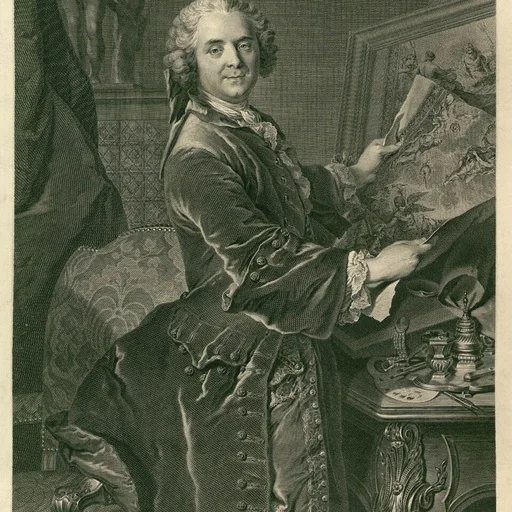
Artist
Jean-Baptiste Massé (29 December 1687, in Paris – 26 September 1767, in Paris) was a French miniature painter, engraver, and draftsman, best remembered as the court painter of Louis XV, for training Jean-Étienne Liotard…

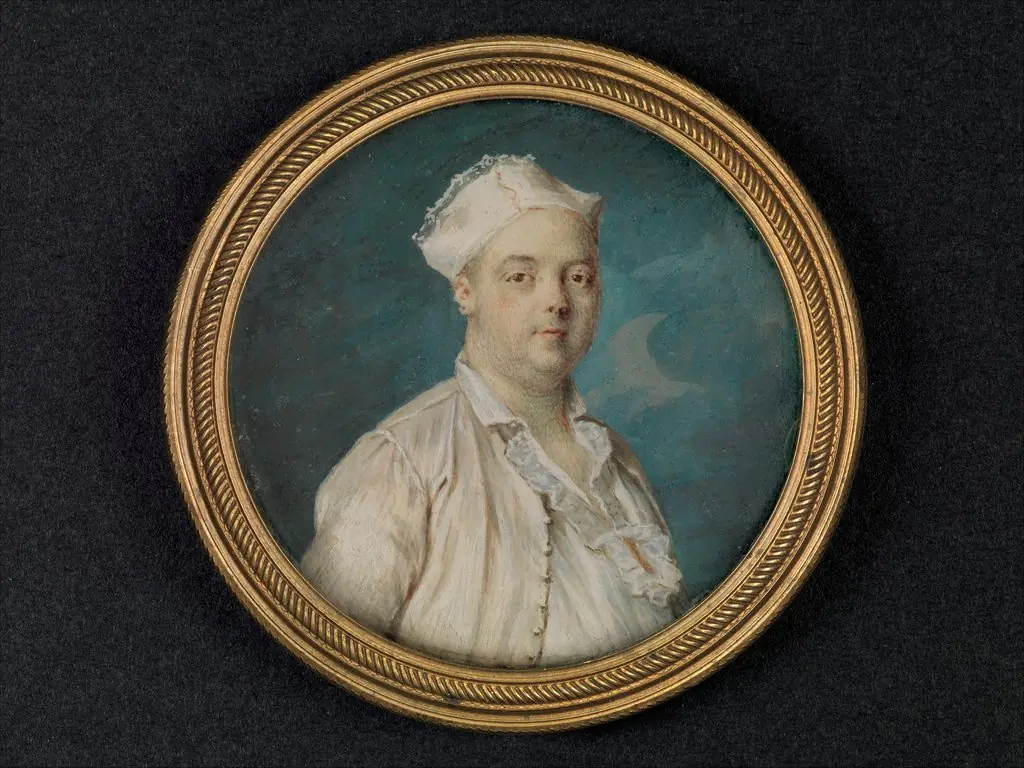 Pierre Louis Dubus (1721–1799), Called Préville, of the Comédie-Française
![Protection accordée aux beaux-arts 1663 (Protection Granted to the Fine Arts 1663) [pl. 24], by Jean-Baptiste Massé](https://artifactworldgallery.com/img/jean-baptiste-masse--protection-accordee-aux-beaux-arts-1663-protection-granted-t--045f3db9c3e49b51-w320.webp) Protection accordée aux beaux-arts 1663 (Protection Granted to the Fine Arts 1663) [pl. 24]
Protection accordée aux beaux-arts 1663 (Protection Granted to the Fine Arts 1663) [pl. 24]![Coupole du Salon de la Paix (Cupola of the Salon of Peace) [pl. 44], by Jean-Baptiste Massé](https://artifactworldgallery.com/img/jean-baptiste-masse--coupole-du-salon-de-la-paix-cupola-of-the-salon-of-peace-pl--083dda9da8b00531-w320.webp) Coupole du Salon de la Paix (Cupola of the Salon of Peace) [pl. 44]
Coupole du Salon de la Paix (Cupola of the Salon of Peace) [pl. 44]![La Prééminence de la France reconnue par l'Espagne 1662 (The Preeminance of France Recognized by Spain 1662) [pl. 17], by Jean-Baptiste Massé](https://artifactworldgallery.com/img/jean-baptiste-masse--la-preeminence-de-la-france-reconnue-par-l-espagne-1662-the--0865c0d8271fc4b5-w320.webp) La Prééminence de la France reconnue par l'Espagne 1662 (The Preeminance of France Recognized by Spain 1662) [pl. 17]
La Prééminence de la France reconnue par l'Espagne 1662 (The Preeminance of France Recognized by Spain 1662) [pl. 17]![L'Allemagne Cintre du Salon de la Guerre du côté des appartemens du Roi (Germany, Center of the Salon of War next to the King's Chambers) [pl. 37], by Jean-Baptiste Massé](https://artifactworldgallery.com/img/jean-baptiste-masse--l-allemagne-cintre-du-salon-de-la-guerre-du-cote-des-apparte--107e6bb2bd4fa1ce-w320.webp) L'Allemagne Cintre du Salon de la Guerre du côté des appartemens du Roi (Germany, Center of the Salon of War next to the King's Chambers) [pl. 37]
L'Allemagne Cintre du Salon de la Guerre du côté des appartemens du Roi (Germany, Center of the Salon of War next to the King's Chambers) [pl. 37]![L'Espagne Cintre du Salon de la Paix sur l'Arcade de la Galerie (Spain, Center of the Salon of Peace in the Gallery's Arcade) [pl. 47], by Jean-Baptiste Massé](https://artifactworldgallery.com/img/jean-baptiste-masse--l-espagne-cintre-du-salon-de-la-paix-sur-l-arcade-de-la-gale--1780f995882c221b-w320.webp) L'Espagne Cintre du Salon de la Paix sur l'Arcade de la Galerie (Spain, Center of the Salon of Peace in the Gallery's Arcade) [pl. 47]
L'Espagne Cintre du Salon de la Paix sur l'Arcade de la Galerie (Spain, Center of the Salon of Peace in the Gallery's Arcade) [pl. 47]![Coupole du Salon de la Guerre (Cupola of the Salon of War) [pl. 35], by Jean-Baptiste Massé](https://artifactworldgallery.com/img/jean-baptiste-masse--coupole-du-salon-de-la-guerre-cupola-of-the-salon-of-war-pl--2b9793f18c09c4bc-w320.webp) Coupole du Salon de la Guerre (Cupola of the Salon of War) [pl. 35]
Coupole du Salon de la Guerre (Cupola of the Salon of War) [pl. 35]![L'Europe Chrêtienne en Paix Cintre du Salon de la Paix du côté des appartemens de la Reine (Christian Europe in Peace, Center of the Salon of Peace next to the Queen's Chambers) [pl. 45], by Jean-Baptiste Massé](https://artifactworldgallery.com/img/jean-baptiste-masse--l-europe-chretienne-en-paix-cintre-du-salon-de-la-paix-du-co--42b41626259ce77e-w320.webp) L'Europe Chrêtienne en Paix Cintre du Salon de la Paix du côté des appartemens de la Reine (Christian Europe in Peace, Center of the Salon of Peace next to the Queen's Chambers) [pl. 45]
L'Europe Chrêtienne en Paix Cintre du Salon de la Paix du côté des appartemens de la Reine (Christian Europe in Peace, Center of the Salon of Peace next to the Queen's Chambers) [pl. 45]
![Alliance de l'Allemagne et de l'Espagne avec la Hollande 1672 Cintre de la Gallerie du côté du Salon de la Guerre (Alliance of Germany and Spain with Holland 1672, Center of the Gallery next to the Salon of War) [pl. 31], by Jean-Baptiste Massé](https://artifactworldgallery.com/img/jean-baptiste-masse--alliance-de-l-allemagne-et-de-l-espagne-avec-la-hollande-167--4b670ecaa7c4c5d8-w320.webp) Alliance de l'Allemagne et de l'Espagne avec la Hollande 1672 Cintre de la Gallerie du côté du Salon de la Guerre (Alliance of Germany and Spain with Holland 1672, Center of the Gallery next to the Salon of War) [pl. 31]
Alliance de l'Allemagne et de l'Espagne avec la Hollande 1672 Cintre de la Gallerie du côté du Salon de la Guerre (Alliance of Germany and Spain with Holland 1672, Center of the Gallery next to the Salon of War) [pl. 31]![L'Espagne Cintre du Salon de la Guerre en face de la Galerie (Spain, Center of the Salon of War Opposite the Gallery) [pl. 38], by Jean-Baptiste Massé](https://artifactworldgallery.com/img/jean-baptiste-masse--l-espagne-cintre-du-salon-de-la-guerre-en-face-de-la-galerie--d829189dd221d18c-w320.webp) L'Espagne Cintre du Salon de la Guerre en face de la Galerie (Spain, Center of the Salon of War Opposite the Gallery) [pl. 38]
L'Espagne Cintre du Salon de la Guerre en face de la Galerie (Spain, Center of the Salon of War Opposite the Gallery) [pl. 38]![La Hollande Cintre du Salon de la Paix en face des Appartmens de la Reine (Holland, Center of the Salon of Peace Opposite the Queen's Apartments) [pl. 48], by Jean-Baptiste Massé](https://artifactworldgallery.com/img/jean-baptiste-masse--la-hollande-cintre-du-salon-de-la-paix-en-face-des-appartmen--9afba5d041a04a3b-w320.webp) La Hollande Cintre du Salon de la Paix en face des Appartmens de la Reine (Holland, Center of the Salon of Peace Opposite the Queen's Apartments) [pl. 48]
La Hollande Cintre du Salon de la Paix en face des Appartmens de la Reine (Holland, Center of the Salon of Peace Opposite the Queen's Apartments) [pl. 48]