Artwork
Le bal paré
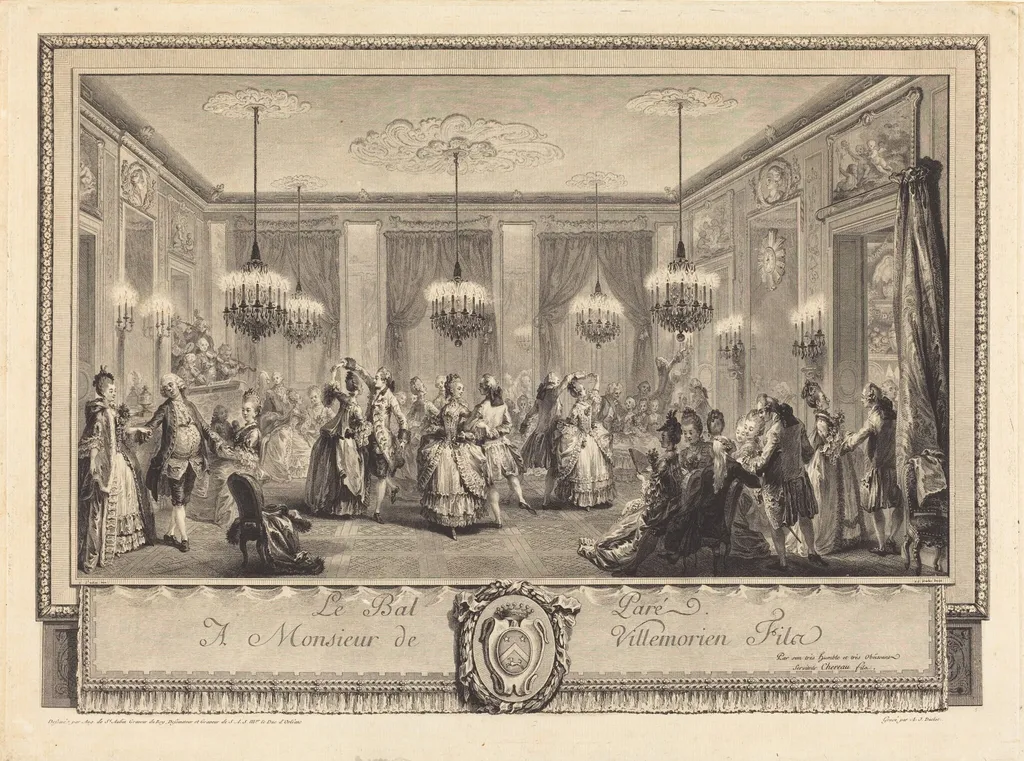
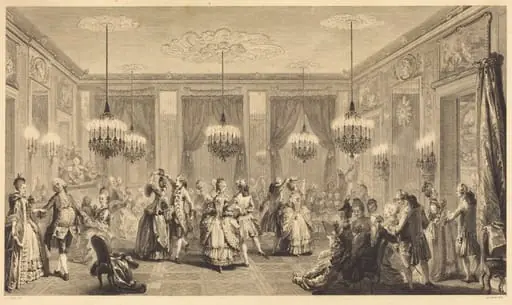
Le bal paré is an ink print by the Romanticist artist Antoine-Jean Duclos. It dates from 1774 and is held in the collection of the National Gallery of Art.
About this work
Overview
The composition captures the bustle of a formal gathering, with participants positioned in various poses—standing, seated, or partnered in movement.
Antoine‑Jean Duclos’s print, titled Le bal paré, dates from 1774 and combines etching with engraving techniques. The work depicts an opulent interior filled with elegantly dressed figures engaged in dance and conversation, set against gilded walls, draped windows, and suspended chandeliers. The composition captures the bustle of a formal gathering, with participants positioned in various poses—standing, seated, or partnered in movement.
Subject & Meaning
The scene presents a lavish ballroom, illustrating the social rituals of eighteenth‑century aristocratic life. Attendees in period costume mingle and waltz, emphasizing the importance of display, refinement, and communal celebration within elite circles. The title, translating to “The Fancy Ball,” underscores the emphasis on ornamentation and the performative nature of such events.
Technique & Style
Duclos employs a hybrid of etching and engraving, using fine, intersecting lines to render texture, shadow, and intricate detail. The contrast between delicate etched washes and the sharper, incised engraving marks creates depth, particularly in the sumptuous fabrics, gilded trim, and the luminous effect of the chandeliers. This interplay of line work gives the print a tactile quality.
History & Provenance
Created in the late Ancien Régime period, Le bal paré reflects contemporary tastes for genre scenes that documented fashionable gatherings. While specific ownership records are scarce, the print has been catalogued among Duclos’s oeuvre and appears in collections focusing on eighteenth‑century French prints, illustrating the artist’s engagement with popular social subjects of his time.
Artist & collection


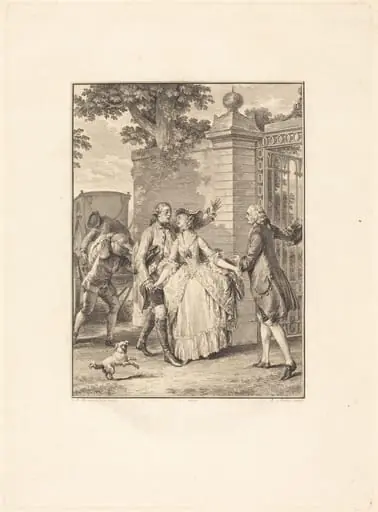
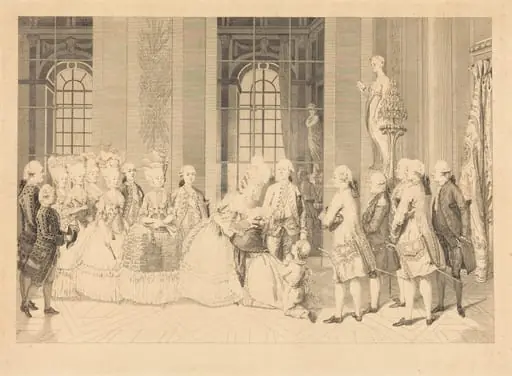 La Reine annonçant à Mme Bellegarde, des Juges, et la liberté de son mari en mai 1777
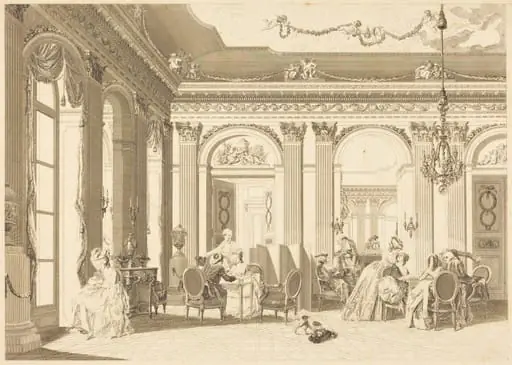 L'assemblee au salon
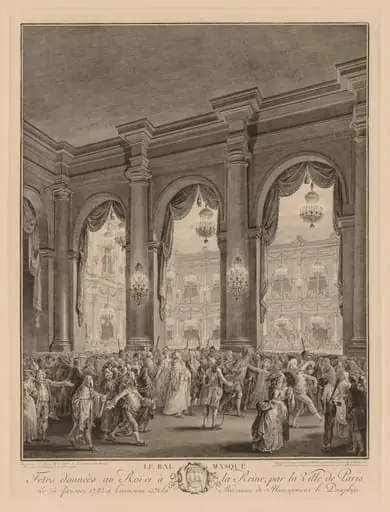 Masked Ball at the Hôtel de Ville, January 23, 1782
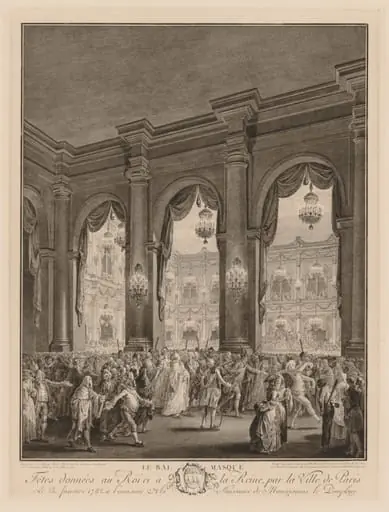 The Masked Ball
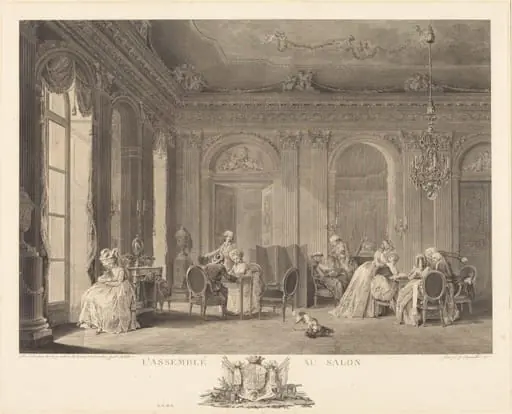 L'assemblee au salon
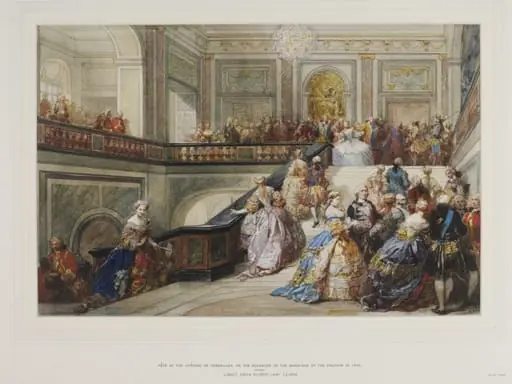 Fete at the Chateau de Versailles in 1745 on the occasion of the marriage of the Dauphin
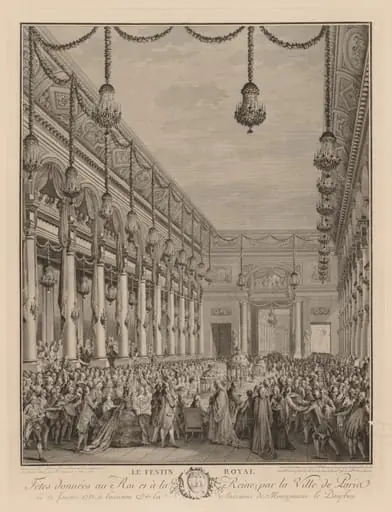 Royal Feast at the Hôtel de Ville, January 21, 1782