Artwork
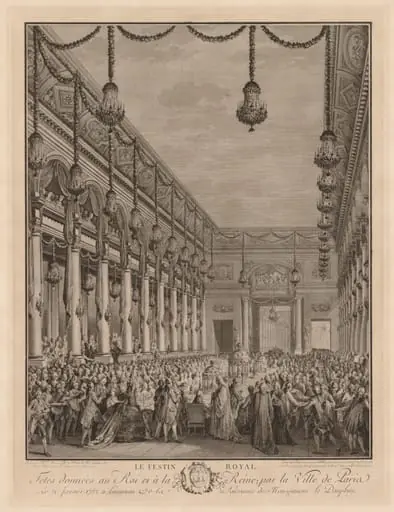
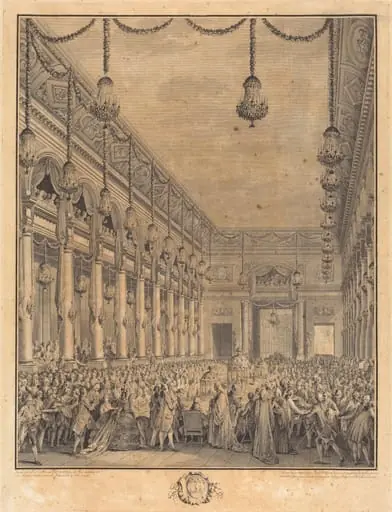
Masked Ball at the Hôtel de Ville, January 23, 1782
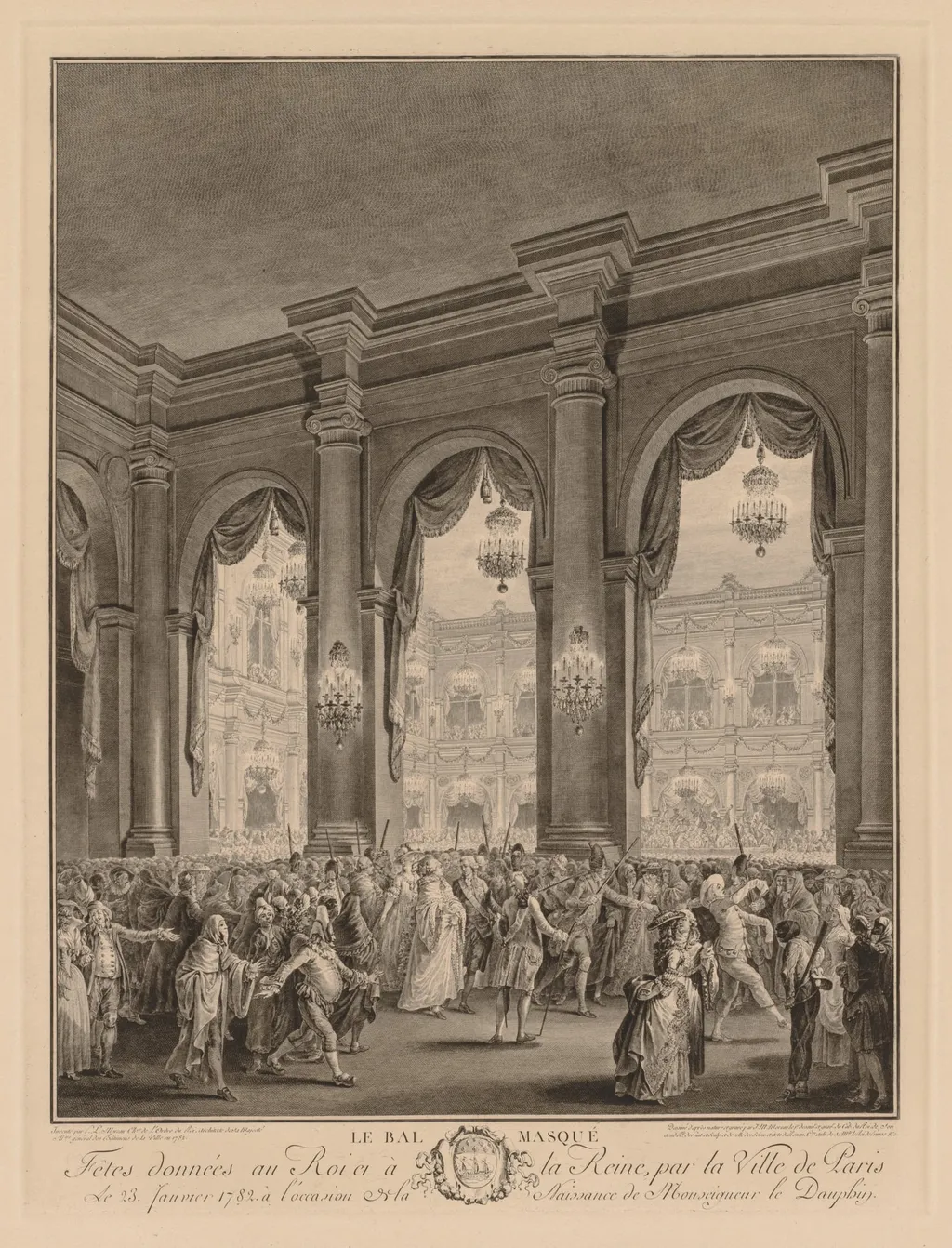
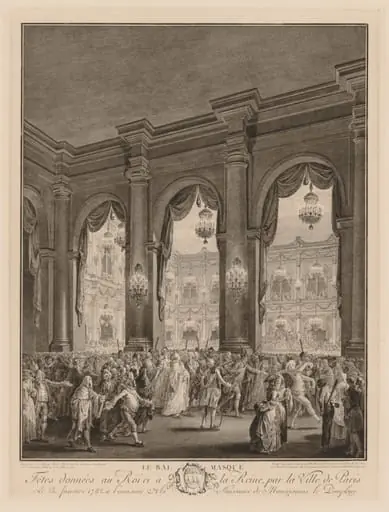
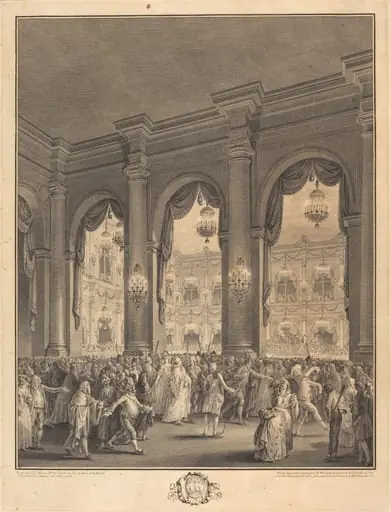
Masked Ball at the Hôtel de Ville, January 23, 1782 is a print by the Romanticist artist Jean-Michel the Younger Moreau. It dates from 1782 and is held in the collection of the Cleveland Museum of Art.
About this work
Overview
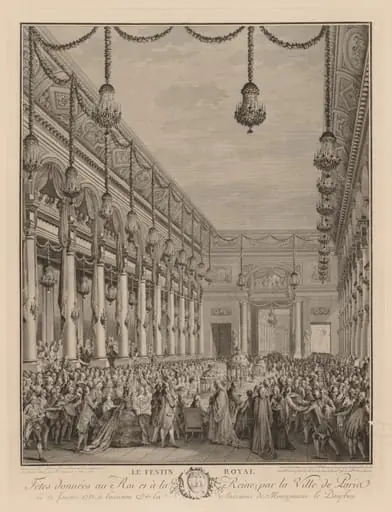
Jean-Michel Moreau le Jeune’s print, titled “Masked Ball at the Hôtel de Ville, January 23, 1782,” depicts a festive gathering in Paris’s municipal hall. Executed in 1782, the work records a specific social event through the medium of engraving, offering a visual document of eighteenth‑century public entertainment.
Subject & Meaning
The image captures participants in elaborate masquerade costumes, emphasizing the theatricality and social stratification of the period’s ballroom culture. By focusing on the masked revelers, the print reflects contemporary interests in disguise, anonymity, and the performative aspects of aristocratic leisure.
Technique & Style
Moreau employs fine line engraving to render intricate details of clothing, architecture, and crowd movement. The composition balances a bustling foreground with a clearly delineated interior space, characteristic of the Rococo penchant for elegance combined with precise observational drawing.
History & Provenance
Created in the year of the depicted event, the print entered the collection of the Cleveland Museum of Art, where it remains part of the museum’s holdings of French prints. Its acquisition history reflects the broader 20th‑century interest in assembling representative examples of pre‑revolutionary French graphic art.
Context
The masked ball took place during the reign of Louis XVI, a time when public festivities at civic venues like the Hôtel de Ville served both political and social functions. Such events offered a venue for the emerging bourgeois class to mingle with the aristocracy, a dynamic that Moreau’s work subtly records.
Artist & collection
Artist
Jean-Michel the Younger Moreau
Jean-Michel the Younger Moreau (1741–1814) was a French artist.