Artwork
Le bal pare
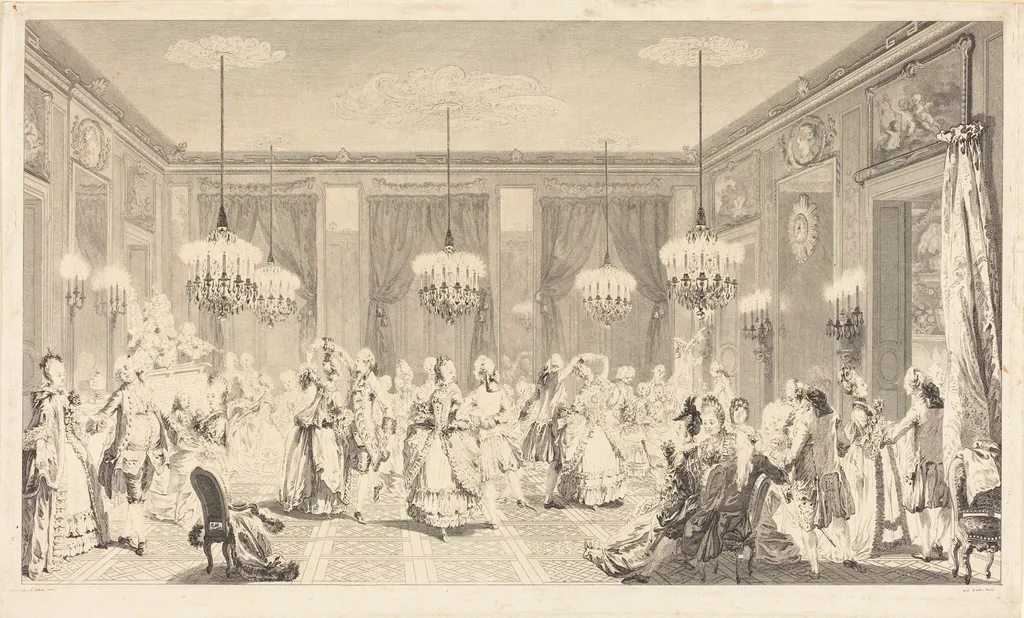
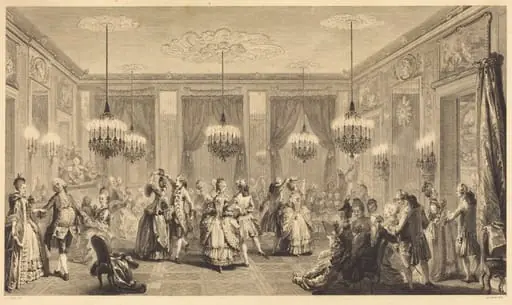
Le bal pare is an ink print by the Romanticist artist Antoine-Jean Duclos. It dates from 1774 and is held in the collection of the National Gallery of Art.
About this work
Overview
The print depicts an opulent ballroom scene, populated by elegantly dressed figures engaged in dance, conversation, and leisure.
Antoine‑Jean Duclos produced the etching Le bal pare in 1774. The print depicts an opulent ballroom scene, populated by elegantly dressed figures engaged in dance, conversation, and leisure. Architectural elements such as chandeliers, draped curtains, and wall paintings frame the space, while a central group gathers around a table, suggesting card play or refreshments. The composition conveys a lively, festive atmosphere typical of eighteenth‑century aristocratic gatherings.
Subject & Meaning
The work presents a snapshot of high‑society entertainment, emphasizing the rituals of courtly dance and social interaction. Attire—long gowns for women and tailored coats with hats for men—signals status and adherence to contemporary fashion codes. The central table, likely a focal point for games or refreshments, underscores the communal aspect of such events, while the overall scene celebrates the pleasure of public display and refined leisure.
Technique & Style
Executed as an etching, Duclos employed incised lines on a copper plate to render intricate architectural details and the delicate textures of clothing. Varying line density creates a nuanced chiaroscuro, allowing light to spill from chandeliers and illuminate figures, thereby producing depth and spatial recession. The print’s fine hatching and cross‑hatching convey both the glitter of the ballroom and the subtle gradations of shadow.
History & Provenance
Created in the latter half of the eighteenth century, Le bal pare reflects the period’s fascination with genre scenes of aristocratic life. While specific ownership records are scarce, the work is attributed to Duclos, a French printmaker active during the pre‑revolutionary era. Its survival in museum collections attests to the enduring interest in visual documentation of social customs preceding the French Revolution.
Artist & collection


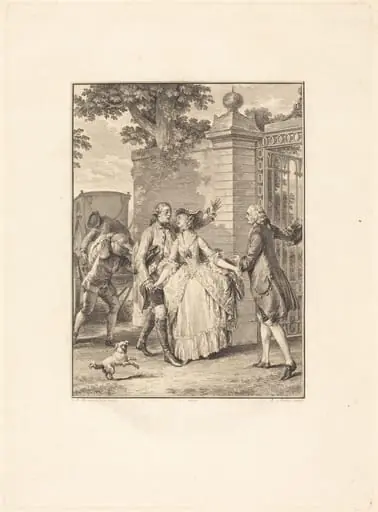
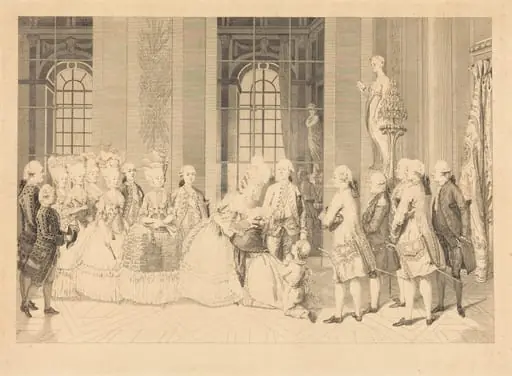 La Reine annonçant à Mme Bellegarde, des Juges, et la liberté de son mari en mai 1777
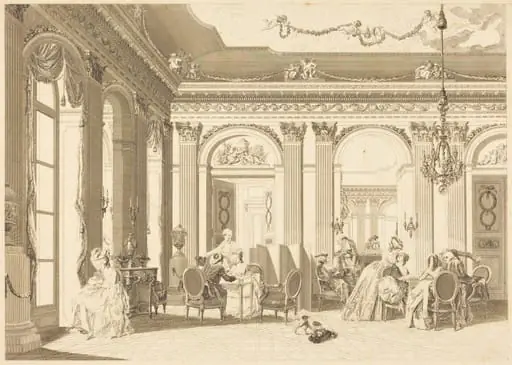 L'assemblee au salon
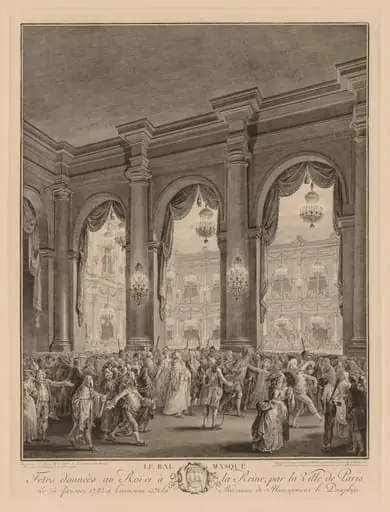 Masked Ball at the Hôtel de Ville, January 23, 1782
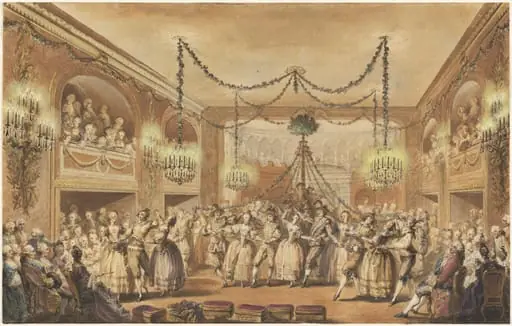 May Ball
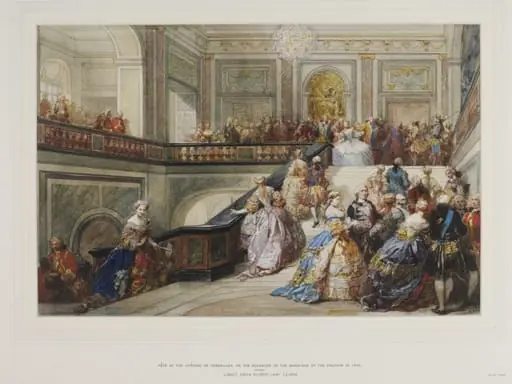 Fete at the Chateau de Versailles in 1745 on the occasion of the marriage of the Dauphin
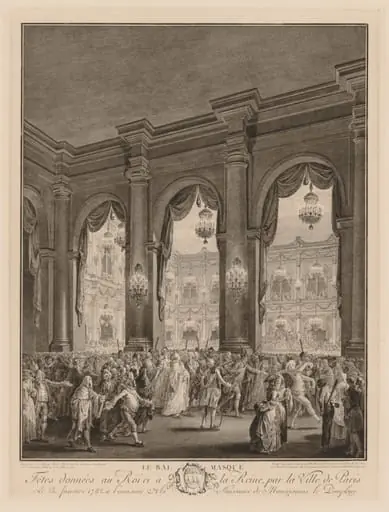 The Masked Ball
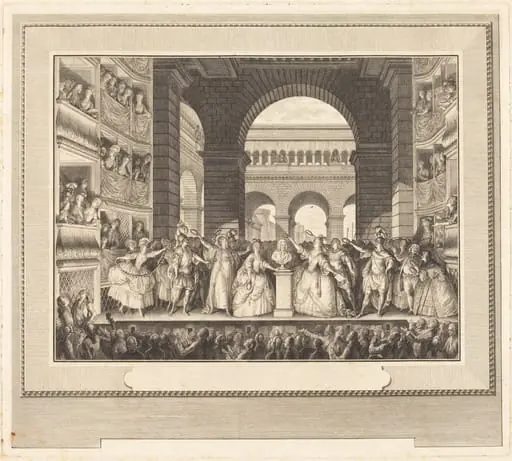 Couronnement de Voltaire (The Crowning of Voltaire)