Artwork
Le bal pare
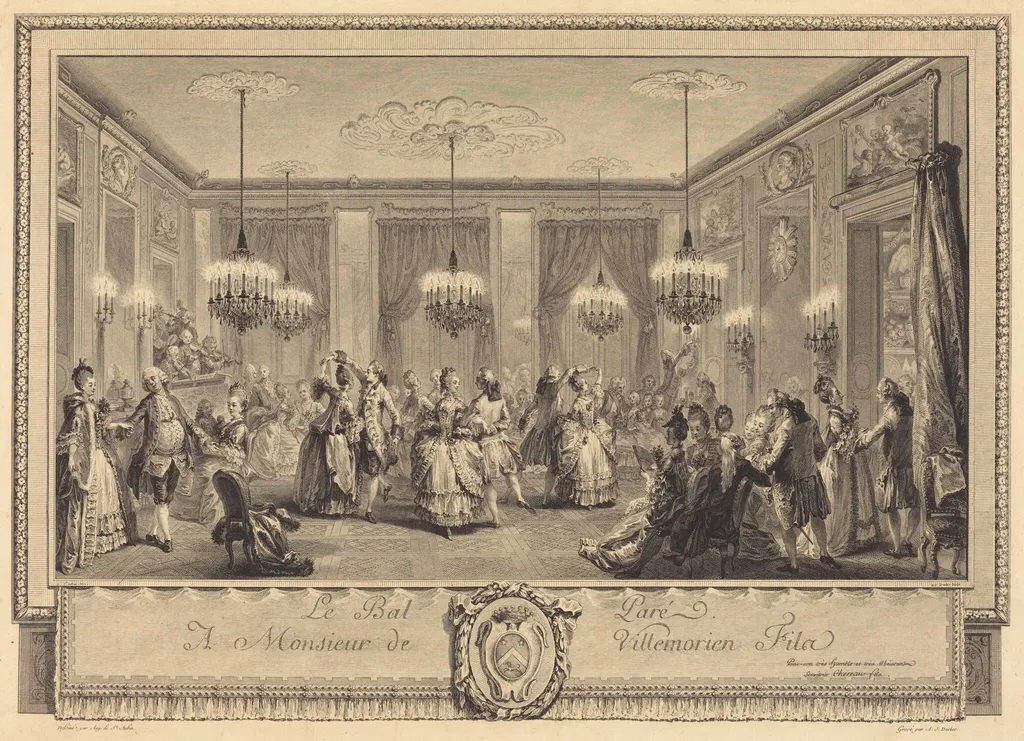
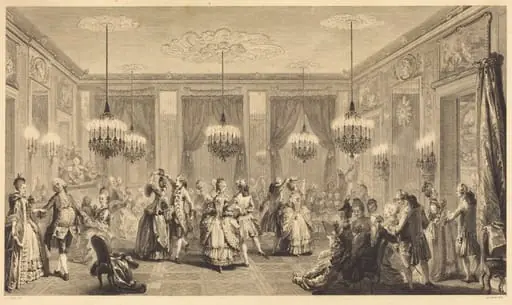
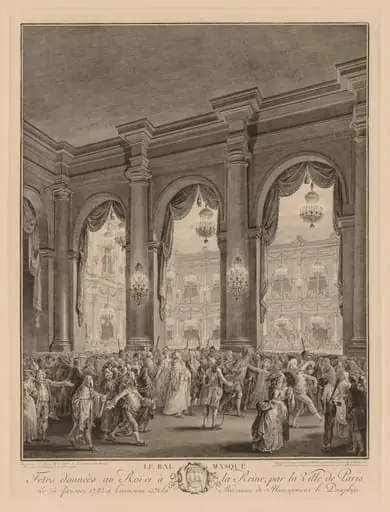
Le bal pare is an ink print by the Romanticist artist Antoine-Jean Duclos. It dates from 1774 and is held in the collection of the National Gallery of Art.
About this work
Overview
The composition is dense with figures, arranged in clusters of conversation and motion, suggesting the complexity of courtly interaction.
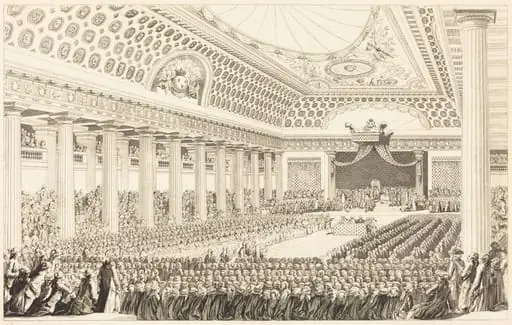
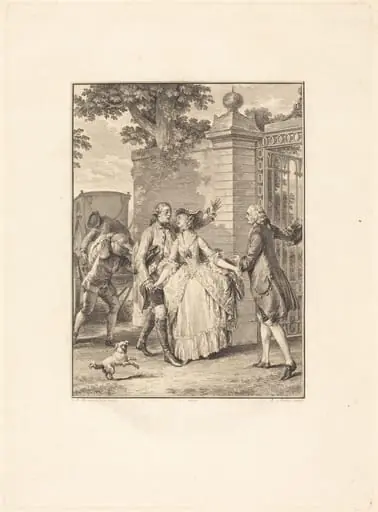
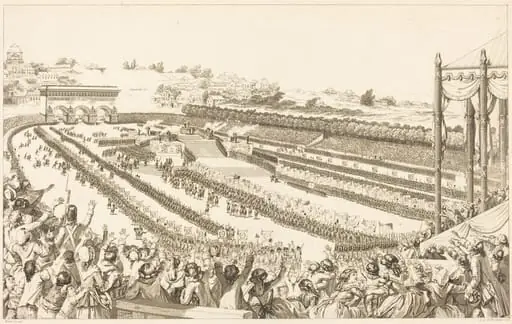
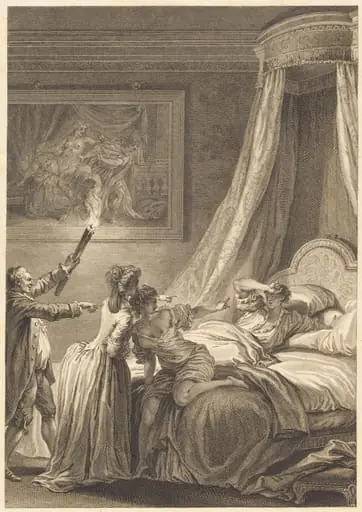
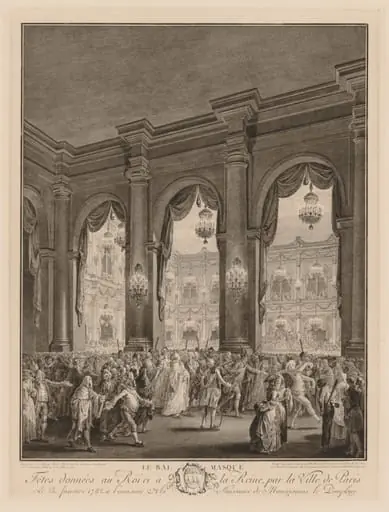
Le bal pare is a print from 1774 by Antoine-Jean Duclos, executed in etching and engraving. It captures a crowded aristocratic ballroom in late 18th-century France, where social ritual unfolds under ornate architecture. The composition is dense with figures, arranged in clusters of conversation and motion, suggesting the complexity of courtly interaction. The medium allows for fine detail in fabric, posture, and interior decoration, grounding the scene in observed reality.
Subject & Meaning
The scene depicts a formal gathering of the French nobility, where dress, posture, and spatial arrangement signal social hierarchy. Men in powdered wigs and embroidered coats mingle with women in voluminous gowns, while a few couples dance. Yet beneath the surface elegance, expressions reveal detachment and fatigue—boredom, quiet observation, or guarded conversation. The image subtly critiques the performative nature of elite social life.
Technique & Style
Duclos employed etching and engraving to achieve intricate detail and tonal variation. Fine lines define lace, silk, and gilded moldings, while cross-hatching models the play of candlelight across faces and fabrics. The contrast between sharply rendered figures and softer, atmospheric backgrounds creates depth. The use of drypoint may have added texture to surfaces like velvet or hair, enhancing the tactile quality of the scene.
History & Provenance
Created in 1774, the print emerged during the final decades of the French monarchy, when such scenes were popular among collectors. It likely circulated as a commercial print, appealing to those fascinated by courtly life. Though specific early ownership records are sparse, its survival in museum collections suggests it was valued for its social documentation rather than artistic novelty.
Context
In pre-revolutionary France, ballroom scenes were common in print culture, reflecting public interest in aristocratic rituals. Duclos’s work aligns with a tradition of genre prints that recorded elite customs, often with an undercurrent of irony. The print’s attention to detail mirrors the precision of contemporary portraiture, while its crowded composition echoes the social pressures of courtly existence.
Legacy
Le bal pare endures as a quiet record of French aristocratic life on the brink of upheaval. It offers no overt political message, yet its nuanced portrayal of isolation within crowds resonates with later interpretations of pre-revolutionary society. As a technical example of late 18th-century printmaking, it remains a reference for the interplay of line, light, and social observation in graphic art.
Artist & collection