Artwork
Pompe funèbre en l'honneur des Martyrs de la journée du 10, dans le Jardin National le 26 Aout 1792
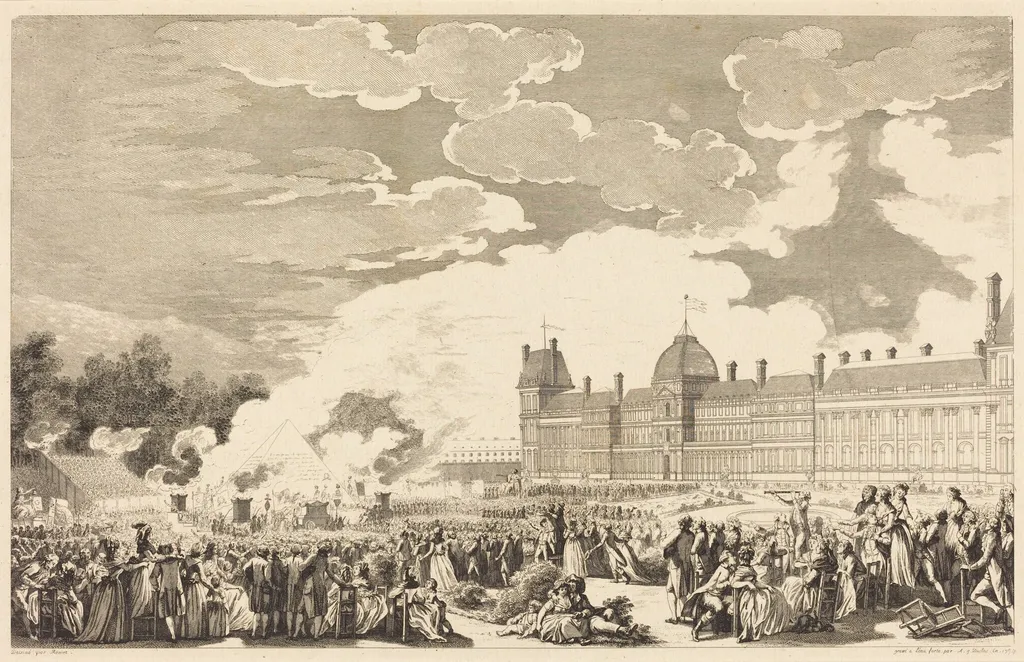
Pompe funèbre en l'honneur des Martyrs de la journée du 10, dans le Jardin National le 26 Aout 1792 is an ink print by the Romanticist artist Antoine-Jean Duclos. It dates from 1794 and is held in the collection of the National Gallery of Art. Antoine‑Jean Duclos’s 1794 etching records a public funeral held on 26 August 1792 in Paris’s Jardin National.
About this work
Overview
Antoine‑Jean Duclos’s 1794 etching records a public funeral held on 26 August 1792 in Paris’s Jardin National. The print captures a densely populated gathering before a monumental building with domes and columns, while a central bonfire emits rising smoke. The composition conveys the solemn yet bustling atmosphere of the revolutionary commemoration.
Subject & Meaning
The scene portrays the funeral rites for the victims of the 10 August 1792 insurrection, known as the “Martyrs of the 10th.” Participants surround a makeshift altar where a fire burns, symbolising both remembrance and the revolutionary fervour that animated the crowd. The varied gestures—standing, seated, conversing—reflect collective mourning and political solidarity.
Technique & Style
Executed as an etching on laid paper, Duclos employs fine line work and cross‑hatching to model depth in the architecture and the mass of figures. Light and shadow delineate the crowd’s layers, while the dramatic cloudscape above adds a theatrical backdrop. The print’s tonal contrasts heighten the sense of movement within the crowded space.
Context
The funeral took place shortly after the fall of the monarchy, during the early French Revolution, when public ceremonies were used to legitimize the new republic. The Jardin National, formerly the Tuileries, served as a civic arena for such events, linking the ritual to the broader re‑imagining of public space in revolutionary France.
History & Provenance
Created in 1794, the etching entered the market as a print of contemporary political significance. It has since been held in several French institutional collections, reflecting its value as a visual document of revolutionary public rites.
Artist & collection


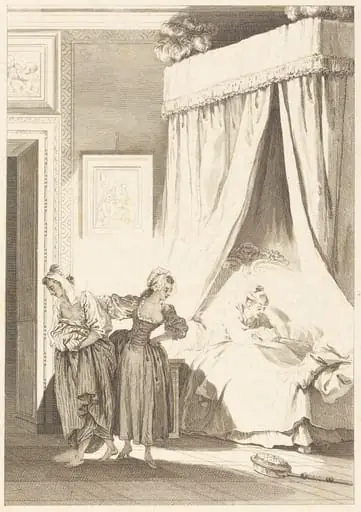
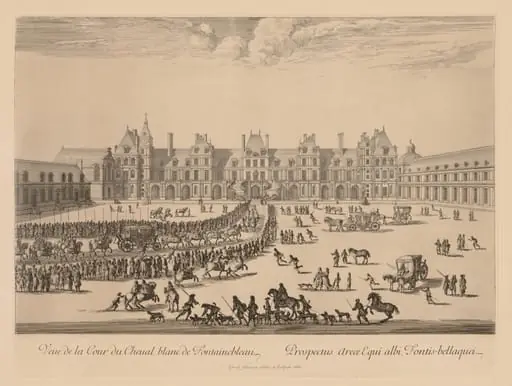 Vue de la Cour du Cheval-Blanc de Fontainebleau
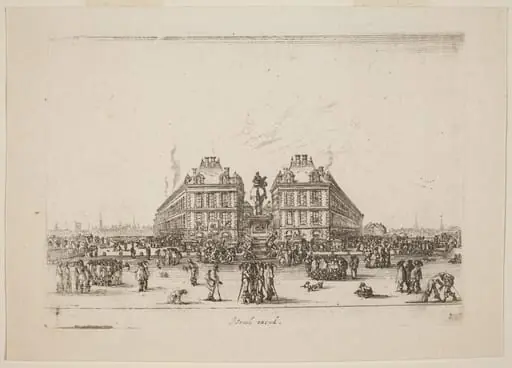 Place Dauphine
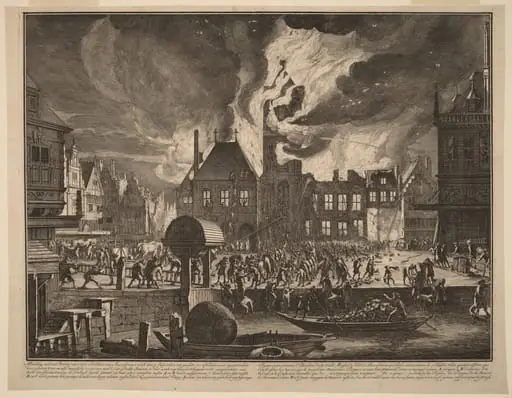 Burning of the Old Amsterdam Town Hall
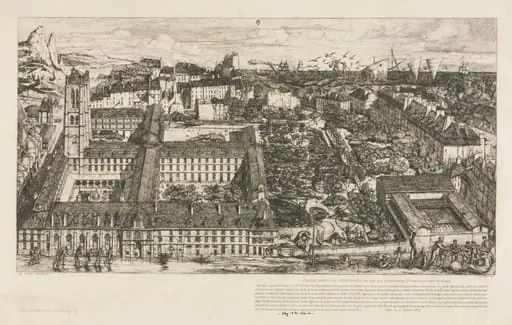 Henry IV College
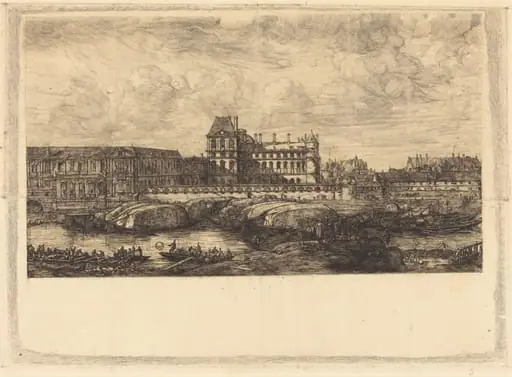 L'ancien Louvre d'après une peinture de Zeeman, 1651 (The Old Louvre, from a Painting by Zeeman, l651)
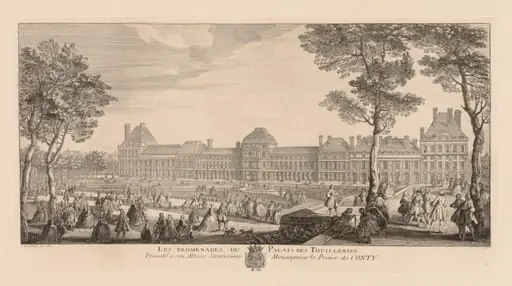 Promenades of the Palais des Tuileries
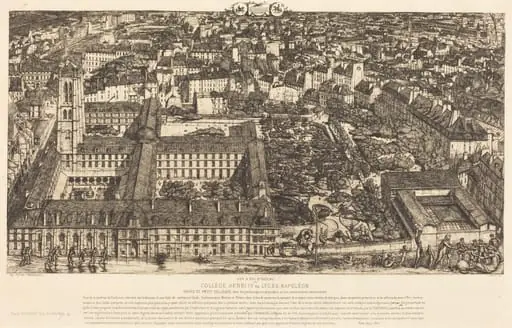 Collège Henri IV, Paris, ou Lycée Napoléon (Henry IV College or Napoleon School, Paris)
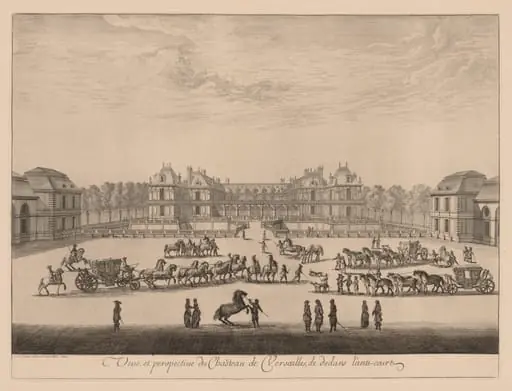 Vue et perspective du Château de Versailles, de dedans l'anti-cour
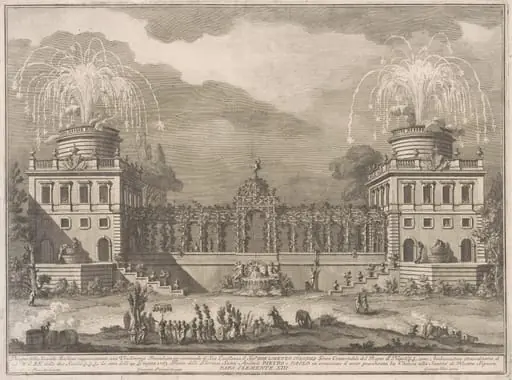 The Seconda Macchina for the Chinea of 1763: The Grape Harvest
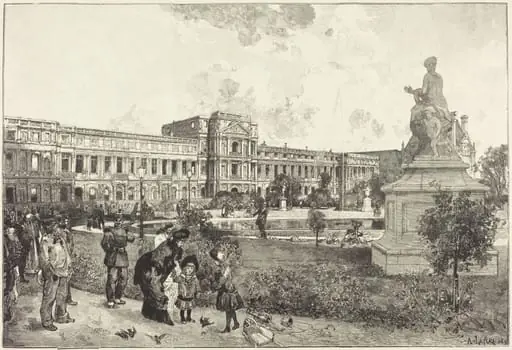 Les ruins du Palais des Tuilleries avant leur démolition