Artwork
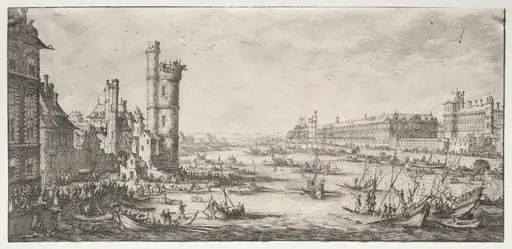
L'ancien Louvre d'après une peinture de Zeeman, 1651 (The Old Louvre, from a Painting by Zeeman, l651)
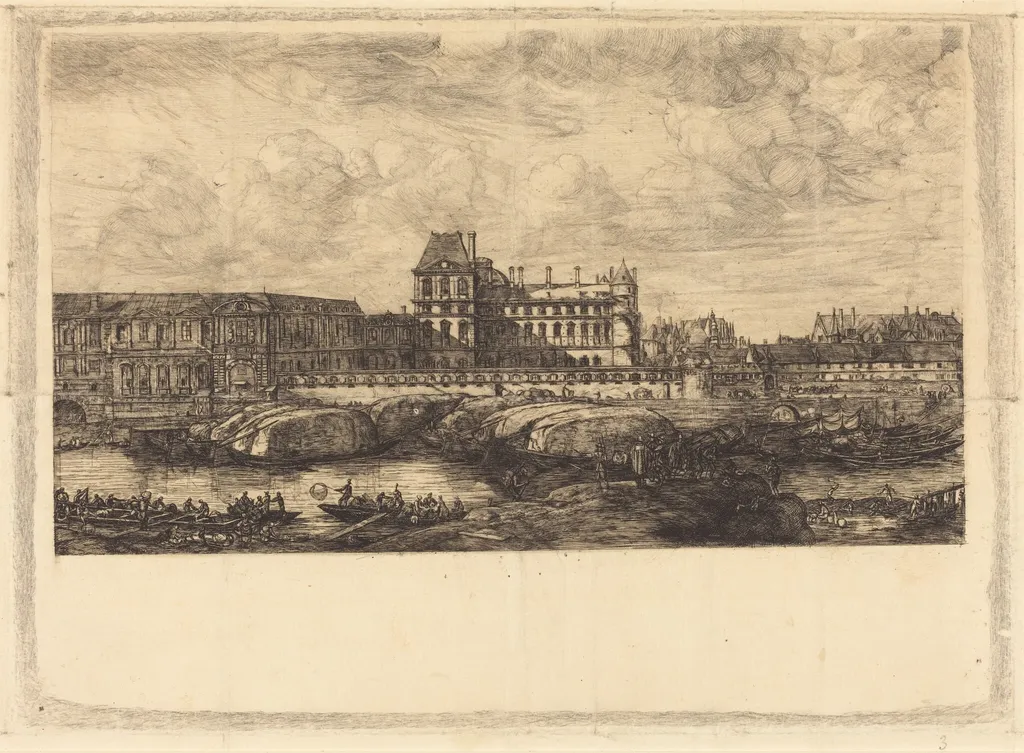
L'ancien Louvre d'après une peinture de Zeeman, 1651 (The Old Louvre, from a Painting by Zeeman, l651) is a graphite print by the Impressionist artist Charles Meryon. It dates from 1866 and is held in the collection of the National Gallery of Art.
About this work
Overview
Executed in etching with graphite enhancements on laid Hudelist paper, the work reflects Meryon’s singular focus on architectural detail and atmospheric tone.
Created in 1866, this etching by Charles Meryon reimagines a 17th-century view of the Louvre as captured by Dutch painter Reinier Zeeman. Executed in etching with graphite enhancements on laid Hudelist paper, the work reflects Meryon’s singular focus on architectural detail and atmospheric tone. Though born of a prior painting, the print is a distinct interpretation, shaped by Meryon’s personal vision and technical mastery of the etching medium.
Subject & Meaning
The scene portrays the Louvre’s pre-modern façade along the Seine, teeming with activity: rowboats dot the river, carriages traverse the courtyard, and figures move between architectural elements. Meryon’s rendering emphasizes the building’s historical presence amid daily life, not as a monument but as a lived-in space. The inclusion of Zeeman’s original composition anchors the work in historical memory, while Meryon’s additions infuse it with quiet melancholy.
Technique & Style
Meryon employed etching to render fine, precise lines across the plate, capturing textures of stone, water, and fabric with meticulous care. Graphite was added by hand to deepen shadows and modulate light, enhancing the tonal depth beyond what etching alone could achieve. His style favors atmospheric perspective and restrained detail, avoiding theatricality in favor of quiet observation—a hallmark of his approach to urban landscapes.
History & Provenance
Meryon, who turned to etching after being barred from painting due to color blindness, developed a reputation for reinterpreting Paris’s architectural past. This print derives from Zeeman’s 1651 painting, now lost, making Meryon’s version a vital visual record. The work was produced during a period of intense urban transformation in Paris, positioning it as both documentation and elegy for a vanishing cityscape.
Context
In mid-19th-century Paris, rapid modernization under Haussmann’s renovations threatened historic structures. Meryon’s etchings, including this one, responded to that loss by preserving older quarters in detailed, somber compositions. His focus on the Louvre—then undergoing its own expansion—reflects a broader cultural anxiety about erasing the past, even as the city moved forward.
Legacy
Meryon’s etchings, once overlooked, gained recognition in the late 19th and early 20th centuries for their emotional resonance and technical rigor. This print exemplifies his role in elevating etching to a serious artistic medium in France. His reinterpretations of historical architecture influenced later generations of printmakers and urban documentarians, cementing his place in the history of printmaking.
Artist & collection
Artist
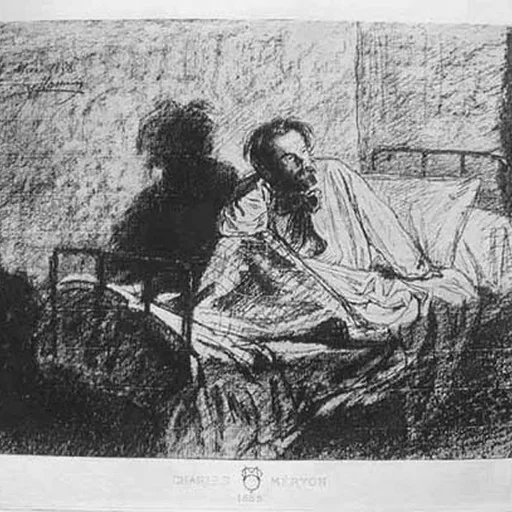
Charles Meryon (sometimes Méryon, 23 November 1821 – 14 February 1868) was a French artist who worked almost entirely in etching, as he had colour blindness.

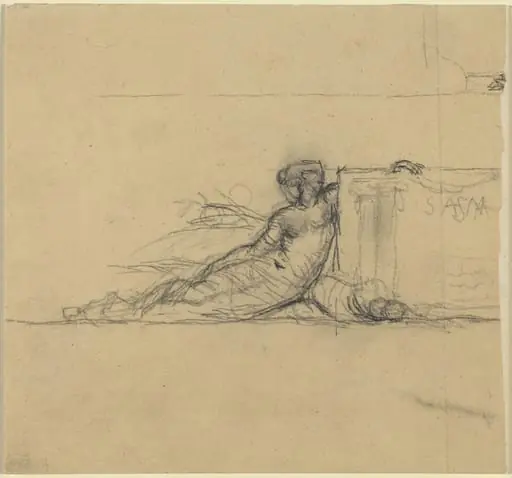
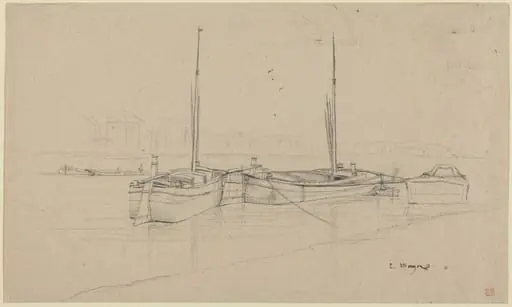
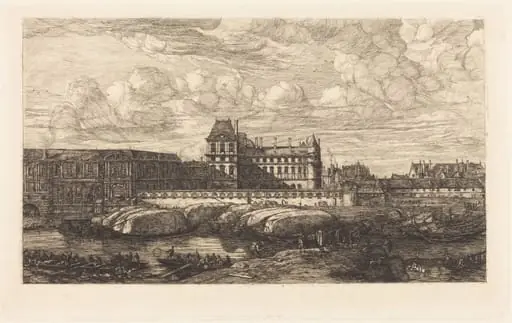 L'ancien Louvre d'après une peinture de Zeeman, 1651 (The Old Louvre, from a Painting by Zeeman, 1651)
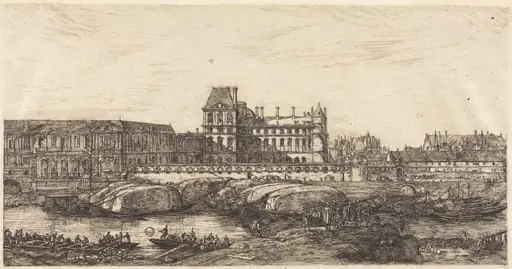 L'ancien Louvre d'après une peinture de Zeeman, 1651 (The Old Louvre, from a Painting by Zeeman, 1651)
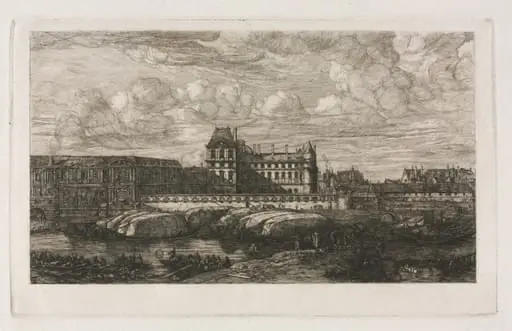 The Old Louvre from a Painting by Zeeman, 1651
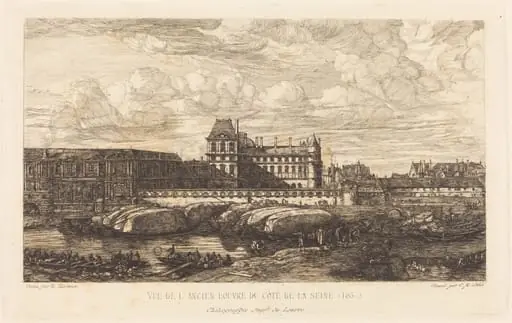 L'ancien Louvre d'après une peinture de Zeeman, 1651 (The Old Louvre, from a Painting by Zeeman, 1651)
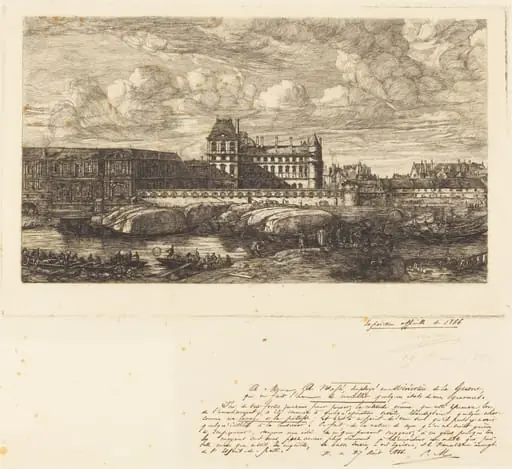 L'ancien Louvre d'après une peinture de Zeeman, 1651 (The Old Louvre, from a Painting by Zeeman, 1651)
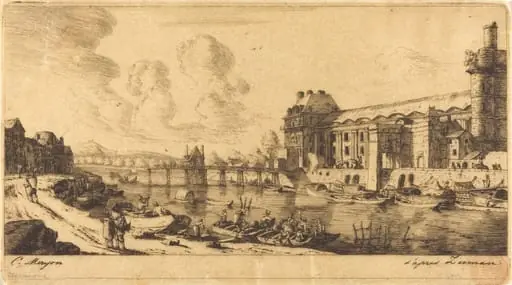 Le Pavillion de Mlle. et une partie du Louvre
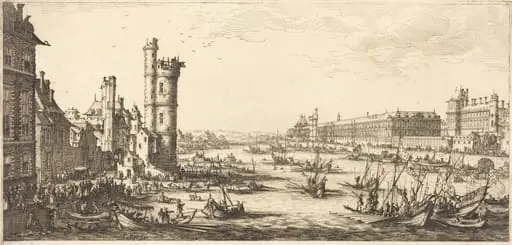 View of the Louvre
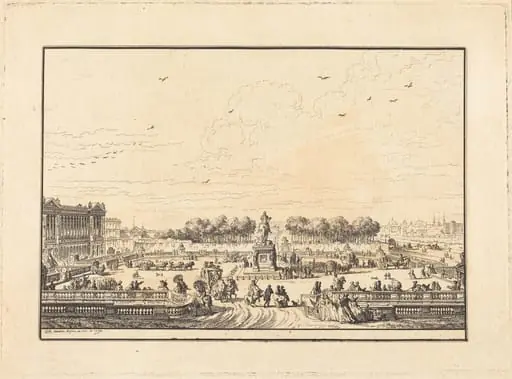 Place de Louis XV
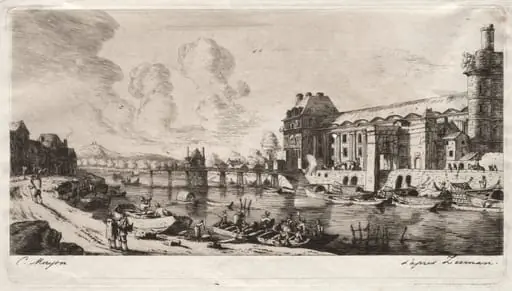 The Pavillon de Mademoiselle and part of the Louvre
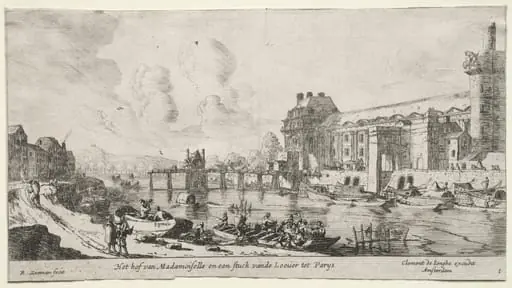 Views of Paris: View of the Louvre and the Tuileries
 Les deux grandes vues de Paris: Vue du Louvre