Artwork
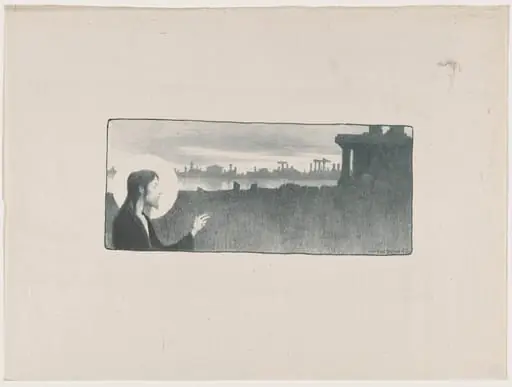
Le doux conquérant
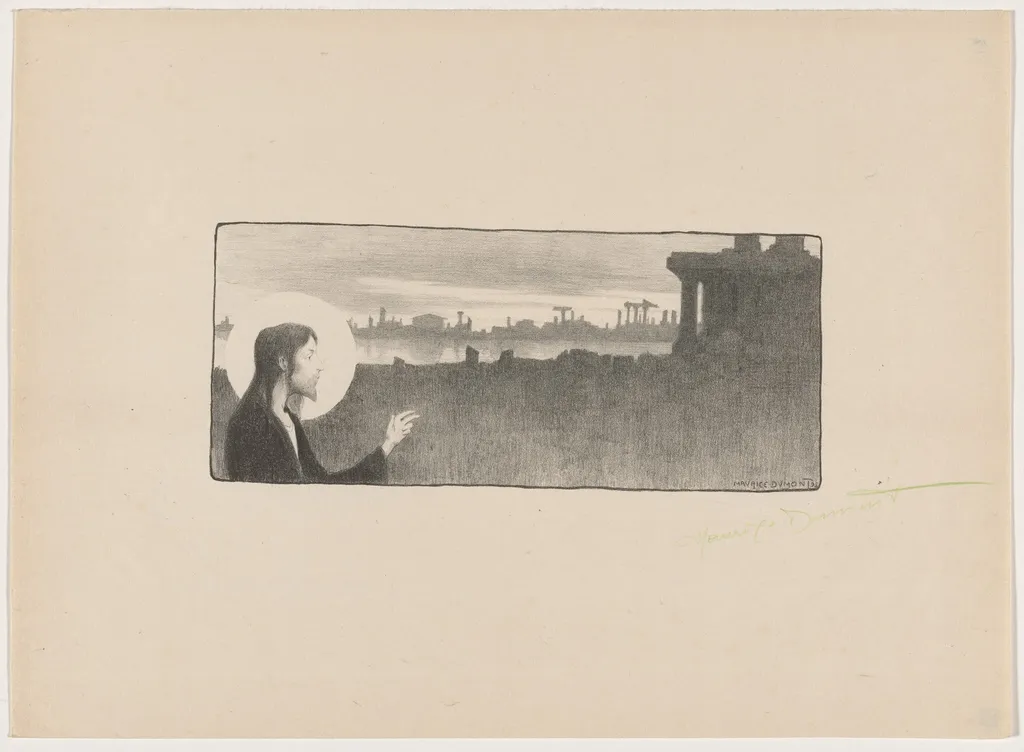
Le doux conquérant is an ink print by the Impressionist artist Maurice Dumont. It dates from 1895 and is held in the collection of the National Gallery of Art.
About this work
Overview
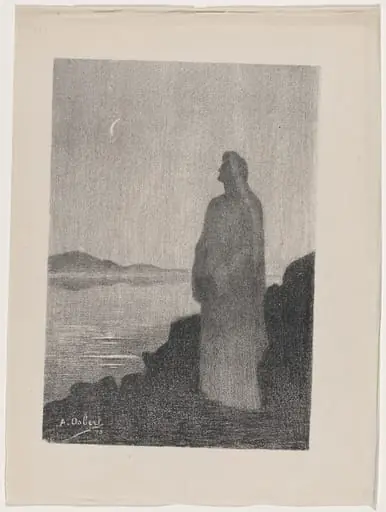
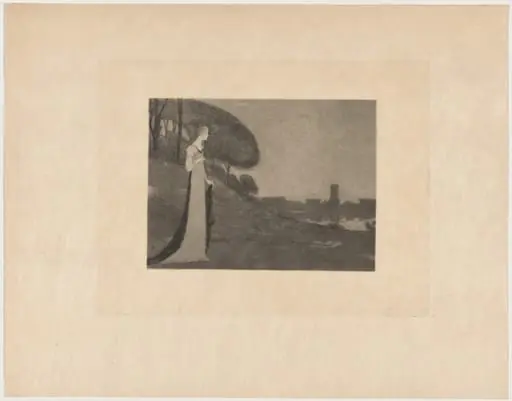
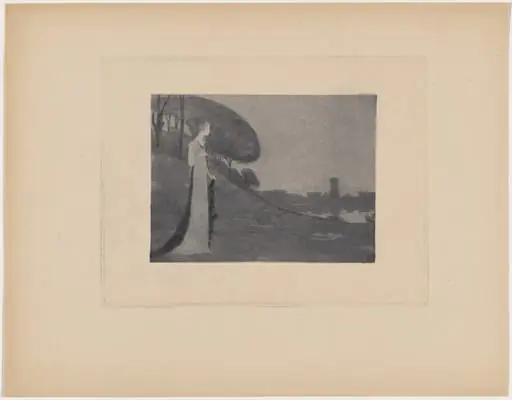
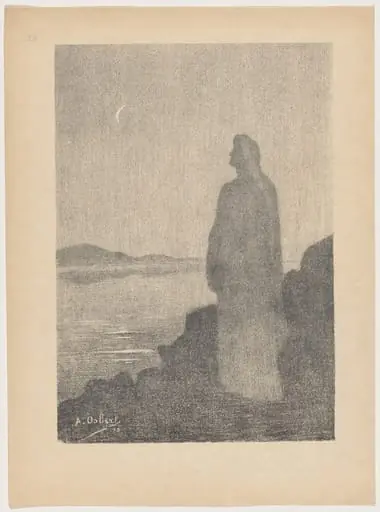
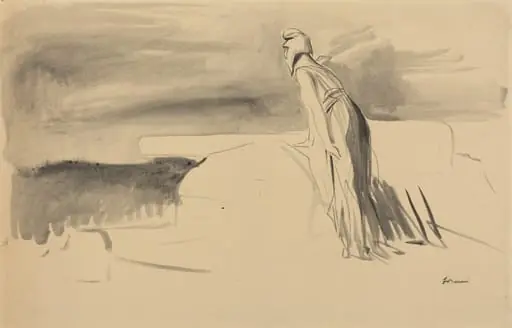
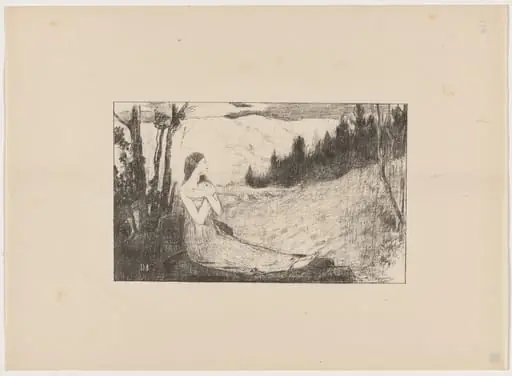
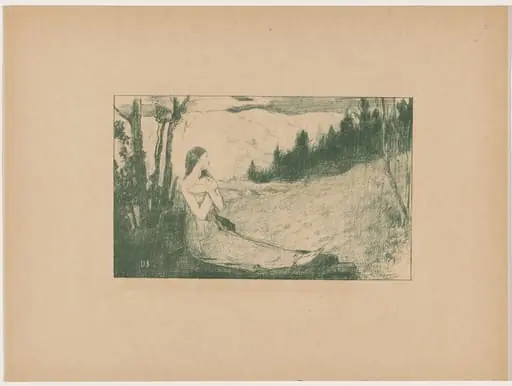
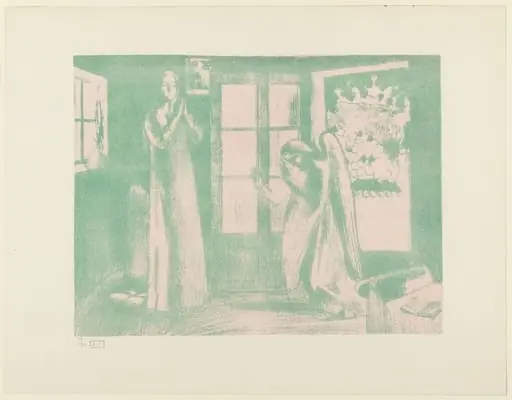
Maurice Dumont’s 1895 lithograph Le doux conquérant presents a solitary figure rendered in black ink on Japan paper. The composition places the man in profile against a stark white circle that functions as a visual focal point, while a distant cityscape and reflective water occupy the background.
Subject & Meaning
The central figure, a long‑haired man in a dark robe, extends his right hand in a gentle gesture. The pose, combined with the luminous circular backdrop reminiscent of a halo, suggests a calm, perhaps contemplative presence, inviting viewers to interpret the gesture as an offering of peace.
Technique & Style
Executed as a lithograph, Dumont exploits the medium’s capacity for strong contrasts, allowing deep blacks to define the figure and architecture while the white circle provides a luminous counterpoint. The use of Japan paper enhances the subtle tonal variations, giving the scene a refined depth.
History & Provenance
Created in 1895, Le doux conquérant is among Dumont’s later prints, produced during a period when French artists were increasingly exploring lithography for its expressive possibilities. The work remains documented in collections of 19th‑century French graphic art.
Context
The late nineteenth century saw a revival of interest in printmaking, with artists like Dumont employing lithography to merge fine‑art drawing with the reproducibility of prints. The inclusion of an urban landscape and reflective water reflects contemporary fascination with modernity and the interplay of natural and built environments.
Artist & collection