Artwork
La jarre couronnée (The Crowned Jar)
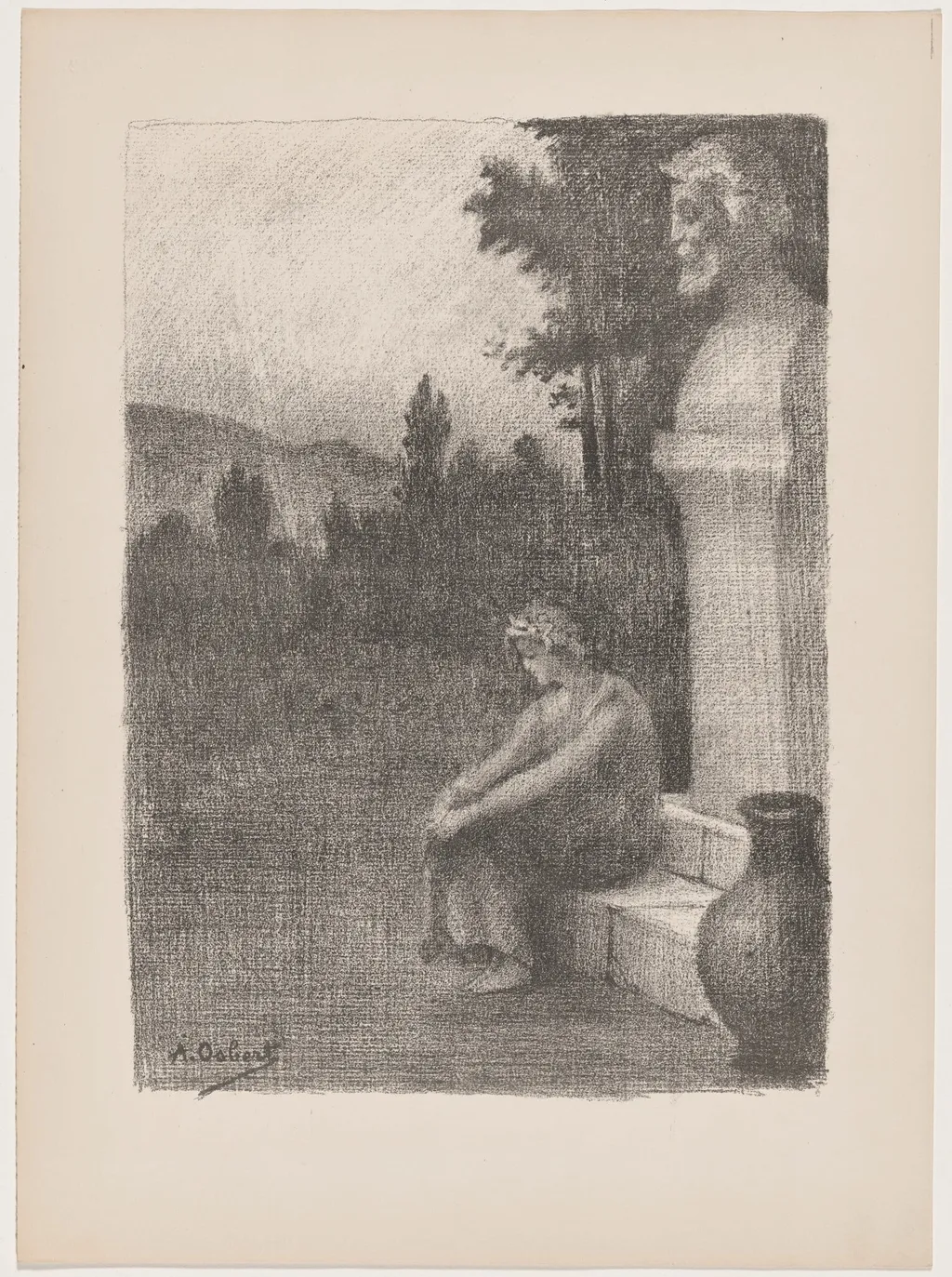
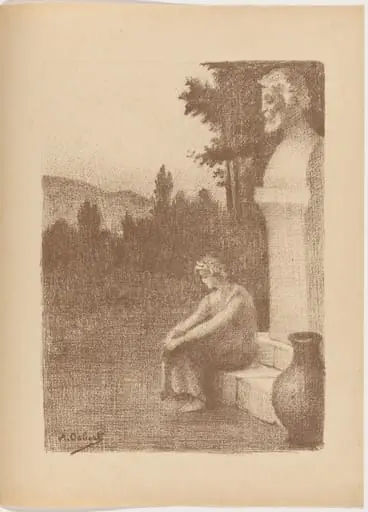
La jarre couronnée (The Crowned Jar) is an ink print by the Impressionist artist Alphonse Osbert. It dates from 1895 and is held in the collection of the National Gallery of Art.
About this work
Overview
The print was made using lithographic technique, in which the image is drawn directly onto a stone surface and then transferred to paper.
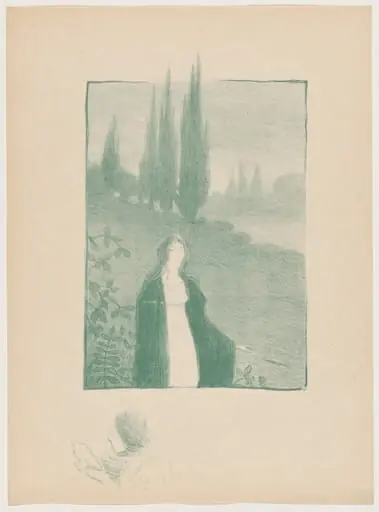
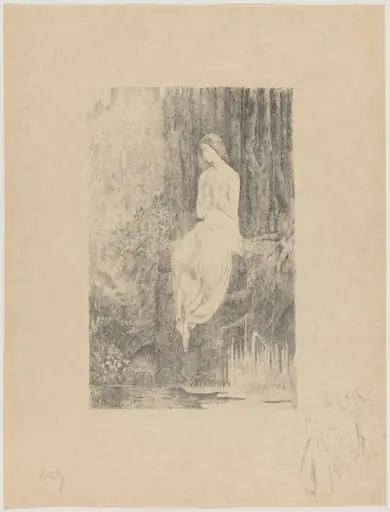
La jarre couronnée is a black-and-white lithograph produced by Alphonse Osbert in 1895. Executed on wove paper, it captures a solitary figure in a garden setting with minimal detail and restrained tonal variation. The print was made using lithographic technique, in which the image is drawn directly onto a stone surface and then transferred to paper. Its quiet composition and loose execution suggest an intimate, spontaneous observation rather than a formal composition.
Subject & Meaning
A woman sits calmly on a low stone wall, her legs crossed, cradling a large ceramic jar. Her posture conveys stillness, and the absence of facial detail invites contemplation rather than narrative. The jar, crowned by a subtle rim, may symbolize containment or domestic ritual, but its meaning remains open. The surrounding vegetation, rendered in loose strokes, frames her without intrusion, emphasizing solitude and quietude over explicit symbolism.
Technique & Style
Osbert employed lithography, a planographic process where the image is drawn with greasy materials on a limestone plate. The print’s soft gradations and uneven lines reflect the artist’s direct hand, with minimal refinement. The use of dark, fluid strokes for foliage and sparse hatching for form creates a sketchlike immediacy. The absence of color and the emphasis on tonal contrast reinforce the work’s meditative, almost ephemeral quality.
History & Provenance
Created in 1895, the print emerged during Osbert’s engagement with Symbolist aesthetics and printmaking circles in France. While no detailed provenance is widely documented, it was likely produced in a small edition for private collectors or art societies interested in graphic art. Its survival in institutional collections suggests early recognition within avant-garde print networks, though it never entered mainstream public discourse.
Context
In the mid-1890s, French artists increasingly turned to printmaking as a medium for personal expression beyond academic painting. Osbert, associated with Symbolist themes, used lithography to explore mood and introspection. La jarre couronnée aligns with contemporaneous works by artists like Redon and Whistler, who favored atmospheric, non-narrative imagery. The garden setting reflects a broader cultural fascination with private, contemplative spaces amid industrial modernity.
Legacy
Though not widely exhibited or reproduced, La jarre couronnée remains a quiet example of late 19th-century Symbolist printmaking. It exemplifies how lithography allowed artists to merge drawing and printing in a direct, unpolished manner. Its understated presence in museum collections underscores its role as a personal, rather than public, artistic statement—valued for its restraint and emotional subtlety rather than its popularity.
Artist & collection