Artwork
Britomartis Jumps into the Sea
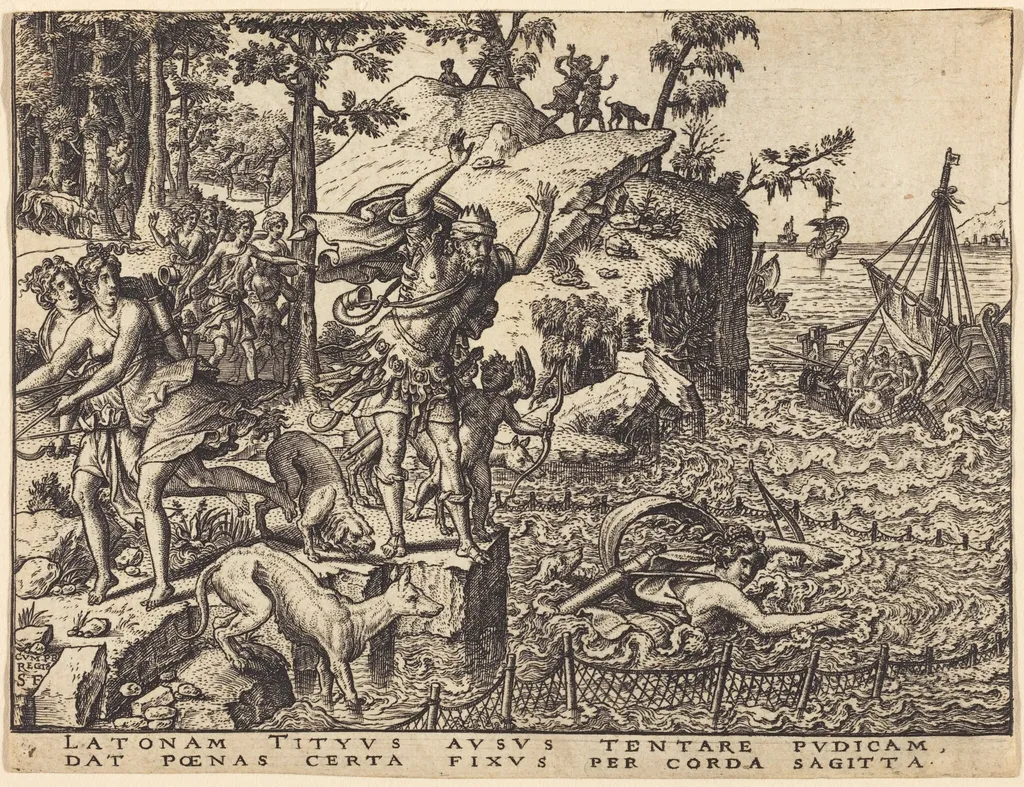
Britomartis Jumps into the Sea is an ink print by the Renaissance artist Etienne Delaune. It dates from 1551 and is held in the collection of the National Gallery of Art.
About this work
Overview
Britomartis Jumps into the Sea is a 1551 engraving by Étienne Delaune, produced through the meticulous process of incising lines into a metal plate.
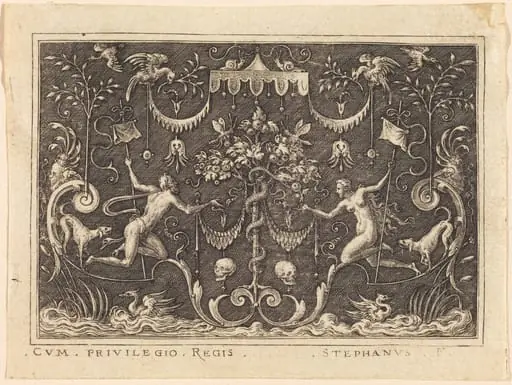
Britomartis Jumps into the Sea is a 1551 engraving by Étienne Delaune, produced through the meticulous process of incising lines into a metal plate. The image captures a moment of dramatic motion: a female figure leaping from a cliff into turbulent waters. Unlike painted works, this print derives its depth and texture from fine, intersecting lines, characteristic of the engraver’s craft. The medium allowed for precise reproduction, making the image accessible beyond a single original.
Subject & Meaning
The figure is Britomartis, a mythological huntress from Sir Philip Sidney’s 'Arcadia,' known for her virtue and courage. Her leap into the sea symbolizes a desperate escape or transformation, possibly to evade pursuit or preserve her honor. The churning waves and her billowing cloak amplify the tension of the moment, suggesting both danger and transcendence. The scene reflects Renaissance fascination with classical allegory and moral resilience.
Technique & Style
Delaune employed engraving to render movement and atmosphere through controlled, linear marks. Cross-hatching builds shadow and volume, while delicate, parallel lines suggest the texture of water and fabric. The absence of color heightens focus on form and contrast. The artist’s precision in carving the copper plate allowed for intricate detail, from the folds of the cloak to the foam of the waves, demonstrating mastery of a technique reliant on patience and control.
History & Provenance
Created in 1551 during Delaune’s time in France, the engraving was likely made for circulation among collectors and scholars interested in mythological themes. It belongs to a series of prints inspired by classical literature and courtly ideals. Though no early ownership records are widely documented, its survival in multiple institutional collections suggests it was valued for its technical skill and narrative depth in the 16th century.
Context
Delaune worked in a period when printmaking flourished as a means of disseminating humanist ideas. His imagery drew from literary sources like Sidney’s 'Arcadia,' which blended classical myth with contemporary moral themes. Engravings like this one served as visual companions to texts, circulating among educated elites who appreciated allegory and refined craftsmanship. The sea as a symbol of peril and purification was a recurring motif in Renaissance visual culture.
Legacy
The engraving remains a notable example of French Mannerist printmaking, admired for its emotional intensity and technical finesse. It influenced later artists working in narrative printmaking and contributed to the broader European engagement with mythological subjects in graphic form. While not widely reproduced today, it endures in museum collections as a testament to the expressive potential of line and the enduring appeal of mythic female agency.
Artist & collection