Artwork
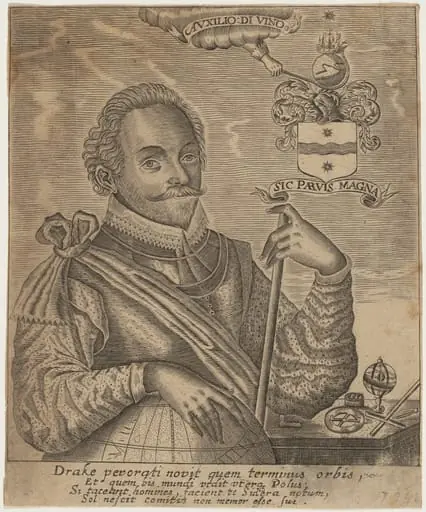
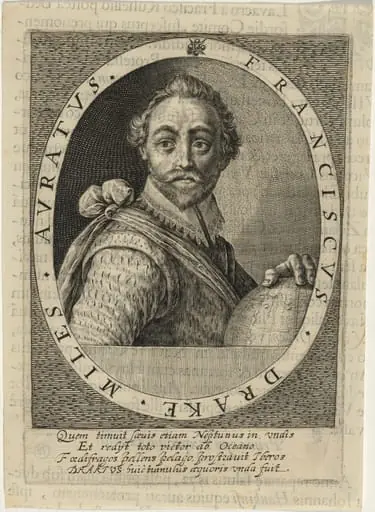
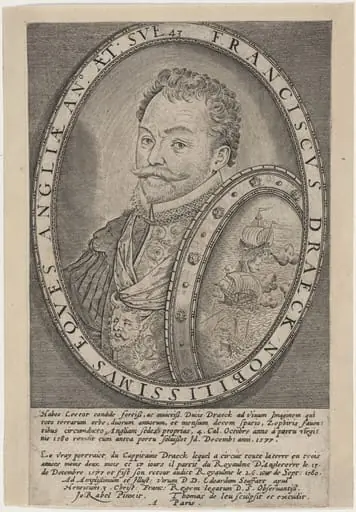
Sir Francis Drake
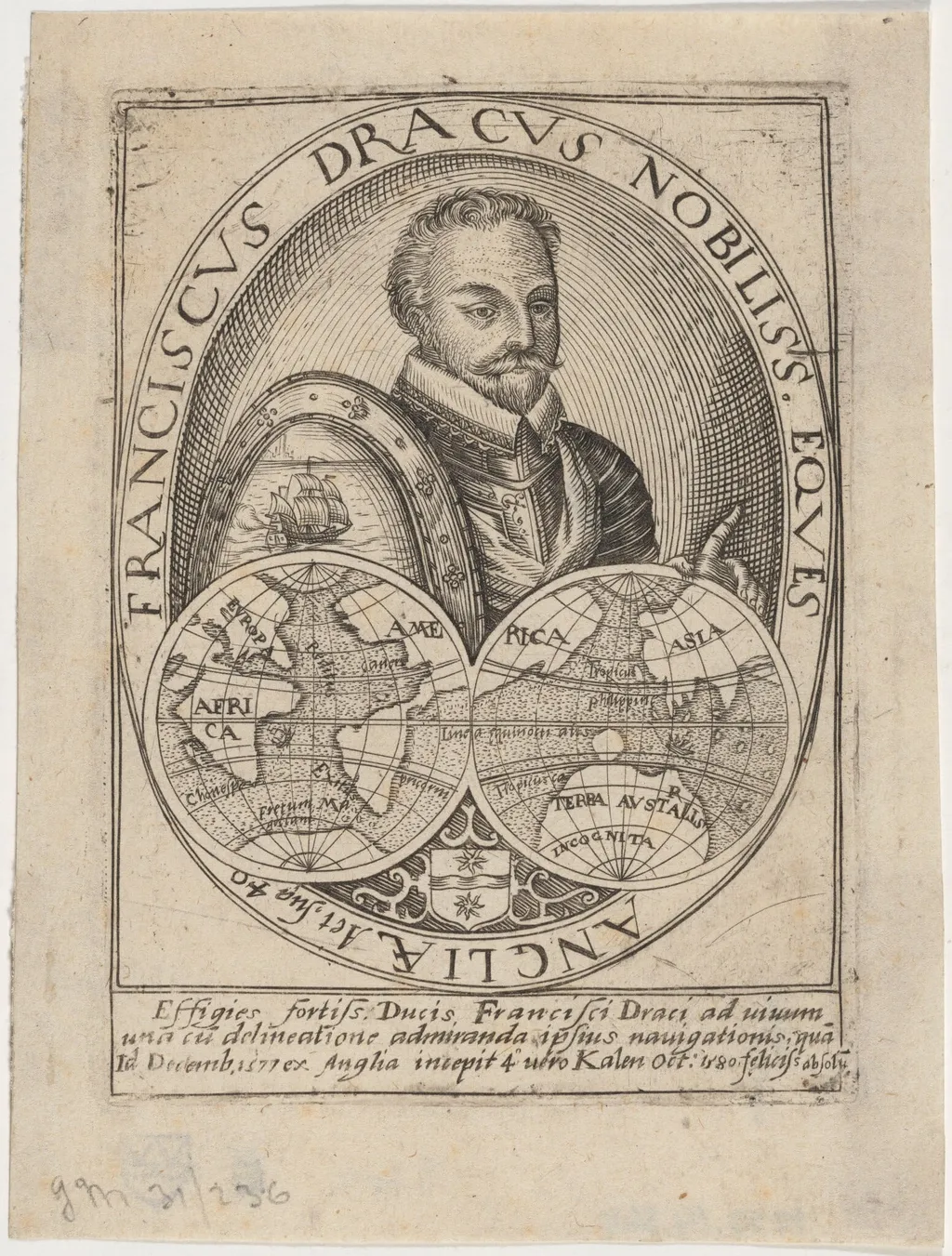
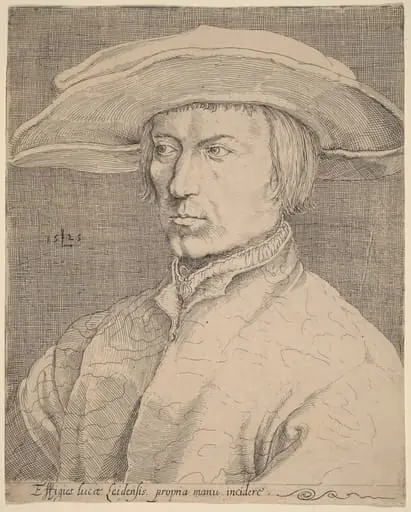
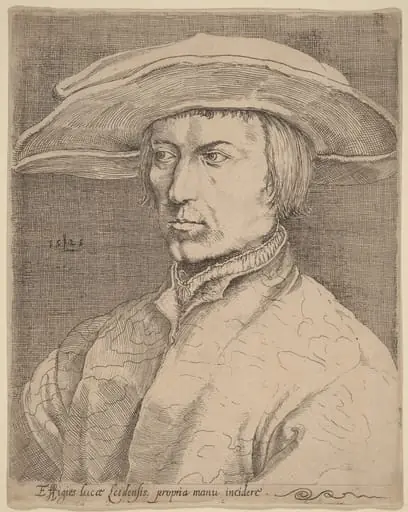
Sir Francis Drake is an ink print by the Renaissance artist Dutch 16th Century. It dates from 1550 and is held in the collection of the National Gallery of Art.
About this work
Overview
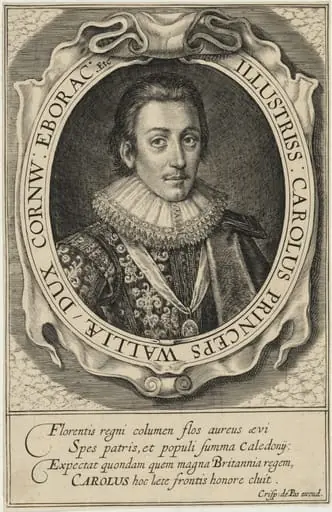
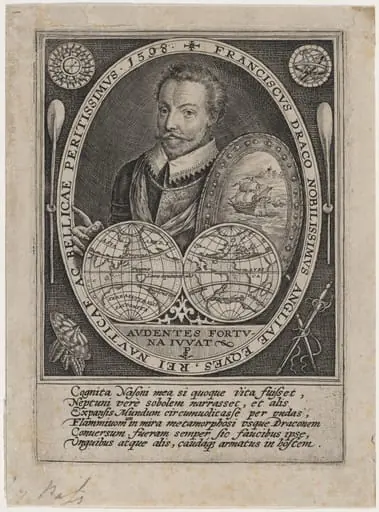
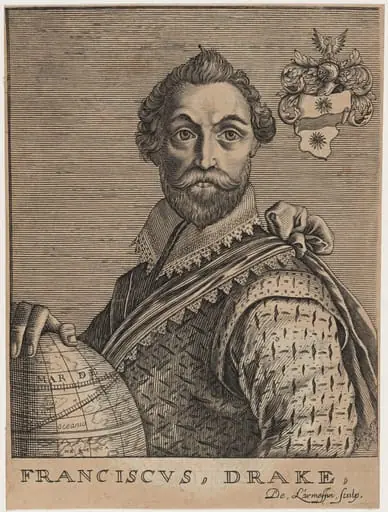
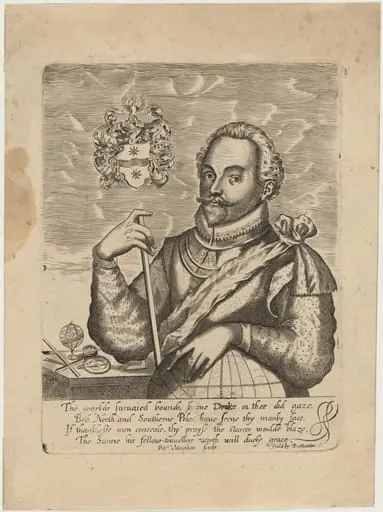
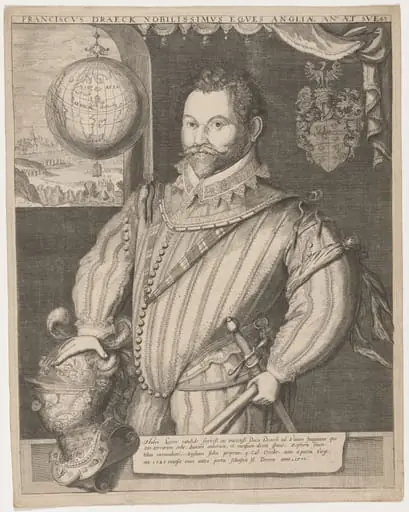
This black-and-white engraving depicts Sir Francis Drake, an English sea captain and explorer, in formal attire with a prominent ruff collar and beard.
This black-and-white engraving depicts Sir Francis Drake, an English sea captain and explorer, in formal attire with a prominent ruff collar and beard. The portrait is framed by two circular maps illustrating regions of Africa, Asia, and the Americas, emphasizing his global voyages. Latin inscriptions surrounding the image, including 'Nobilis' and 'Drake,' reflect the scholarly and heraldic conventions of early modern portraiture. The image was produced through the engraving process, involving incised lines on a metal plate inked and pressed onto paper.
Subject & Meaning
The portrait presents Drake not merely as an individual but as a symbol of English maritime ambition. The inclusion of global maps underscores his role in circumnavigating the world and expanding England’s reach beyond Europe. Latin text reinforces his status and legitimacy within contemporary European elite culture. The composition merges personal likeness with geographic achievement, positioning Drake as both a nobleman and an agent of imperial exploration during the Elizabethan era.
Technique & Style
Executed as a line engraving, the image relies on fine, incised marks on a copper plate to create tonal variation and detail. The beard, ruff, and maps are rendered with precise, controlled strokes, typical of 16th- and 17th-century printmaking. The circular maps are stylized rather than cartographically accurate, serving symbolic rather than navigational purposes. The layout is formal and symmetrical, aligning with conventions of portraiture meant for dissemination among educated audiences.
History & Provenance
The engraving likely dates to the late 16th or early 17th century, produced shortly after Drake’s death in 1596 to commemorate his legacy. Such prints were often circulated to celebrate national heroes and promote England’s maritime prowess. While the original artist is unconfirmed, the style aligns with workshop practices in London or Antwerp, where engraved portraits of explorers were commonly produced for collectors and institutions.
Context
During Drake’s lifetime, England was competing with Spain for dominance in global exploration and trade. His circumnavigation and raids on Spanish ships made him a celebrated figure at home and a villain abroad. Engravings like this served as propaganda, reinforcing national pride and legitimizing England’s colonial ambitions. The use of Latin and heraldic motifs reflects the period’s fusion of classical learning with emerging imperial identity.
Legacy
This engraving contributed to the enduring visual representation of Drake as a national hero. It helped standardize his image across publications and public memory, influencing later depictions in textbooks and monuments. Though not a unique portrait, its combination of personal likeness and symbolic geography made it a widely reproduced template, embedding his legacy into the visual culture of British exploration.
Artist & collection

Artist
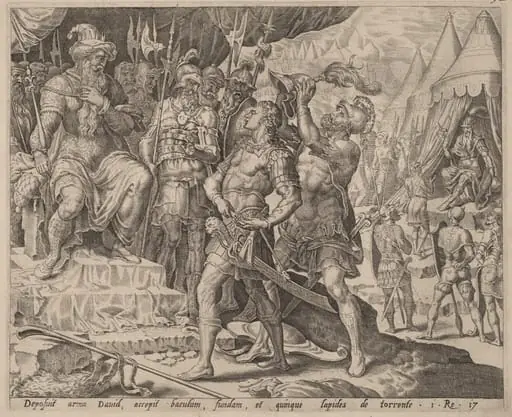
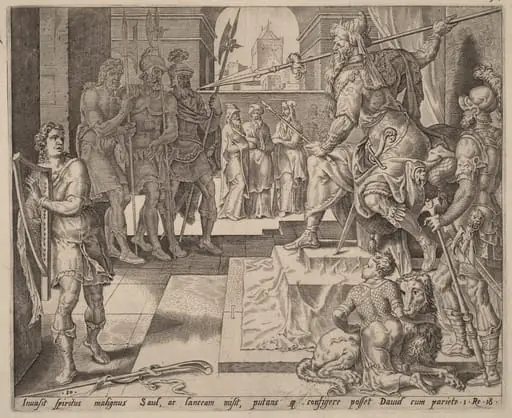
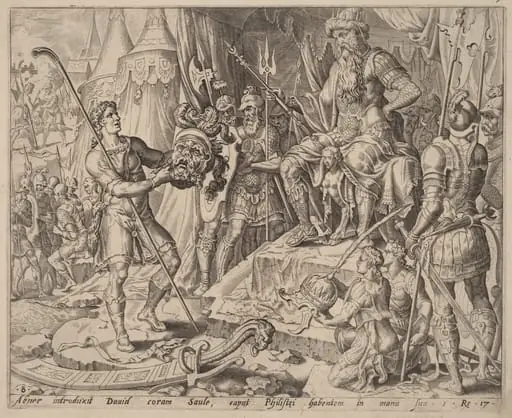
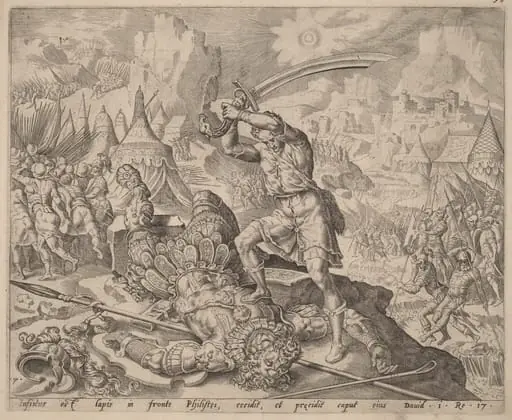
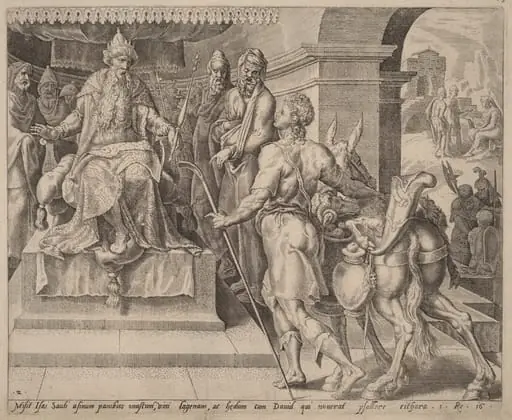
This Dutch artist made engravings in the 1550s that retell the biblical story of David and Saul.