Artwork
Sir Francis Drake
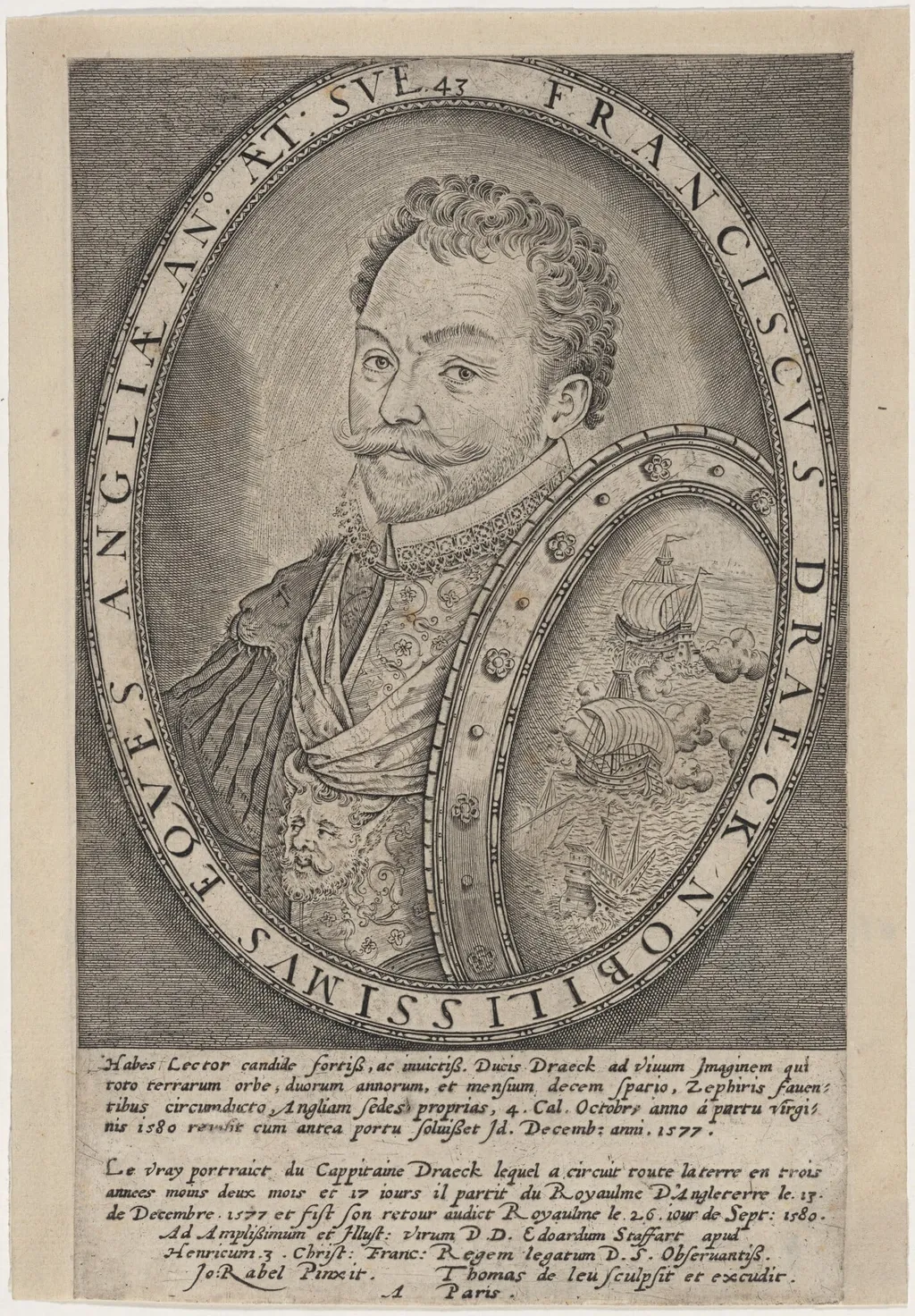
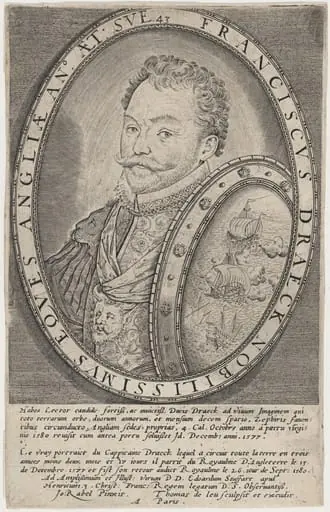
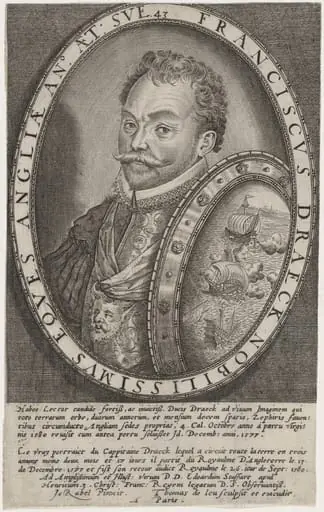
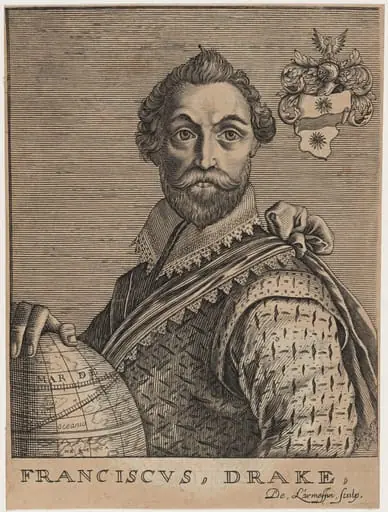
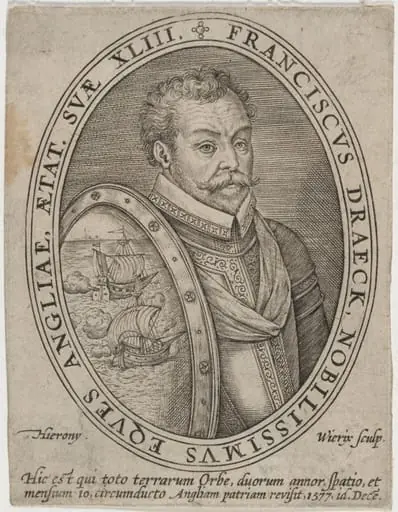
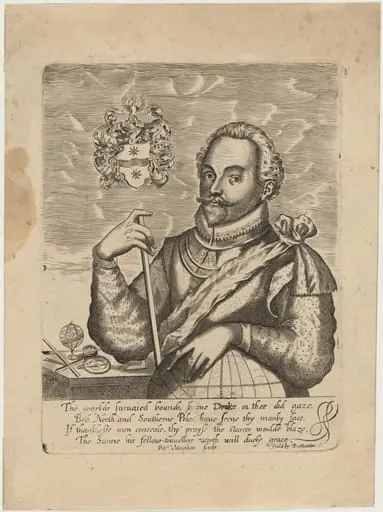
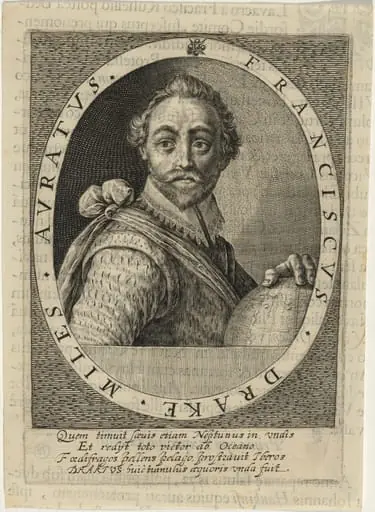
Sir Francis Drake is an ink print by the Renaissance artist Thomas de Leu. It dates from 1590 and is held in the collection of the National Gallery of Art.
About this work
Overview
Created around 1590 by Thomas de Leu, a Flemish-born French engraver, *Sir Francis Drake* is a black-and-white engraving portraying the renowned English explorer. The print reflects the late 16th century's fascination with maritime exploration and prominent figures in the field.
Subject & Meaning
The engraving depicts Sir Francis Drake with a serious demeanor, adorned with a luxurious coat and a round shield bearing a ship and symbolic motifs. A curved Latin banner encircles his head, while the inscription below identifies him as a world-traveling sailor, highlighting his achievements.
Technique & Style
As an engraving, the work showcases de Leu's skill in printmaking, characterized by detailed linework and textures achievable through this medium. The composition balances ornate elements, such as the coat and banner, with the simplicity of the black-and-white palette.
History & Provenance
Produced in the late 16th century, *Sir Francis Drake* is part of de Leu's body of work as a publisher, print dealer, and engraver. The engraver's name is prominently signed at the bottom of the print, attesting to his involvement.
Context
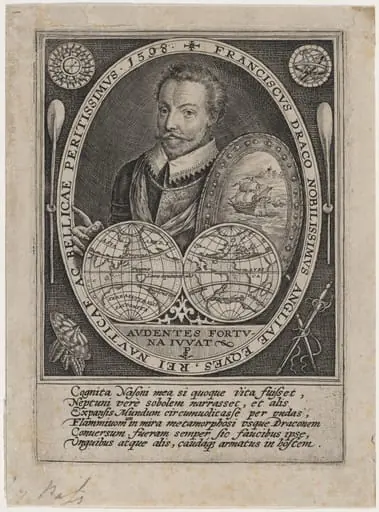
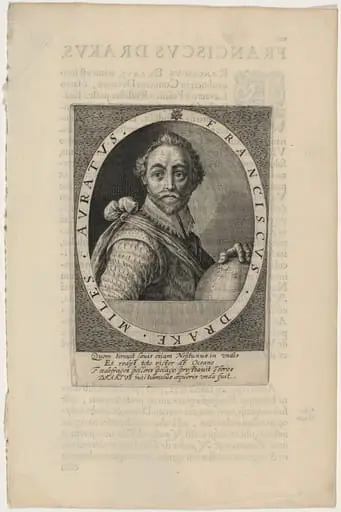
The engraving was created during a period of heightened interest in exploration and maritime endeavors. It likely catered to the contemporary audience's desire for images of celebrated explorers, contributing to the visual culture of the time.
Artist & collection

Artist
Thomas de Leu or Leeuw or Le Leup or Deleu (1560–1612) was a French engraver, publisher, and print dealer of Flemish origin.