Artwork
Francis Drake
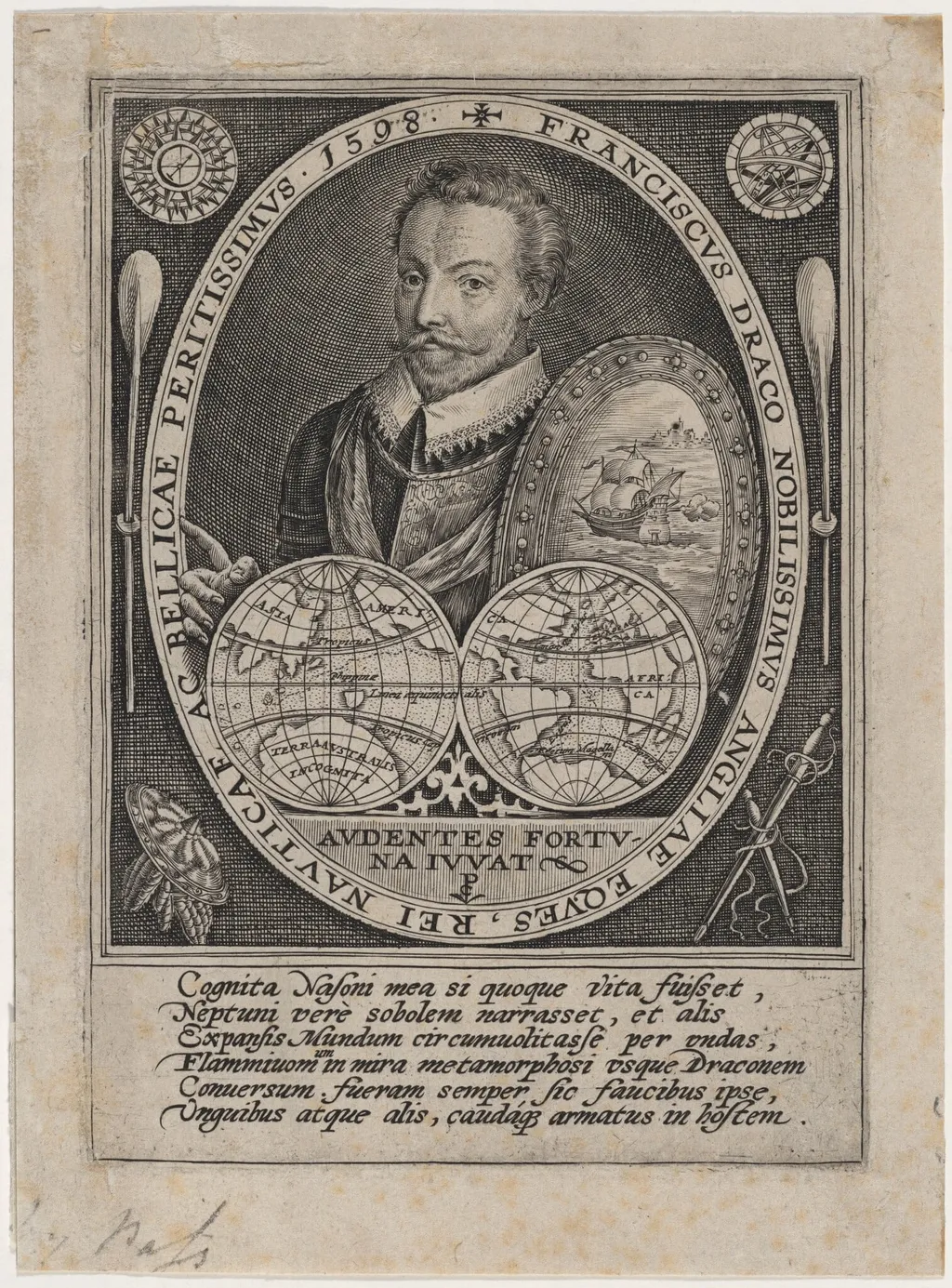
Francis Drake is an ink print by the Renaissance artist Crispijn van de Passe I. It dates from 1598 and is held in the collection of the National Gallery of Art.
About this work
Overview
Rendered in fine linear detail, the portrait combines portraiture with symbolic elements arranged symmetrically around the central figure.
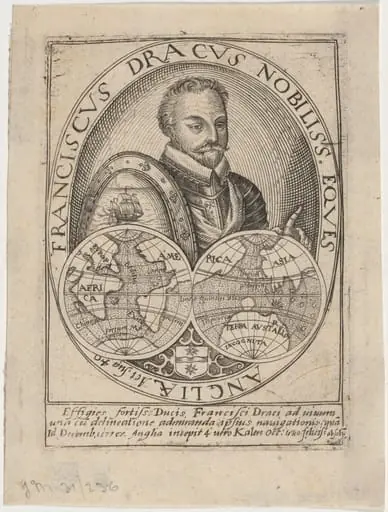
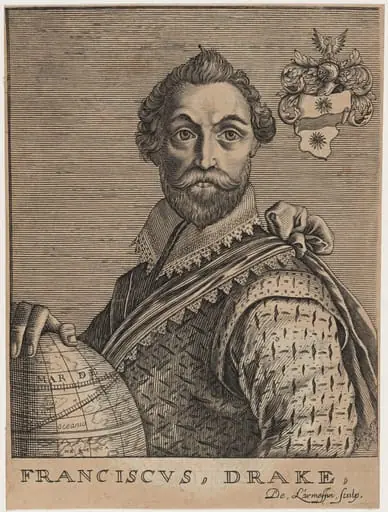
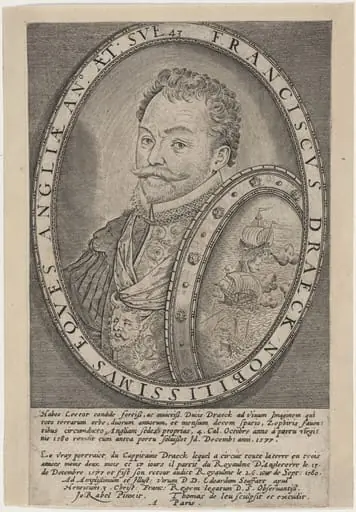
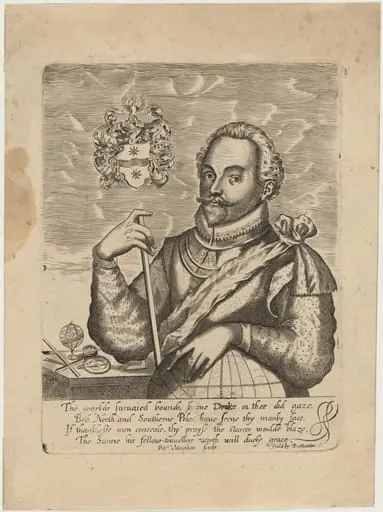
This 1598 engraving by Crispijn van de Passe I portrays the English navigator Francis Drake as a figure of exploration and authority. Rendered in fine linear detail, the portrait combines portraiture with symbolic elements arranged symmetrically around the central figure. The composition reflects the Renaissance tradition of embedding intellectual and imperial ideals within individual representation, using engraving to convey both likeness and allegory.
Subject & Meaning
Drake is depicted holding a globe, his left hand indicating its surface, suggesting mastery over global navigation. Surrounding him are tools of maritime enterprise—a ship, compass, and sword—each symbolizing exploration, direction, and conquest. The arrangement implies a controlled, ordered expansion of English influence. The portrait does not celebrate mere achievement but frames Drake as an agent of imperial knowledge, aligning personal renown with the broader ambitions of the Elizabethan age.
Technique & Style
The image is executed in the meticulous tradition of Northern European engraving, using fine cross-hatching and precise line work to model form and texture. The dark jacket, crisp white collar, and detailed globe demonstrate a high degree of technical control. Background elements are rendered with equal care, their circular placement enhancing compositional balance. The medium’s capacity for fine detail allowed van de Passe to convey both realism and symbolic clarity without color.
History & Provenance
Created in 1598, the engraving was produced during Drake’s posthumous rise as a national symbol, following his circumnavigation and role in the defeat of the Spanish Armada. Van de Passe, a Dutch engraver working in the Netherlands, likely based his image on existing portraits or descriptions. The print circulated widely across Europe, serving as a visual tool to disseminate Drake’s reputation beyond England, particularly among Protestant and maritime audiences.
Context
In the late 16th century, printed portraits of explorers functioned as propaganda and education tools. Drake’s image, surrounded by instruments of navigation and empire, reflects the era’s fusion of science, commerce, and national pride. The engraving aligns with broader trends in Northern European print culture, where cartographic and maritime themes were popularized through the press. It also mirrors the Protestant emphasis on individual agency and worldly achievement.
Legacy
The engraving became one of the most reproduced images of Drake in the early modern period, shaping visual perceptions of the explorer for generations. Its compositional structure influenced later depictions of naval figures, embedding the motif of the globe and tools of discovery into the iconography of empire. Though not a likeness in the modern photographic sense, it established a lasting symbolic template for maritime leadership.
Artist & collection

Artist
Crispijn van de Passe I (1564–1637) was an artist, born in Arnemuiden.