Artwork
Sheet of Seven Roundels with Portraits
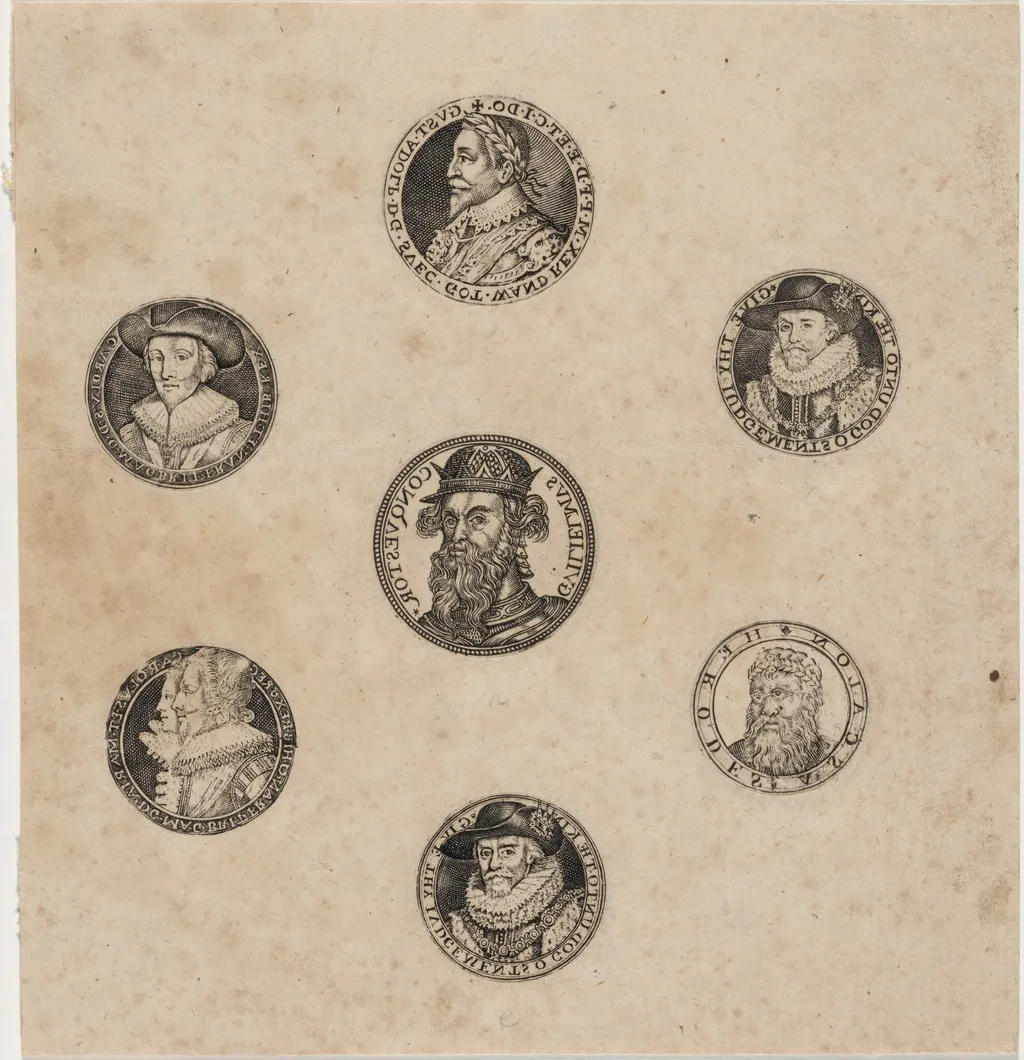
Sheet of Seven Roundels with Portraits is an ink print by the Renaissance artist Dutch 17th Century. It dates from 1621 and is held in the collection of the National Gallery of Art. The work consists of a sheet containing seven circular engravings, each portraying a distinct individual.
About this work
Overview
The work consists of a sheet containing seven circular engravings, each portraying a distinct individual. Rendered in black and white, the images derive from silver medal dies that were pressed onto paper, producing crisp, detailed likenesses. The composition presents each portrait within its own roundel, bordered by marginal inscriptions that are difficult to decipher.
Subject & Meaning
Each roundel depicts a solemn figure, distinguished by attire such as elaborate collars, hats, beards, and, in some cases, crowns or ornamental jewelry. The uniform seriousness of the expressions suggests a formal or commemorative purpose, likely intended to honor the persons represented.
Technique & Style
The images were created by engraving designs into silver medals and then transferring them to paper through a printing process. This method allowed for fine line work and precise rendering of facial features, clothing details, and ornamental elements, characteristic of metal-plate engraving in the period.
History & Provenance
The sheet is a print made from original silver medal dies, indicating it was produced to disseminate the likenesses beyond the limited number of medals themselves. The exact origin, date, and ownership trail are not recorded in the available information.
Context
Engraved portrait roundels were commonly used in the early modern era to circulate images of notable individuals, especially royalty, nobles, or officials. By reproducing medal designs on paper, the images could reach a broader audience while preserving the aesthetic of the original metal work.
Legacy
Works of this type illustrate the intersection of numismatic art and printmaking, demonstrating how portraiture could be replicated efficiently before the advent of photography. They provide valuable visual documentation of the attire and iconography associated with the depicted figures.
Artist & collection

Artist
This Dutch artist made small, sharp engravings and etchings—mostly portraits and sea battles—printed from metal plates.

![Coins [plate 8], by Jacques Callot](https://artifactworldgallery.com/img/jacques-callot--coins-plate-8--065000946c0ac004-w320.webp) Coins [plate 8]
Coins [plate 8]![Coins [plate 3], by Jacques Callot](https://artifactworldgallery.com/img/jacques-callot--coins-plate-3--48953d8de7930b03-w320.webp) Coins [plate 3]
Coins [plate 3]![Coins [plate 2], by Jacques Callot](https://artifactworldgallery.com/img/jacques-callot--coins-plate-2--b39cf66376b9d11b-w320.webp) Coins [plate 2]
Coins [plate 2]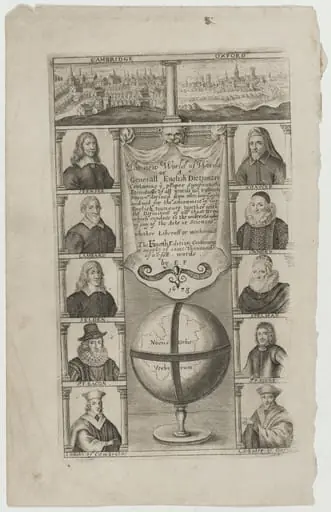 Title Page to The New World of Words or A General English Dictionary
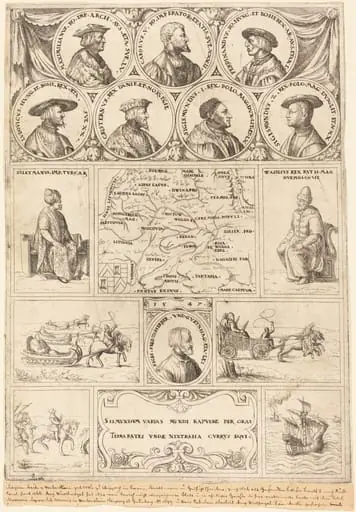 Map of Eastern Europe with portraits of Sigismund von Herberstein, Emperor Charles V, Emperor Maximilian I, Ferdinand of Hungary, Ludwig II of Hungary, Sigismund I of Poland, Sigismund II of Poland, Christian II of Denmark, Suleiman the Magnificent and Vasili III, Grand Prince of Moscow, and vignettes showing four journeys made by Herberstein
![Coins [plate 6], by Jacques Callot](https://artifactworldgallery.com/img/jacques-callot--coins-plate-6--e6dbedab3bd6bb44-w320.webp) Coins [plate 6]
Coins [plate 6]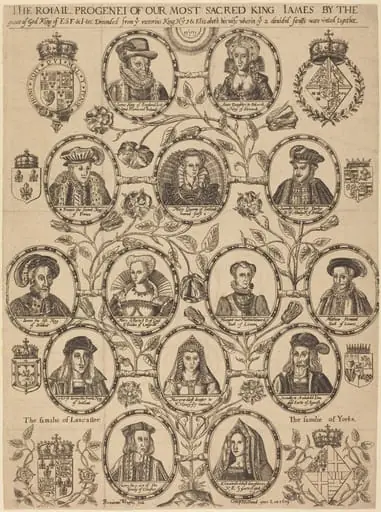 Royal Progeny of King James
![Charles I and Henrietta Maria Facing to the Left [right half], by Dutch 17th Century](https://artifactworldgallery.com/img/dutch-17th-century--charles-i-and-henrietta-maria-facing-to-the-left-right-half--1ba0d7b33cdf9484-w320.webp) Charles I and Henrietta Maria Facing to the Left [right half]
Charles I and Henrietta Maria Facing to the Left [right half]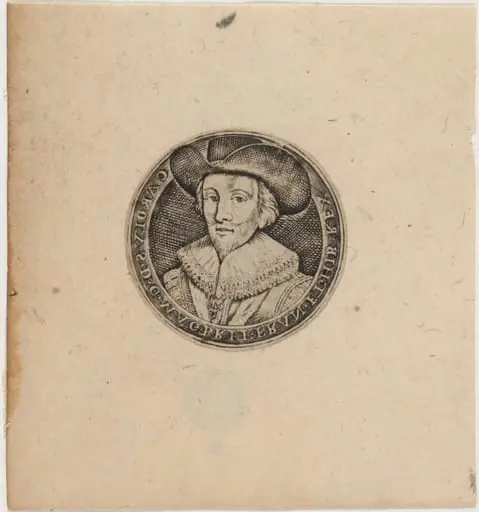 Charles I, King of England
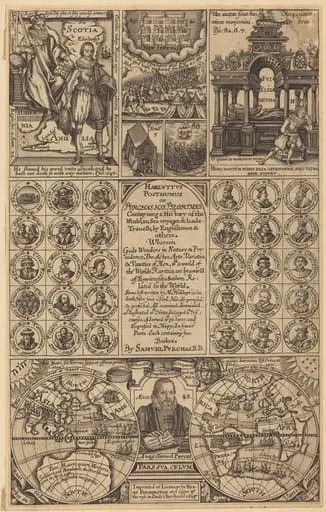 Frontispiece
![Coins [plate 7], by Jacques Callot](https://artifactworldgallery.com/img/jacques-callot--coins-plate-7--2d5636beaedc8195-w320.webp) Coins [plate 7]
Coins [plate 7]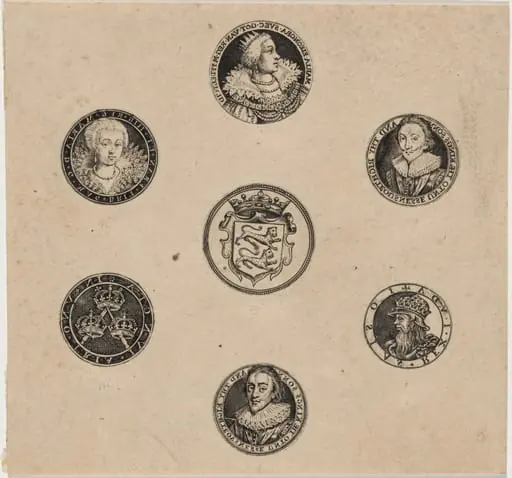 Sheet of Seven Roundels with Portraits