Artwork
Map of Eastern Europe with portraits of Sigismund von Herberstein, Emperor Charles V, Emperor Maximilian I, Ferdinand of Hungary, Ludwig II of Hungary, Sigismund I of Poland, Sigismund II of Poland, Christian II of Denmark, Suleiman the Magnificent and Vasili III, Grand Prince of Moscow, and vignettes showing four journeys made by Herberstein
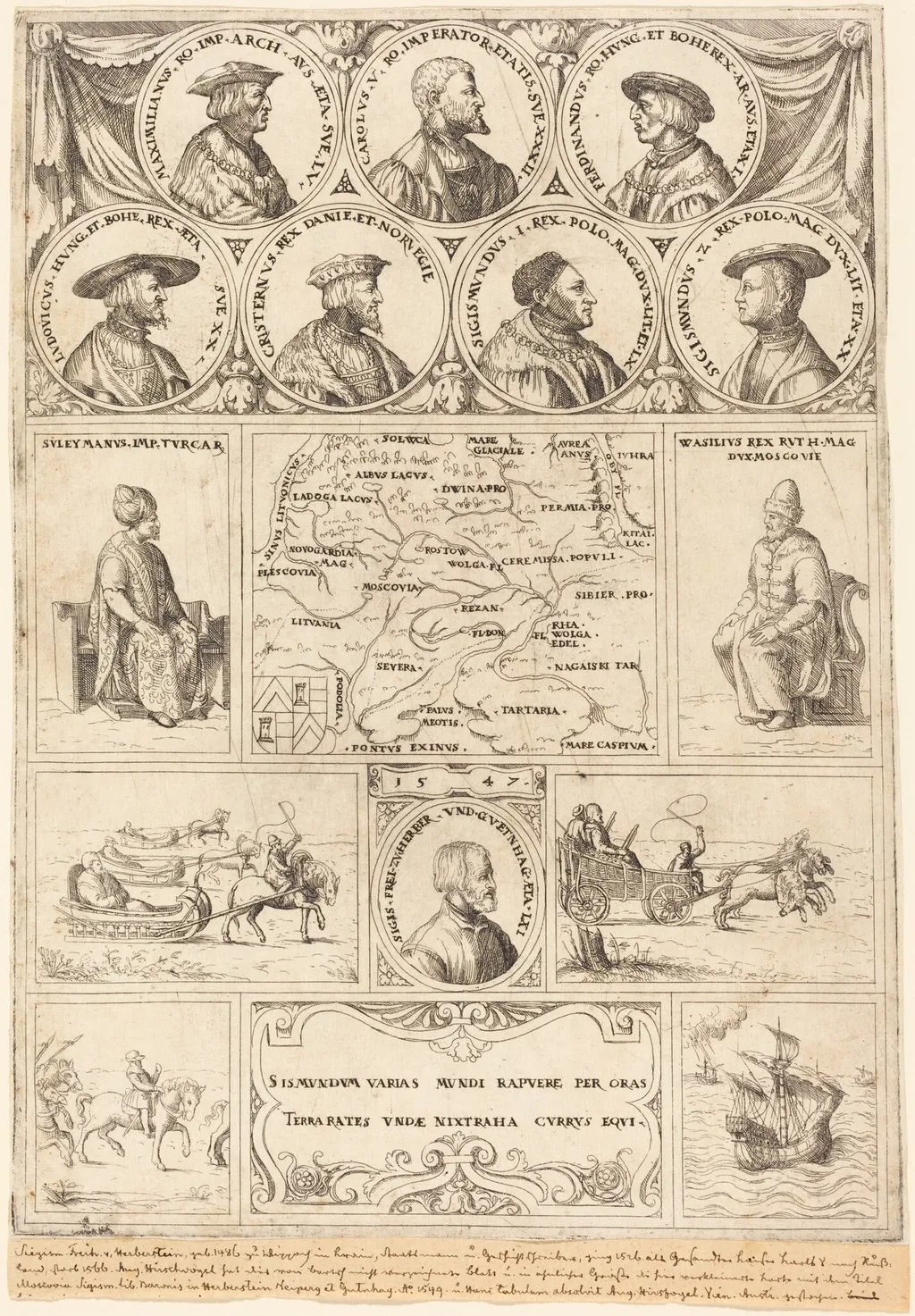
Map of Eastern Europe with portraits of Sigismund von Herberstein, Emperor Charles V, Emperor Maximilian I, Ferdinand of Hungary, Ludwig II of Hungary, Sigismund I of Poland, Sigismund II of Poland, Christian II of Denmark, Suleiman the Magnificent and Vasili III, Grand Prince of Moscow, and vignettes showing four journeys made by Herberstein is an ink print by the Renaissance artist Augustin Hirschvogel. It dates from 1548 and is held in the collection of the National Gallery of Art.
About this work
Overview
Designed as a single printed sheet, it reflects the intersection of political documentation and cartographic innovation in mid-16th-century Europe.
Created in 1548 by the German artist and cartographer Augustin Hirschvogel, this etching merges geographic detail with portraiture to depict Eastern Europe and its ruling figures. The work integrates a detailed map of the region with likenesses of ten contemporary monarchs and four miniature scenes illustrating journeys undertaken by diplomat Sigismund von Herberstein. Designed as a single printed sheet, it reflects the intersection of political documentation and cartographic innovation in mid-16th-century Europe.
Subject & Meaning
The portrait row features rulers from the Holy Roman Empire, Poland, Denmark, Muscovy, and the Ottoman Empire, emphasizing their political presence across a contested region. Below them, the map locates key cities and rivers, while the vignettes—sleigh, horseback, cart, and ship—visually trace Herberstein’s diplomatic travels. Together, the elements frame the map not merely as a geographic tool but as a record of imperial reach and cross-cultural contact during a period of shifting alliances.
Technique & Style
Executed in etching, the work relies on fine, incised lines to render both intricate facial features and topographic detail. Hirschvogel’s precision in line work reflects his training as a mathematician and his association with the Danube School, known for blending naturalism with decorative clarity. The small-scale travel scenes are rendered with economy, using minimal strokes to suggest movement and terrain, while the portraits maintain a formal, profiled convention common in imperial portraiture of the era.
History & Provenance
Produced in 1548, the print emerged during a period of heightened diplomatic activity between Central European courts and the Ottoman Empire. Hirschvogel, active in Nuremberg, likely created it for an audience interested in Eastern politics and exploration. Though its early ownership is undocumented, its survival in institutional collections suggests it was valued as a scholarly object, possibly used in courtly or academic settings to illustrate geopolitical dynamics of the time.
Context
In the mid-1500s, European powers sought to understand and negotiate with neighboring states, particularly Muscovy and the Ottoman Empire. Herberstein’s published travel accounts had recently circulated, fueling interest in the region. Hirschvogel’s print responds to this curiosity, synthesizing cartography, portraiture, and narrative imagery into a single visual reference. It reflects a broader trend of using prints to disseminate political and geographic knowledge beyond elite circles.
Legacy
As one of Hirschvogel’s few cartographic works, the print stands as a rare fusion of artistic skill and geopolitical documentation. It influenced later mapmakers who combined portraiture with territorial representation, though few replicated its dense, multi-layered format. Today, it remains a key example of how Renaissance prints served as tools of political education, bridging art, science, and diplomacy in an era of expanding European awareness of the East.
Artist & collection
Artist
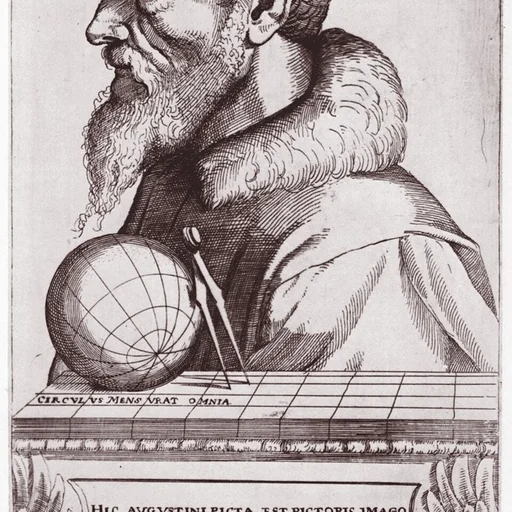
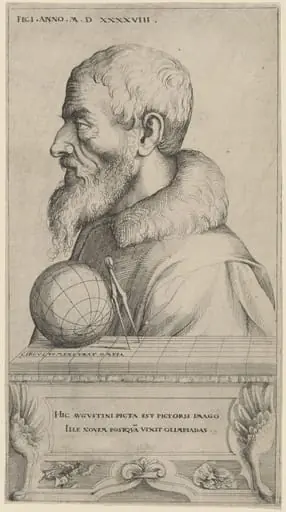
Augustin Hirschvogel (1503 – February 1553) was a German artist, mathematician, and cartographer known primarily for his etchings.

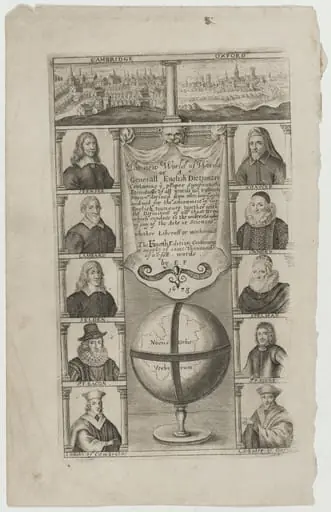 Title Page to The New World of Words or A General English Dictionary
 Frontispiece
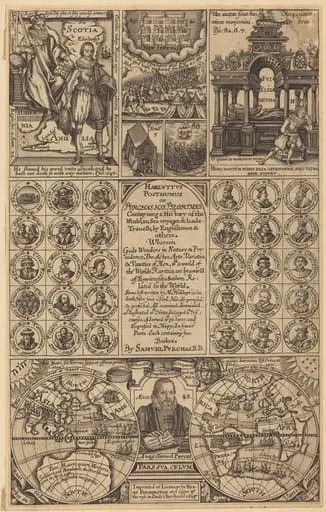 Frontispiece
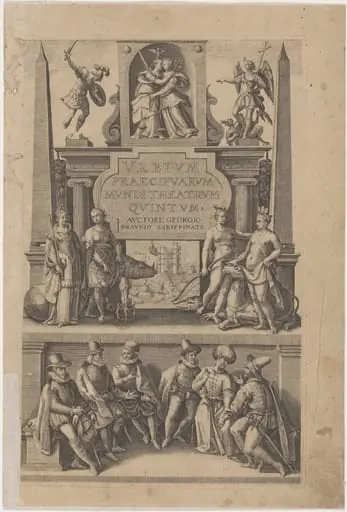 Title Page to Urbium Praecipuarum Mundi Theatrum Quintum
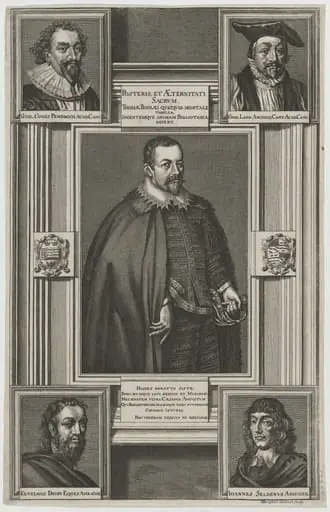 Thomas Bodley
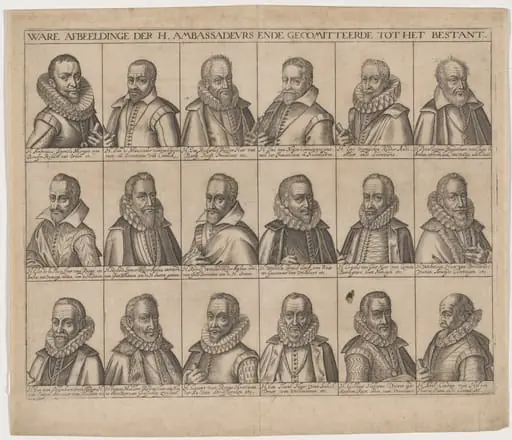 Dutch Ambassadors
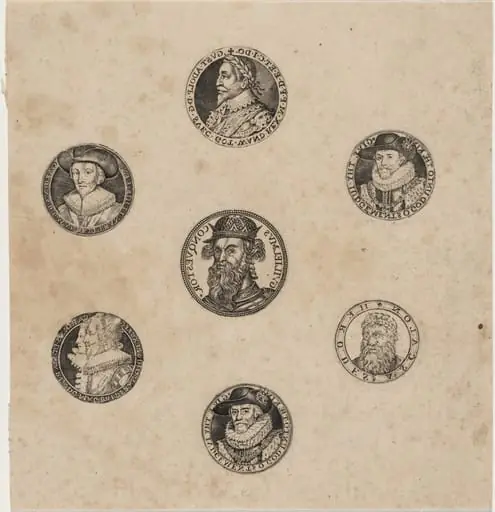 Sheet of Seven Roundels with Portraits
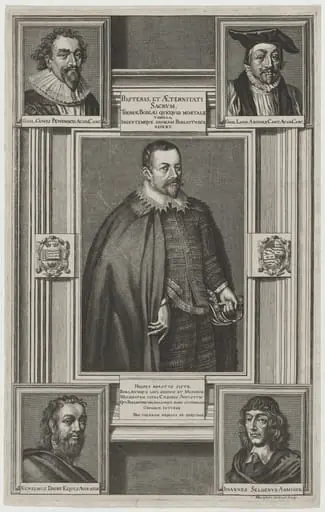 Sir Thomas Bodley, Founder of the Bodleian Library
![Coins [plate 8], by Jacques Callot](https://artifactworldgallery.com/img/jacques-callot--coins-plate-8--065000946c0ac004-w320.webp) Coins [plate 8]
Coins [plate 8]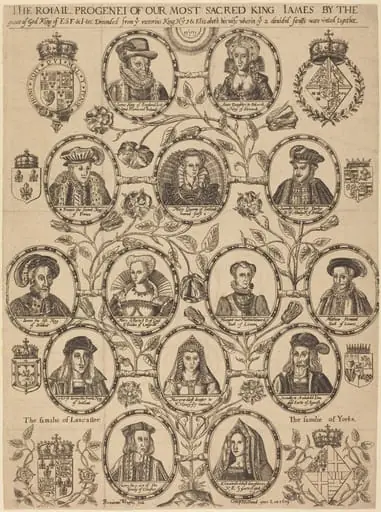 Royal Progeny of King James
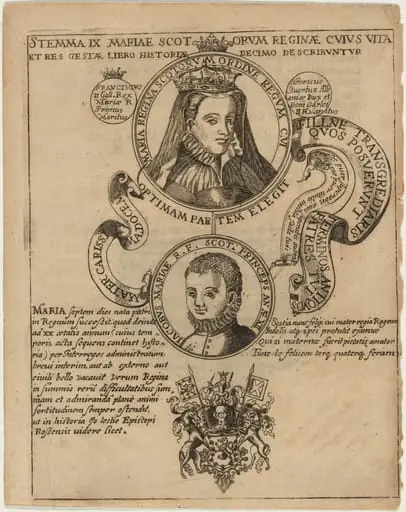 Mary Queen of Scots with James VI of Scotlandand I of England
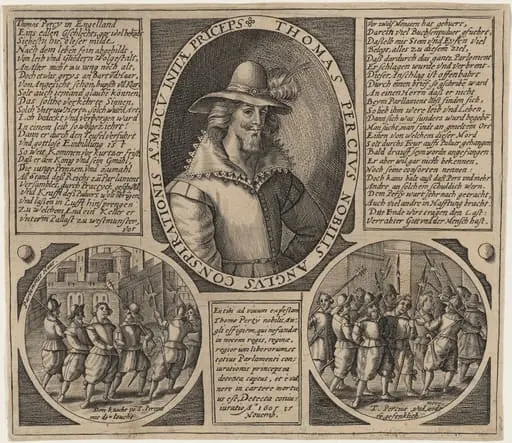 Thomas Percy and the Gunpowder Plot