Artwork
Design for a Ceiling: Aeolus Seated on Clouds Surrounded by Putti
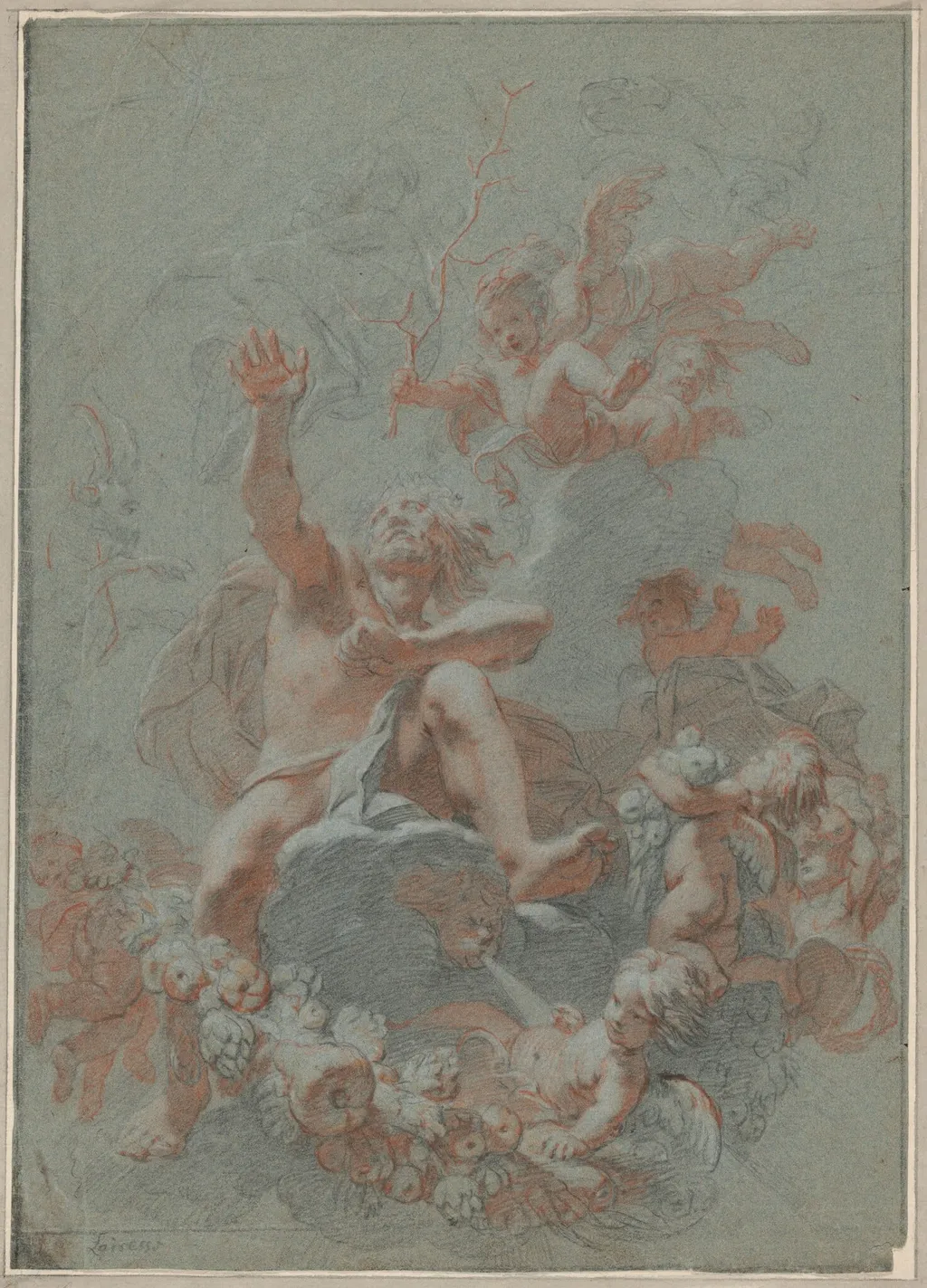
Design for a Ceiling: Aeolus Seated on Clouds Surrounded by Putti is a chalk drawing by the Baroque artist Dutch 18th Century. It dates from 1750 and is held in the collection of the National Gallery of Art. This drawing, executed in black, white, and red chalk on blue laid paper, presents a preparatory study for a ceiling composition.
About this work
Overview
This drawing, executed in black, white, and red chalk on blue laid paper, presents a preparatory study for a ceiling composition.
This drawing, executed in black, white, and red chalk on blue laid paper, presents a preparatory study for a ceiling composition. It depicts Aeolus, the mythological keeper of the winds, seated atop a cloud, surrounded by fluttering putti. The restrained palette and delicate handling of chalk suggest a focus on form and movement rather than finished detail, typical of studio sketches intended for larger decorative projects.
Subject & Meaning
Aeolus, identified by his staff and classical drapery, embodies control over the winds. The surrounding putti, in playful motion, symbolize the chaotic forces he governs. The upward gaze implies divine authority or cosmic observation. The scene functions as an allegory of natural order under divine or royal patronage, common in Baroque ceiling schemes meant to elevate the viewer’s perception of power.
Technique & Style
The artist employed chalks with varying hardness to modulate tone and texture: black for definition, red for warmth, and white for highlights against the blue paper’s cool ground. The soft blending and loose contours create a sense of atmospheric motion, while the blue substrate enhances luminosity. This method reflects a Baroque preference for dynamic composition and tactile surface variation over rigid linearity.
History & Provenance
The drawing likely originated in a workshop associated with a major Baroque decorative project, possibly in Italy or France during the late 17th or early 18th century. Its survival as a standalone sheet suggests it was valued for its compositional clarity rather than as a mere draft. No definitive record of its original commission or early ownership has been established.
Context
Ceiling decorations in this period often featured mythological figures to convey political or religious themes through allegory. Aeolus, though a minor deity, was frequently invoked in royal or ecclesiastical interiors to symbolize control over nature’s elements. This sketch aligns with broader trends in decorative arts where preparatory drawings were refined into frescoes or stucco reliefs by teams of artists.
Legacy
As a well-preserved example of a studio study, the drawing offers insight into the working methods of Baroque designers. It illustrates how mythological subjects were translated from preliminary sketches to monumental formats. While not attributed to a major master, it remains a representative artifact of the collaborative, process-driven nature of large-scale decorative programs in early modern Europe.
Artist & collection

Artist
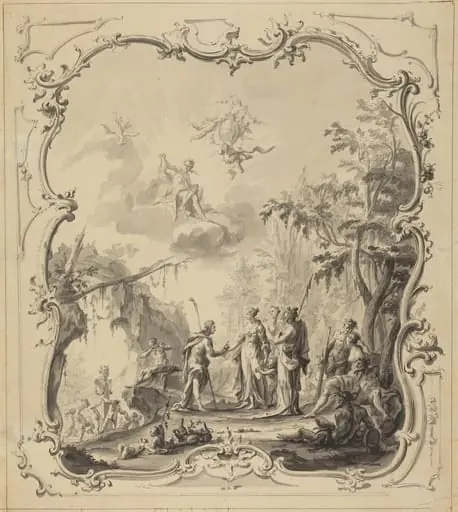
This 18th-century Dutch artist left behind three precise drawings on paper. *The Judgment of Paris* shows a mythological scene in pen and ink with gray shading. *Design for a Ceiling: Aeolus Seated on Clouds Surrounded…

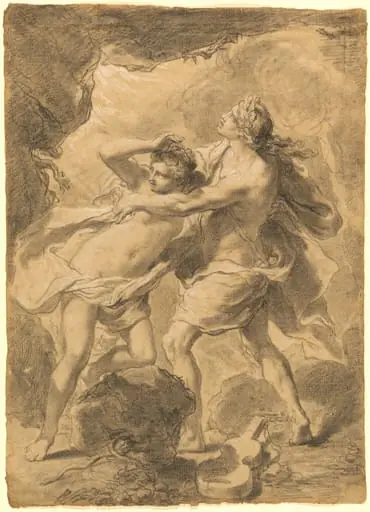 Orpheus and Eurydice
 Antwerp Blessed with Abundance
 Ecstasy of a Saint
 Aurora and Cephalus
 Angels and Putti
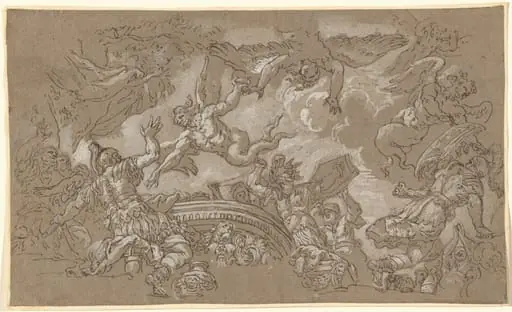 The Harpies Attacking Aeneas and His Companions
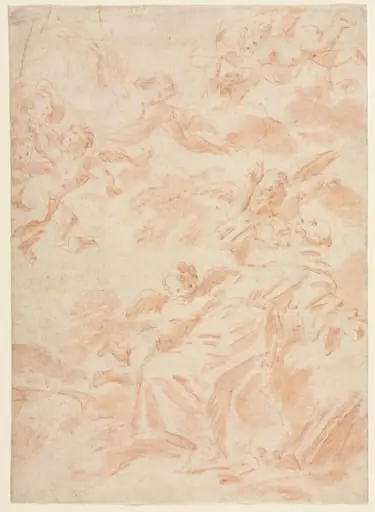 The Stigmatization of Saint Francis
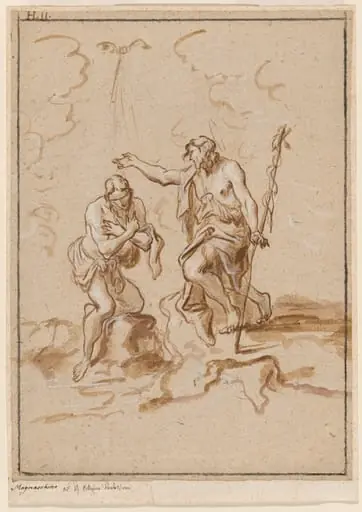 The Baptism of Christ
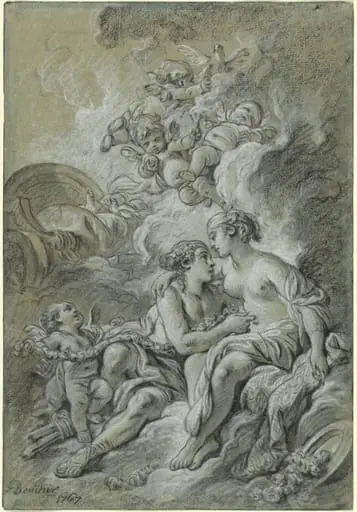 Venus appuyee sur son cher Adonis ...
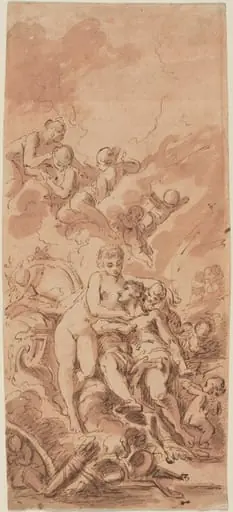 Venus at the Forge of Vulcan
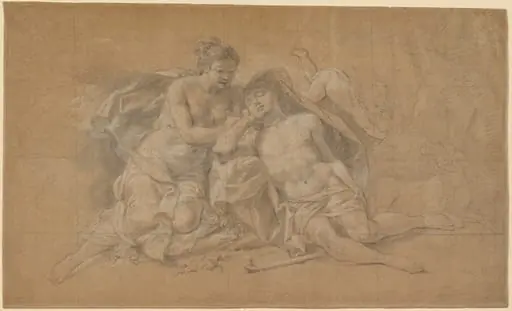 Diana and Endymion
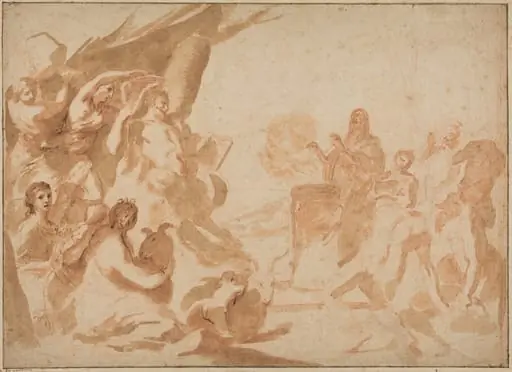 A Sacrifice to Pan