Artwork
Henry II as the Victorious Saint Michael
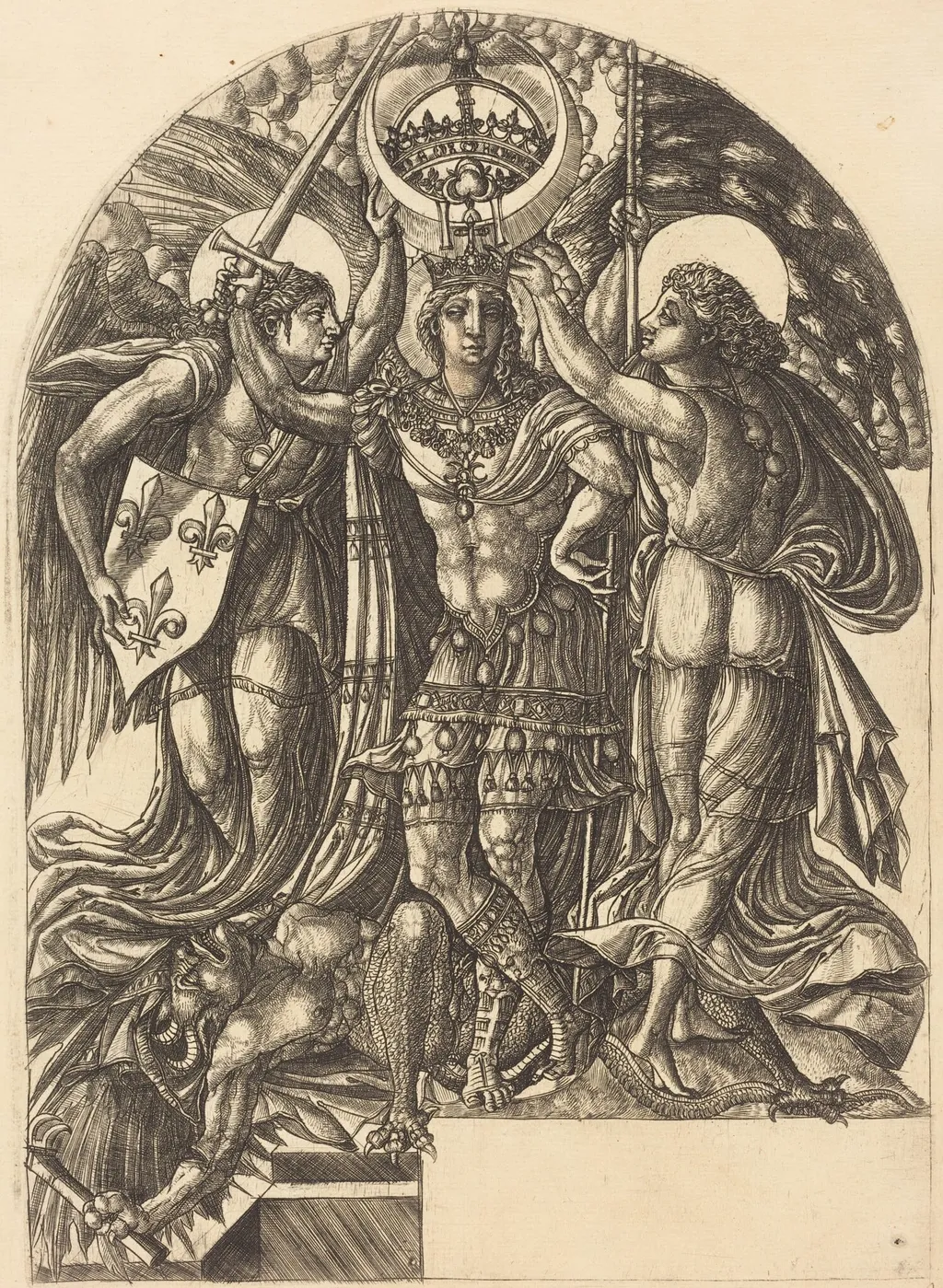
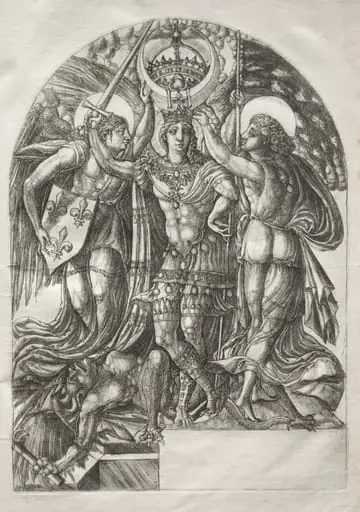
Henry II as the Victorious Saint Michael is an ink print by the Renaissance artist Jean Duvet. It dates from 1548 and is held in the collection of the National Gallery of Art.
About this work
Overview
Created around 1548 by Jean Duvet, this engraving on laid paper portrays King Henry II of France as the archangel Michael, triumphing over evil.
Created around 1548 by Jean Duvet, this engraving on laid paper portrays King Henry II of France as the archangel Michael, triumphing over evil. Duvet, a French goldsmith and printmaker, produced approximately 73 engraved plates during his career, distinguished by their dense compositions and fervent spiritual tone. This work exemplifies his singular approach within 16th-century French printmaking, blending royal iconography with apocalyptic symbolism in a highly personal visual language.
Subject & Meaning
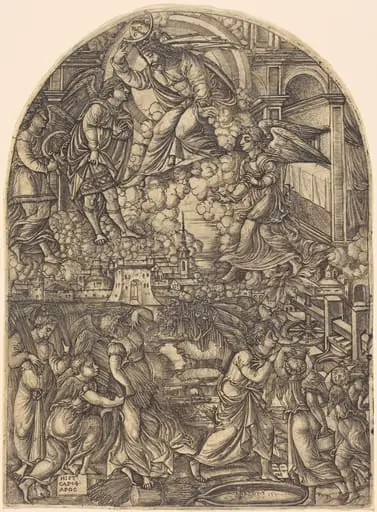
Henry II is depicted not as a monarch in courtly attire, but as the celestial warrior Saint Michael, clad in armor bearing the fleur-de-lis. A divine crown hovers above his head, reinforcing his divine mandate. Flanking him are two figures—one wielding a sword, the other a staff—suggesting celestial aid in his earthly rule. The imagery aligns Henry with divine justice, positioning his reign as part of a sacred struggle against chaos, a common theme in Catholic propaganda of the era.
Technique & Style
Duvet employed fine, incised lines to render intricate details of armor, drapery, and musculature, using cross-hatching to model form and depth. The composition is tightly packed, with no empty space, creating a sense of overwhelming spiritual intensity. Unlike the balanced harmony of Italian Renaissance prints, Duvet’s style is marked by expressive distortion and emotional urgency, reflecting a more medieval sensibility that anticipates later visionary artists.
History & Provenance
Duvet worked primarily in France, likely in Paris or Lyon, and his prints were circulated among elite collectors and clergy. Though few impressions survive, this engraving is documented in early 16th-century collections. Its subject suggests it was commissioned or endorsed by the French court to bolster Henry II’s image during a period of religious conflict. The print’s survival in institutional holdings indicates its recognized significance within French print culture.
Context
In mid-16th-century France, the monarchy increasingly aligned itself with divine authority amid the Protestant Reformation and civil unrest. Duvet’s imagery reflects this political-theological climate, where rulers were portrayed as God’s instruments. His work diverged from Italianate elegance, drawing instead from northern European traditions and French Gothic aesthetics, offering a uniquely French response to the visual language of power and faith.
Legacy
Duvet’s engravings, once overlooked, are now recognized for their emotional rawness and idiosyncratic vision. His fusion of royal portraiture with religious allegory influenced later French graphic art, particularly in the use of symbolic figuration. Though not widely reproduced in his time, his prints have been reevaluated in modern scholarship as vital expressions of French identity during a turbulent religious age.
Artist & collection

Artist
Jean Duvet (1485 – after 1562) was a French Renaissance goldsmith and engraver, now best known for his engravings.