Artwork
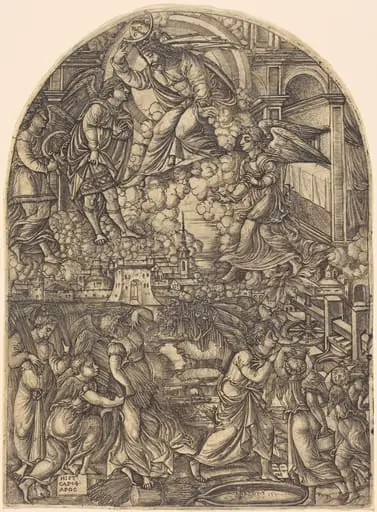
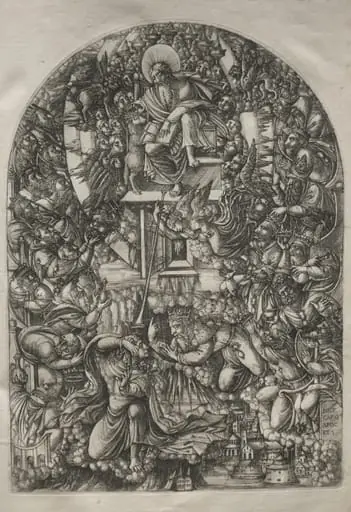
Saint John Summoned to Heaven
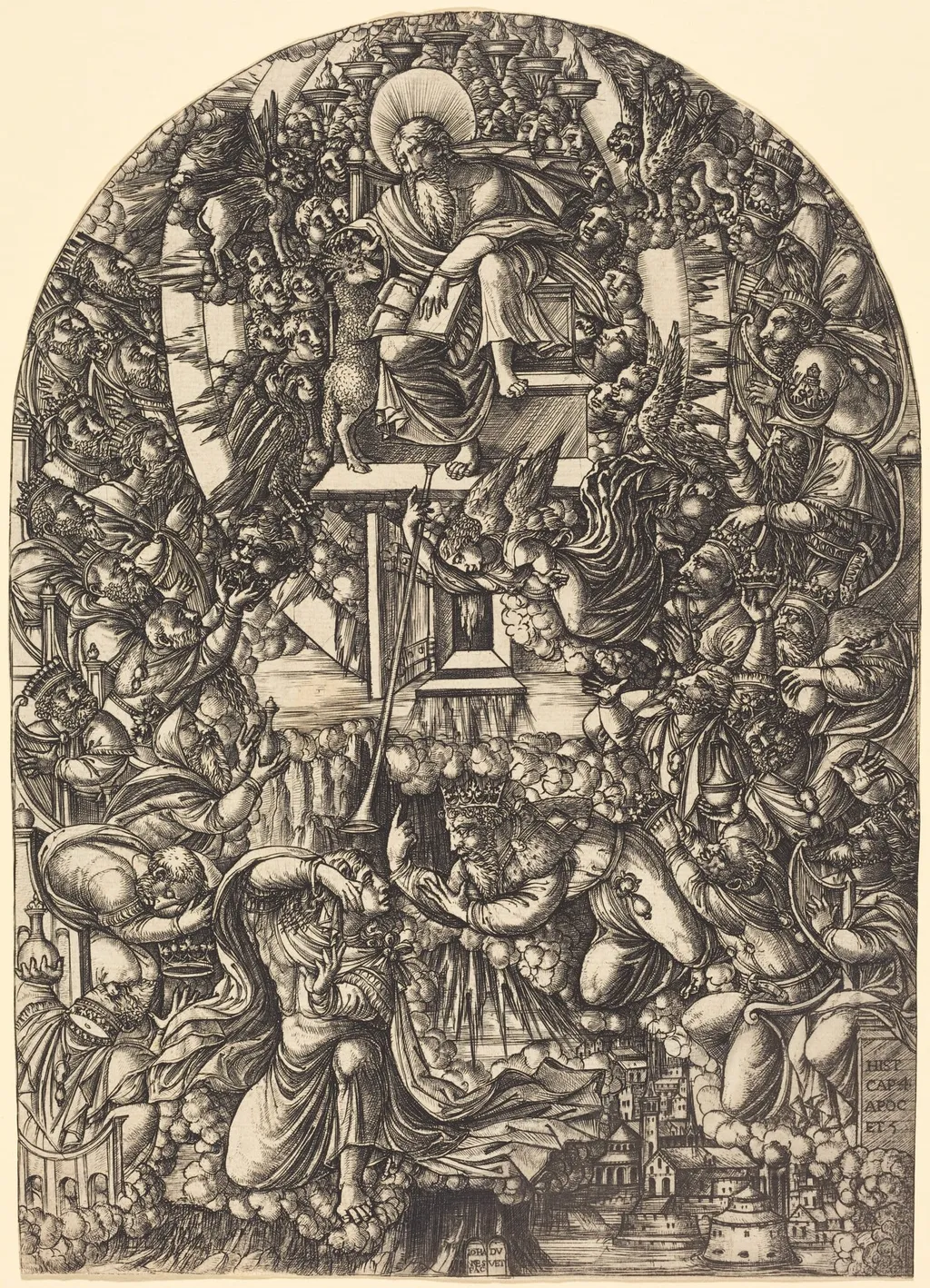
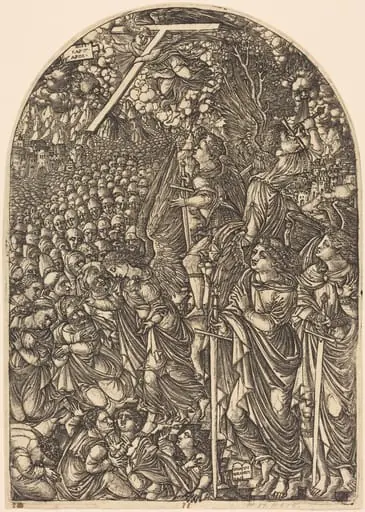
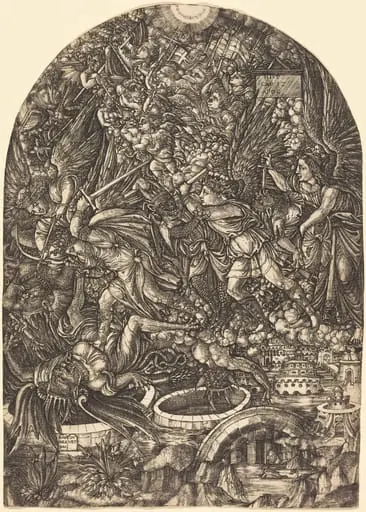
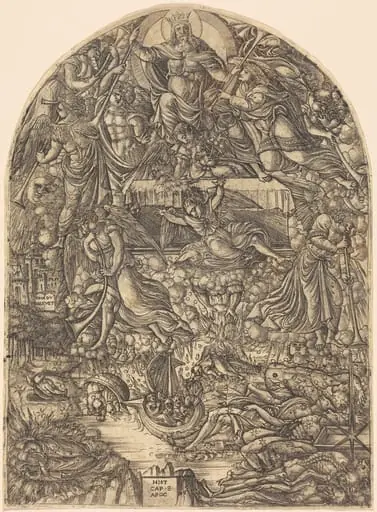
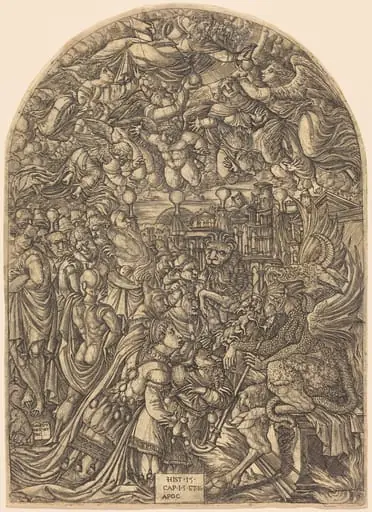
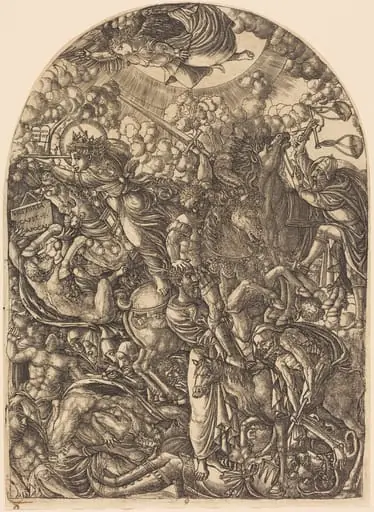
Saint John Summoned to Heaven is an ink print by the Renaissance artist Jean Duvet. It dates from 1551 and is held in the collection of the National Gallery of Art.
About this work
Overview
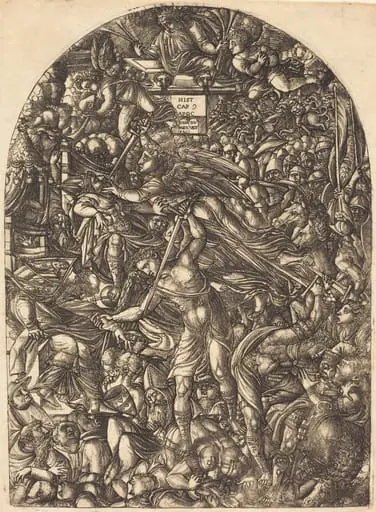
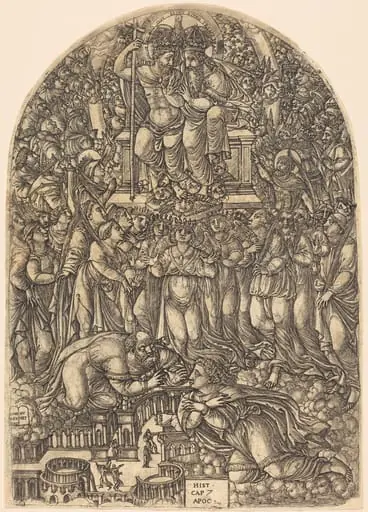
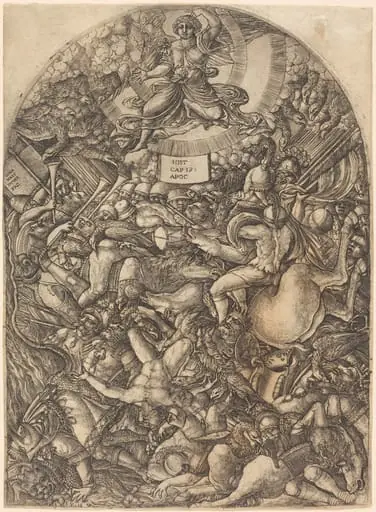
Saint John Summoned to Heaven is a 1551 engraving on laid paper by Jean Duvet, a prominent French Renaissance goldsmith and printmaker. This work exemplifies Duvet's characteristic style, marked by densely populated compositions and profound religious themes.
Subject & Meaning
The engraving depicts a pivotal religious moment: Saint John's ascension to heaven. A haloed, robed figure rises centrally, surrounded by angels and clouds, while a multitude of figures below react with varied gestures. The scene conveys spiritual ascent amidst earthly presence.
Technique & Style
Duvet employed cross-hatching to achieve depth and shading, evident in the sharp lines and deep shadows throughout. The composition is characteristic of his naive yet expressive approach, blending detailed, tiny figures with dramatic movement.
History & Provenance
Created in 1551, this engraving is part of Duvet's oeuvre of approximately 73 prints, securing his status as the first major French printmaker. Active from around 1485 to after 1562, Duvet's work is noted for its immediacy and expressive freedom.
Context
Duvet's emphasis on religious subjects and his distinctive artistic voice draw historical comparisons to later artists like William Blake, highlighting a shared intensity in spiritual themes and expressive technique.
Artist & collection

Artist
Jean Duvet (1485 – after 1562) was a French Renaissance goldsmith and engraver, now best known for his engravings.