Artwork
The Winepress of the Wrath of God
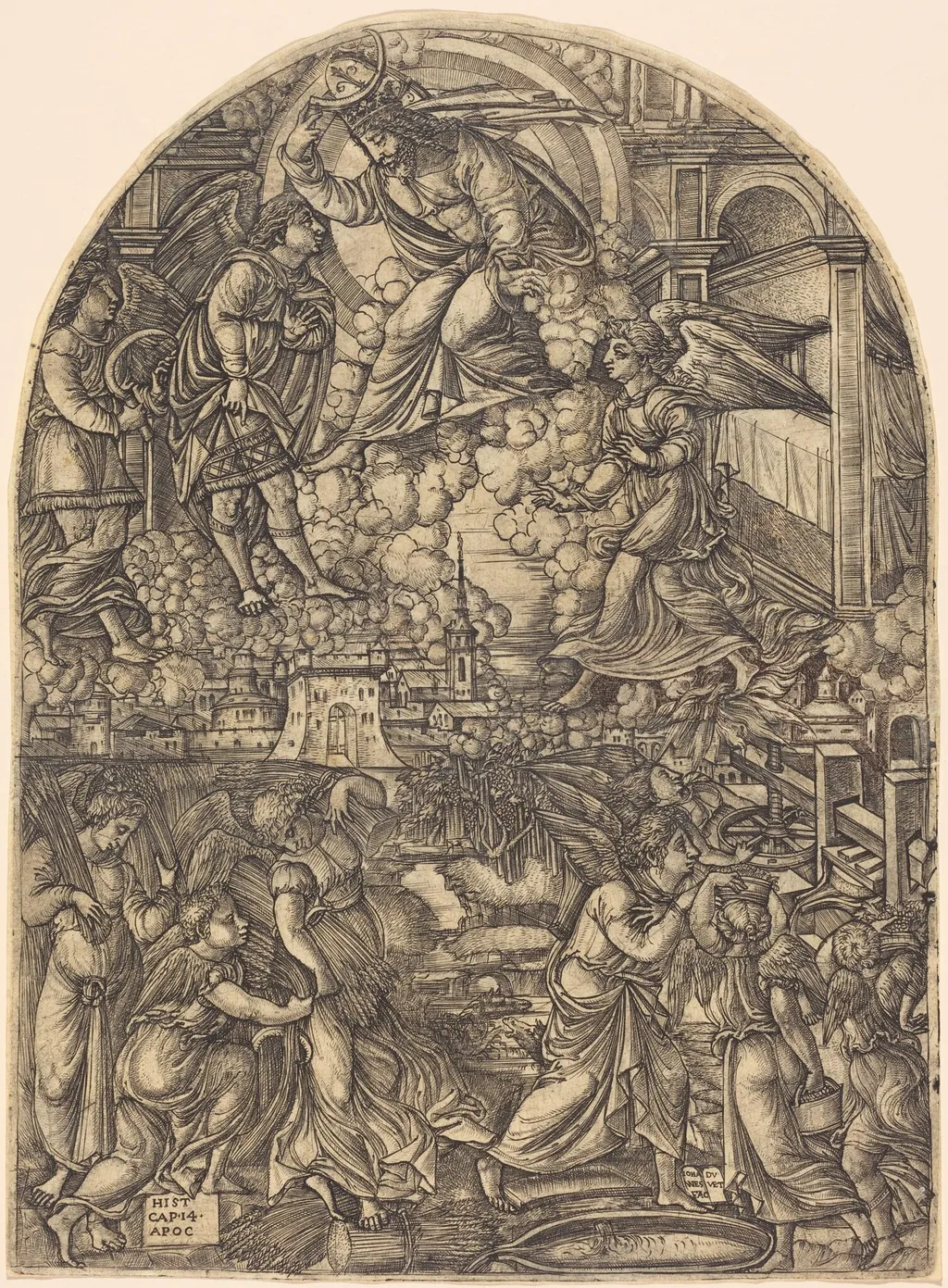
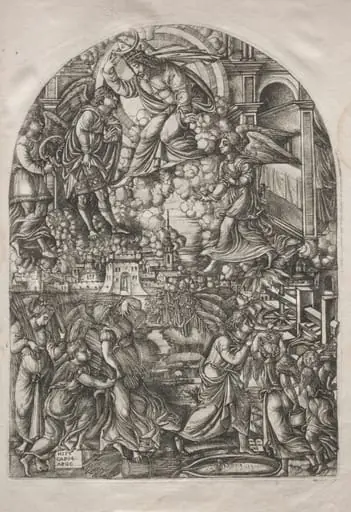
The Winepress of the Wrath of God is an ink print by the Renaissance artist Jean Duvet. It dates from 1551 and is held in the collection of the National Gallery of Art.
About this work
Overview
One of the earliest significant French printmakers, he created approximately 73 plates, all marked by intricate linework and a highly individualized aesthetic.
Jean Duvet, a 16th-century French goldsmith and engraver, produced *The Winepress of the Wrath of God* in 1551 as a detailed engraving on laid paper. One of the earliest significant French printmakers, he created approximately 73 plates, all marked by intricate linework and a highly individualized aesthetic. His work diverged from the classical ideals of the Renaissance, favoring dense, emotionally charged scenes rendered with meticulous precision.
Subject & Meaning
The image depicts a apocalyptic vision drawn from Revelation, where a celestial figure crushes grapes in a massive press, symbolizing divine judgment. Below, terrified figures scramble amid burning structures, while storm-laden skies loom overhead. The scene conveys theological dread and the inevitability of divine retribution, reflecting the religious anxieties of post-Reformation Europe. Duvet’s interpretation is intensely personal, blending biblical narrative with visionary intensity.
Technique & Style
Duvet employed fine, layered cross-hatching to model form and generate depth on a metal plate, then transferred the image to paper through pressure. Every inch of the composition is densely packed with lines, leaving no empty space. The sharp, controlled strokes create texture, shadow, and motion without color or wash. His method required exceptional hand control, resulting in a tactile, almost claustrophobic visual rhythm unique among his contemporaries.
History & Provenance
Created in 1551, the print emerged from Duvet’s workshop in France during a period of religious upheaval. Few of his prints were widely distributed, and most surviving impressions are held in institutional collections. The work was not widely reproduced in his lifetime, and its significance grew posthumously as scholars recognized its departure from mainstream Renaissance aesthetics and its anticipatory qualities toward later visionary art.
Context
Duvet worked in a France transitioning between medieval piety and Renaissance humanism. While Italian artists pursued harmony and proportion, Duvet embraced emotional intensity and symbolic complexity. His imagery resonated with Protestant and Catholic anxieties alike, though he remained outside dominant artistic circles. His prints were likely owned by private collectors or clergy, not the general public, due to their complexity and limited circulation.
Legacy
Though largely overlooked during his lifetime, Duvet’s work gained renewed attention in the 19th and 20th centuries for its raw expressiveness and psychological depth. His dense, visionary compositions prefigured the Romantic and Symbolist traditions, drawing comparisons to later artists like William Blake. Today, his prints are studied for their technical rigor and as rare examples of French printmaking that resisted classical norms in favor of personal revelation.
Artist & collection

Artist
Jean Duvet (1485 – after 1562) was a French Renaissance goldsmith and engraver, now best known for his engravings.

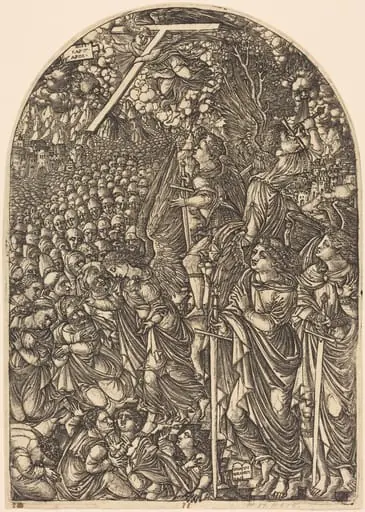
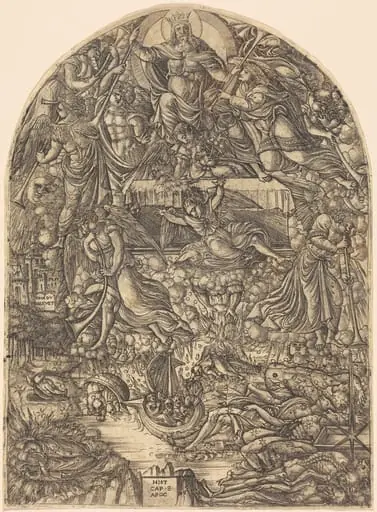 The Opening of the Seventh Seal
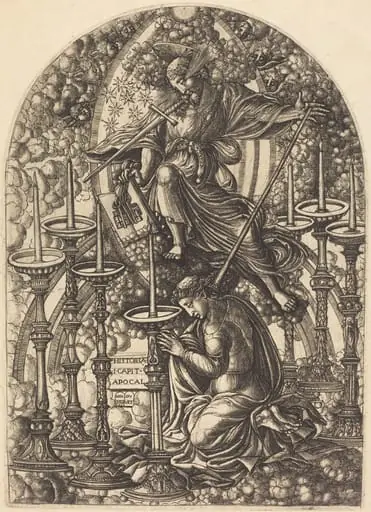
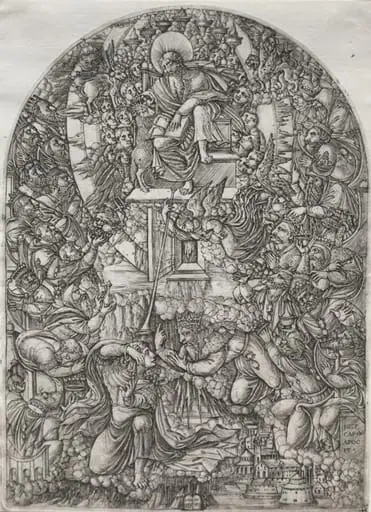 The Apocalpse: St. John Summoned to Heaven
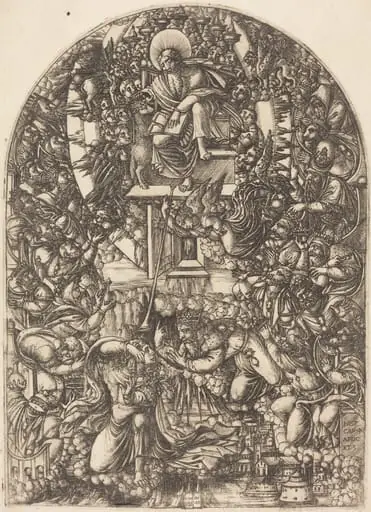 Saint John Summoned to Heaven
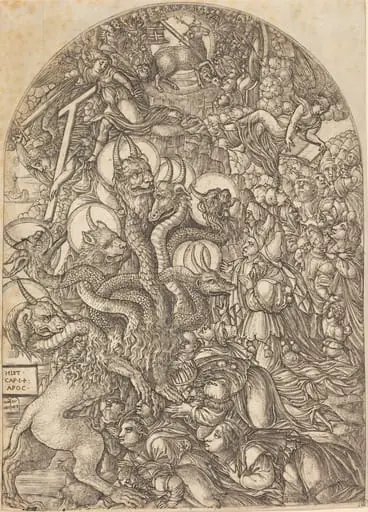
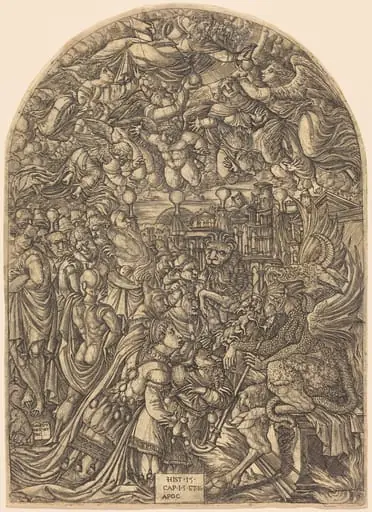 The Dragon and the Beast
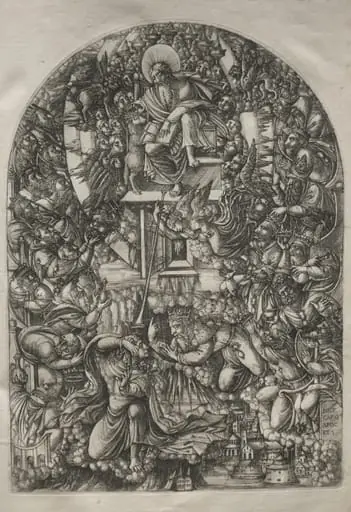 The Apocalypse: St. John Summoned to Heaven
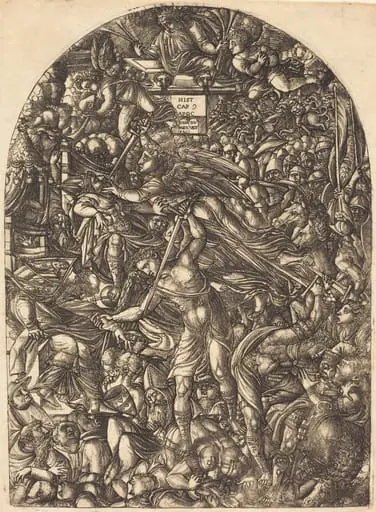 The Angel Sounding the Sixth Trumpet
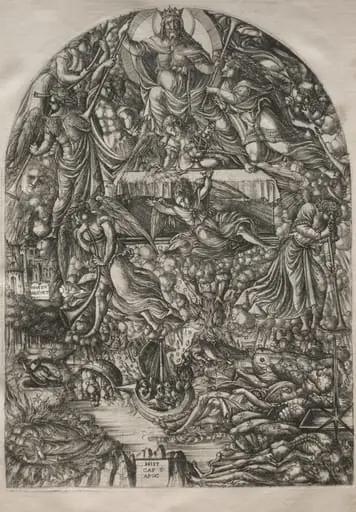 The Apocalypse: The Opening of the Seventh Seal
 Saint John Sees the Four Horsemen
 The Apocalypse: The Winepress of the Wrath of God