Artwork
Bride
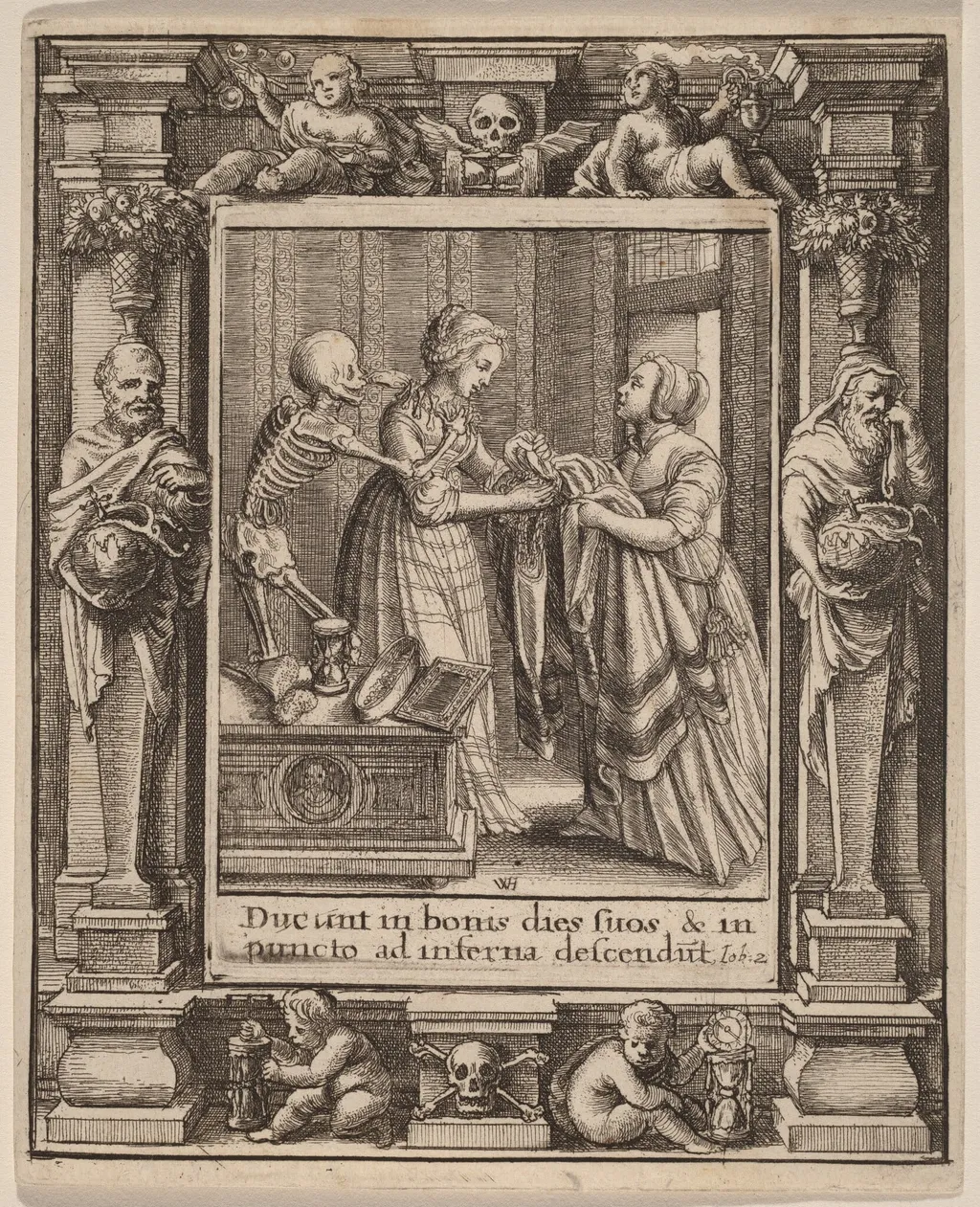
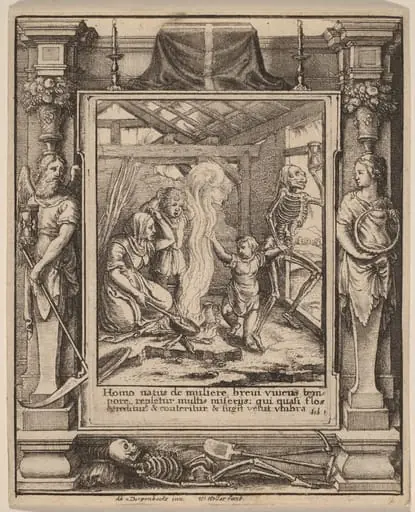
Bride is an ink print by the Baroque artist Wenceslaus Hollar. It dates from 1651 and is held in the collection of the National Gallery of Art.
About this work
Overview
The surrounding border bears the title *Democritus and Heraclitus*, linking the central scene to philosophical contemplation.
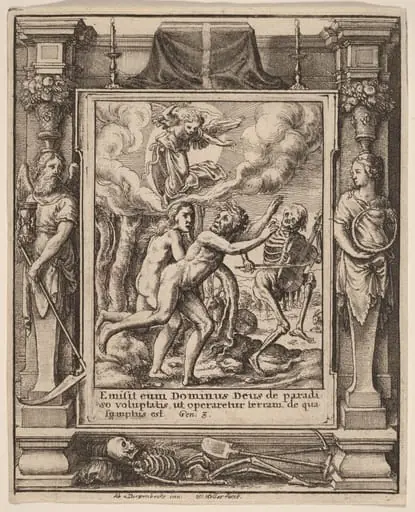
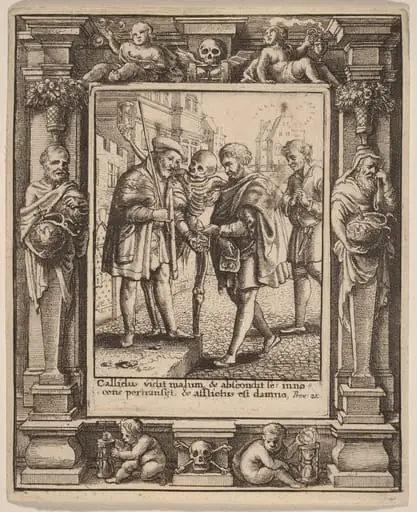
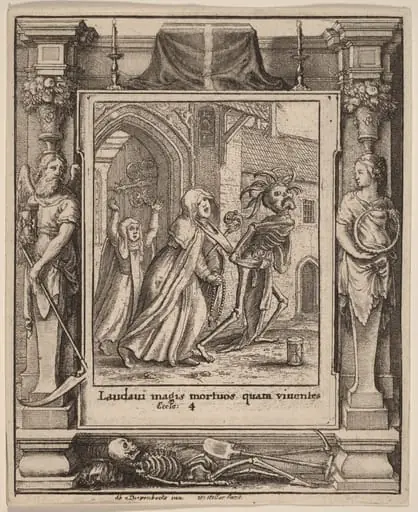
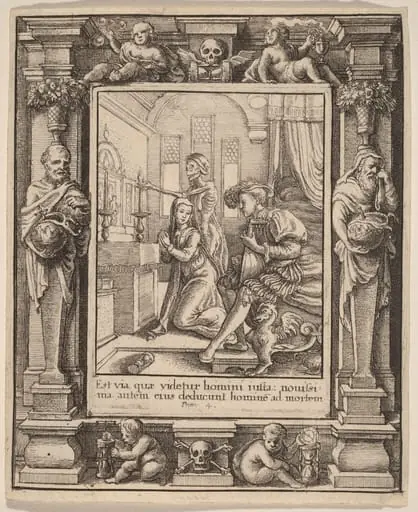
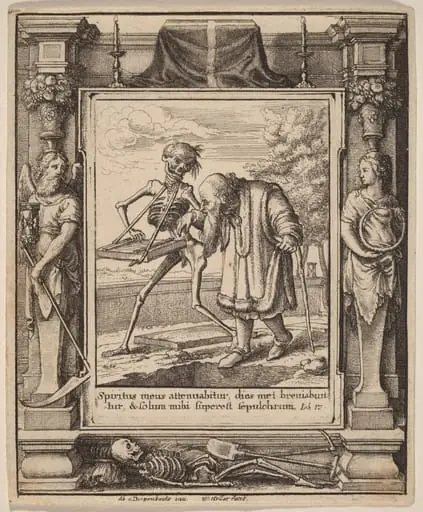
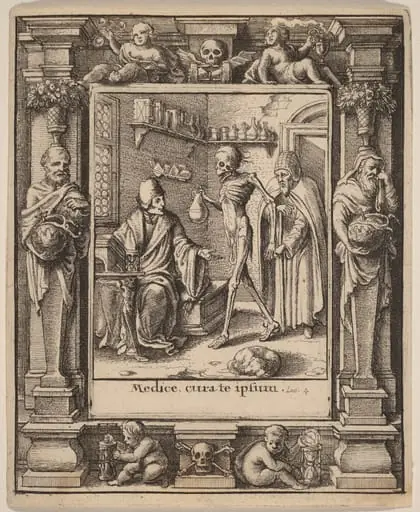
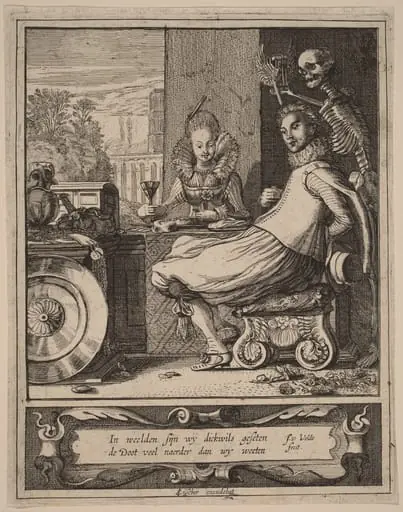
Created in 1651, *Bride* is an etching by Wenceslaus Hollar, a Czech-born printmaker who worked chiefly in England. The image presents a solitary woman in a flowing bridal gown offering an object to a male figure, set within a complex allegorical frame that includes a skeletal figure, skulls, broken hourglasses, and cherubic attendants. The surrounding border bears the title *Democritus and Heraclitus*, linking the central scene to philosophical contemplation.
Subject & Meaning
The central couple appears to enact a ritual exchange, while the skeletal figure and macabre symbols of skulls and shattered hourglasses foreground mortality. Above, cherubs clutch hourglasses and a book, reinforcing themes of time and knowledge. A Latin inscription at the bottom translates as “God leads the good into good things, and at the point they descend into hell,” suggesting a moral warning about the fleeting nature of earthly pleasures and the consequences of moral choices.
Technique & Style
Hollar employed the etching process, incising lines into a copper plate with acid to achieve fine detail. His characteristic precision is evident in the intricate rendering of fabrics, the delicate anatomy of the cherubs, and the stark realism of the skeletal figure. The composition balances dense symbolic elements with a clear central narrative, reflecting Hollar’s skill in integrating observational detail with allegorical content.
History & Provenance
The work was produced during Hollar’s most prolific period in England, when he was documenting both urban scenes and imaginative subjects. The plate bears the reference number Pennington 233A, indicating its inclusion in the Pennington Library’s catalog of Hollar’s prints. *Bride* has remained in the public domain, appearing in several collections of 17th‑century prints and serving as a reference point for studies of Hollar’s allegorical oeuvre.
Context
The border’s title, *Democritus and Heraclitus*, invokes the ancient philosophers known for their contrasting views on change and permanence, echoing the etching’s juxtaposition of life and death. In the mid‑17th century, such moralizing imagery was common in print culture, used to convey didactic messages to a broad audience. Hollar’s work thus reflects contemporary concerns with transience, virtue, and the interplay between earthly celebration and inevitable decay.
Artist & collection
Artist
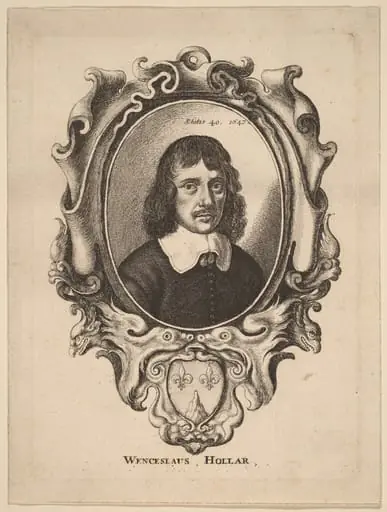
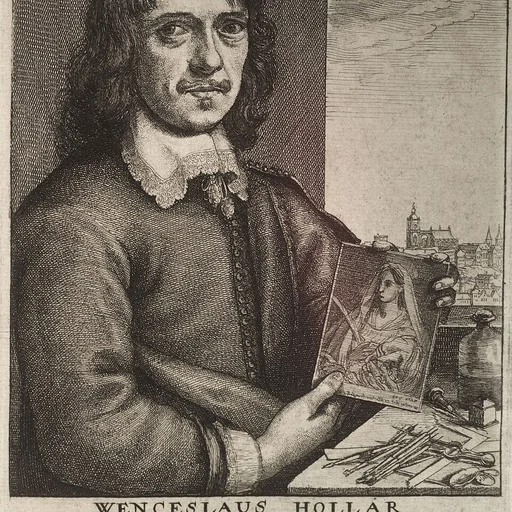
Wenceslaus Hollar (Czech: Václav Hollar (Czech pronunciation: ), German: Wenzel Hollar; 23 July 1607 – 25 March 1677) was a Czech engraver, etcher and painter.