Artwork
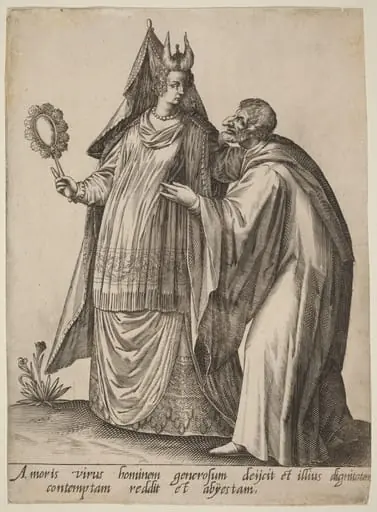
Turpe senex miles...
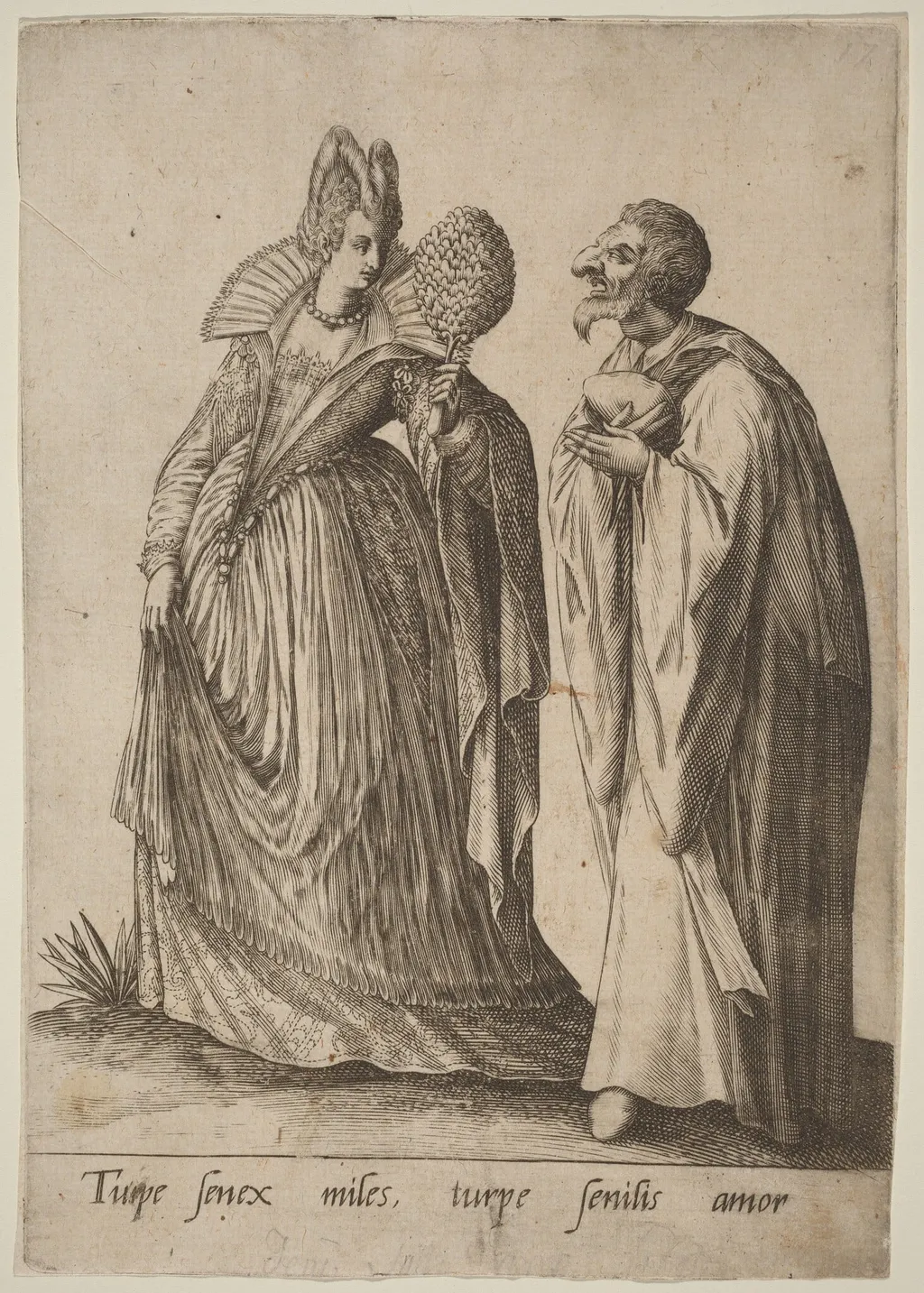
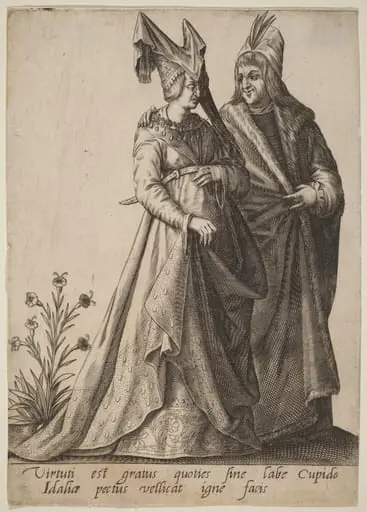
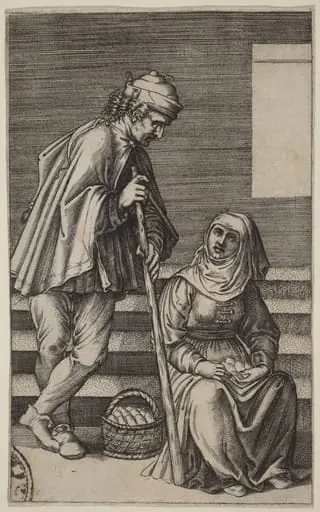
Turpe senex miles... is an ink print by the Renaissance artist Robert Boissard. It dates from 1570 and is held in the collection of the National Gallery of Art.
About this work
Overview
Robert Boissard’s 1570 engraving, titled *Turpe senex miles…*, presents a compact composition of two standing figures against a minimal backdrop. The left figure, a woman, is dressed in an elaborate gown with ruffled sleeves and a high coiffure, holding a fan. To her right, a bearded man in a loose robe grasps an object, while a small plant motif appears in the corner.
Subject & Meaning
The work juxtaposes a youthful, fashionable female figure with an older, bearded male, underscored by the Latin inscription *Turpe senex miles, turpe senilis amor*—a commentary on the unattractiveness of aged love or the folly of an old soldier’s affection. The pairing suggests a moralizing narrative about the incongruity of age and desire, typical of late‑Renaissance didactic imagery.
Technique & Style
Boissard employed fine cross‑hatching on a copper plate to render the figures, creating tonal variation through intersecting lines. This method allows subtle gradations of light and shadow, especially evident in the texture of the woman’s fabric and the man’s beard. The engraving’s restrained background and precise line work reflect the meticulous printmaking practices of the period.
History & Provenance
The engraving dates to 1570, situating it within Boissard’s productive years in Strasbourg, where he was known for portraiture and book illustrations. While specific ownership records are scarce, the piece survives in several European print collections, indicating its circulation among collectors of moralistic prints during the late sixteenth century.
Artist & collection