Artwork
Peasant with Hat in Hand
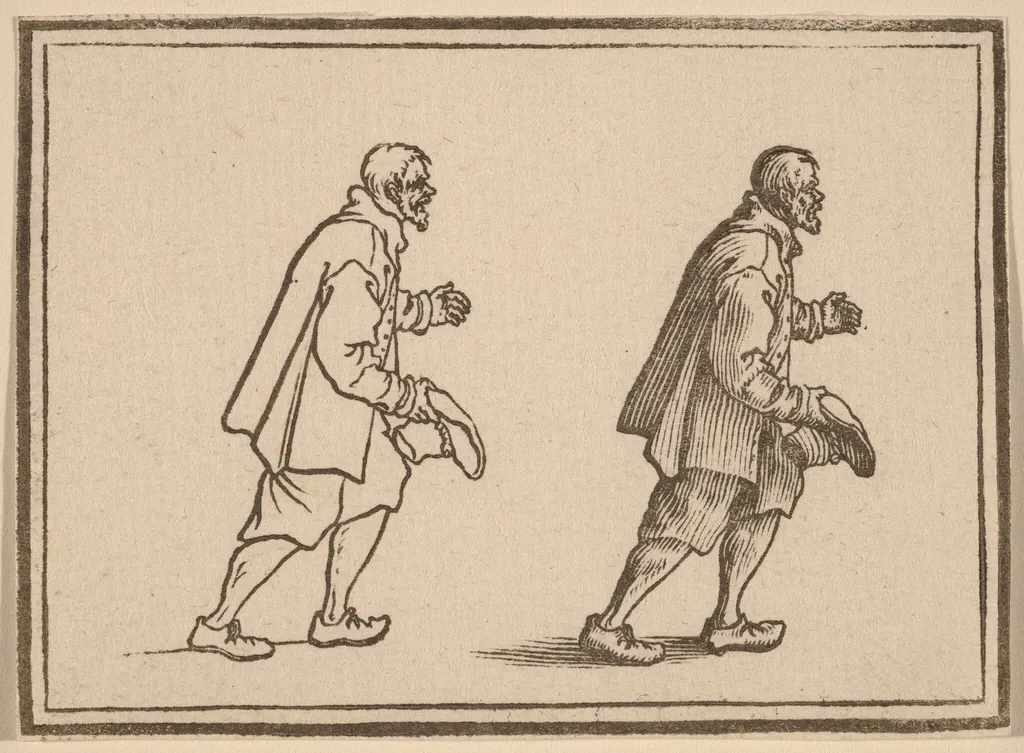
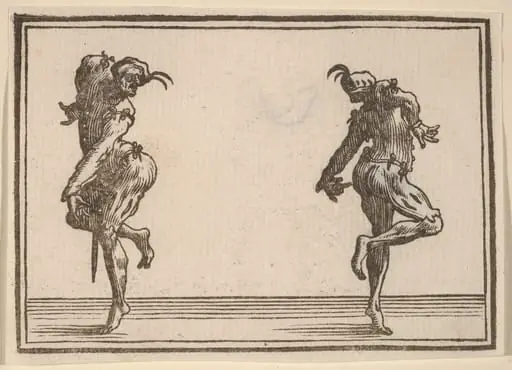
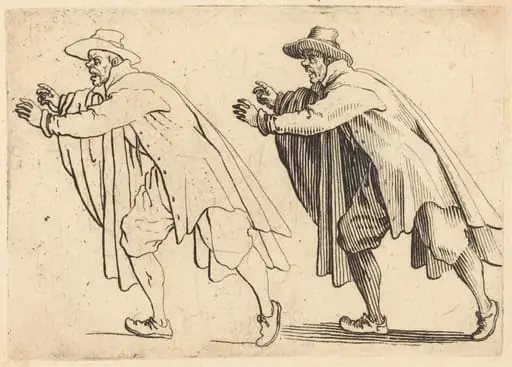
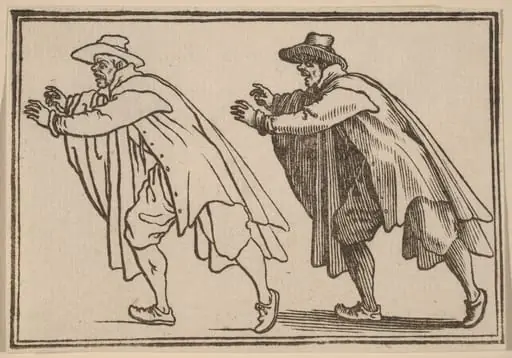
Peasant with Hat in Hand is an ink print by the Baroque artist Edouard Eckman. It dates from 1621 and is held in the collection of the National Gallery of Art. Created in 1621, this woodcut depicts a solitary rural figure captured in a moment of motion.
About this work
The peasant's facial expression is difficult to discern, but his posture suggests a sense of movement or action.
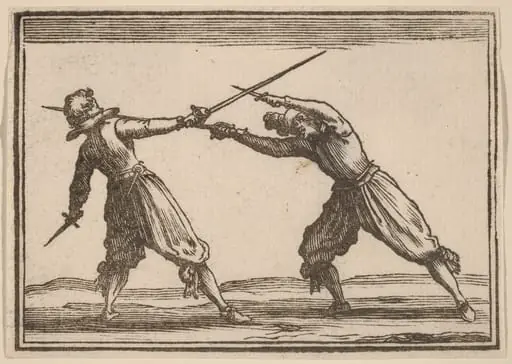
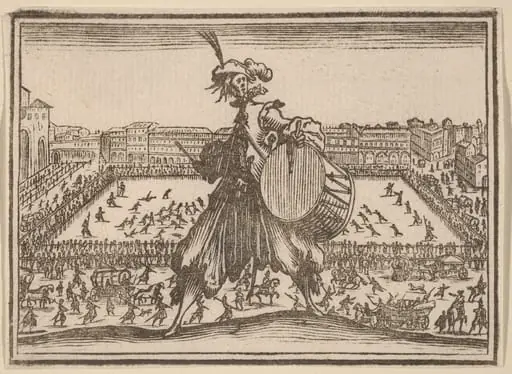
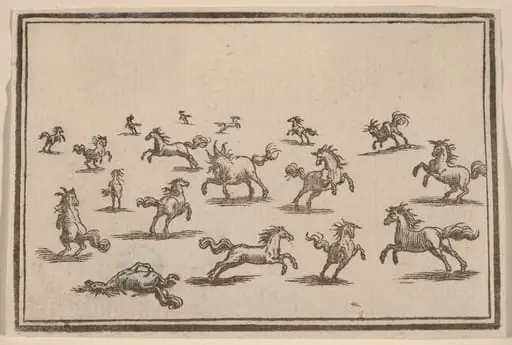
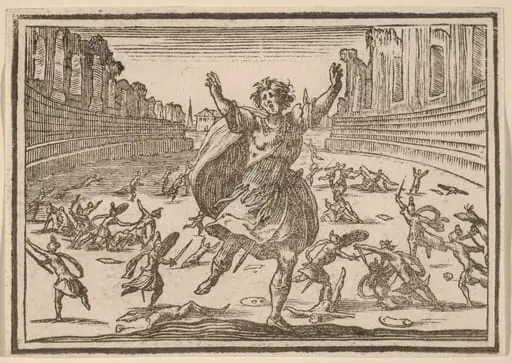
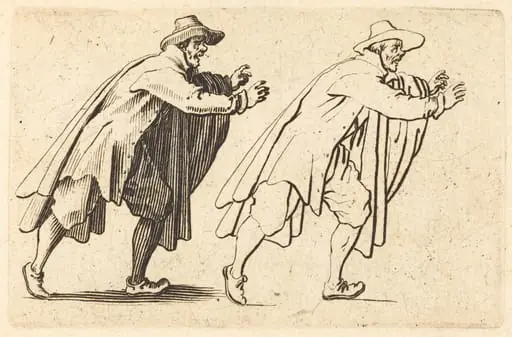
This woodcut image features a peasant with a hat in his hand. The peasant is dressed in a long coat and loose-fitting pants, with a hat held in his right hand. His left arm is bent, and he appears to be in motion.
The peasant's facial expression is difficult to discern, but his posture suggests a sense of movement or action. The image is rendered in a simple, yet expressive style, with bold lines and minimal shading.
The image is a woodcut on laid paper, created by Edouard Eckman in 1621. It is held at the National Gallery of Art, Washington. To learn more about the artist's techniques, look up the woodcut technique.
Overview
Created in 1621, this woodcut depicts a solitary rural figure captured in a moment of motion. The composition centers on a peasant who holds a hat aloft with his right hand while his left arm bends, suggesting a gesture of either greeting or departure. Rendered in stark black lines against the texture of laid paper, the image conveys a direct, unembellished view of early‑17th‑century agrarian life.
Subject & Meaning
The central figure is a peasant dressed in a long coat and loose trousers, attire typical of lower‑status workers of the period. The act of holding a hat may imply respect, a pause before travel, or a ritual of removal, inviting viewers to consider everyday customs and the dignity of labor in a modest, anonymous individual.
Technique & Style
Executed as a woodcut, the artist carved the design into a wooden block, inked the surface, and pressed it onto laid paper, preserving the paper’s ribbed texture. The work relies on bold, unmodulated lines and limited tonal variation, a hallmark of early printmaking that emphasizes form and gesture over subtle shading.
History & Provenance
The print is attributed to Edouard Eckman, a German‑born engraver active in the early 1600s. After its creation, the woodcut entered various collections before being acquired by the National Gallery of Art in Washington, where it remains part of the museum’s holdings on early modern European printmaking.
Artist & collection