Artwork
Alpha and Omega: The Wife Omega and the Donkey
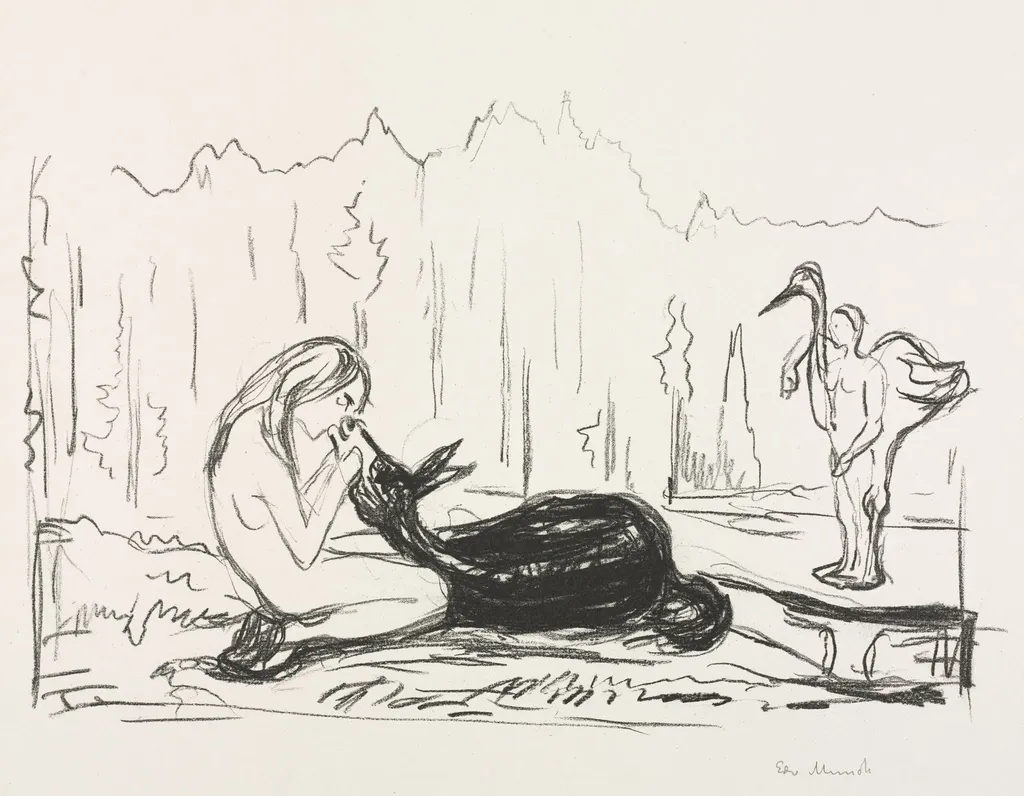
Alpha and Omega: The Wife Omega and the Donkey is a print by Edvard Munch. It dates from 1908 and is held in the collection of the Cleveland Museum of Art.
About this work
Overview
The work is part of the Cleveland Museum of Art’s collection, where it is studied as an example of his expressive draftsmanship.
Created in 1908, *Alpha and Omega: The Wife Omega and the Donkey* is a graphic work by Norwegian artist Edvard Munch. It belongs to his later output, a period marked by introspective themes and simplified forms. Executed in ink or pencil, the piece reflects Munch’s enduring interest in emotional states and symbolic narratives. The work is part of the Cleveland Museum of Art’s collection, where it is studied as an example of his expressive draftsmanship.
Subject & Meaning
The image depicts a woman kneeling beside a donkey, her hand gently resting on its head. Behind them, two tall, silent figures stand near water, arms raised in ambiguous gestures. The donkey, often a symbol of humility or endurance, and the woman’s calm posture suggest a quiet intimacy. The distant figures remain enigmatic, possibly representing spiritual or existential forces. The scene evokes contemplation rather than narrative clarity, inviting interpretation without resolution.
Technique & Style
Munch employed loose, fluid lines to construct the scene, avoiding defined contours in favor of suggestive strokes. The sketchy quality conveys movement and emotional resonance over detail. The composition is sparse, with minimal shading and no background modeling, focusing attention on the figures’ relationships. This approach aligns with his broader shift toward expressive abstraction, where form serves psychological depth rather than realism.
History & Provenance
The work was produced during Munch’s time in Norway, following years of personal instability and artistic experimentation. It entered the Cleveland Museum of Art’s collection in the 20th century, likely through acquisition from a European dealer or collector. Its preservation as a standalone print, rather than a study for a larger painting, suggests Munch valued it as a finished expression of his thematic concerns.
Context
This piece emerged alongside Munch’s broader preoccupations with life, death, and human connection, themes also present in *The Scream* and his *Frieze of Life* series. The use of symbolic animals and ambiguous figures reflects his engagement with symbolism and Nordic folklore. Unlike his earlier, more dramatic compositions, this work favors stillness and ambiguity, signaling a maturation in his visual language.
Legacy
Though less widely known than his paintings, this print exemplifies Munch’s mastery of line and emotional suggestion in graphic media. It influenced later expressionist artists who valued psychological intensity over literal representation. Its presence in a major museum underscores its role in documenting the evolution of modern printmaking and the personal symbolism central to Munch’s oeuvre.
Artist & collection
Artist
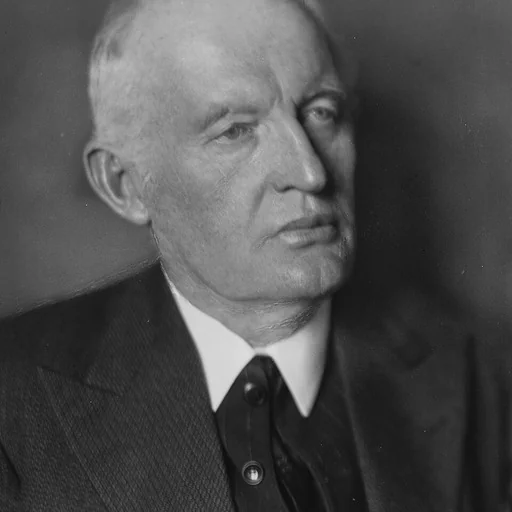
Edvard Munch ( MUUNK; Norwegian: ; 12 December 1863 – 23 January 1944) was a Norwegian painter.

 Bathsheba Reading David's Letter (after Rembrandt)
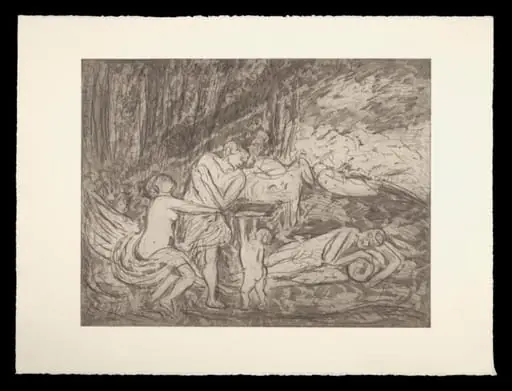 Cephalus and Aurora (after Poussin)
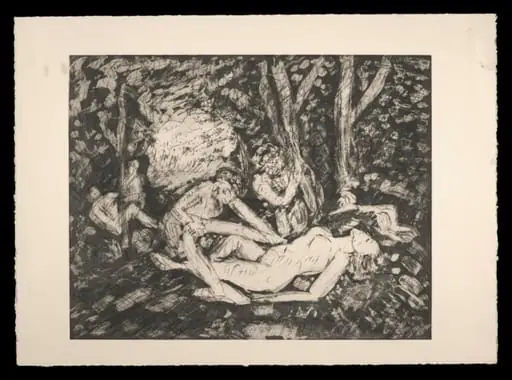 Nymph with Satyrs (after Poussin)
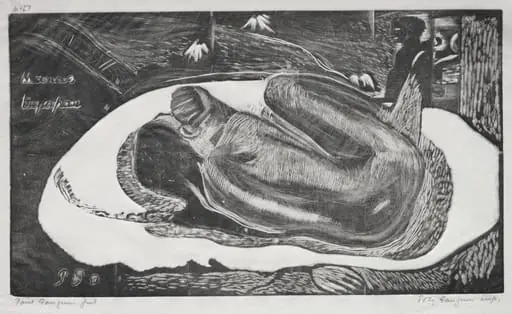 Noa Noa: Manao Yupapau ( Watched by the Spirts of the Dead)
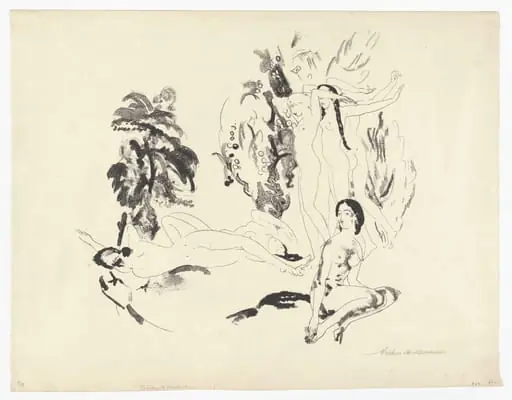 Untitled
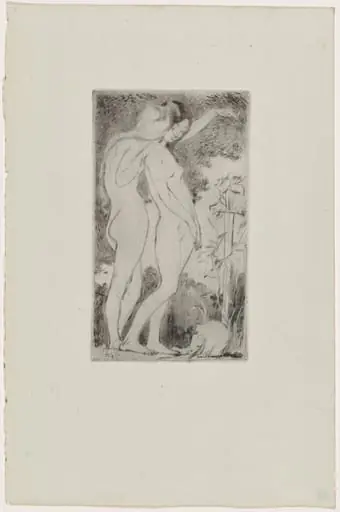 Nymphes
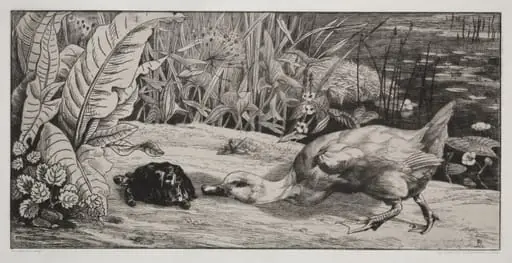 An Unknown
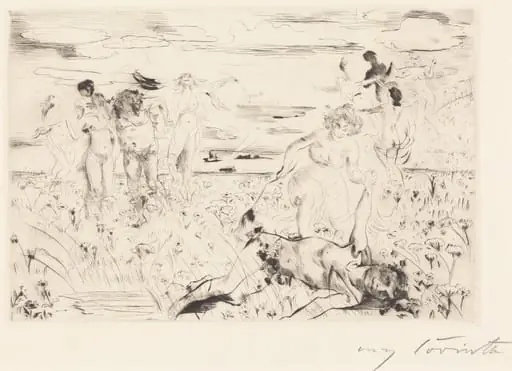 Bacchanal
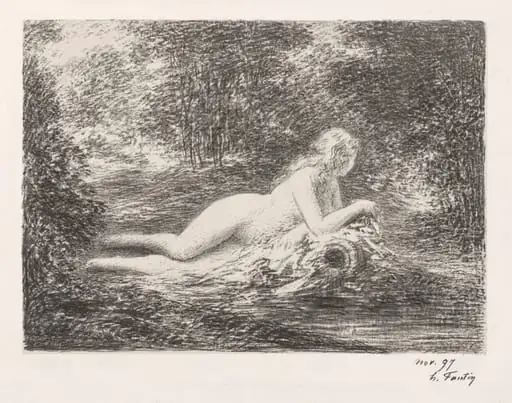 The Spring
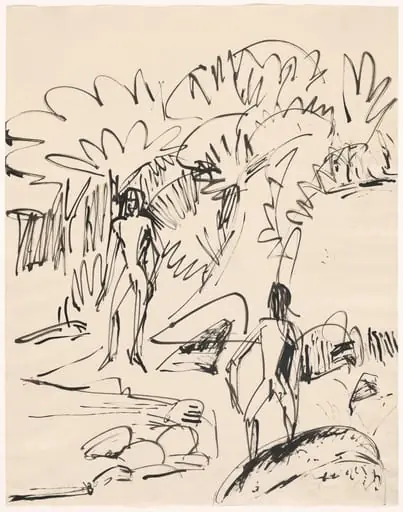 Two Bathers on the Fehmarn Coast (Zwei Badende am hoher Fehmarnküste)
 Untitled
 Alpha and Omega: Omega's Flight