Artwork
Alpha and Omega: Omega's Flight
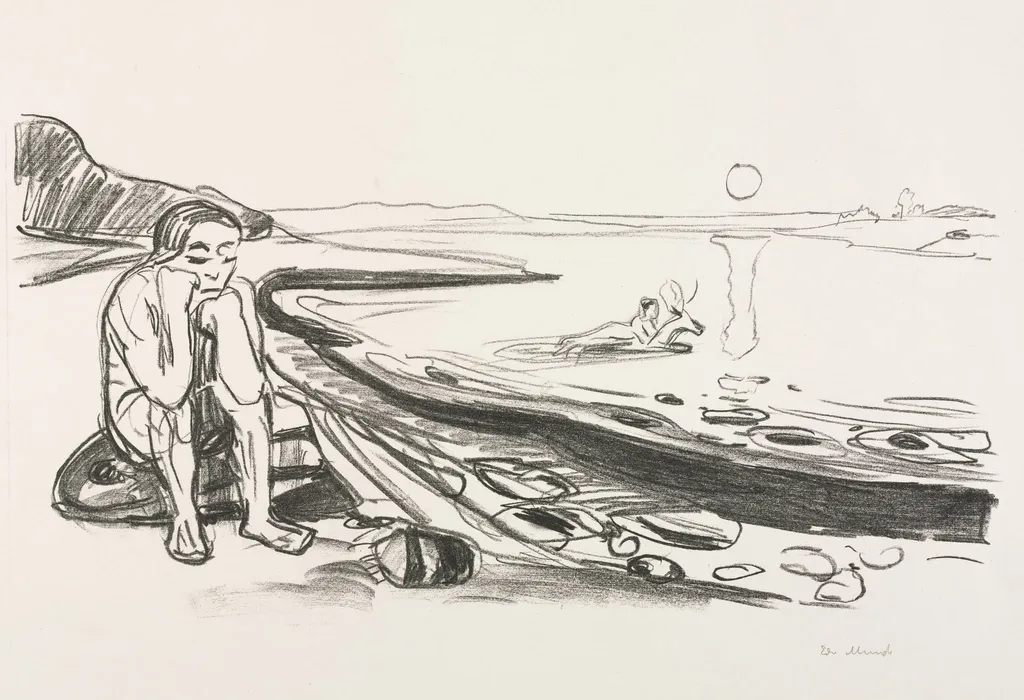
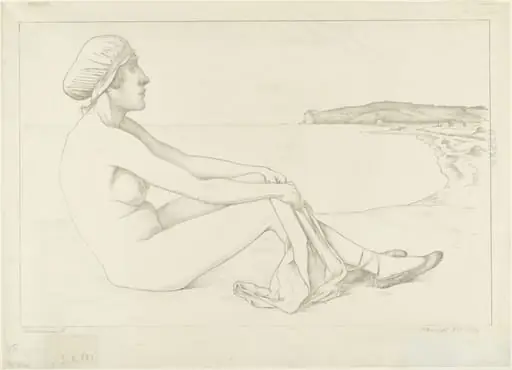
Alpha and Omega: Omega's Flight is a print by Edvard Munch. It dates from 1908 and is held in the collection of the Cleveland Museum of Art.
About this work
Overview
Created in 1908, *Alpha and Omega: Omega's Flight* is a charcoal sketch by Norwegian artist Edvard Munch. It belongs to his later period, when he increasingly turned to drawing as a means of probing psychological states. The work is held in the collection of The Cleveland Museum of Art and exemplifies his shift toward simplified forms and expressive gesture over detailed representation.
Subject & Meaning
The image depicts two figures near water: one seated, hunched on the shore, and another reclining in the water. The figures suggest a narrative of presence and absence, perhaps symbolizing life and death or isolation and surrender. Munch avoids literal storytelling, instead using posture and placement to evoke emotional resonance, aligning with his broader interest in existential solitude.
Technique & Style
Munch employed rapid, loose charcoal strokes to define form without detail. The figures are reduced to essential shapes, their edges blurred and ambiguous. The background is minimally suggested with faint lines for trees and horizon, leaving much of the paper empty. This economy of line emphasizes movement and mood over realism, reflecting his belief in art as an expression of inner experience.
History & Provenance
The sketch entered the collection of The Cleveland Museum of Art through documented acquisition, though its exact path from Munch’s studio remains unclear. It was likely made during a period of intense personal reflection following Munch’s time in a sanatorium. As part of a larger body of drawings from this era, it was never intended as a finished work but as a study in emotional weight.
Context
In the early 20th century, Munch increasingly turned to drawing and printmaking to explore themes of mortality, anxiety, and transformation. *Omega's Flight* reflects his engagement with symbolic narratives and the cyclical nature of existence, influenced by his personal losses and broader cultural shifts toward modernist introspection in art.
Legacy
This sketch exemplifies Munch’s enduring influence on expressive drawing traditions. Its raw, unfinished quality inspired later artists to value immediacy and emotional honesty over technical polish. As a study in economy and suggestion, it remains a quiet but potent example of how minimal means can convey profound psychological depth.
Artist & collection
Artist
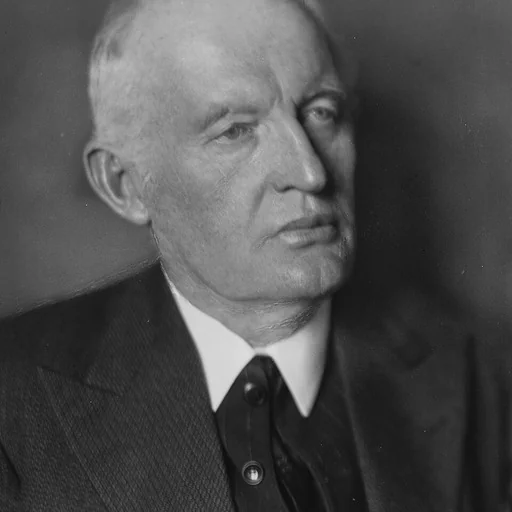
Edvard Munch ( MUUNK; Norwegian: ; 12 December 1863 – 23 January 1944) was a Norwegian painter.

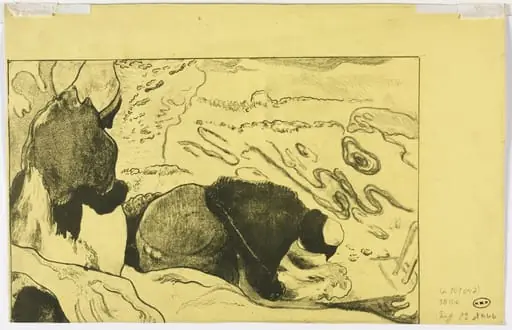 Volpini Suite: Women Washing Clothes (verso)
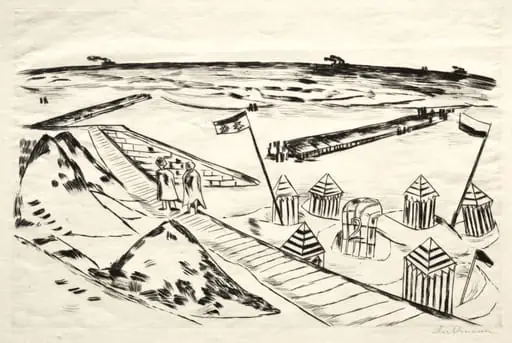 Beach
Beach Launching the Life Boat
 Young Girl under a Tree
 Tail Piece for Chapter XII from "Lorna Doone"
 Hadrian's Lake, Tivoli
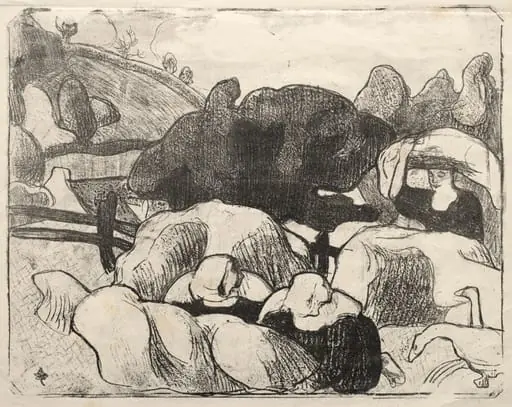 Les Bretonneries: Breton Women Making Haystacks (Bretonnes Faisant les Foins)
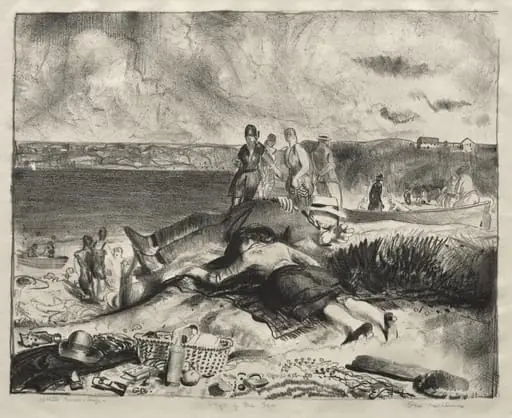 Legs of the Sea
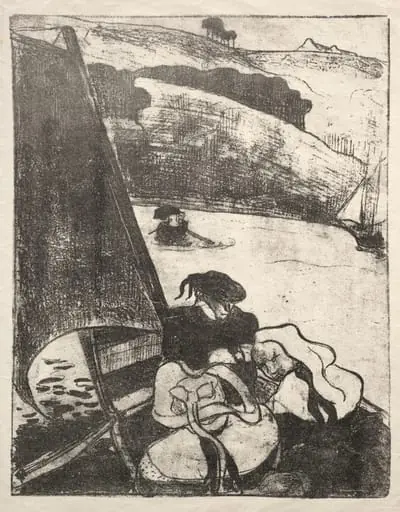 Les Bretonneries: The Return from the Pilgrimage (Le Retour du Pardon)
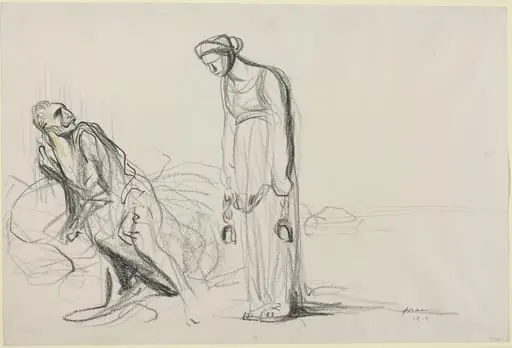 a) Fetters (recto); b) Sketch for Fetters (verso)
 Untitled
 Alpha and Omega: The Wife Omega and the Donkey