Artwork
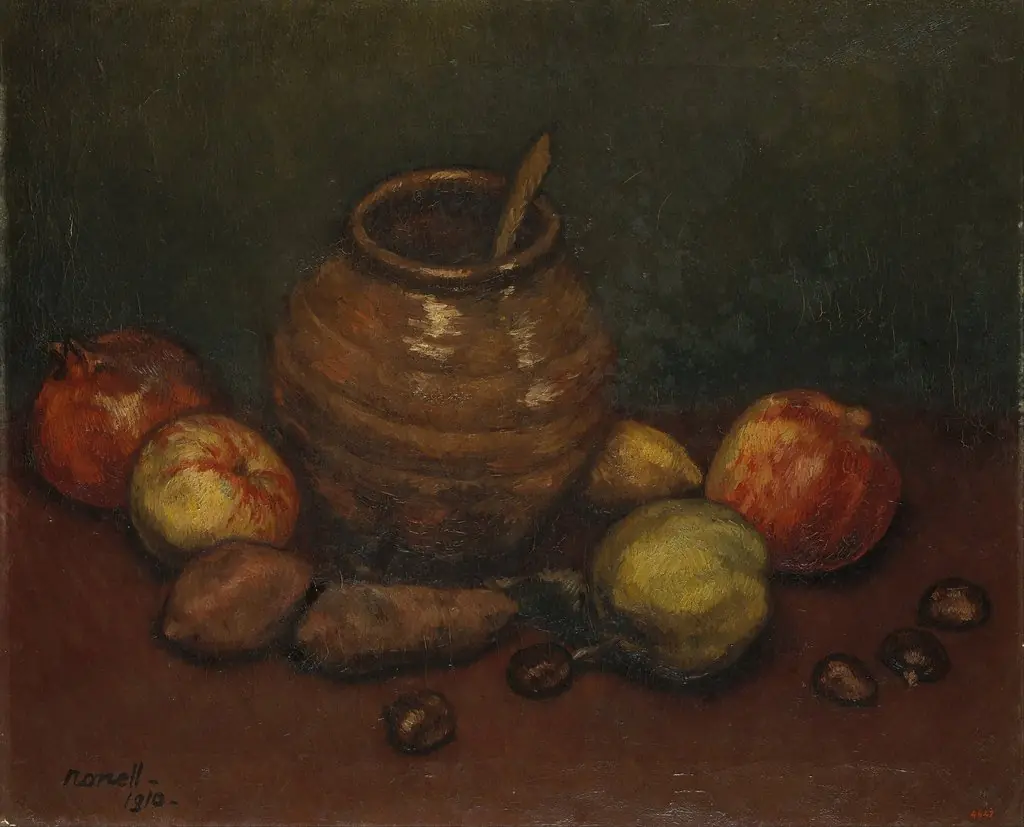
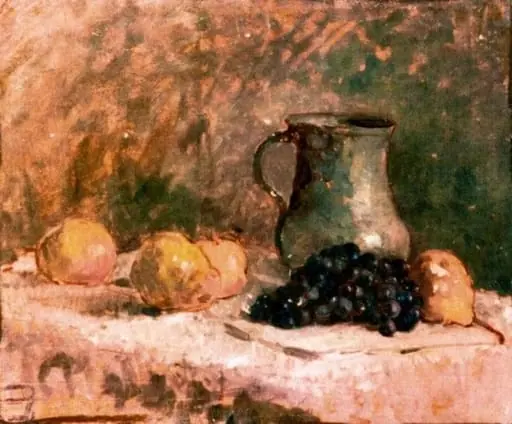
Still Life with Jar, Apple, Walnut and Coconut
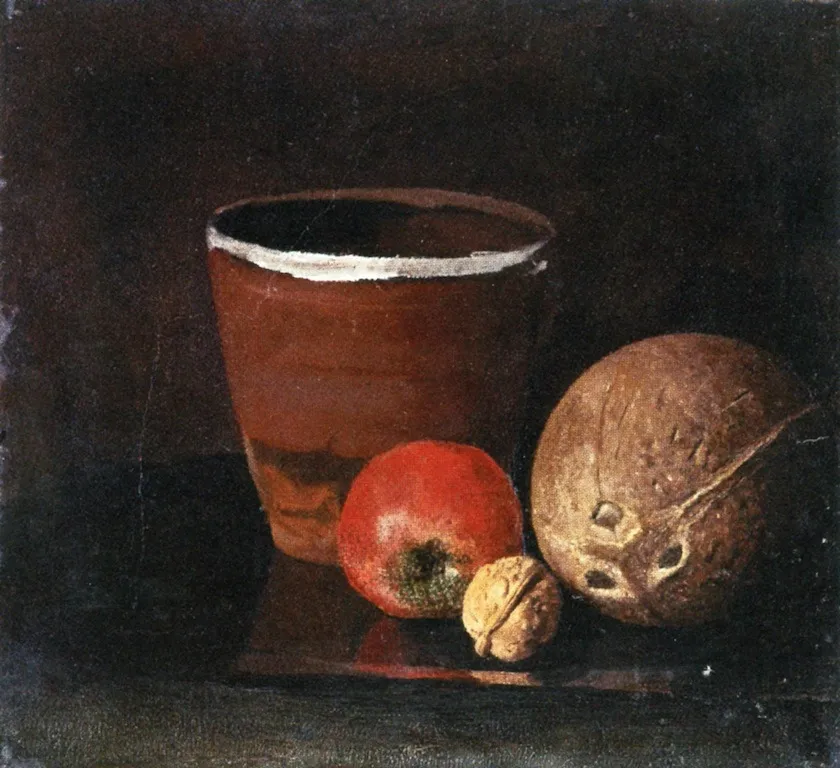
Still Life with Jar, Apple, Walnut and Coconut is an oil painting by the Post-Impressionist artist Edvard Munch. It dates from 1891 and is held in the collection of the Munch Museum.
About this work
Overview
Painted in 1891 by Norwegian artist Edvard Munch, this still life presents ordinary domestic objects with restrained intensity.
Painted in 1891 by Norwegian artist Edvard Munch, this still life presents ordinary domestic objects with restrained intensity. Unlike traditional still lifes focused on abundance or symbolism, Munch’s composition emphasizes quiet presence over narrative. Executed in oil, the work reflects his broader shift toward expressing psychological states through simplified forms and muted color, aligning with post-impressionist tendencies of the era.
Subject & Meaning
The arrangement—earthen jar, red apple, walnut, and coconut—lacks conventional symbolic weight. Instead, their placement suggests a moment of private observation, as if captured in passing. The objects appear unadorned, unidealized, their significance rooted in their tangible existence rather than allegory. Munch’s choice of humble items hints at introspection, mirroring his interest in the emotional resonance of the mundane.
Technique & Style
Munch applied oil paint with deliberate, flat brushwork, avoiding detailed rendering in favor of tonal harmony. Earth tones—browns, deep reds, and ochres—dominate, unified by a shadowed background that subtly catches light. The surface reflects minimal highlights, enhancing the sense of stillness. Form is reduced to essential shapes, prioritizing mood over realism, a hallmark of his move away from naturalism toward emotional expression.
History & Provenance
Created during Munch’s time in Kristiania, the painting remained in his personal collection until his death. It was later transferred to the Munch Museum in Oslo, established to preserve his artistic legacy. Its inclusion in the museum’s permanent holdings underscores its role as a quiet but significant example of his non-portrait work, offering insight into his private visual language.
Context
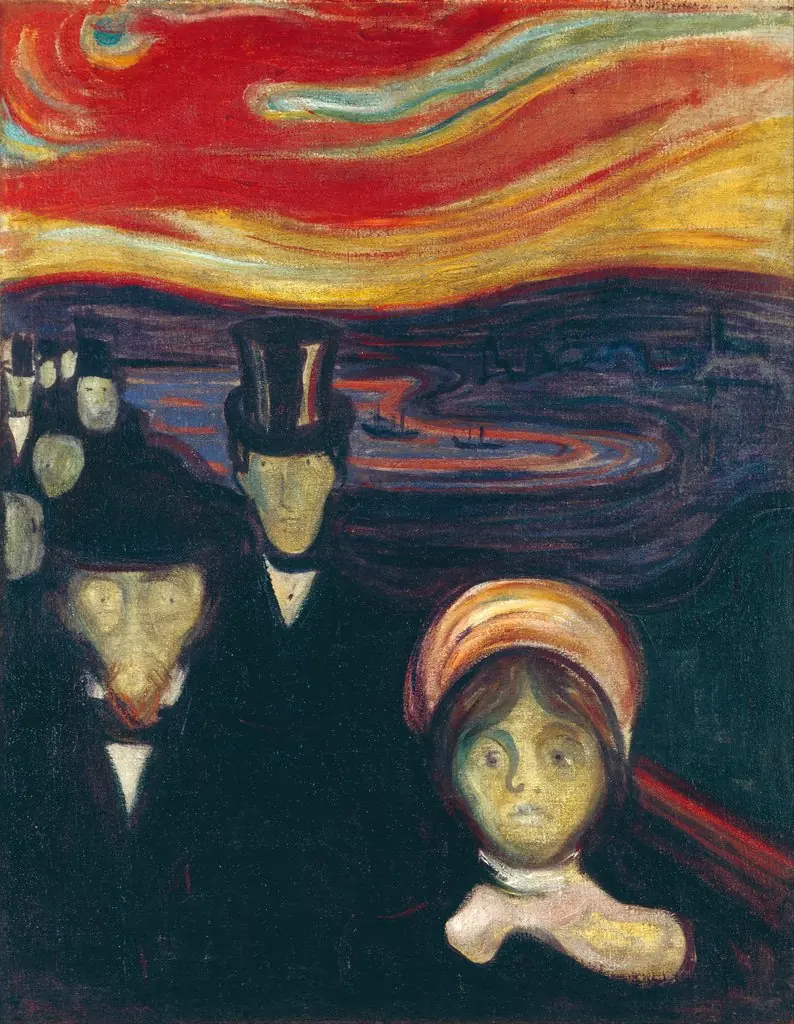
In the early 1890s, Munch was deepening his engagement with themes of isolation and inner life, as seen in works like 'The Scream.' This still life, though seemingly detached from his more dramatic subjects, shares the same preoccupation with emotional atmosphere. It reflects the influence of contemporary European movements that favored subjective experience over academic precision.
Legacy
Though less known than his figurative works, this still life contributes to understanding Munch’s broader artistic range. Its understated tone reveals how he extended his psychological approach beyond human subjects to everyday things. The painting remains a quiet testament to his belief that even the simplest arrangements could carry emotional gravity.
Artist & collection
Artist
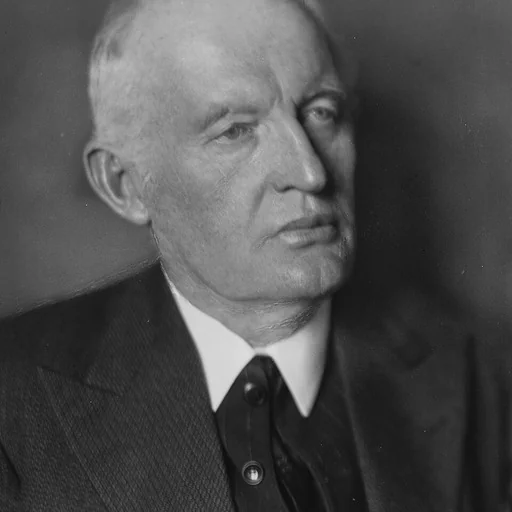
Edvard Munch ( MUUNK; Norwegian: ; 12 December 1863 – 23 January 1944) was a Norwegian painter.

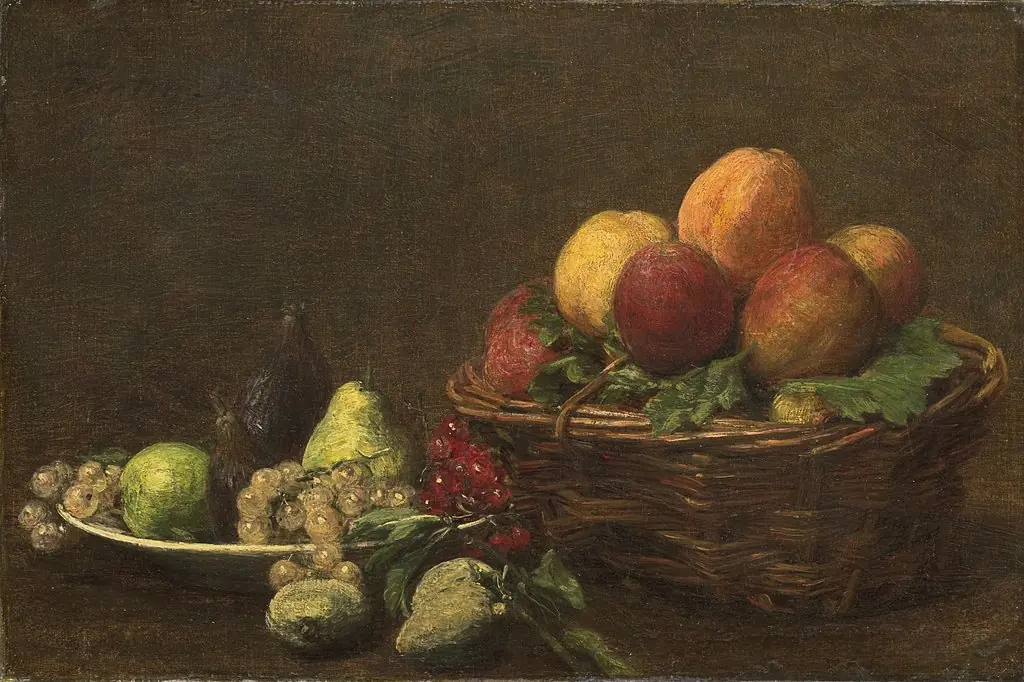 Still Life with Fruit
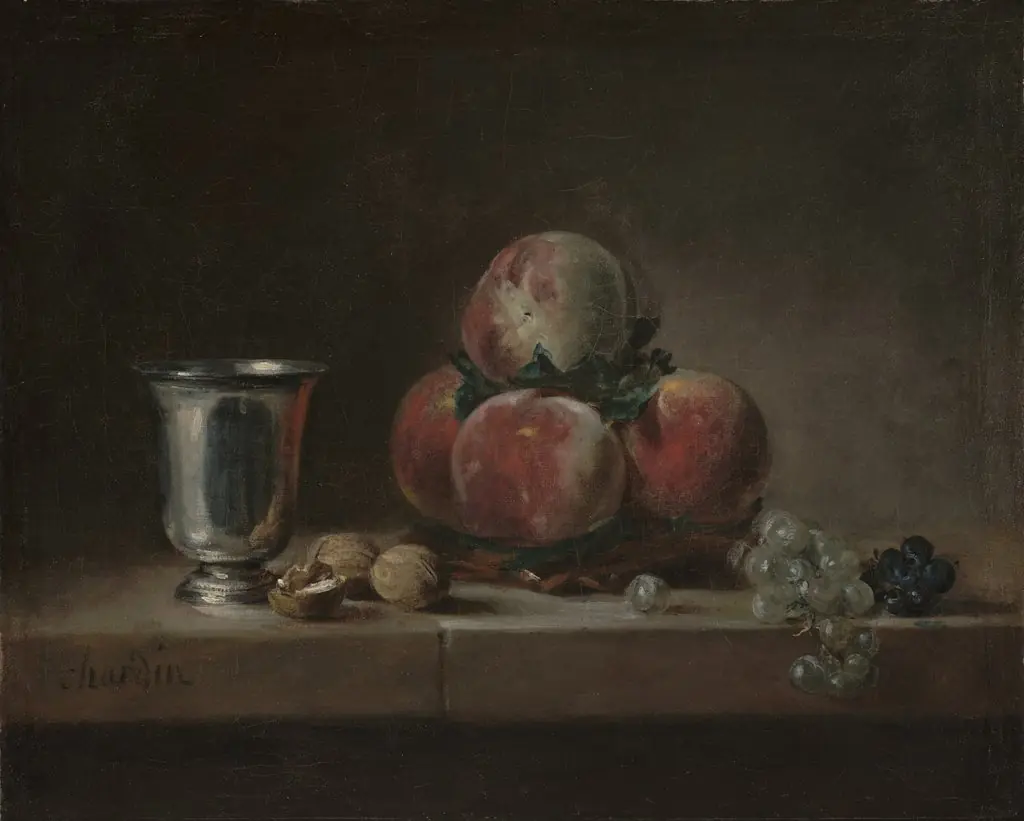 Still Life with Peaches, a Silver Goblet, Grapes, and Walnuts
 Still Life
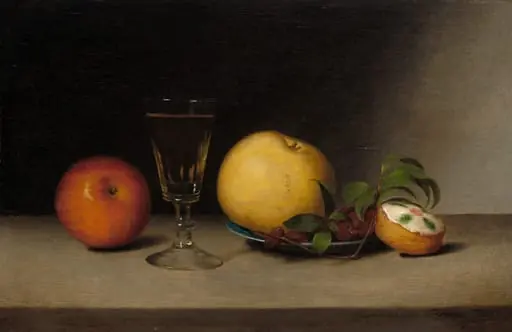 Still Life with Apples, Sherry, and Tea Cake
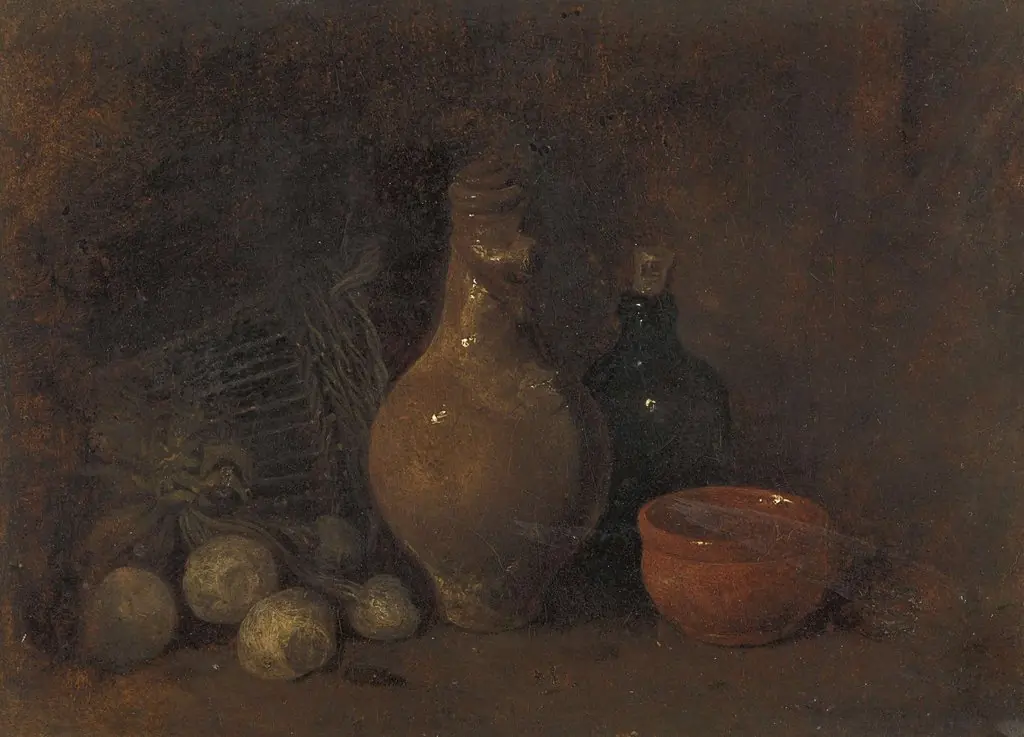 Stilleven met vier vruchten, glas en aardewerk
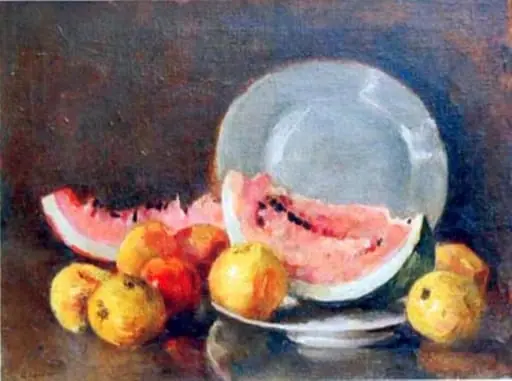 Natură moartă
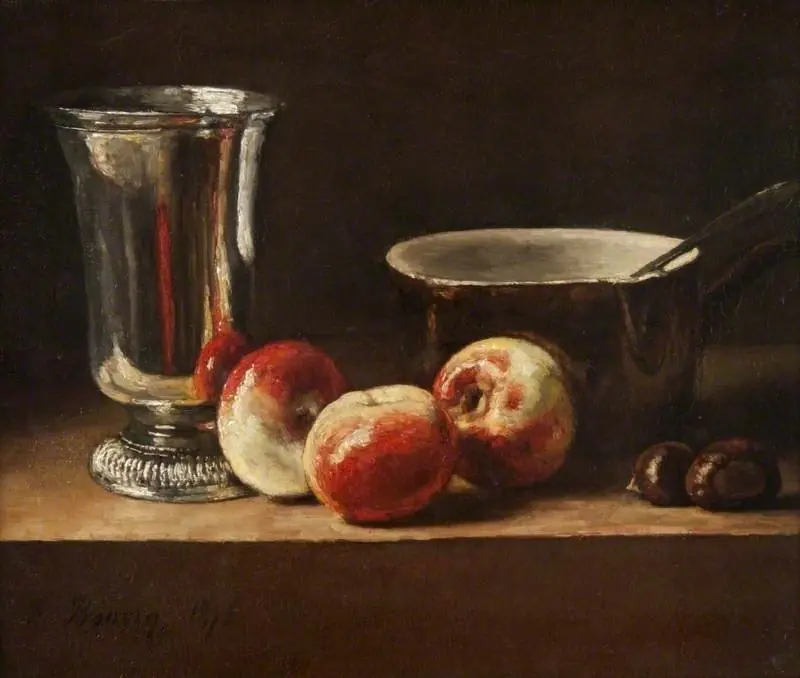 Still Life with Apples and a Silver Goblet
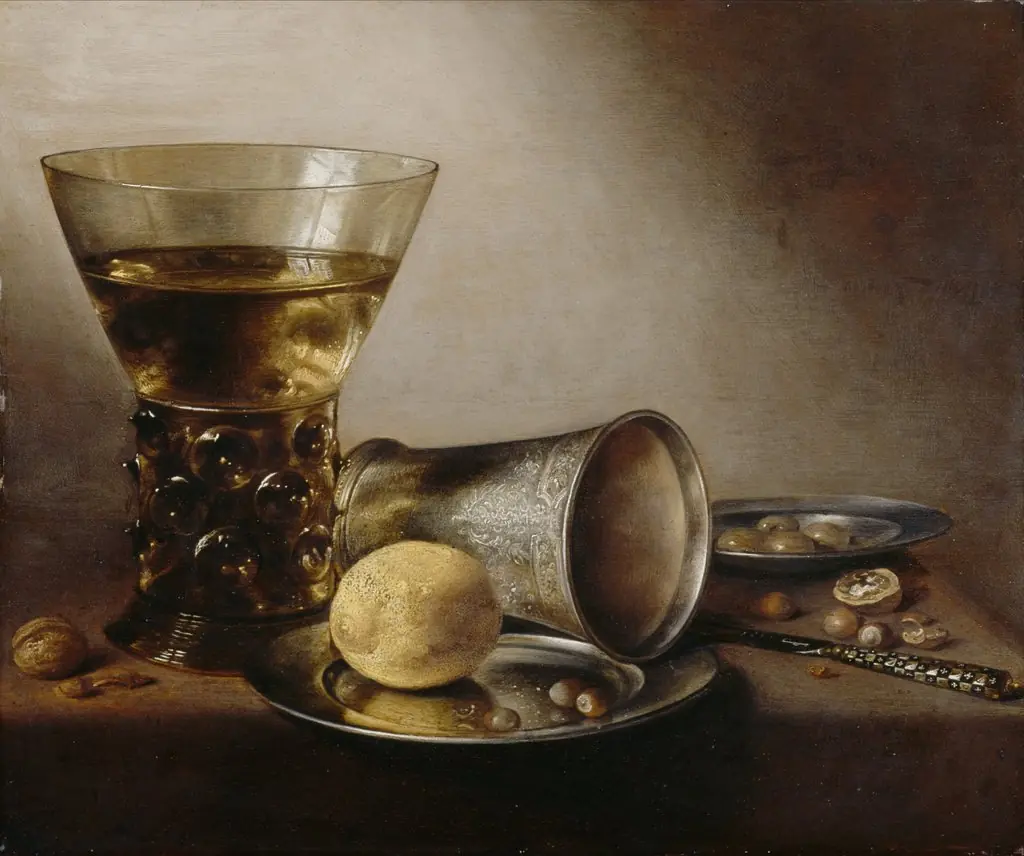 Still Life with Roemer
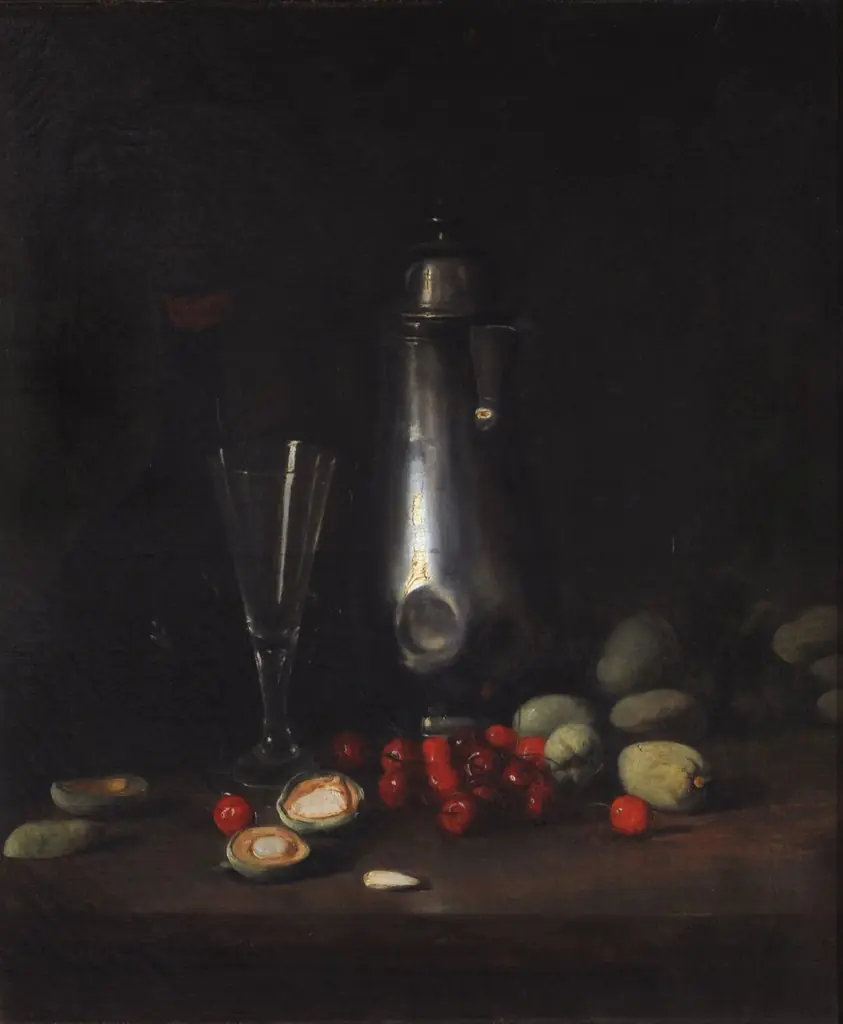 Naturaleza muerta
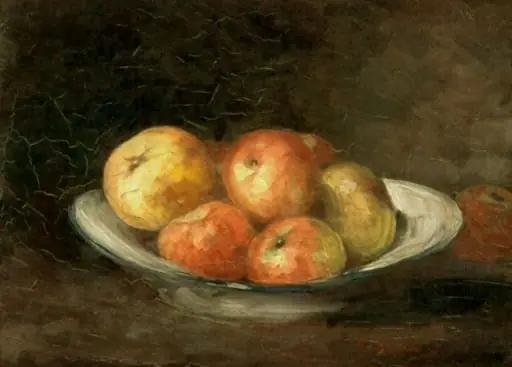 Farfurie cu mere
 Natură statică cu fructe
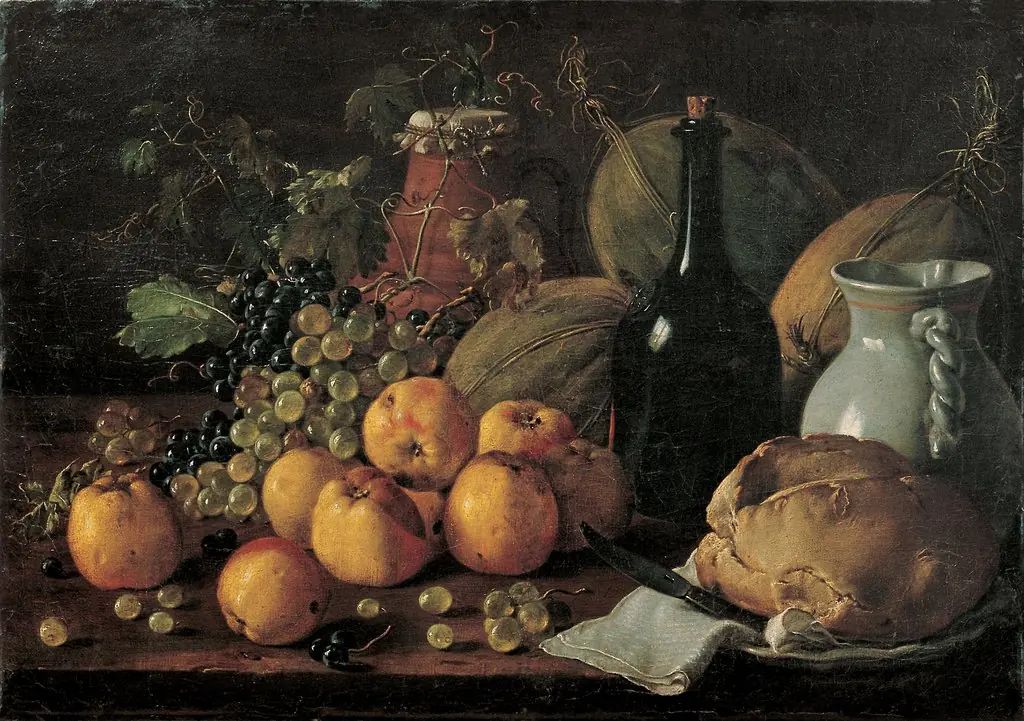 Still Life with Apples, Grapes, Melons, Bread, Jug and Bottle