Artwork
Lighthouse Village (also known as Cape Elizabeth)
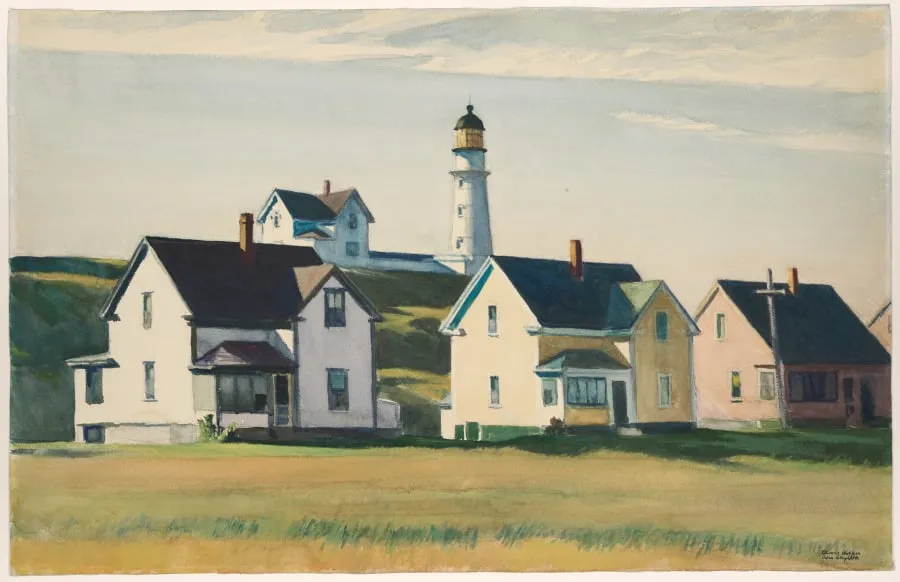
Lighthouse Village (also known as Cape Elizabeth) is a drawing by Edward Hopper. It dates from 1929 and is held in the collection of the Cleveland Museum of Art.
About this work
You see a white lighthouse perched on a grassy hill, a few small buildings clustered around it, and a quiet road leading down to the sea.
You see a white lighthouse perched on a grassy hill, a few small buildings clustered around it, and a quiet road leading down to the sea.
Hopper painted this spot twice—once in oil, then again in watercolor. The second time, he focused on the mix of buildings: the keeper’s house, the coast guard homes, even the fog signal tower. Each one has its own shape and job, but together they feel lonely.
If you like this quiet American scene, look up more work by Edward Hopper (American, 1882–1967).
Overview
Lighthouse Village is a watercolor drawing by Edward Hopper, created during one of his several visits to Maine. The work depicts a lighthouse and surrounding buildings on a grassy hill.
Subject & Meaning
The drawing shows a cluster of buildings, including a lighthouse, keeper's house, coast guard residences, and a fog signal tower, each with a distinct form and function. The arrangement conveys a sense of isolation and quietude.
Technique & Style
Hopper employed varying tones of watercolor to capture the reflection of light on the different structures and to convey the diverse hues of the surrounding grass.
History & Provenance
Hopper had previously painted the Cape Elizabeth lighthouse in oil two years prior to creating this watercolor drawing, indicating his ongoing fascination with the site.
Artist & collection
Artist
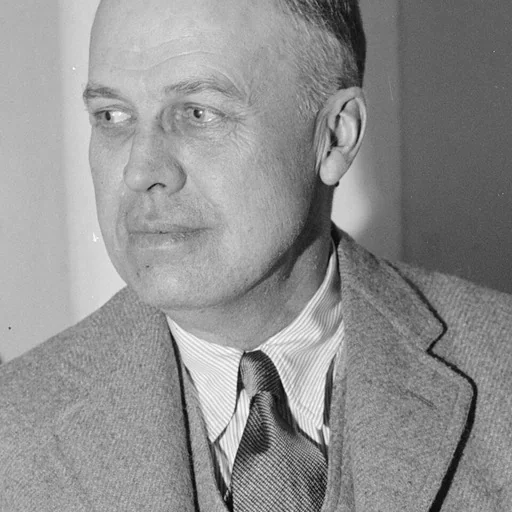
Edward Hopper (July 22, 1882 – May 15, 1967) was an American realist painter and printmaker.