Artwork
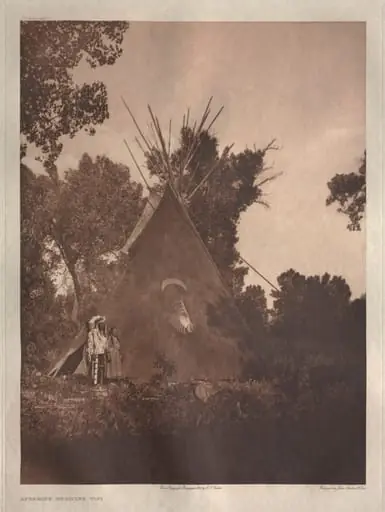
Portfolio I, Plate 39: Alhkidókihi-Navaho
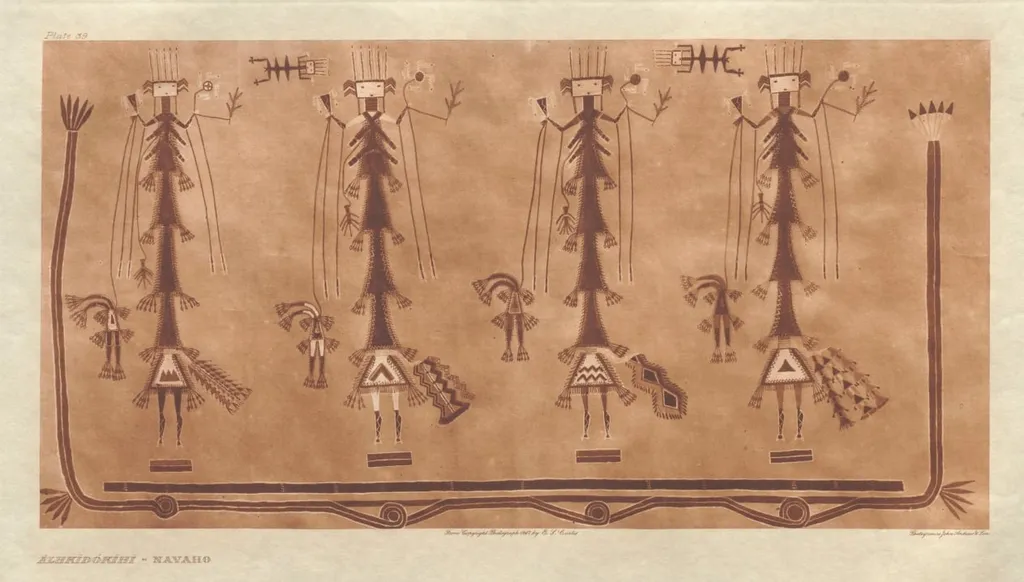
Portfolio I, Plate 39: Alhkidókihi-Navaho is a work on paper by Edward S. Curtis. It dates from 1904 and is held in the collection of the Cleveland Museum of Art.
About this work
Overview
It is currently held in the collection of The Cleveland Museum of Art, where it is preserved as a historical artifact of ethnographic photography.
Portfolio I, Plate 39: Alhkidókihi-Navaho is one of 100 photogravures in Edward S. Curtis’s early 20th-century project documenting Indigenous peoples of North America. Created in 1904, this plate is part of a larger series intended to record cultural practices and visual traditions. It is currently held in the collection of The Cleveland Museum of Art, where it is preserved as a historical artifact of ethnographic photography.
Subject & Meaning
The image depicts four elongated, stylized figures arranged in a row, each with simplified human features and feathered bases. Their outstretched arms hold objects, suggesting ritual or symbolic action. The term 'Alhkidókihi-Navaho' may reference a specific ceremonial role or spiritual entity within Navajo tradition. The figures blend human form with abstract elements, possibly representing ancestral beings, deities, or ceremonial participants rather than literal portraits.
Technique & Style
Curtis rendered this image using photogravure, a process that transfers photographic tones onto copper plates for printing. The figures are outlined in bold black against a warm, light brown background, creating strong contrast. Forms are reduced to essential lines—square bases, straight limbs, minimal facial features—emphasizing symbolic presence over naturalism. The plain backdrop isolates the figures, directing focus to their arrangement and symbolic details.
History & Provenance
This plate was produced as part of Curtis’s monumental The North American Indian, a multi-volume publication initiated in 1900 with financial backing from J.P. Morgan. Plate 39 was printed in 1904 during the early phase of the project. It entered The Cleveland Museum of Art’s collection through documented acquisition, likely as part of a complete set of the portfolio, and has remained in public custody since.
Context
Curtis’s work emerged during a period of intense cultural displacement for Native communities, as federal policies sought assimilation. His images, while often romanticized, aimed to preserve visual records of traditions perceived as vanishing. This plate reflects his tendency to prioritize aesthetic composition and symbolic representation over ethnographic precision, blending observation with interpretive stylization.
Legacy
Though later criticized for idealization and lack of Indigenous collaboration, Curtis’s portfolio remains a significant historical resource. Plate 39 exemplifies his distinctive visual language—stylized, monumental, and atmospheric. Today, it is studied both for its technical achievement in photogravure and as a contested artifact of early ethnographic representation, prompting ongoing dialogue about cultural authority and visual ethics.
Artist & collection

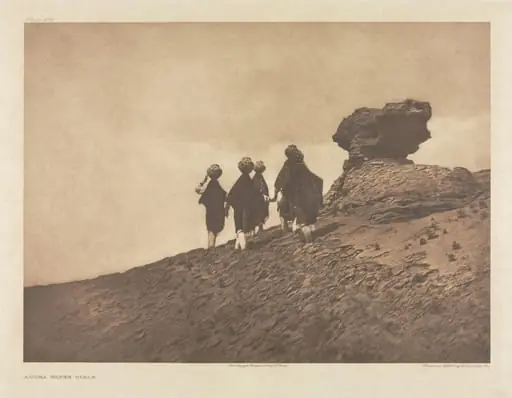 Portfolio XVI, Plate 573: Acoma Water Girls
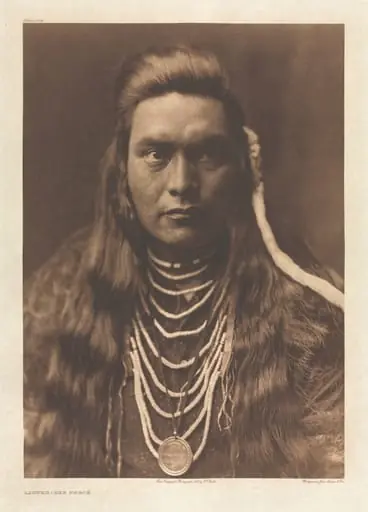 Portfolio VIII, Plate 264: Lawyer - Nez Percé
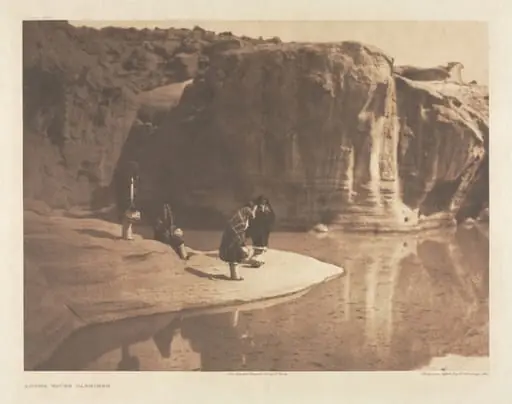 Portfolio XVI, Plate 568: Acoma Water Carriers
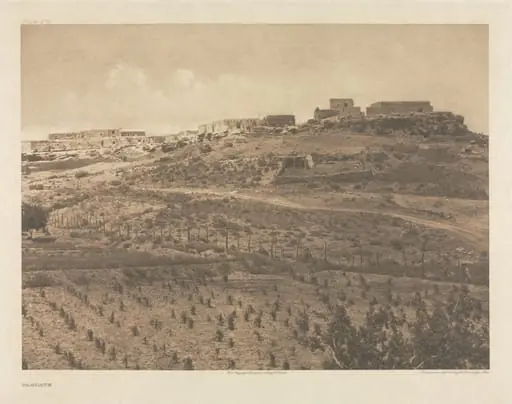 Portfolio XVI, Plate 574: Paguate
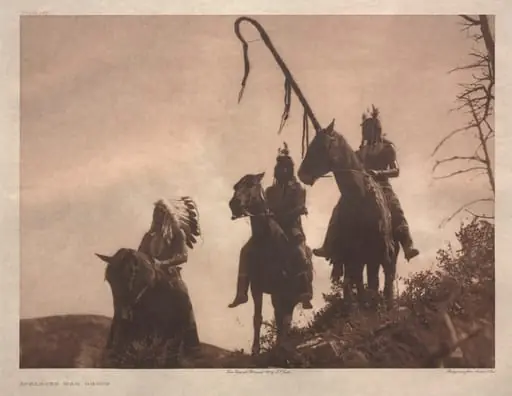 Portfolio IV, Plate 147: Apsaroke War Group
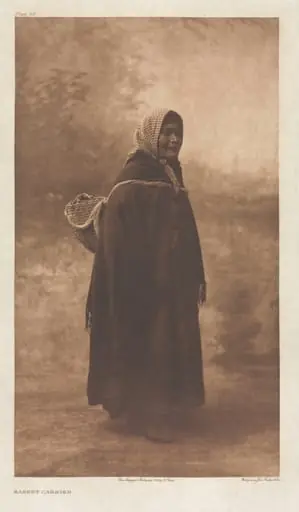 Portfolio IX, Plate 311: Basket Carrier
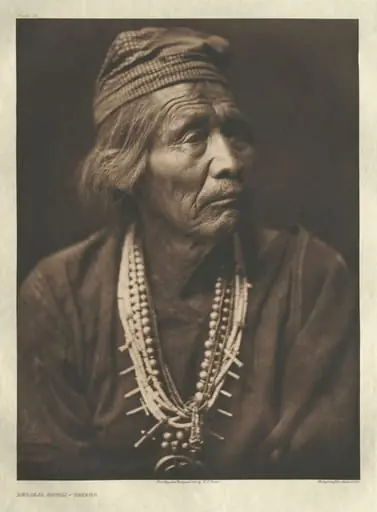 Portfolio I, Plate 31: Nesjája Hatáli-Navaho
 Portfolio IV, Plate 140: A Mountain Fastness--Apsaroke
 (Untitled)
 painting, graphics,
 Facsimile of a Pawnee Doctor's Robe with Fantastic Professional Designs
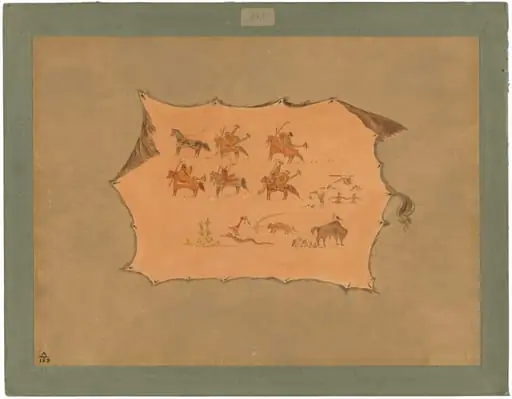 Facsimile of a Pawnee Doctor's Robe
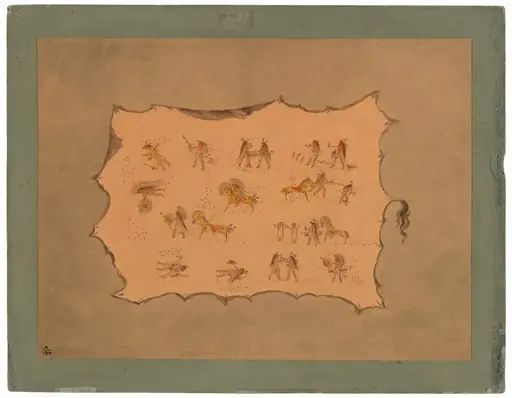 Facsimile of the Robe of Mah-to-toh-pa - Mandan
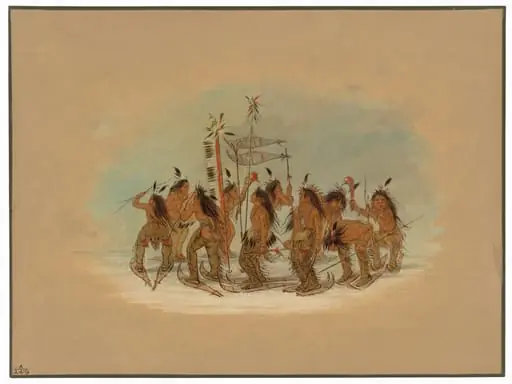 Snow Shoe Dance - Ojibbeway
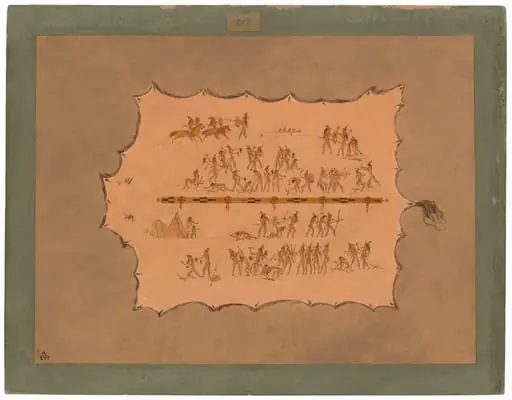 Facsimile of a Sioux Robe
 遼 宴飲圖(殘片)|Banquet Scene
 Untitled
 Bear Dance - K'nisteneux
 Facsimile of an Omaha Robe
 Portfolio IV, Plate 141: Apsaroke Medicine Tipi