Artwork
Portfolio II, Plate 58: Mohave Water Carrier
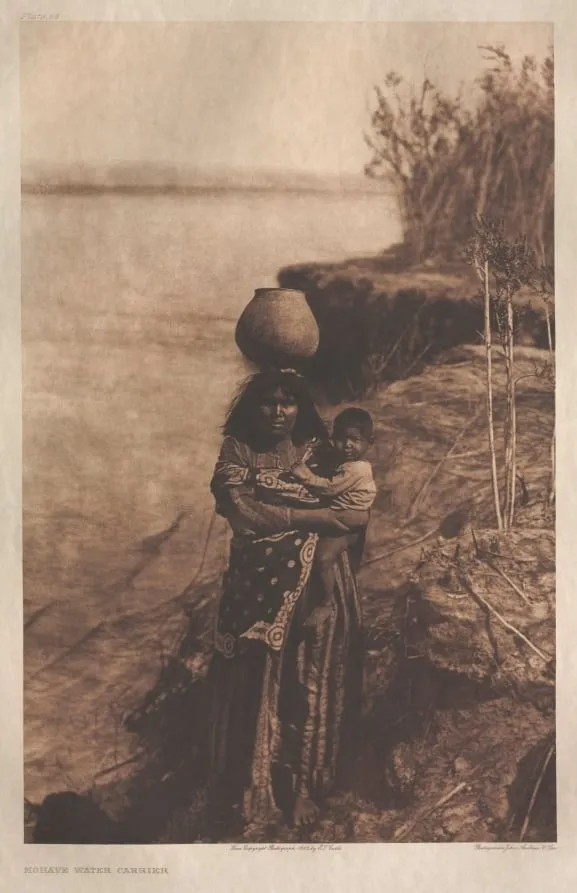
Portfolio II, Plate 58: Mohave Water Carrier is a work on paper by Edward S. Curtis. It dates from 1903 and is held in the collection of the Cleveland Museum of Art. Edward S.
About this work
Overview
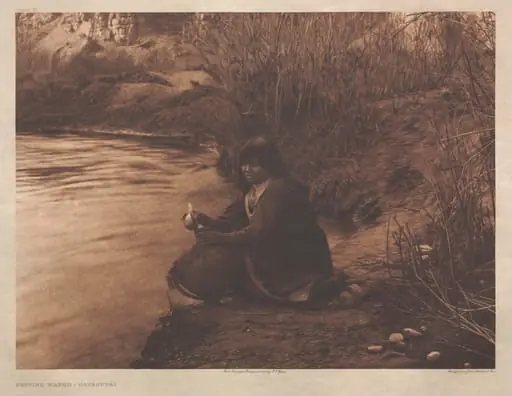
Edward S. Curtis’s photograph, catalogued as Portfolio II, Plate 58, dates from 1903 and is part of the collection at the Cleveland Museum of Art. The image records a woman from the Mohave community carrying a sizable clay water jar on her back while a child clings to her leg. The scene unfolds on a dry, rocky path near a water source, offering a quiet glimpse into daily life.
Subject & Meaning
The figure is identified as a Mohave water carrier, a role that involved fetching water for the tribe’s settlement.
The figure is identified as a Mohave water carrier, a role that involved fetching water for the tribe’s settlement. Her attire features geometric woven patterns, and her hair is pulled back, suggesting practicality. The presence of the child underscores the familial responsibilities intertwined with communal labor, highlighting the interdependence of family and resource gathering in the Mohave culture.
Technique & Style
Curtis employed a large-format camera and glass plate negative, typical of early twentieth‑century documentary photography. The composition balances the solitary figure against the barren landscape, using natural light to emphasize texture in the clay jar and the rough terrain. The image’s tonal range captures subtle gradations of shadow, lending a sense of immediacy and realism to the moment.
History & Provenance
Created during Curtis’s extensive fieldwork among Native American peoples, the photograph entered the Cleveland Museum of Art’s holdings as part of a broader acquisition of his portfolio series. The museum’s records list the work under its original title, “Mohave Water Carrier,” and it remains accessible for scholarly research and public viewing.
Artist & collection

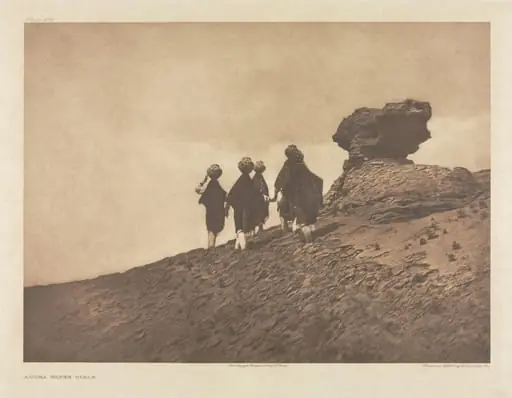 Portfolio XVI, Plate 573: Acoma Water Girls
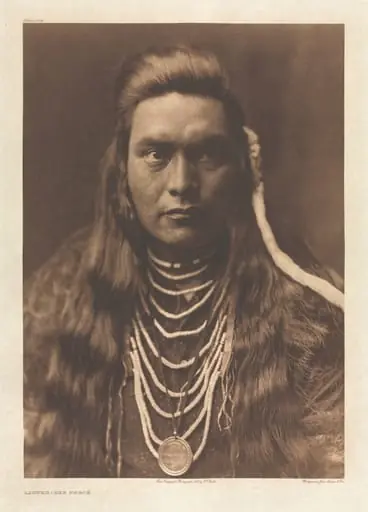 Portfolio VIII, Plate 264: Lawyer - Nez Percé
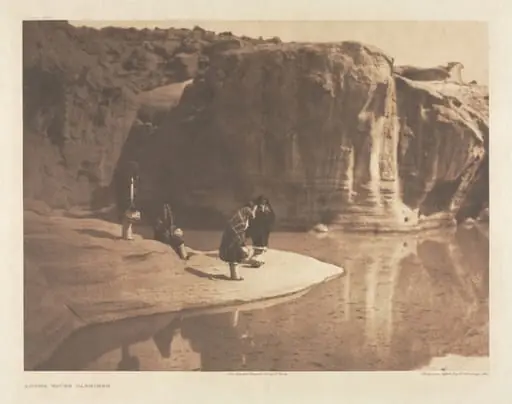 Portfolio XVI, Plate 568: Acoma Water Carriers
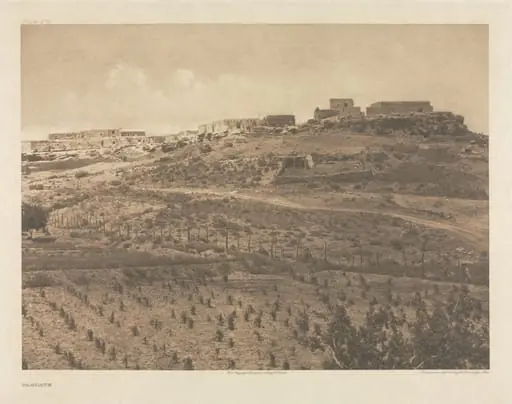 Portfolio XVI, Plate 574: Paguate
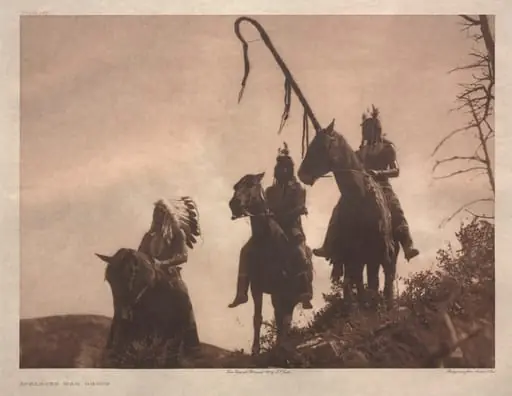 Portfolio IV, Plate 147: Apsaroke War Group
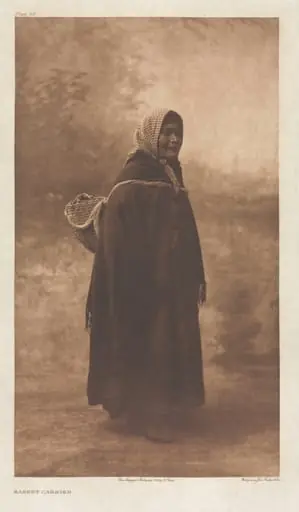 Portfolio IX, Plate 311: Basket Carrier
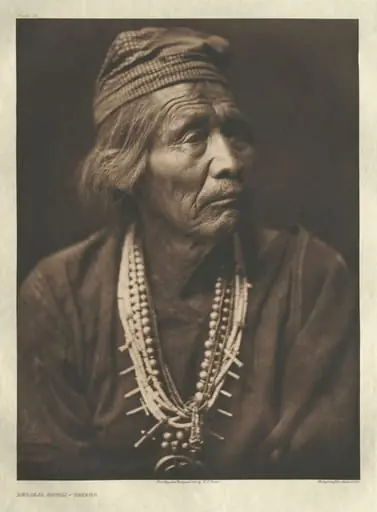 Portfolio I, Plate 31: Nesjája Hatáli-Navaho
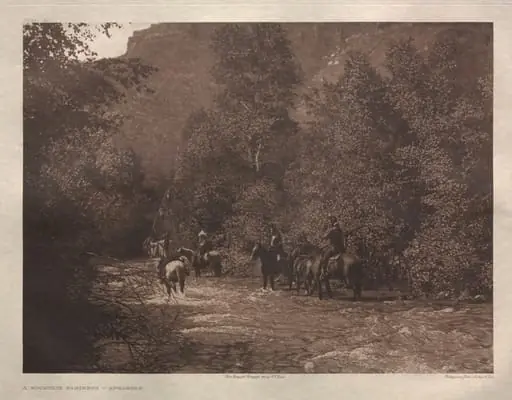 Portfolio IV, Plate 140: A Mountain Fastness--Apsaroke