Artwork
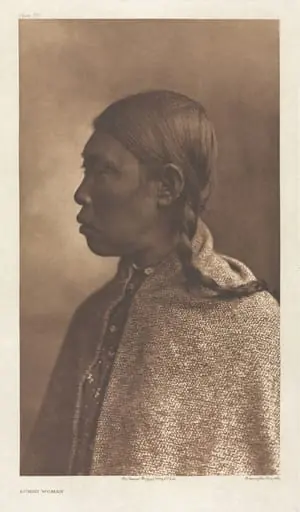
Portfolio IX, Plate 305: Suquamish Woman
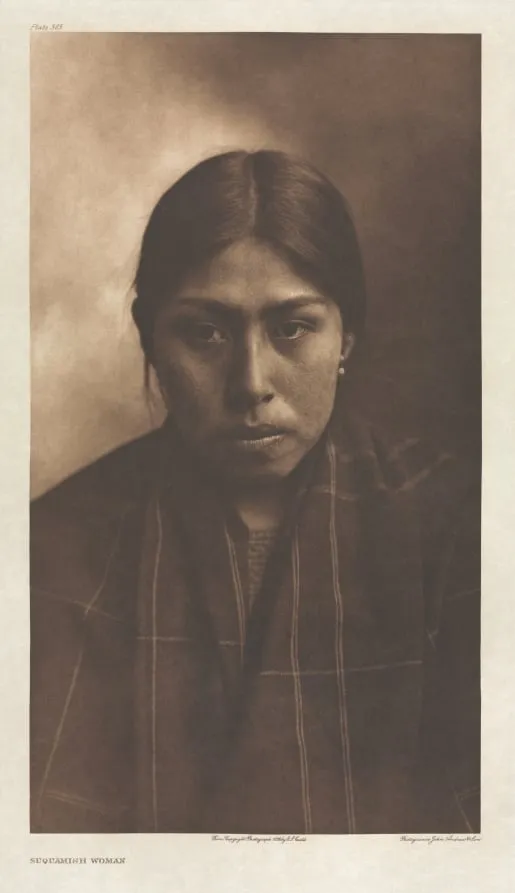
Portfolio IX, Plate 305: Suquamish Woman is a work on paper by the Impressionist artist Edward S. Curtis. It dates from 1899 and is held in the collection of the Cleveland Museum of Art.
About this work
Overview
Portfolio IX, Plate 305: Suquamish Woman is a photographic portrait from Edward S.
Portfolio IX, Plate 305: Suquamish Woman is a photographic portrait from Edward S. Curtis’s larger ethnographic project, completed in 1899. It is part of a series documenting Indigenous peoples of North America. The image is held in the collection of The Cleveland Museum of Art and exemplifies Curtis’s method of capturing individuals with solemn dignity, often isolating them against neutral backgrounds to emphasize presence over context.
Subject & Meaning
The subject is identified as a woman of the Suquamish people, a Coast Salish group from the Pacific Northwest. Her direct gaze and composed posture convey quiet authority. The absence of decorative elements or contextual clues shifts focus to her facial expression and personal bearing, suggesting an intention to represent individual identity rather than cultural stereotype, though the framing remains shaped by early 20th-century ethnographic conventions.
Technique & Style
Curtis employed soft, diffused lighting to model the woman’s face with subtle gradations of tone, avoiding harsh contrasts while still defining form. The dark, high-collared garment contrasts with her skin, drawing attention to her features. The plain background eliminates distraction, reinforcing a sense of stillness. The image’s tonal range and careful composition reflect the influence of pictorialist photography, prioritizing mood over documentary precision.
History & Provenance
This image was produced during Curtis’s extensive fieldwork in the Pacific Northwest, part of his multi-decade effort to document Native American life. It was later included in his monumental publication The North American Indian. The photograph entered The Cleveland Museum of Art’s collection through established acquisition channels, likely as part of a broader donation or purchase of Curtis’s photographic materials in the mid-20th century.
Context
Curtis’s work emerged amid growing anthropological interest in Indigenous cultures, often framed by the belief that these societies were vanishing. While his images preserved details of dress and appearance, they frequently removed contemporary elements to evoke an idealized past. This portrait reflects that tension—capturing a real person while conforming to a romanticized narrative of cultural disappearance.
Legacy
Curtis’s photographs, including this one, remain widely referenced in discussions of Indigenous representation. They are valued for their technical quality and historical record, yet critically examined for their role in shaping enduring stereotypes. Today, institutions like The Cleveland Museum of Art present such works with contextual framing, acknowledging both their aesthetic merit and the complex ethics of their creation.
Artist & collection

 Portfolio XVI, Plate 573: Acoma Water Girls
 Portfolio VIII, Plate 264: Lawyer - Nez Percé
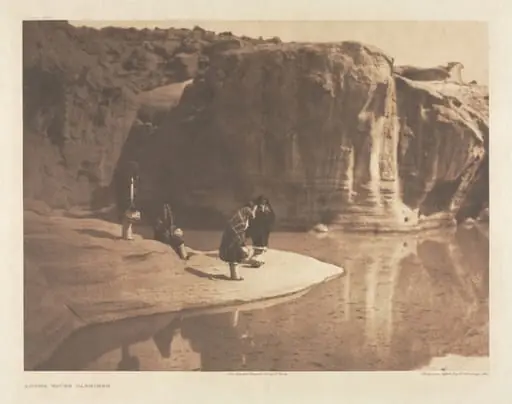 Portfolio XVI, Plate 568: Acoma Water Carriers
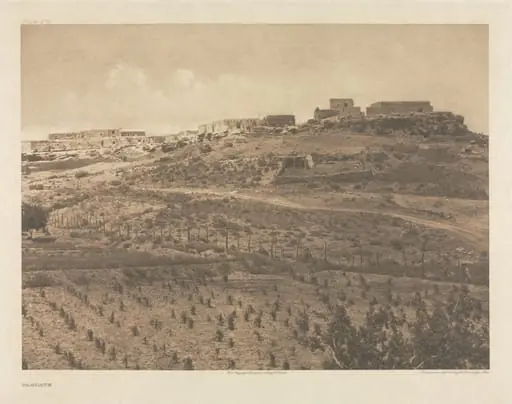 Portfolio XVI, Plate 574: Paguate
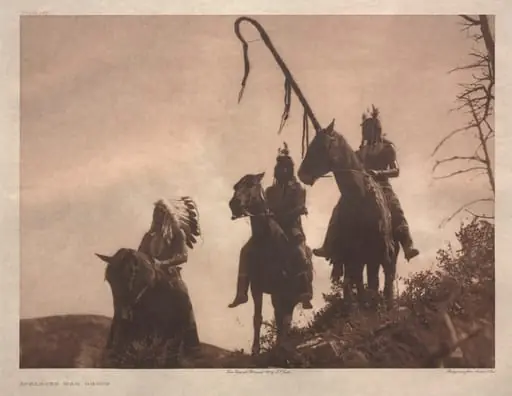 Portfolio IV, Plate 147: Apsaroke War Group
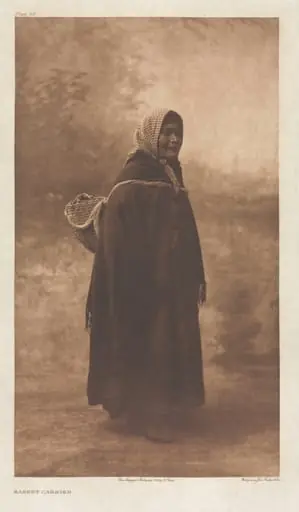 Portfolio IX, Plate 311: Basket Carrier
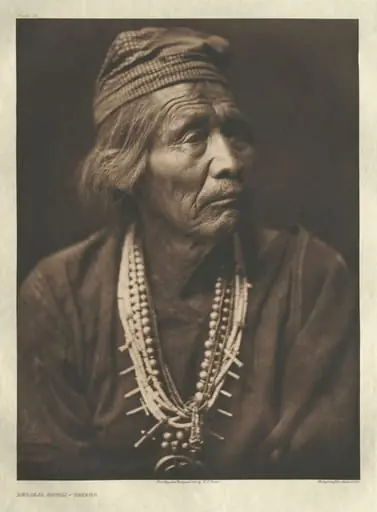 Portfolio I, Plate 31: Nesjája Hatáli-Navaho
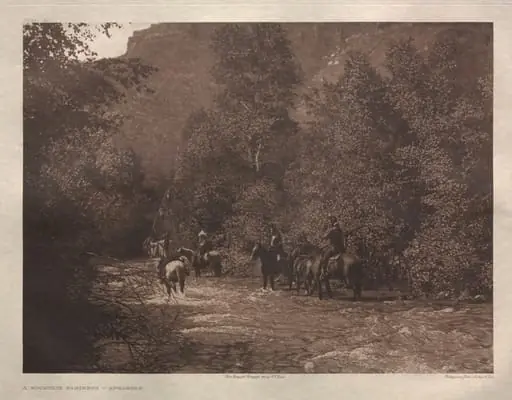 Portfolio IV, Plate 140: A Mountain Fastness--Apsaroke