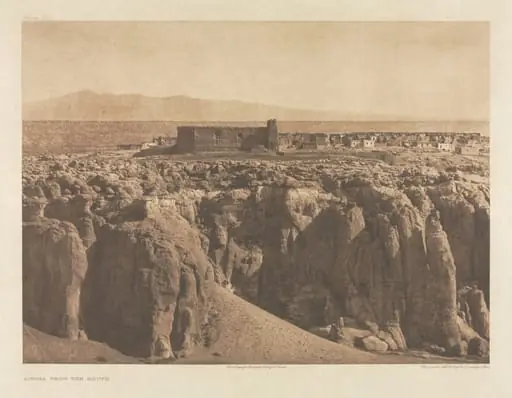
Artwork
Portfolio XVI, Plate 571: At the Old Well of Acoma
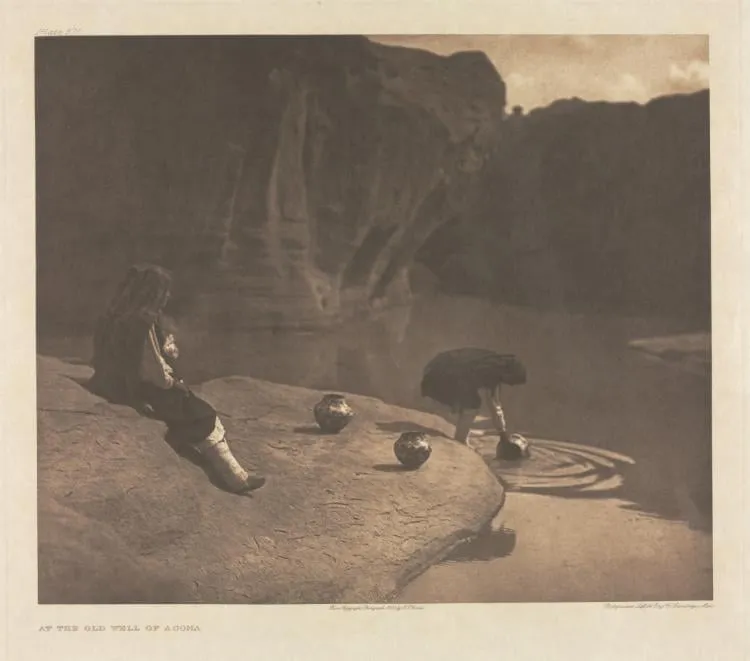
Portfolio XVI, Plate 571: At the Old Well of Acoma is a work on paper by Edward S. Curtis. It dates from 1904 and is held in the collection of the Cleveland Museum of Art.
About this work
Overview
It is part of a larger series intended to record cultural practices before they were altered by outside forces.
Portfolio XVI, Plate 571: At the Old Well of Acoma is one of 150 photographs Edward S. Curtis produced for his ethnographic project documenting Native American life. Created in 1904, this image captures a quiet scene at a traditional water source in the Acoma Pueblo. It is part of a larger series intended to record cultural practices before they were altered by outside forces. The work is now held in the collection of The Cleveland Museum of Art.
Subject & Meaning
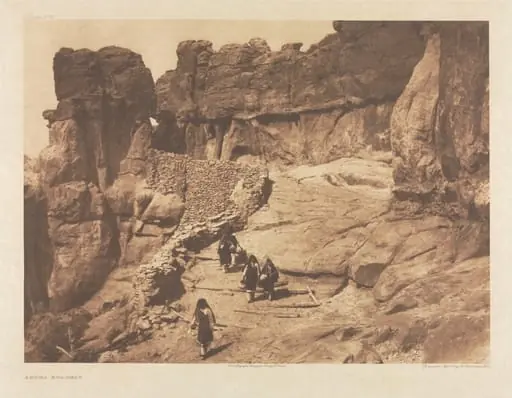
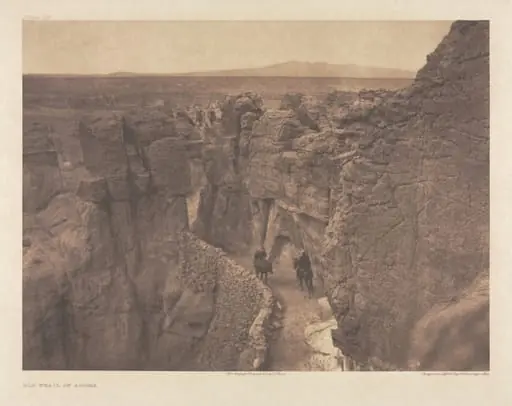
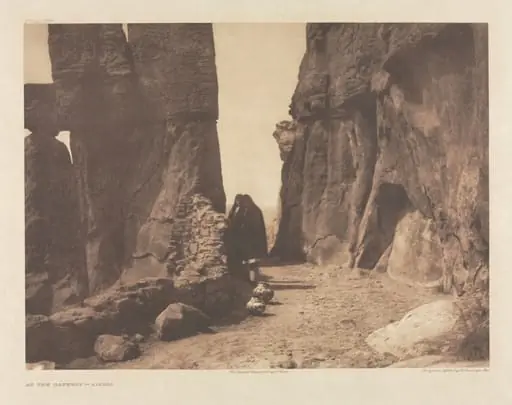
The photograph depicts a solitary figure seated beside a stone well, accompanied by a donkey and two metal vessels. The still water reflects muted light, emphasizing stillness and routine. The scene suggests daily labor—fetching water—without theatricality or staged drama. The title anchors the image in Acoma, a community with deep ancestral ties to the land, reinforcing the photograph’s role as a record of enduring cultural practices.
Technique & Style
Curtis used large-format film and long exposures to achieve fine detail and tonal depth. The composition is carefully balanced, with the well’s edge framing the figure and the donkey placed to guide the viewer’s eye. Soft lighting and a restrained palette enhance the quiet mood. The image avoids overt sentimentality, favoring observation over dramatization, consistent with Curtis’s broader documentary aims.
History & Provenance
This image was made during Curtis’s fieldwork in the American Southwest, part of his decade-long effort to compile The North American Indian. It was published in 1907 as part of Portfolio XVI, a limited-edition volume distributed to subscribers. The Cleveland Museum of Art acquired the original print, preserving it as a key artifact of early 20th-century ethnographic photography.
Context
Curtis worked during a period of intense cultural disruption for Indigenous communities. His project emerged amid federal policies aimed at assimilation and the erosion of traditional lifeways. While his images are often criticized for romanticism, this photograph avoids overt staging, offering a restrained glimpse into a functional, unremarkable moment—valuable as a record of continuity amid change.
Legacy
Curtis’s photographs remain primary visual sources for understanding Indigenous life at the turn of the century. Though later scholars have questioned his methods and motives, this image endures for its quiet authenticity. It contributes to ongoing conversations about representation, preservation, and the ethics of ethnographic documentation in American visual culture.
Artist & collection

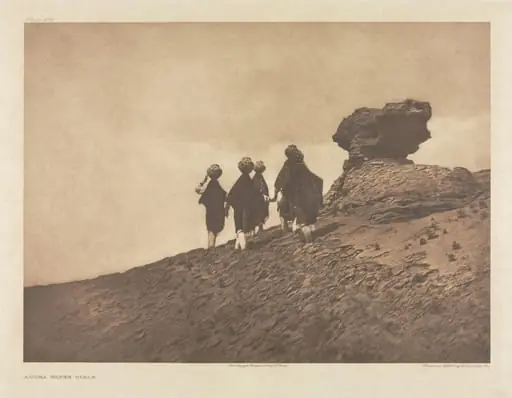 Portfolio XVI, Plate 573: Acoma Water Girls
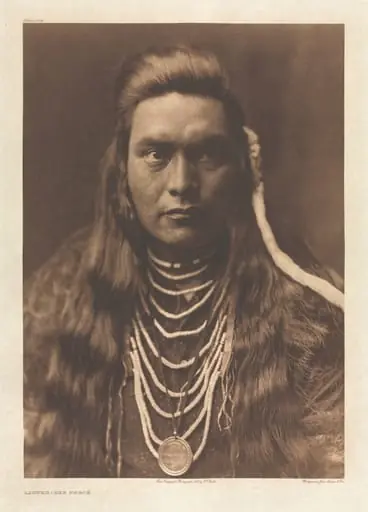 Portfolio VIII, Plate 264: Lawyer - Nez Percé
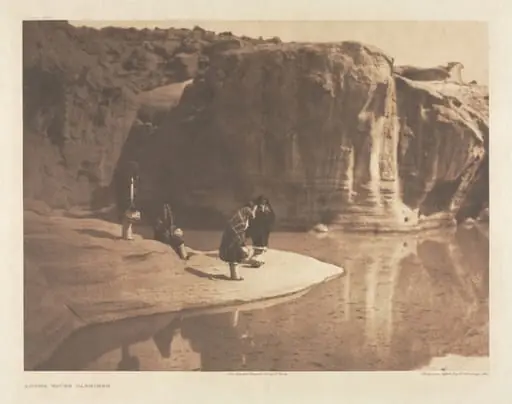 Portfolio XVI, Plate 568: Acoma Water Carriers
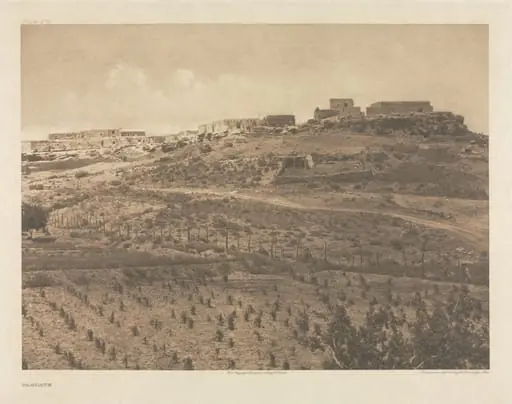 Portfolio XVI, Plate 574: Paguate
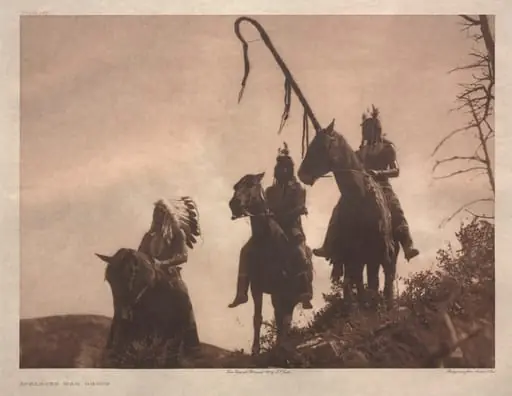 Portfolio IV, Plate 147: Apsaroke War Group
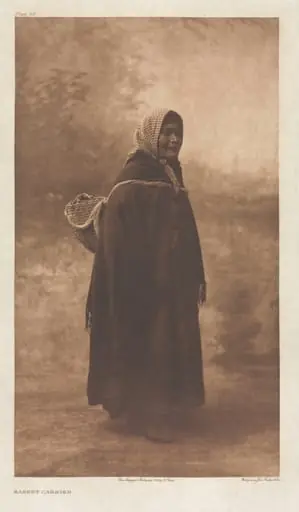 Portfolio IX, Plate 311: Basket Carrier
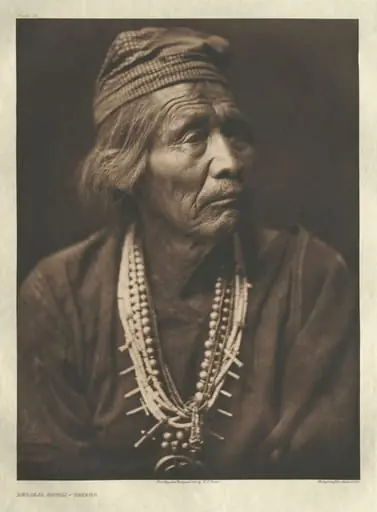 Portfolio I, Plate 31: Nesjája Hatáli-Navaho
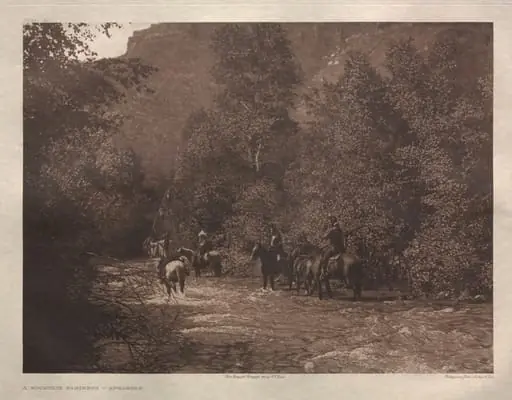 Portfolio IV, Plate 140: A Mountain Fastness--Apsaroke