Artwork
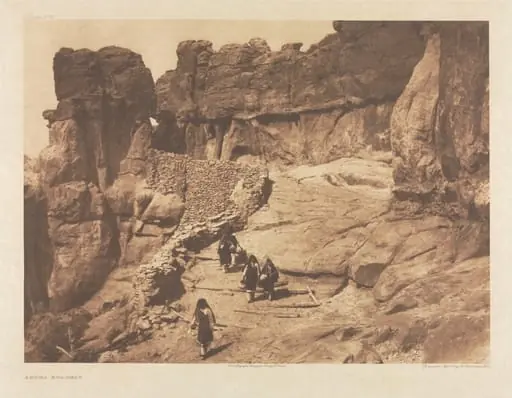
Portfolio XVI, Plate 567: Old Trail at Acoma
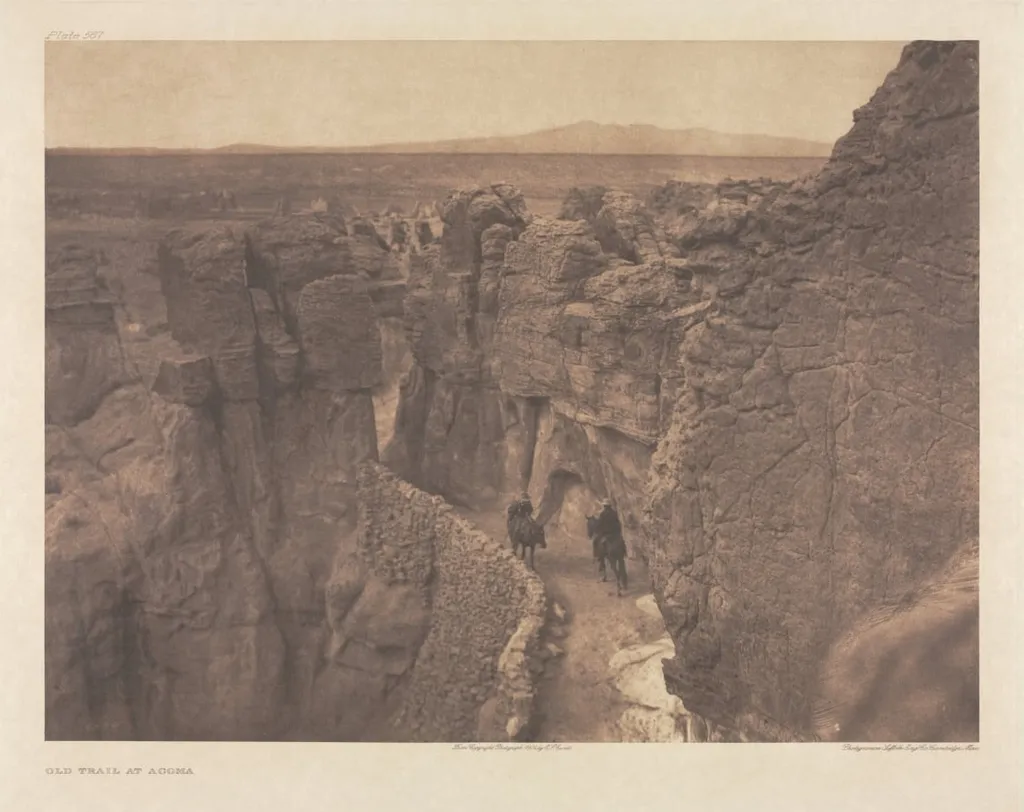
Portfolio XVI, Plate 567: Old Trail at Acoma is a work on paper by Edward S. Curtis. It dates from 1904 and is held in the collection of the Cleveland Museum of Art.
About this work
Overview
The work captures a remote landscape in New Mexico, emphasizing the relationship between human movement and the natural environment.
Portfolio XVI, Plate 567: Old Trail at Acoma is a black-and-white photograph from Edward S. Curtis’s larger project documenting Indigenous peoples of the American West. Created in 1904, it is one of many images in his ethnographic series, now held by The Cleveland Museum of Art. The work captures a remote landscape in New Mexico, emphasizing the relationship between human movement and the natural environment.
Subject & Meaning
The image shows two riders on horseback traversing a narrow path through a canyon, surrounded by towering cliffs. Their small scale against the vast terrain suggests solitude and endurance. The absence of overt cultural markers shifts focus to the land itself, implying a quiet persistence of Indigenous presence within a landscape shaped by time and tradition.
Technique & Style
Curtis employed large-format film and long exposures to achieve sharp detail and tonal depth. The composition uses the trail as a leading line, drawing the eye into the distance. The muted gray sky and textured rock surfaces enhance the image’s somber mood, while the careful framing avoids romanticization, favoring a restrained, documentary aesthetic.
History & Provenance
This photograph was produced during Curtis’s extensive fieldwork for The North American Indian, a multi-volume publication spanning two decades. It was later acquired by The Cleveland Museum of Art as part of its collection of early 20th-century photographic works, reflecting institutional interest in ethnographic imagery and American landscape photography.
Context
Curtis worked during a period of rapid cultural change for Native communities, as federal policies disrupted traditional lifeways. His photographs, though often criticized for staging, were intended as records of what he perceived as vanishing cultures. This image reflects his focus on place as a vessel for cultural memory, even when human figures are minimally present.
Legacy
The photograph contributes to ongoing discussions about representation, authenticity, and the role of photography in shaping perceptions of Indigenous life. While its aesthetic power is acknowledged, scholars continue to examine its position within colonial frameworks and the complex legacy of Curtis’s project as both archive and intervention.
Artist & collection

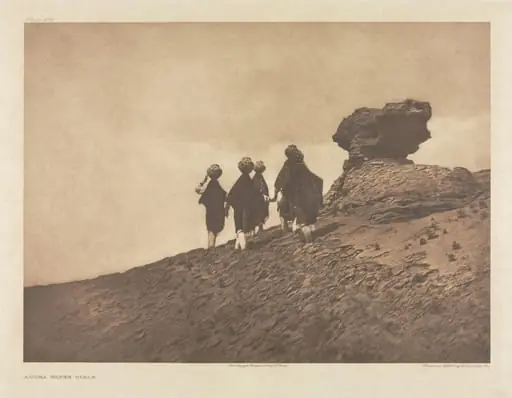 Portfolio XVI, Plate 573: Acoma Water Girls
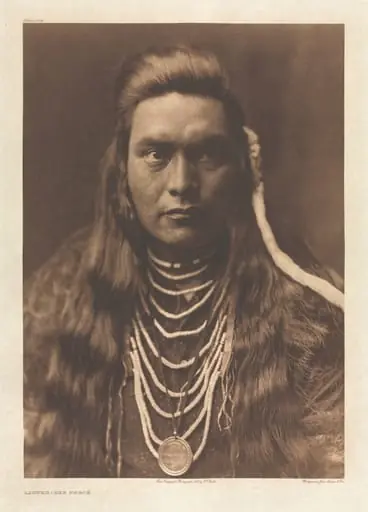 Portfolio VIII, Plate 264: Lawyer - Nez Percé
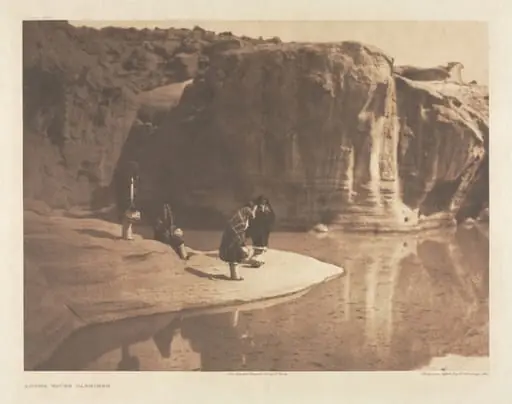 Portfolio XVI, Plate 568: Acoma Water Carriers
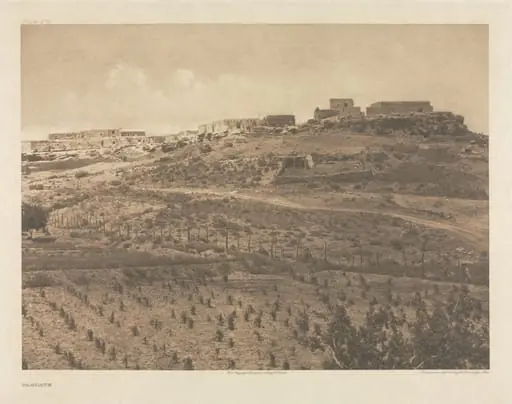 Portfolio XVI, Plate 574: Paguate
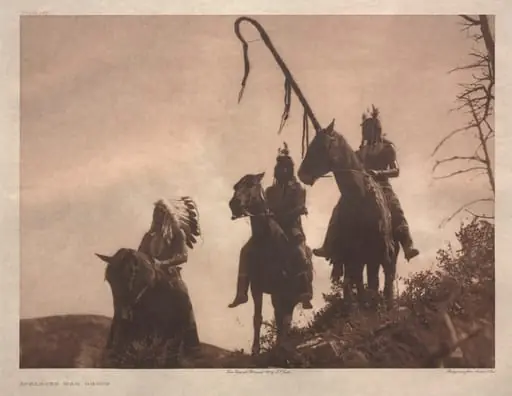 Portfolio IV, Plate 147: Apsaroke War Group
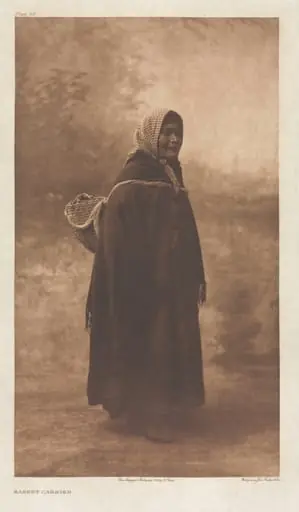 Portfolio IX, Plate 311: Basket Carrier
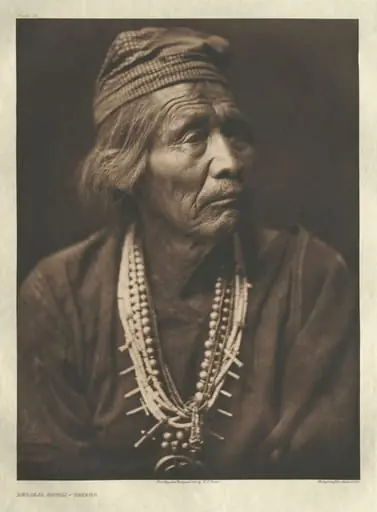 Portfolio I, Plate 31: Nesjája Hatáli-Navaho
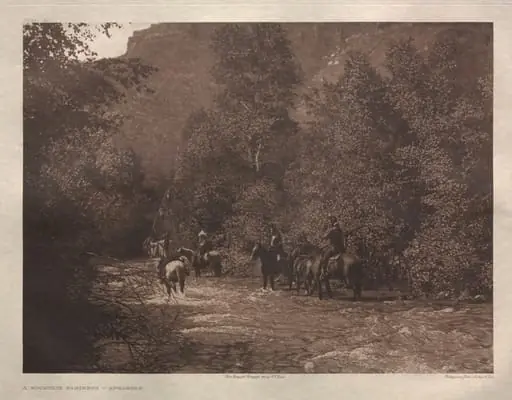 Portfolio IV, Plate 140: A Mountain Fastness--Apsaroke