Artwork
Portfolio XVII, Plates 580- 615
Portfolio XVII, Plates 580- 615 is a work on paper by Edward S. Curtis. It dates from 1914 and is held in the collection of the Cleveland Museum of Art. Portfolio XVII, Plates 580–615 is a bound collection of photographic prints by Edward S.
About this work
Overview
These plates are among hundreds created during his fieldwork, intended to preserve visual records of cultures he believed were disappearing.
Portfolio XVII, Plates 580–615 is a bound collection of photographic prints by Edward S. Curtis, produced in 1914 as part of his larger project documenting Indigenous peoples of North America. These plates are among hundreds created during his fieldwork, intended to preserve visual records of cultures he believed were disappearing. The portfolio is held in the collection of The Cleveland Museum of Art, where it is preserved as a historical document rather than a work of fine art in the traditional sense.
Subject & Meaning
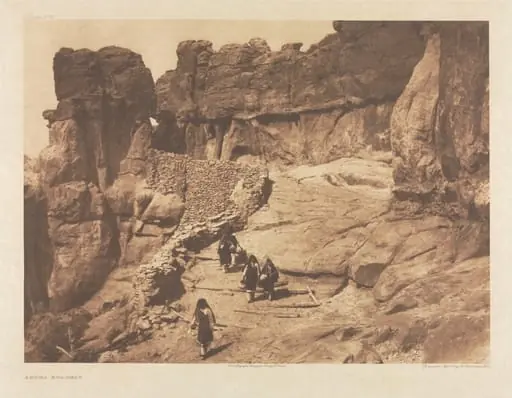
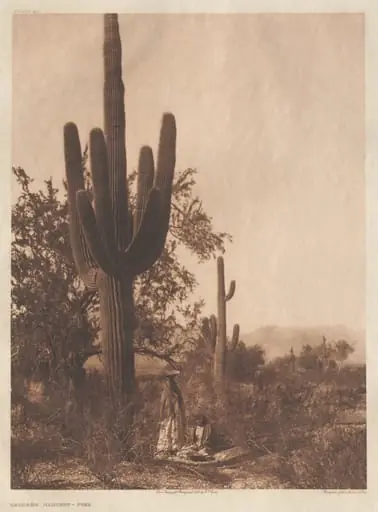
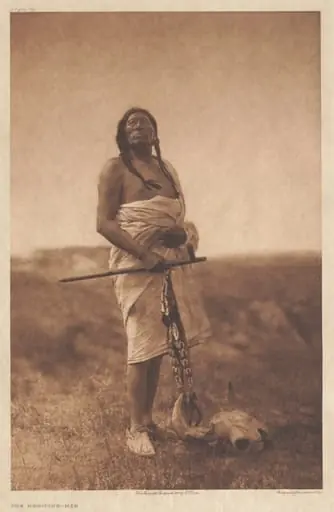
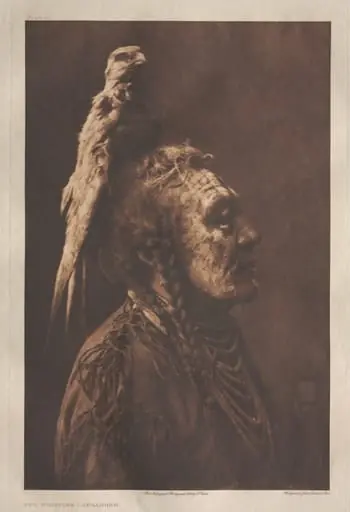
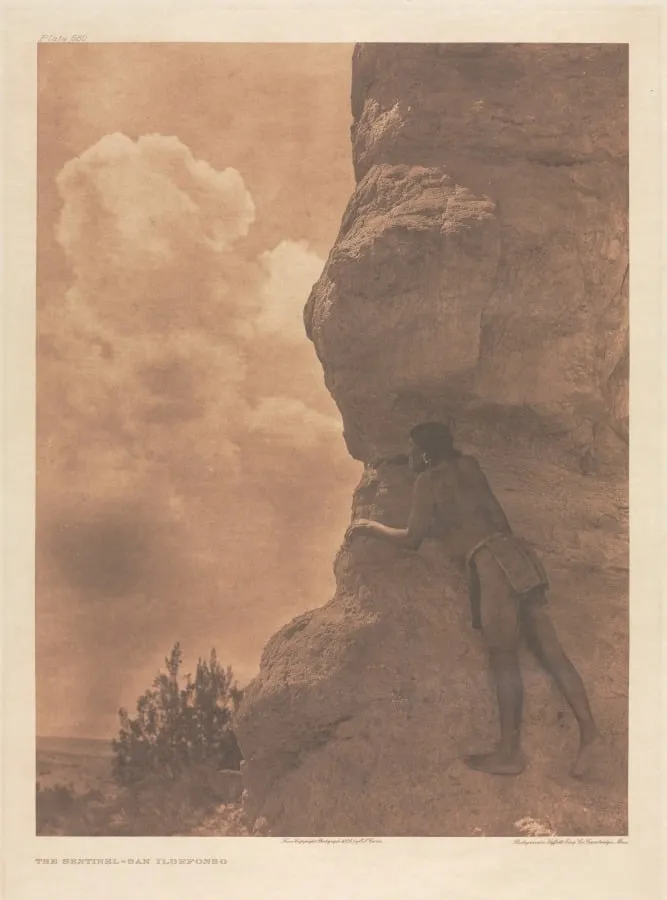
The images in these plates depict individuals from Native American communities, often posed in traditional attire and settings. One plate shows a man standing on a rocky ledge, clad in a loincloth and wrapped cloth, gazing toward a storm-lit sky. The composition suggests introspection, but the intent was not artistic expression—it was ethnographic documentation, framing the subject as a representative of a vanishing way of life, shaped by Curtis’s own cultural assumptions of the time.
Technique & Style
Curtis employed large-format plate cameras and hand-coloring techniques to achieve tonal richness. The muted palette of browns and beiges reflects natural pigments and the limitations of early photographic processes. Soft lighting and careful staging create a sense of depth, with chiaroscuro effects enhancing the texture of rock and fabric. These stylistic choices were deliberate, aiming to evoke a romanticized, timeless quality rather than capture spontaneous moments.
History & Provenance
Created between 1900 and 1930, Portfolio XVII was part of Curtis’s 20-volume The North American Indian, funded by J.P. Morgan. The plates were printed on thin paper and bound into limited editions, distributed to libraries and institutions. The Cleveland Museum of Art acquired its copy as part of its broader collection of early 20th-century photographic documentation, preserving it as a record of both cultural history and the methods of its time.
Context
Curtis worked during a period of intense assimilation policies targeting Native communities. His project emerged from a belief that Indigenous cultures were on the verge of extinction, prompting a rush to document them. While his images are now studied for their visual detail, they also reflect the paternalism and romanticism of early anthropology, often staging scenes to conform to prevailing stereotypes rather than capturing lived reality.
Legacy
Curtis’s portfolio remains a contested resource: valued for its scale and visual archive, yet criticized for its constructed narratives. Contemporary scholars use the plates to examine how photography shaped perceptions of Native identity, while Indigenous communities have reclaimed the images as tools for cultural reconnection. The work endures not as a definitive record, but as a complex artifact of its era’s ideologies and ambitions.
Artist & collection

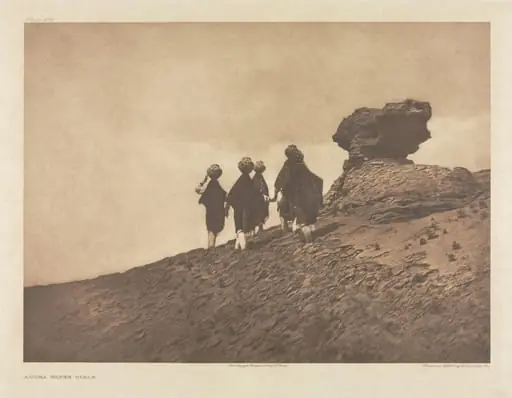 Portfolio XVI, Plate 573: Acoma Water Girls
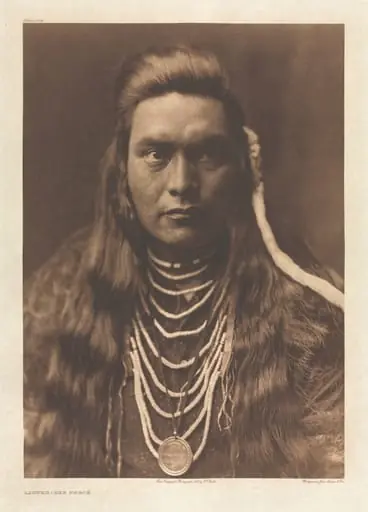 Portfolio VIII, Plate 264: Lawyer - Nez Percé
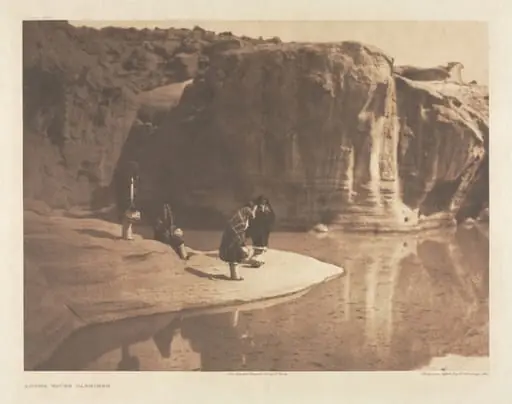 Portfolio XVI, Plate 568: Acoma Water Carriers
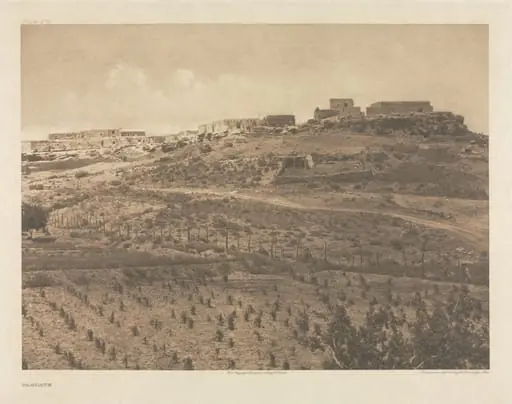 Portfolio XVI, Plate 574: Paguate
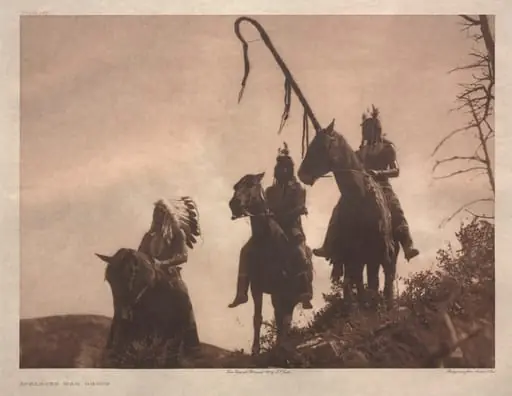 Portfolio IV, Plate 147: Apsaroke War Group
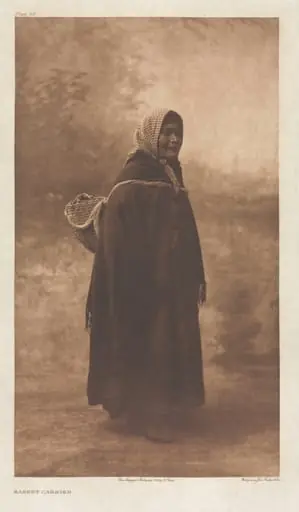 Portfolio IX, Plate 311: Basket Carrier
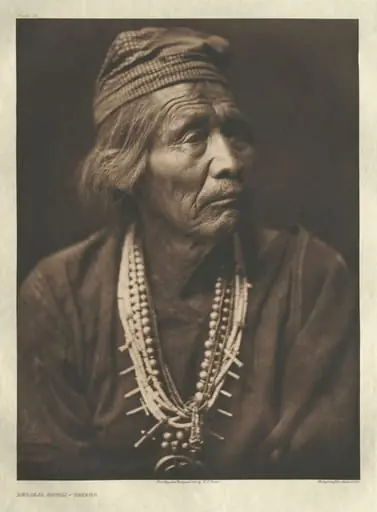 Portfolio I, Plate 31: Nesjája Hatáli-Navaho
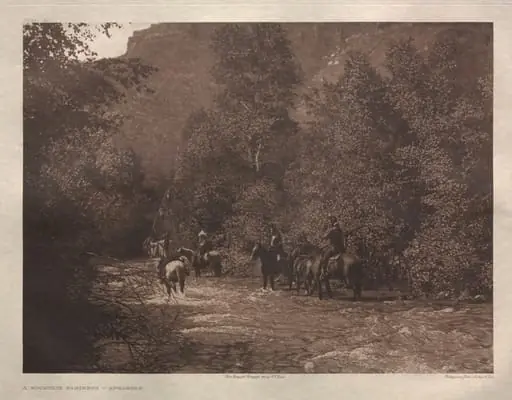 Portfolio IV, Plate 140: A Mountain Fastness--Apsaroke