Artwork
Portfolio XVII, Plate 583: On the Rio Grande - San Ildefonso
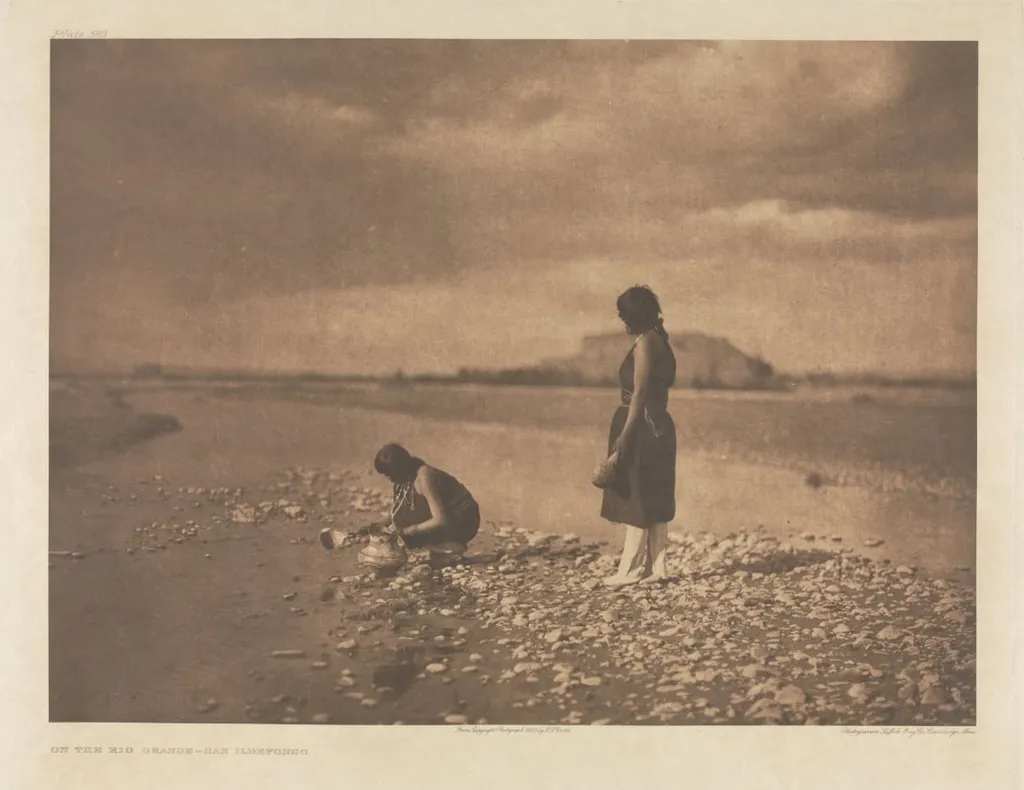
Portfolio XVII, Plate 583: On the Rio Grande - San Ildefonso is a work on paper by Edward S. Curtis. It dates from 1905 and is held in the collection of the Cleveland Museum of Art. This image is part of Edward S.
About this work
Overview
This image is part of Edward S. Curtis’s larger project documenting Indigenous peoples of North America. Created in 1905, it appears as Plate 583 in Portfolio XVII, a volume dedicated to the Pueblo communities of the Southwest. The photograph was produced during Curtis’s extensive fieldwork and is now held in the collection of The Cleveland Museum of Art.
Subject & Meaning
The photograph captures a moment along the Rio Grande near San Ildefonso Pueblo, focusing on the landscape and its relationship to the people who live there. Rather than centering individuals, it emphasizes the environment—river, rock, and sky—as integral to cultural continuity. The image reflects Curtis’s intent to portray Native life as inseparable from its natural setting.
Technique & Style
Curtis used large-format film and long exposure times to achieve fine detail and tonal depth. The composition is carefully balanced, with soft light enhancing the textures of earth and water. His approach favored atmospheric quiet over dramatic action, aligning with the pictorialist tradition that valued mood and composition over documentary immediacy.
History & Provenance
The photograph was made during Curtis’s decade-long expedition funded by J.P. Morgan. It was later included in his 20-volume series The North American Indian. The Cleveland Museum of Art acquired the print as part of its collection of early 20th-century photographic works, preserving it as a key example of Curtis’s method and vision.
Context
At the time of its creation, federal policies sought to assimilate Native communities, while public interest in Indigenous cultures was often romanticized. Curtis’s work emerged amid this tension—offering images that, while idealized, preserved visual records of lifeways undergoing rapid change due to displacement and cultural erosion.
Legacy
Though later criticized for staging and omission, Curtis’s photographs remain significant as historical documents. This image contributes to a visual archive that continues to inform discussions about representation, memory, and the complex relationship between photography and cultural preservation in the American West.
Artist & collection

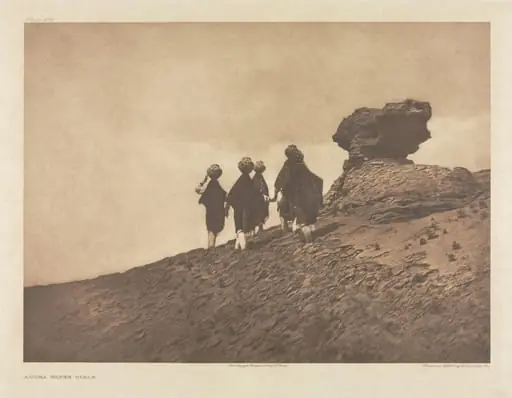 Portfolio XVI, Plate 573: Acoma Water Girls
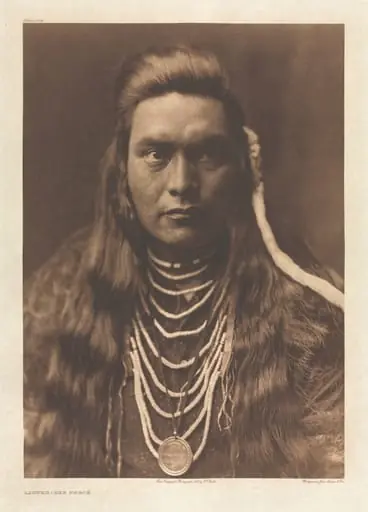 Portfolio VIII, Plate 264: Lawyer - Nez Percé
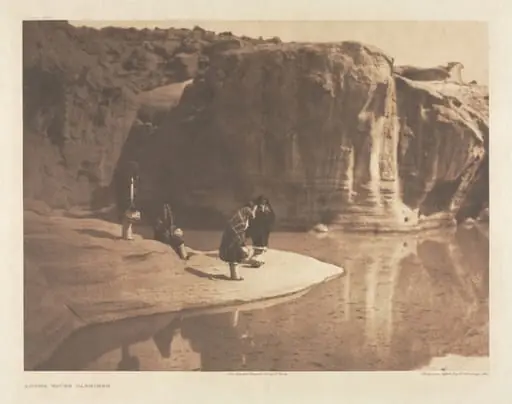 Portfolio XVI, Plate 568: Acoma Water Carriers
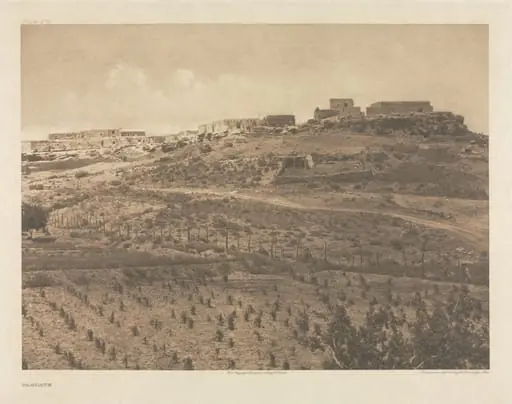 Portfolio XVI, Plate 574: Paguate
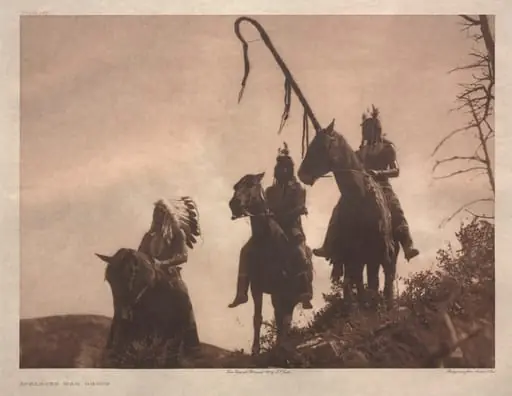 Portfolio IV, Plate 147: Apsaroke War Group
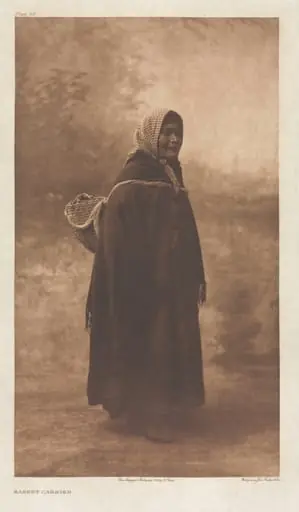 Portfolio IX, Plate 311: Basket Carrier
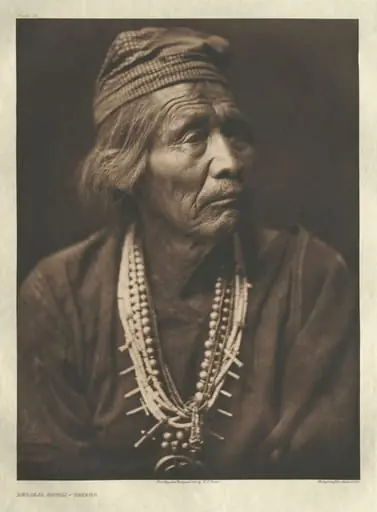 Portfolio I, Plate 31: Nesjája Hatáli-Navaho
 Portfolio IV, Plate 140: A Mountain Fastness--Apsaroke
 Portfolio XVII, Plate 591: In the Gray Morning - San Ildefonso
 Portfolio XVII, Plate 585: The Fruit Gatherer - San Ildefonso
 Portfolio XVII, Plate 588: Tablita Dancers and Singers - San Ildefonso
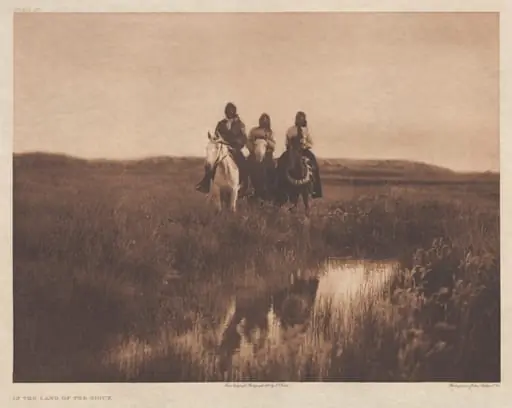 Portfolio III, Plate 95: In the Land of the Sioux
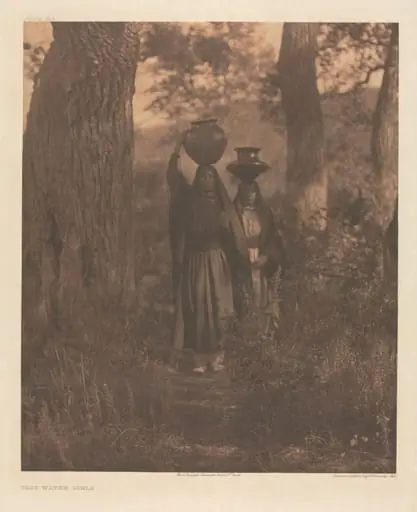 Portfolio XVI, Plates 544- 579
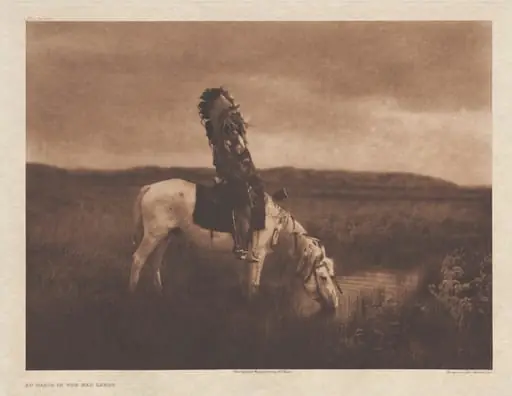 Portfolio III, Plate 80: An Oasis on the Bad Lands
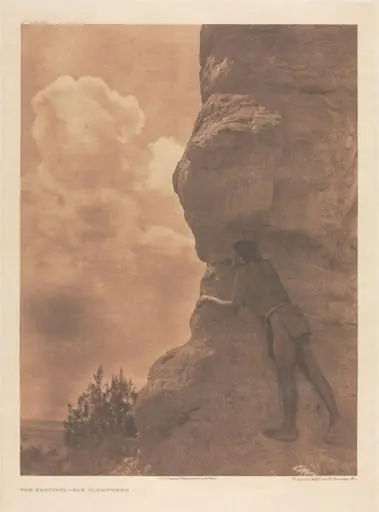 Portfolio XVII, Plates 580- 615
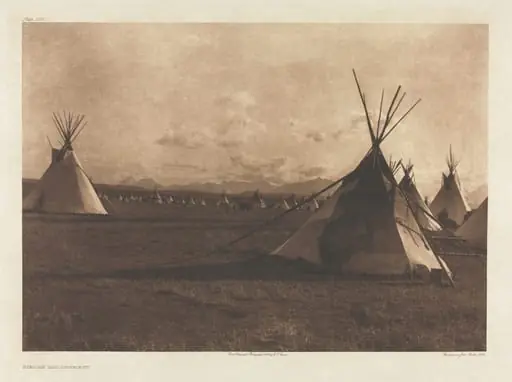 Portfolio VI, Plate 207: Piegan Encampment