Artwork
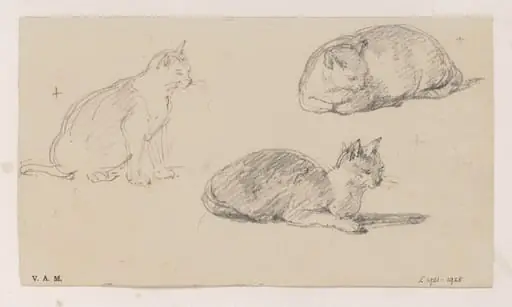
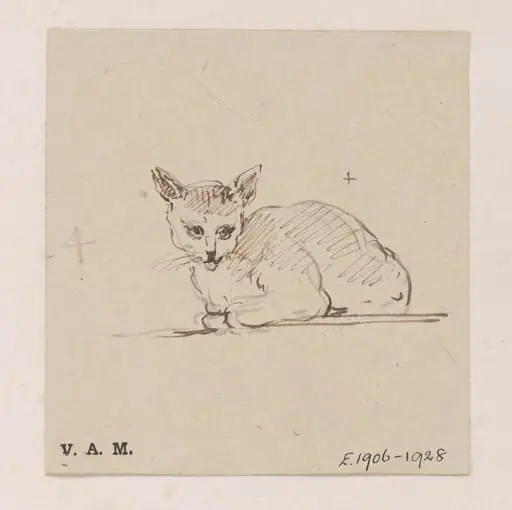
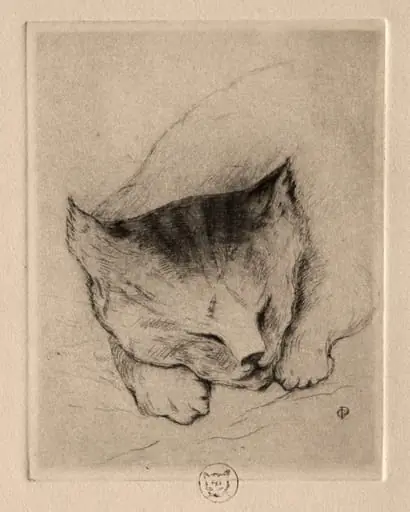
Drawing of a cat
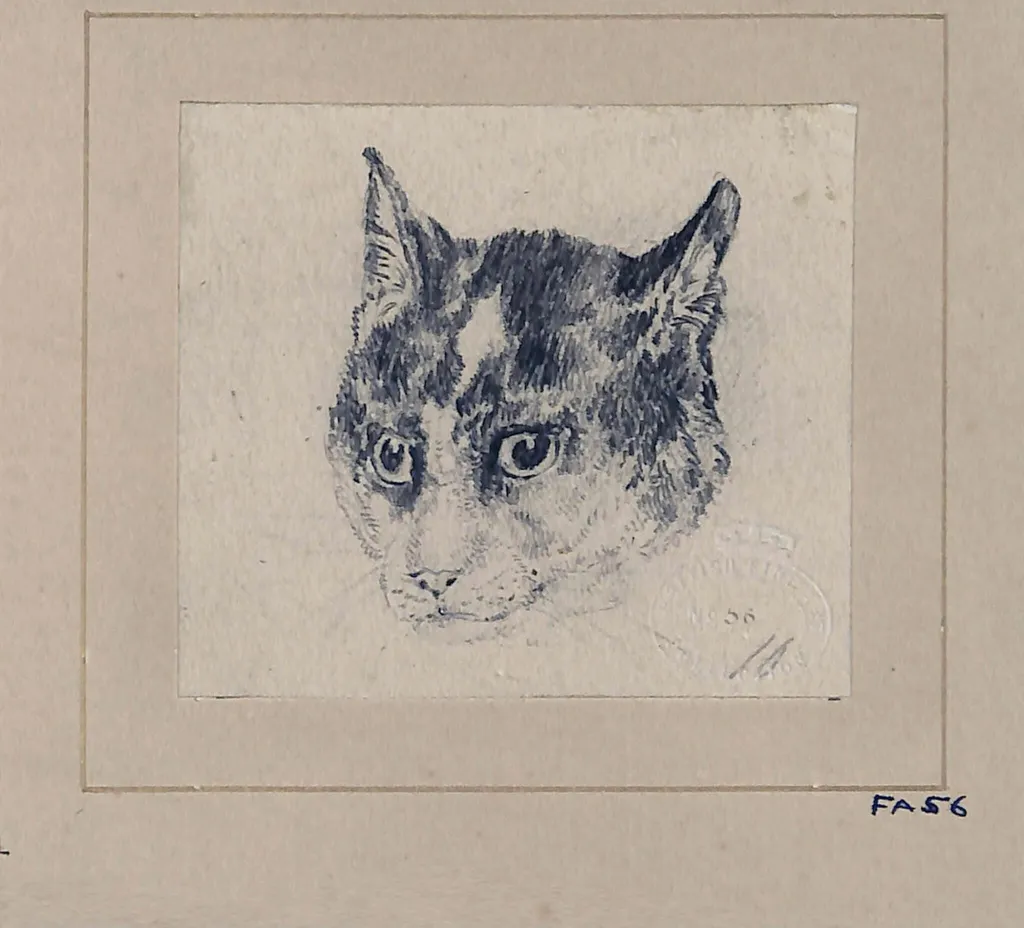
Drawing of a cat is a drawing by the Romanticist artist Edwin Landseer. It dates from 1812 and is held in the collection of the Victoria and Albert Museum.
About this work
Overview
Created in 1812 by Edwin Landseer, this drawing depicts a cat’s head in monochrome. Executed in pencil or charcoal, it belongs to a group of early works donated by John Sheepshanks, which document the artist’s formative studies. These pieces reflect Landseer’s early engagement with direct observation, moving beyond academic copying toward a more intimate rendering of animal life.
Subject & Meaning
The subject is a domestic cat, captured mid-moment with ears alert and head tilted slightly. Its gaze, directed leftward, suggests awareness of something just beyond the frame. Rather than idealized or symbolic, the cat is presented as a living, sentient being—its stillness and attentiveness evoking quiet presence rather than narrative or allegory.
Technique & Style
Landseer employs controlled, confident lines and graded shading to suggest the texture of fur and the form of the skull. Fine hatching builds volume, while delicate strokes define individual whiskers and the soft contours around the eyes. The contrast between dark shadows and untouched paper enhances the three-dimensionality of the head, demonstrating an early mastery of tonal modeling.
History & Provenance
The drawing was part of a larger collection of Landseer’s juvenile sketches bequeathed to the South Kensington Museum by John Sheepshanks in the mid-19th century. These works were preserved as evidence of the artist’s development, offering insight into his transition from childhood studies to professional animal portraiture. The piece remains within the museum’s permanent holdings.
Context
In early 19th-century Britain, detailed animal studies were gaining traction among artists interested in naturalism. Landseer’s focus on domestic creatures aligned with broader cultural fascination with pets and the emotional lives of animals. Though not yet associated with Romanticism’s grand themes, his attention to individual character foreshadowed its empathetic approach to nature.
Legacy
This early work illustrates Landseer’s lifelong commitment to observing animals with precision and sensitivity. It laid groundwork for his later fame as a painter of dogs and horses, establishing a visual language rooted in close study rather than convention. The drawing remains a quiet but significant marker of his artistic origins.
Artist & collection

Artist
Sir Edwin Henry Landseer was an English painter and sculptor, well known for his paintings of animals – particularly horses, dogs, and stags. His best-known work is the lion sculptures at the base of Nelson's Column in Trafalgar Square.