Artwork
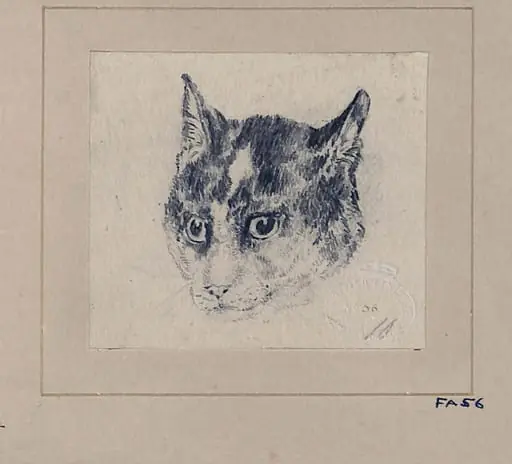
Six Etchings: Head of a Kitten
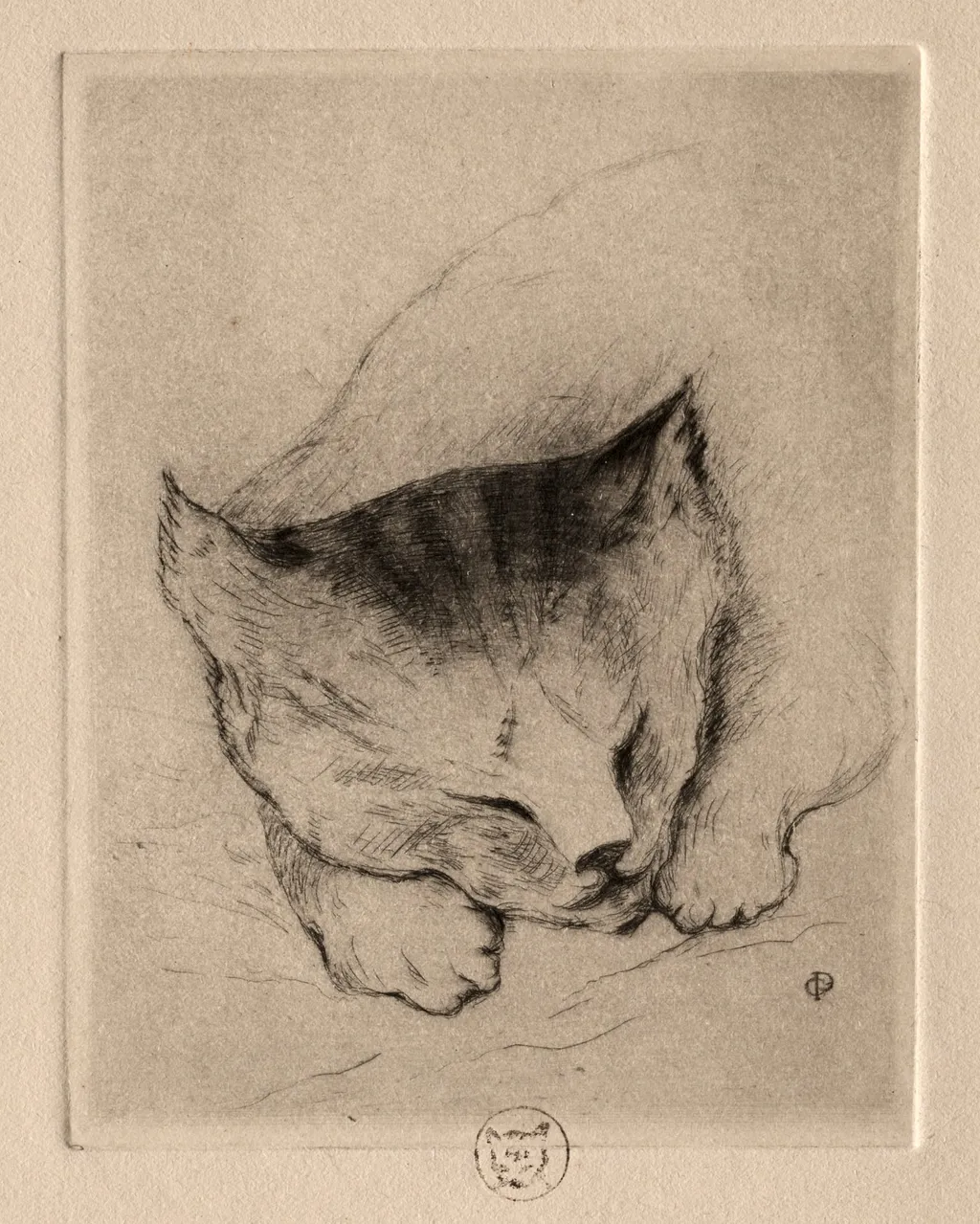
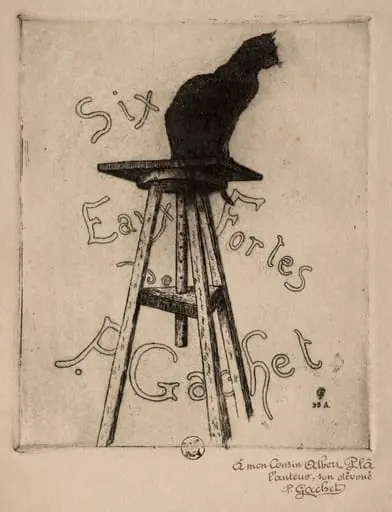
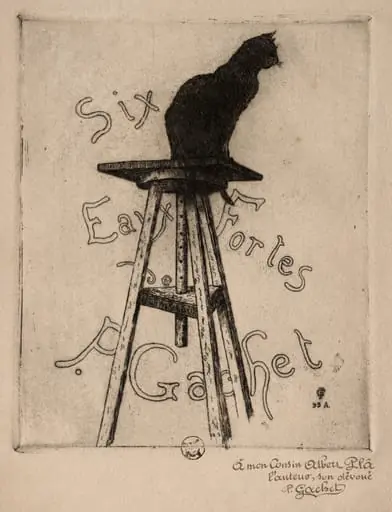
Six Etchings: Head of a Kitten is a print by the Impressionist artist Paul Gachet. It dates from 1895 and is held in the collection of the Cleveland Museum of Art.
About this work
Overview
Created in 1895, *Six Etchings: Head of a Kitten* is one of six small etchings by Paul Gachet, a French physician with a keen interest in printmaking.
Created in 1895, *Six Etchings: Head of a Kitten* is one of six small etchings by Paul Gachet, a French physician with a keen interest in printmaking. Though primarily known for his medical work with Vincent van Gogh, Gachet produced a modest body of artistic work under the pseudonym Paul van Ryssel, a nod to his Lille origins. This piece exemplifies his quiet, observational approach to animal subjects, rendered with precision and sensitivity.
Subject & Meaning
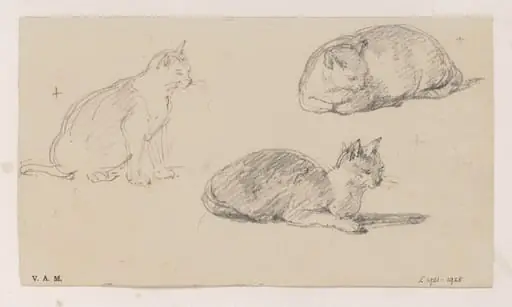
The etching focuses narrowly on a kitten’s head and forepaws, capturing a moment of stillness. The half-closed eyes and relaxed posture suggest rest or quiet alertness, evoking intimacy rather than narrative. Gachet’s attention to minute details—whiskers, tufted fur, the curve of the paws—transforms a simple study into a quiet meditation on presence. The subject reflects a broader 19th-century interest in domestic life and the subtle beauty of ordinary creatures.
Technique & Style
Gachet employed fine, incised lines to suggest texture and form, using varied pressure to differentiate between soft fur and sharper contours. The fur is rendered with short, irregular strokes that imply volume without overdetailing, while the paws and ears are defined with cleaner, more deliberate marks. The absence of heavy shading creates a delicate tonal range, relying on line density to suggest depth and light, a hallmark of intimate etching practice.
History & Provenance
The etching entered the collection of The Cleveland Museum of Art through documented acquisition, though its earlier ownership remains unrecorded. As part of a small series, it was likely produced for personal or private circulation rather than public exhibition. Gachet’s use of a pseudonym suggests a deliberate separation between his medical identity and artistic pursuits, reflecting the era’s blurred boundaries between amateur and professional practice.
Context
Gachet’s work emerged within the broader circle of late 19th-century French artists who valued direct observation and informal subjects. Though not formally trained, his etchings align with the Impressionist ethos of capturing fleeting moments and everyday beauty. His focus on animals, particularly domestic ones, parallels similar studies by contemporaries like Degas and Toulouse-Lautrec, who also explored motion and stillness in non-human subjects.
Legacy
Though Gachet’s artistic output was limited and largely overshadowed by his medical role, his etchings remain as quiet testaments to his perceptiveness. *Head of a Kitten* exemplifies how amateur artists contributed to the visual culture of the time, bridging scientific observation and artistic sensitivity. The work continues to be studied for its understated technique and its reflection of the era’s intimate, observational aesthetic.
Own this work as a print
Artist & collection
Artist
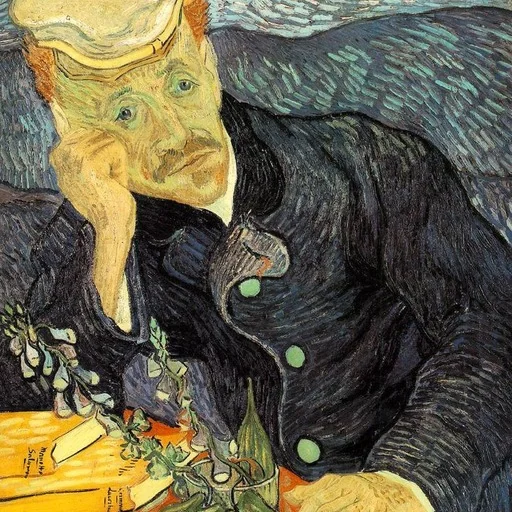
Paul-Ferdinand Gachet (30 July 1828 – 9 January 1909) was a French physician most famous for treating the painter Vincent van Gogh during his last weeks in Auvers-sur-Oise.