Artwork
Agony in the Garden
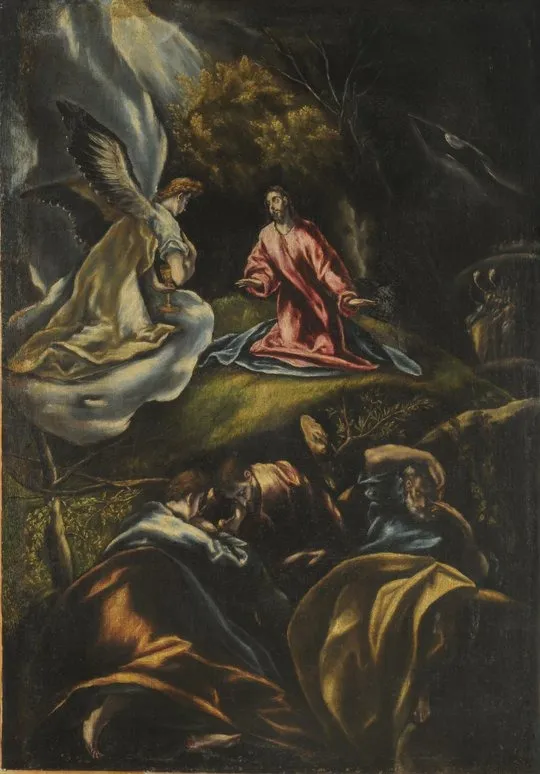
Agony in the Garden is an oil painting by the Mannerist artist El Greco. It dates from 1604 and is held in the collection of the National Museum of Fine Arts, Argentina.
About this work
Overview
Its composition reflects the spiritual intensity characteristic of late Mannerist art, emphasizing emotional depth over naturalistic representation.
Painted in 1604, Agony in the Garden is an oil on canvas work by El Greco, depicting a moment from the New Testament when Christ prays in Gethsemane before his arrest. The painting is part of the collection at the National Museum of Fine Arts in Buenos Aires. Its composition reflects the spiritual intensity characteristic of late Mannerist art, emphasizing emotional depth over naturalistic representation.
Subject & Meaning
The scene captures Christ in prayer, his outstretched hands conveying surrender and anguish, as an angel presents him a chalice symbolizing the cup of suffering. Behind him, three apostles sleep, illustrating human frailty in contrast to divine resolve. The dark, undulating landscape amplifies the isolation of the moment, reinforcing the theological theme of solitary sacrifice amid human neglect.
Technique & Style
El Greco employs chiaroscuro to heighten the drama, with stark contrasts between the illuminated figure of Christ and the enveloping shadows. His elongated forms and fluid brushwork, typical of Mannerism, distort proportion to evoke spiritual tension. The angel’s expansive wings and Christ’s ethereal glow create a sense of otherworldliness, while the muted palette of browns, deep reds, and blacks grounds the scene in solemnity.
History & Provenance
Commissioned during El Greco’s later years in Toledo, the painting entered the collection of the National Museum of Fine Arts in Buenos Aires in the early 20th century. Its journey from Spain to Argentina reflects broader patterns of European art dispersal. While its early ownership is not fully documented, its stylistic consistency with El Greco’s known works from the 1600s supports its attribution.
Context
Created amid the Counter-Reformation, the painting aligns with Catholic efforts to evoke personal devotion through emotionally charged religious imagery. El Greco’s departure from Renaissance harmony reflects a shift toward introspective spirituality. The work resonates with contemporary devotional practices that emphasized Christ’s suffering as a model for faithful endurance.
Legacy
Though not widely exhibited in major European collections, the painting remains a significant example of El Greco’s mature style. Its emotional intensity and formal experimentation influenced later artists exploring psychological depth in religious subjects. In Argentina, it stands as a rare European Old Master work that continues to shape local engagement with Baroque-era spirituality.
Artist & collection
Artist
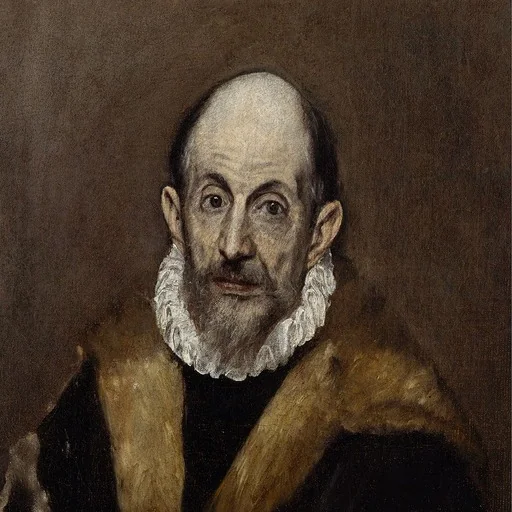
Doménikos Theotokópoulos was born in 1541 in Candia (modern Heraklion), the capital of Venetian-ruled Crete, where he was trained in the post-Byzantine tradition of icon painting.

Museum
National Museum of Fine Arts, Argentina
Continue through works from the same source collection.