Artwork
Saint Andrew
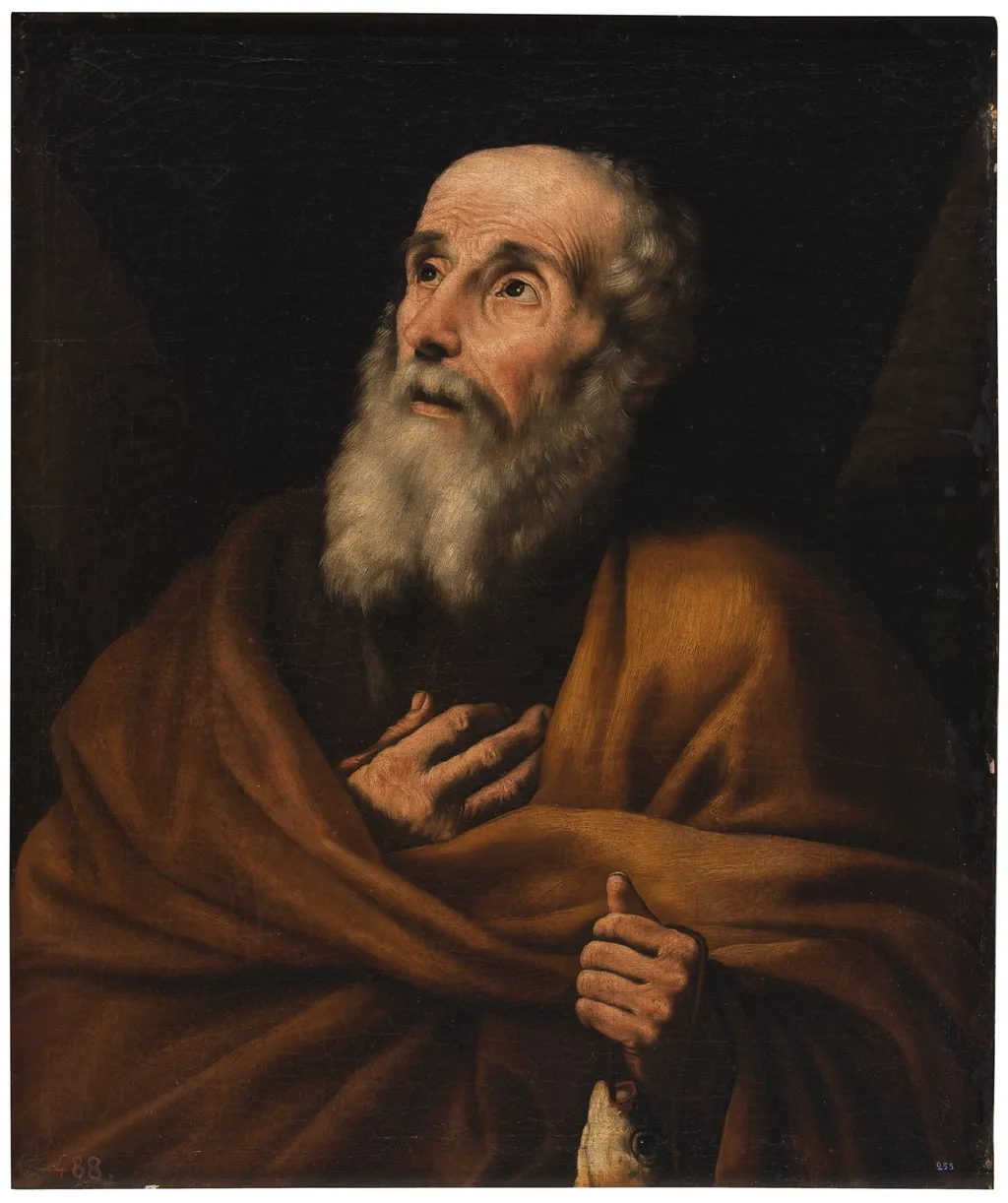
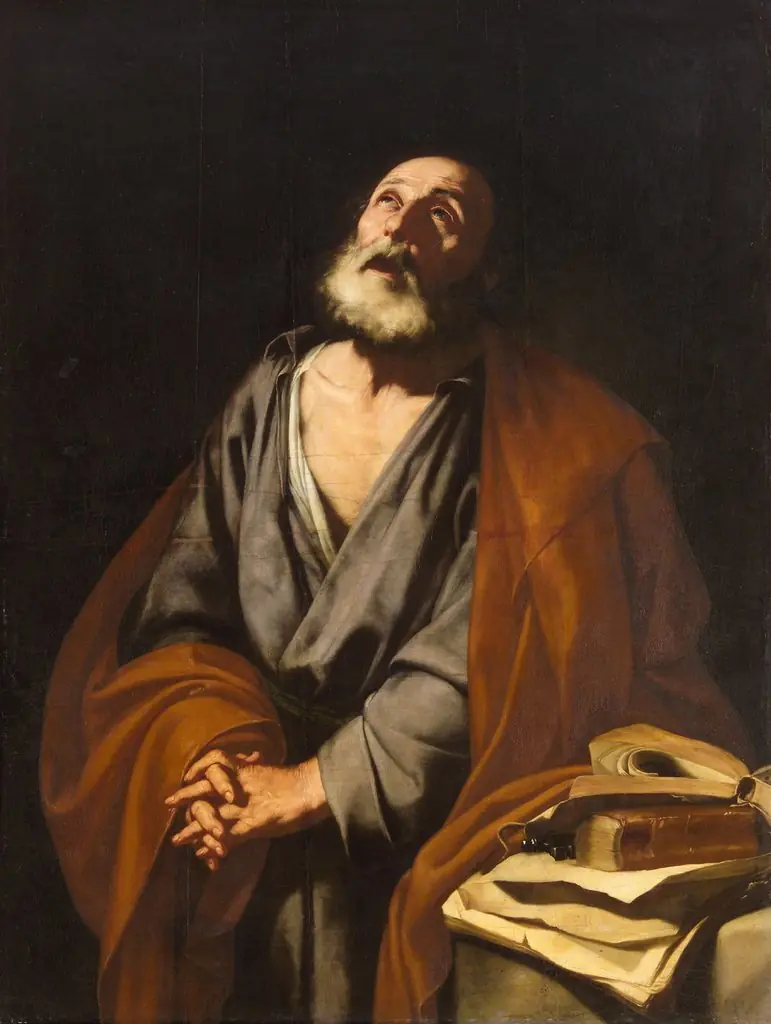
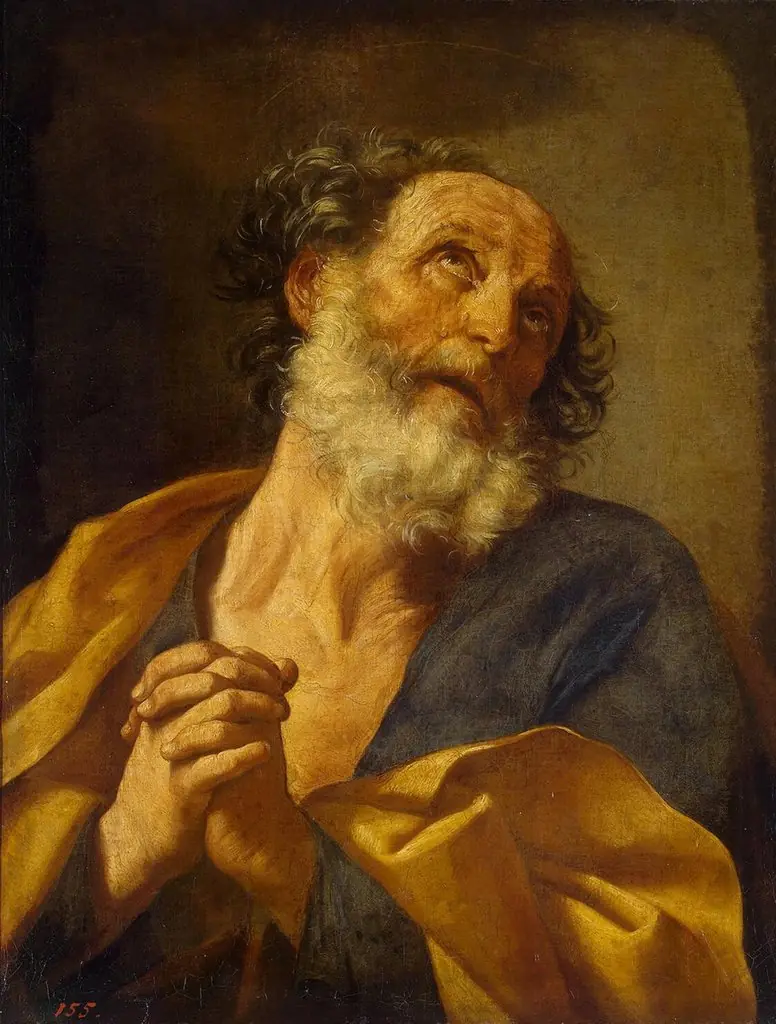
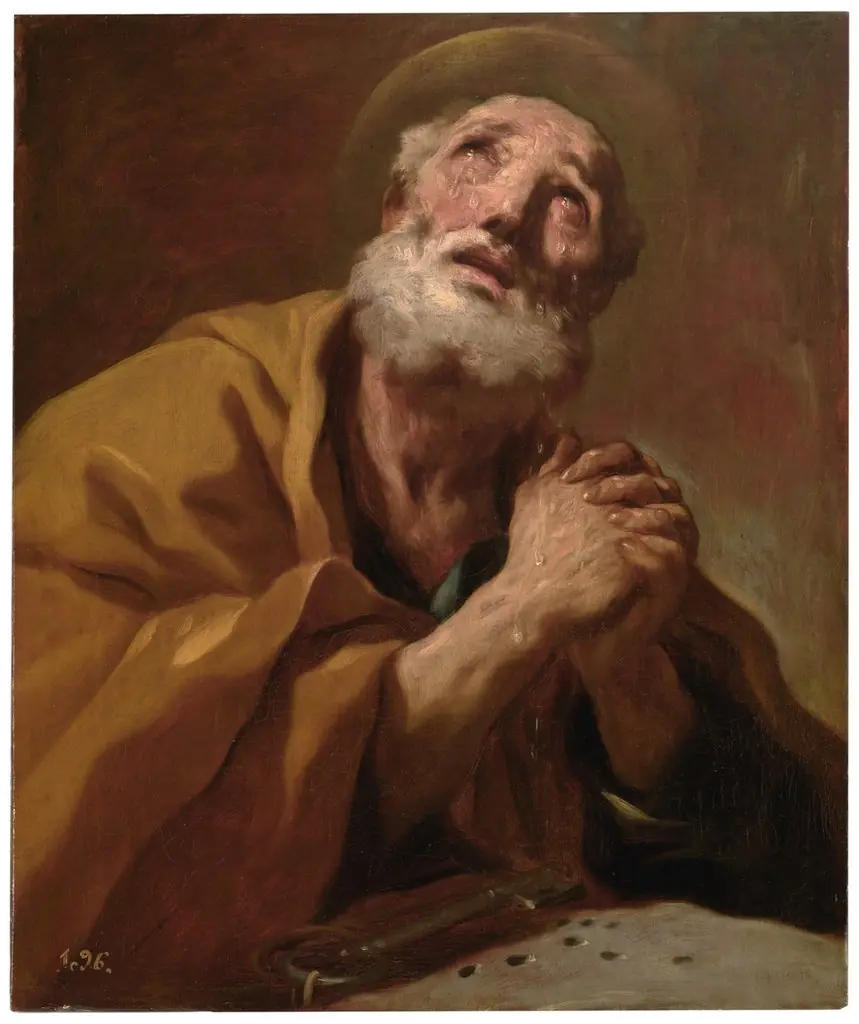
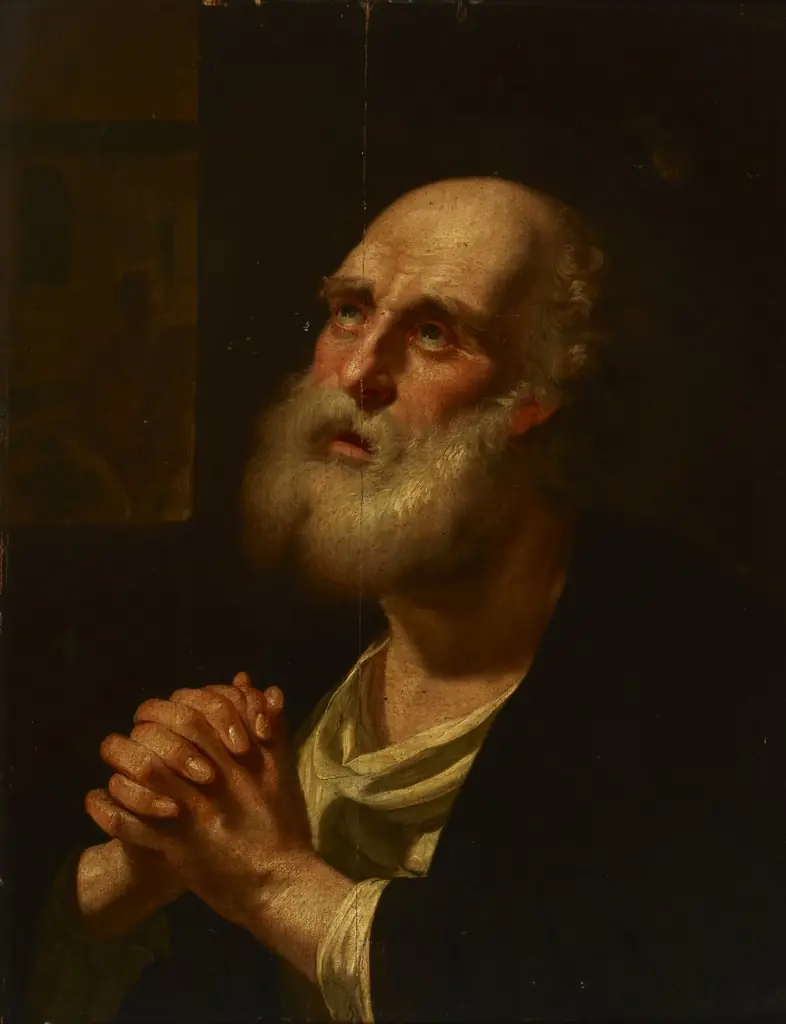
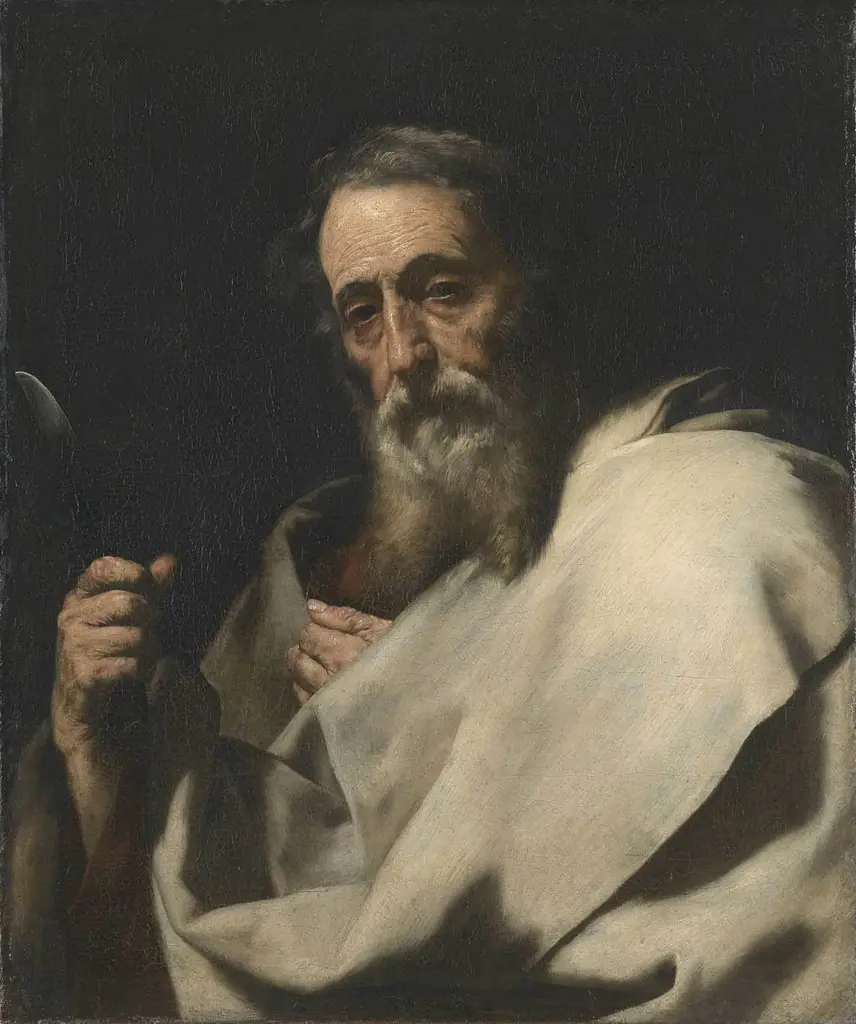
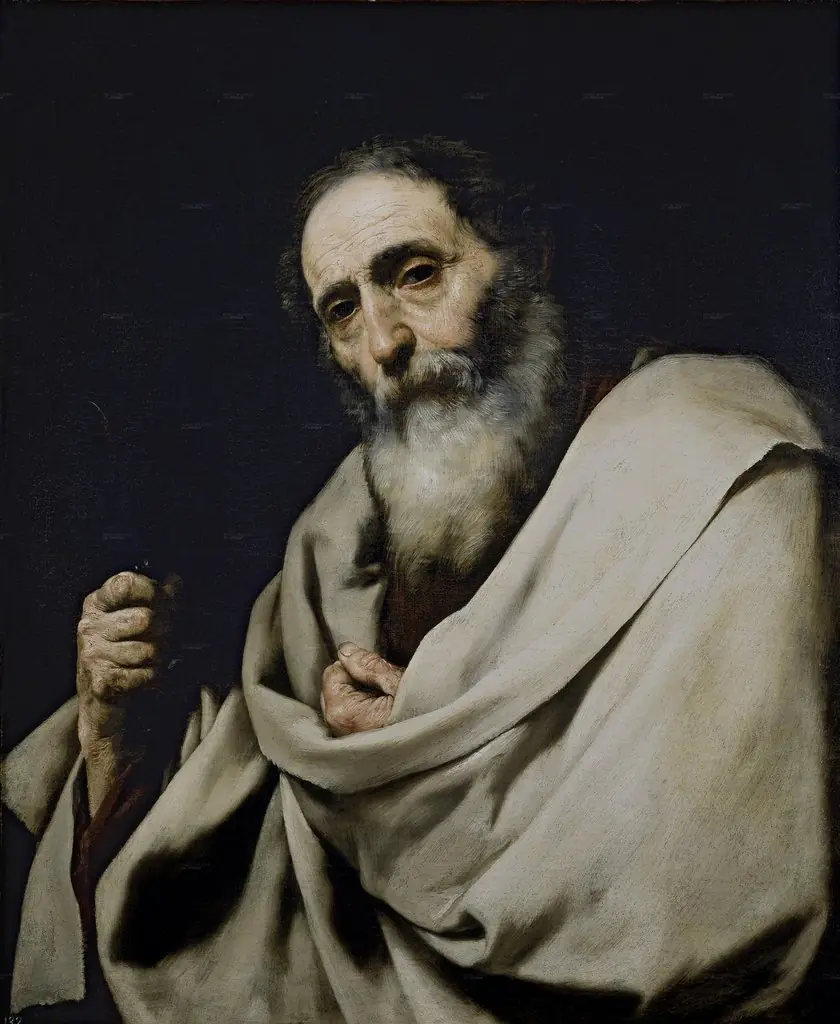
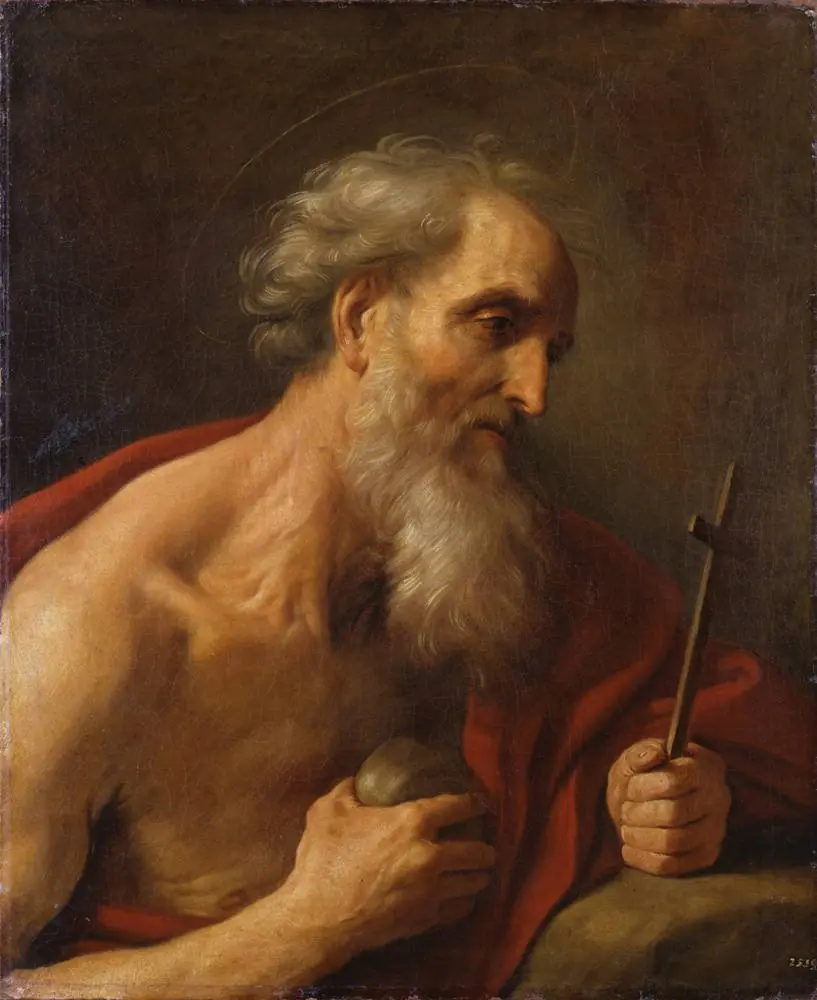
Saint Andrew is an oil painting by the Early Baroque Italian artist Unknown. It dates from 1601 and is held in the collection of the Museo del Prado. The work is an oil painting portraying a bearded figure in a brown robe, illuminated from one side against a dark backdrop.
About this work
Overview
The work is an oil painting portraying a bearded figure in a brown robe, illuminated from one side against a dark backdrop. He holds a fish—identified as a salmon or trout—in his right hand while his left hand rests on his chest, his gaze directed downward with a solemn expression.
Subject & Meaning
The central character, distinguished by a long white beard and hair, suggests a saintly or hermitic identity, possibly Saint Andrew, though the title is not confirmed by iconography. The fish, rendered with careful detail, may symbolize sustenance, spiritual nourishment, or a specific biblical narrative associated with the saint.
Technique & Style
The artist employs chiaroscuro, using strong contrasts of light and shadow to model the figure’s volume and give the scene depth. The side lighting highlights the texture of the robe and the scales of the fish, while the surrounding darkness isolates the subject, creating a focused, contemplative atmosphere.
Context
Executed in oil on canvas, the painting aligns with traditions of religious portraiture that emphasize introspection and moral gravity. The subdued palette and dramatic lighting reflect influences from Baroque tenebrism, yet the restrained composition suggests a later, perhaps 19th‑century, reinterpretation of earlier devotional motifs.
Artist & collection

 Domestic Scene
 Giacomo and Cardinal Marco, investing Andrea, Abbot of San Zeno, with his Benefice
 The Nymph of Fontainebleau
 Portrait of a Woman
 Madonna and Child with Saints in the Enclosed Garden
 Venus and Minerva
 Family Group of Four on Sofa
 Wall painting from Room H of the Villa of P. Fannius Synistor at Boscoreale