Artwork
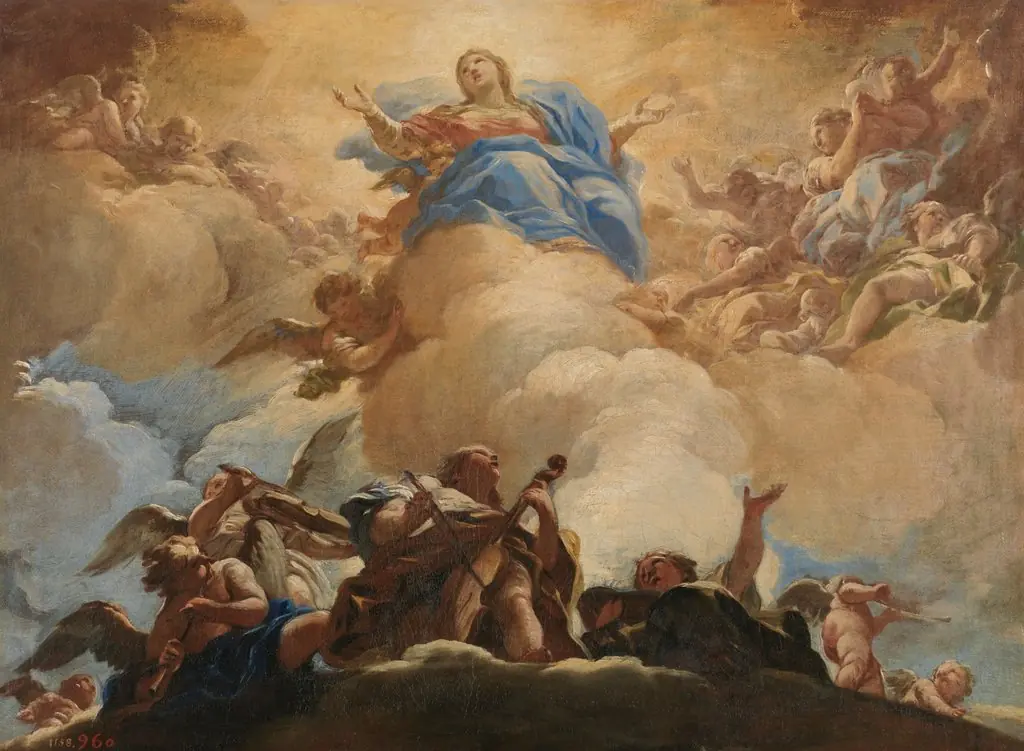
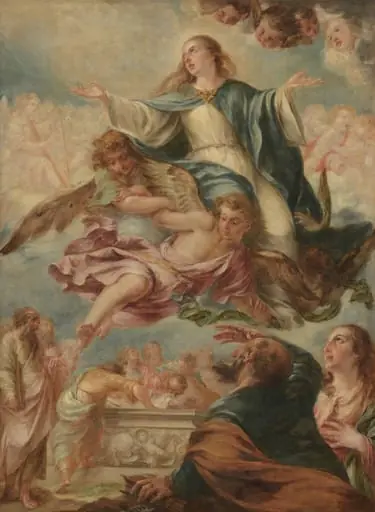
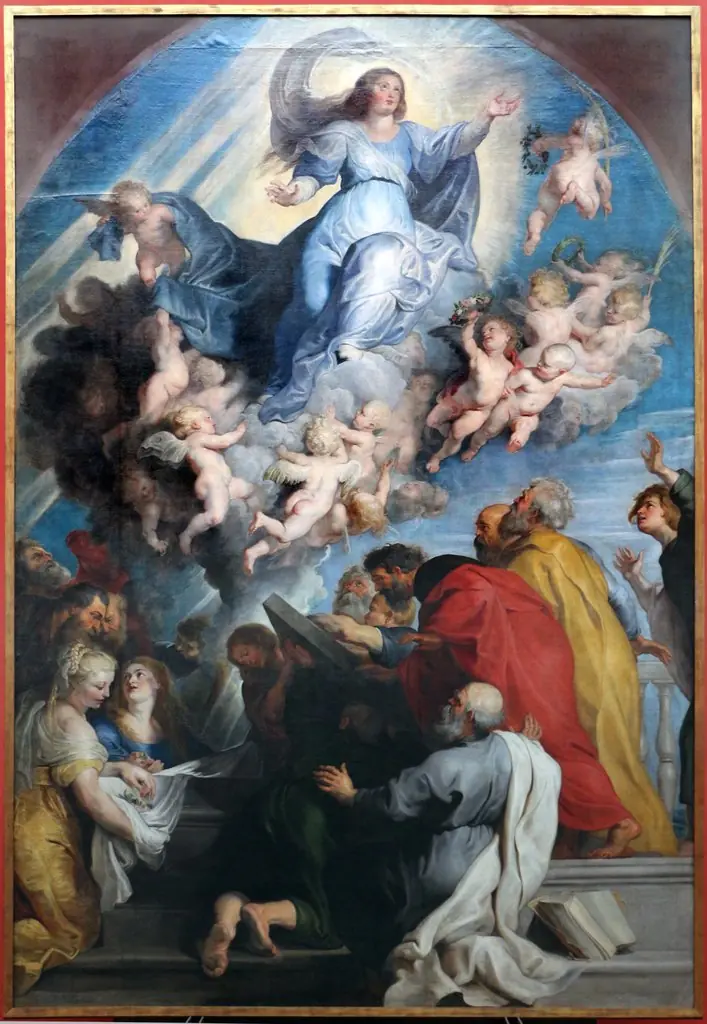
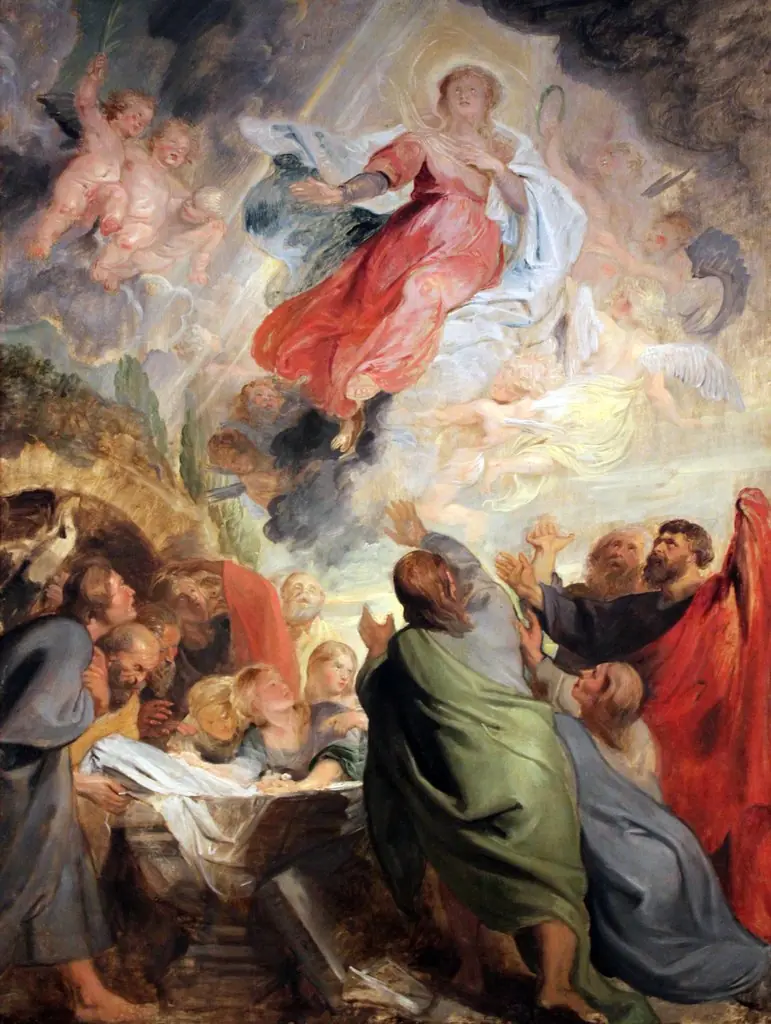
The Assumption of the Virgin
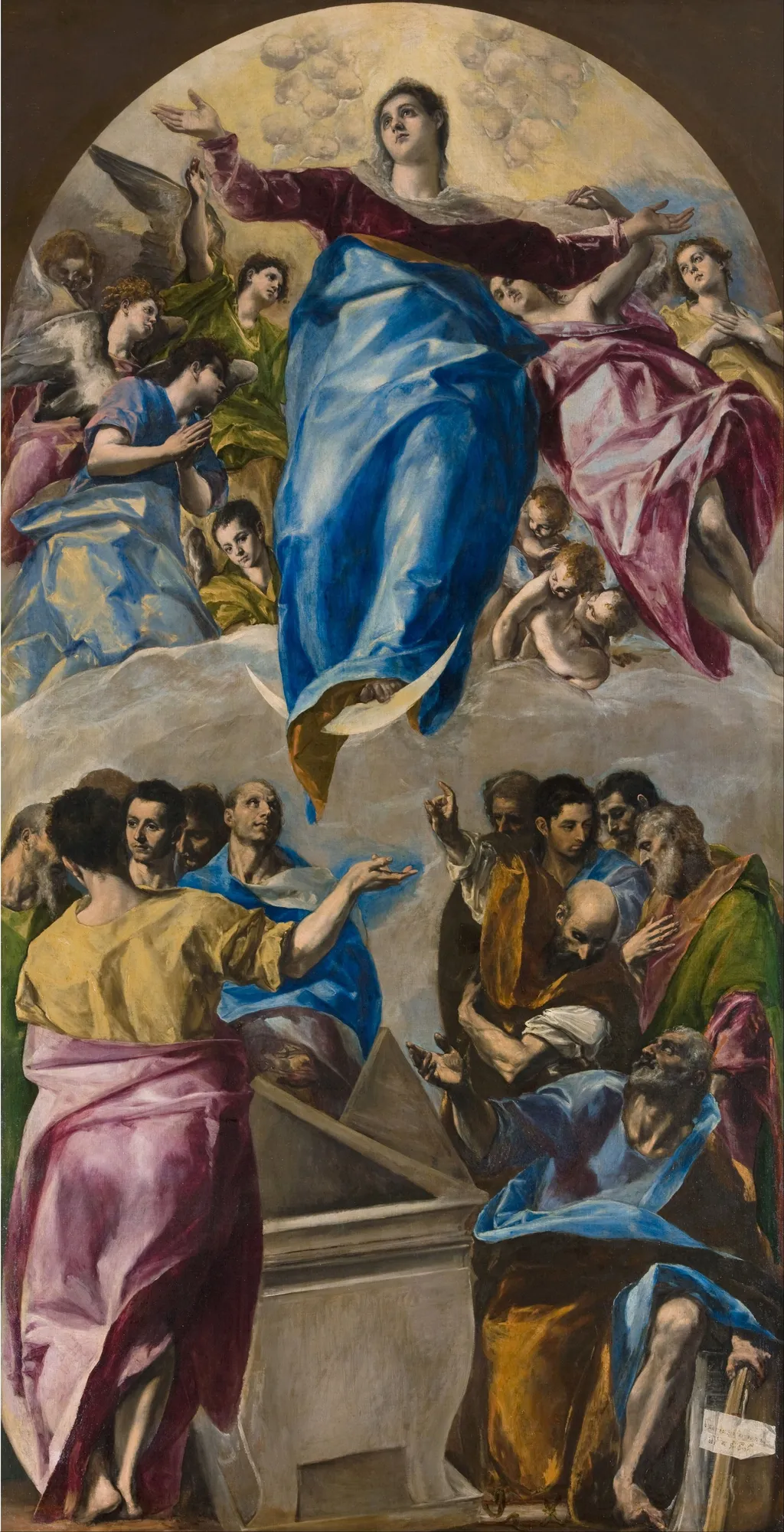
The Assumption of the Virgin is an oil painting by the Mannerist artist El Greco. It dates from 1589 and is held in the collection of the Art Institute of Chicago.
About this work
The Assumption of the Virgin is an oil painting by El Greco, made around 1577. It was the first of nine works he did for the church of Santo Domingo el Antiguo in Toledo.
The piece shows the Virgin rising with angels, echoing a similar scene by Titian. El Greco was influenced by Michelangelo, using a naturalistic style and a Roman palette.
You can see more at the Art Institute of Chicago.
Overview
The Assumption of the Virgin is an oil on canvas painting created by El Greco between 1577 and 1579 for the church of Santo Domingo el Antiguo in Toledo, Spain, marking the beginning of his 37-year career in the city.
Subject & Meaning
Depicting the Virgin Mary's ascent to heaven, the painting symbolizes her purity through her upward floatation, while the gathered apostles below convey amazement and concern around her empty tomb.
Technique & Style
Influenced by Michelangelo, El Greco employed a naturalistic style with monumental figures and a Roman school color palette, distinguishing the work as essentially Italian in character.
History & Provenance
Originally the central altarpiece of Santo Domingo el Antiguo, it was the first of nine commissioned paintings by El Greco for the church. It is now part of the collection at the Art Institute of Chicago.
Context
The composition draws parallels with Titian's Assumption in Venice, featuring the Virgin and angels above, with mourners below, yet infused with El Greco's unique interpretive twist.
Legacy
As El Greco's inaugural work in Toledo, The Assumption of the Virgin initiated a prolific career in the city, leaving a lasting impact on the local artistic landscape.
Artist & collection
Artist
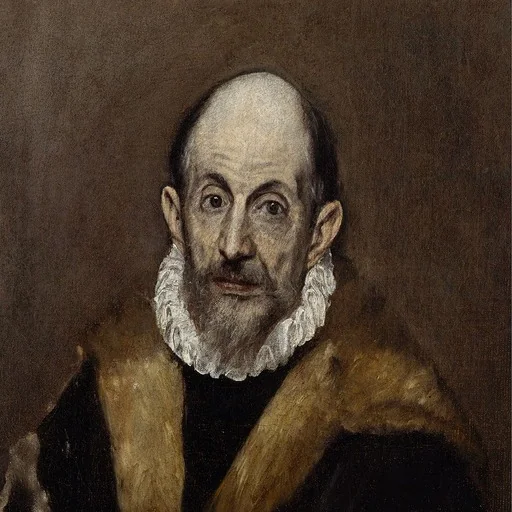
Doménikos Theotokópoulos was born in 1541 in Candia (modern Heraklion), the capital of Venetian-ruled Crete, where he was trained in the post-Byzantine tradition of icon painting.