Artwork
The Assumption of the Virgin
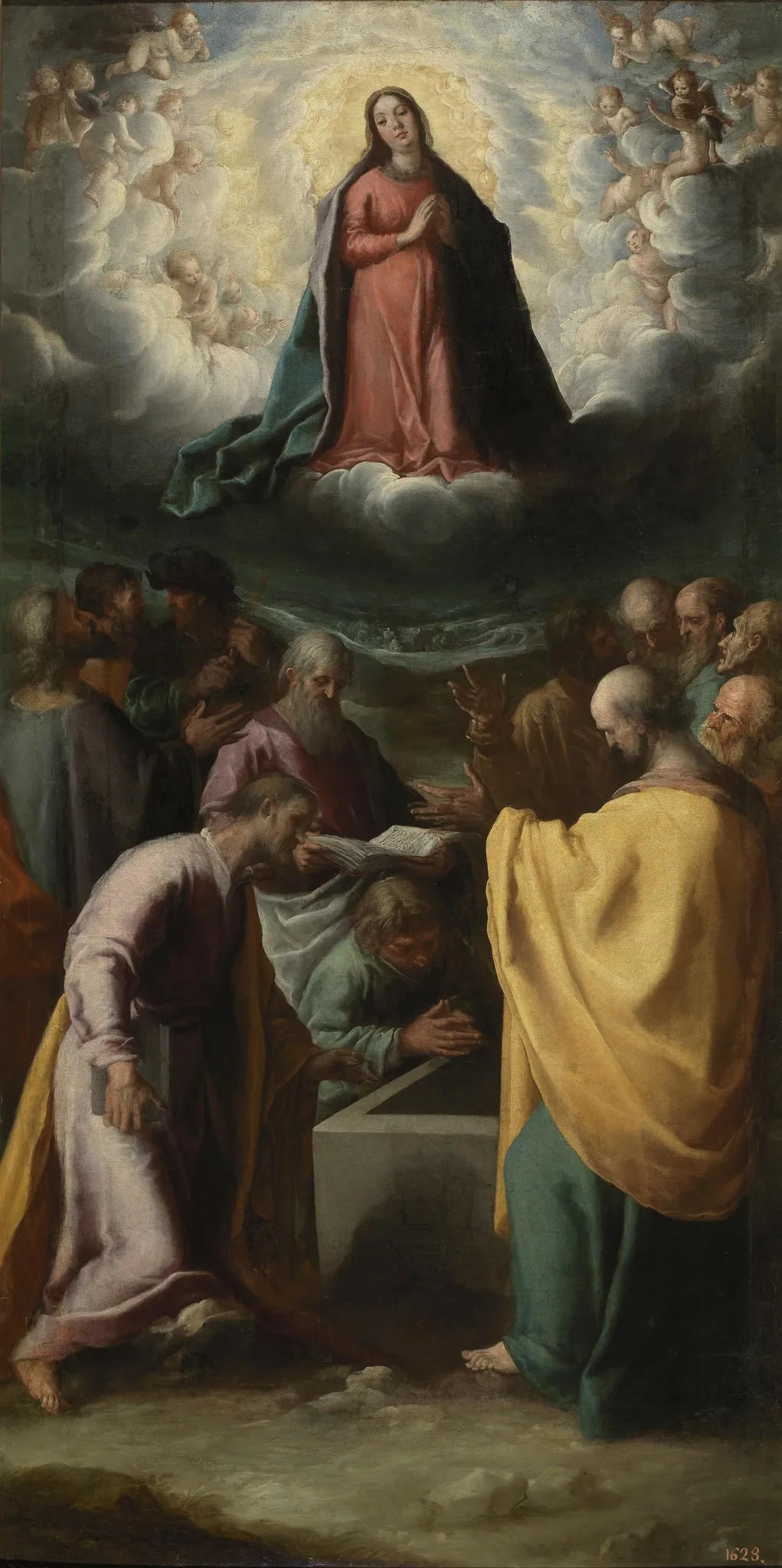
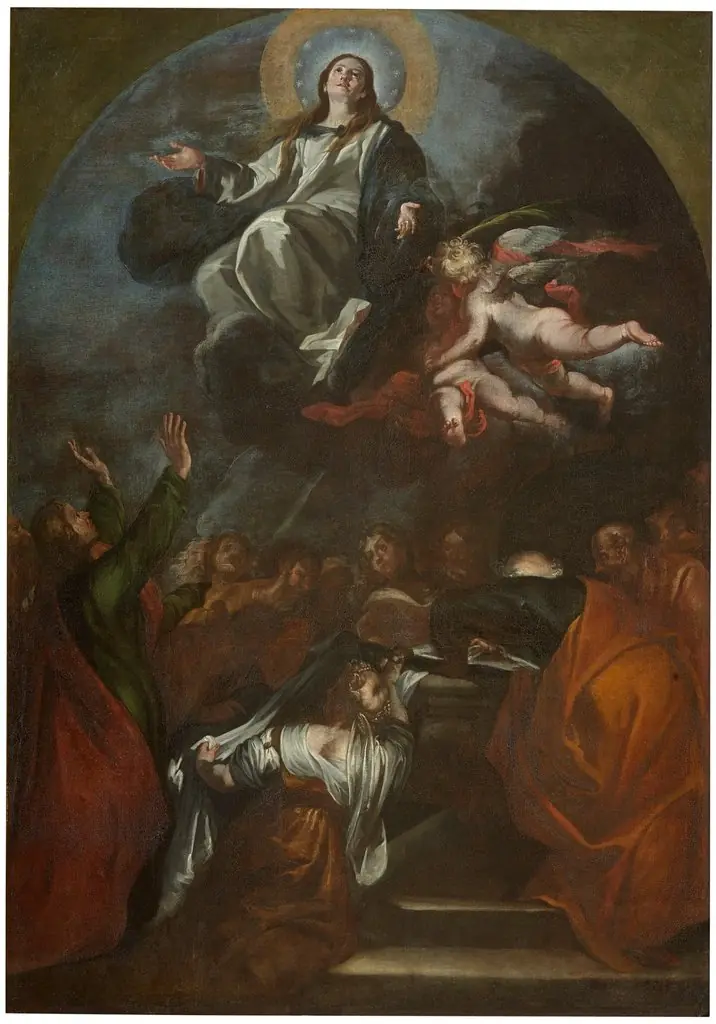
The Assumption of the Virgin is an oil painting by the Early Baroque Italian artist Eugenio Caxés. It dates from 1603 and is held in the collection of the Museo del Prado.
About this work
Overview
Painted in 1603, Eugenio Caxés's The Assumption of the Virgin is a significant early work by the Spanish artist, created during his formative period in Madrid.
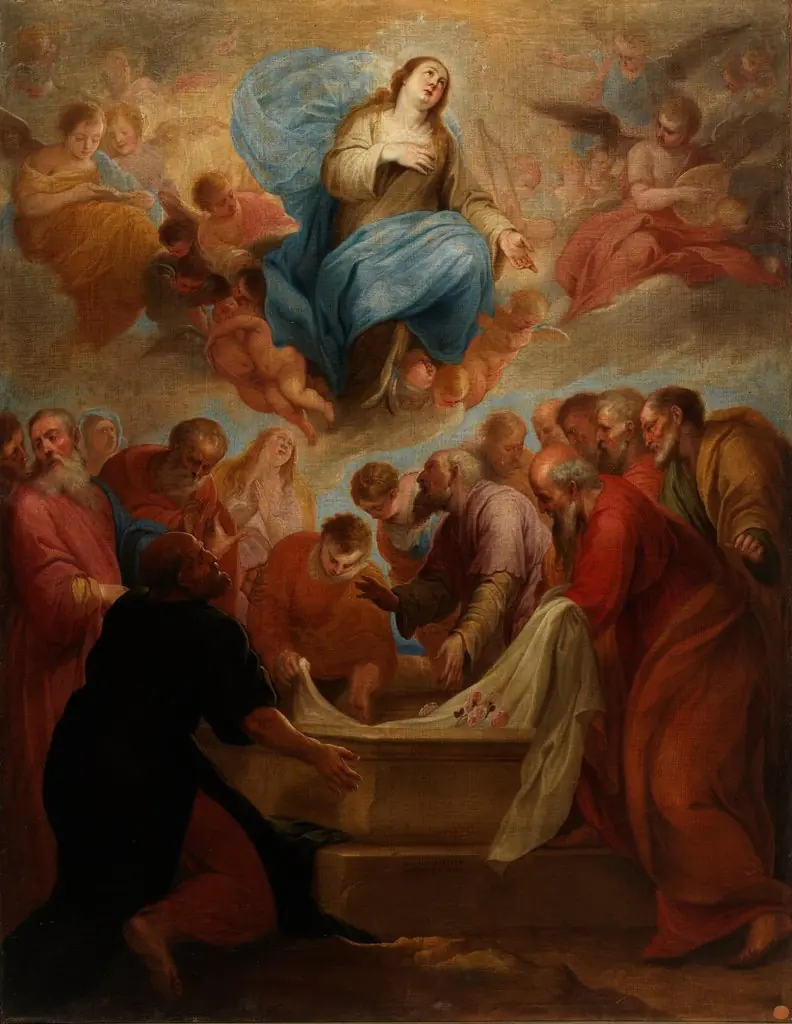
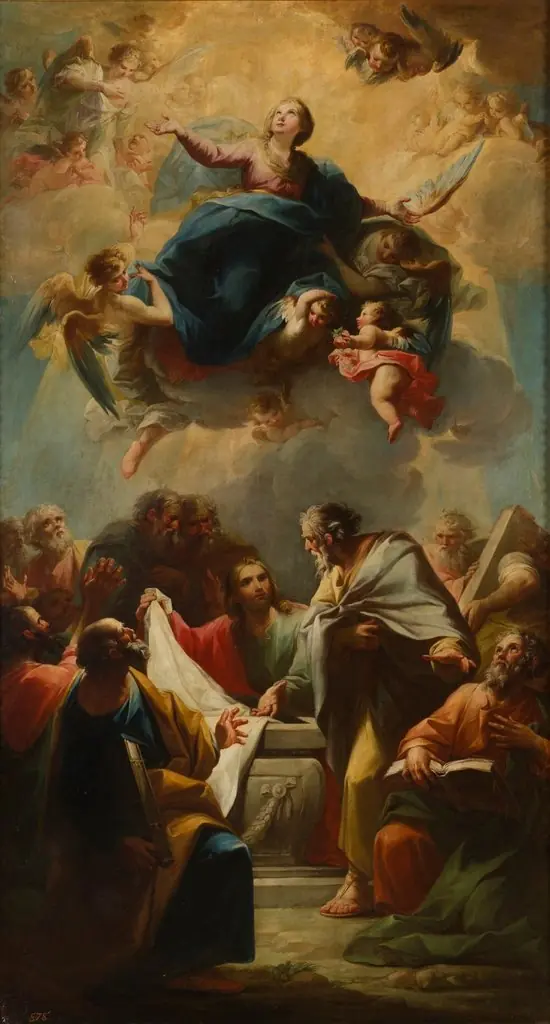
Painted in 1603, Eugenio Caxés's The Assumption of the Virgin is a significant early work by the Spanish artist, created during his formative period in Madrid. The composition depicts the Virgin Mary ascending bodily into heaven, a central dogma of the Counter-Reformation. She is shown floating above a group of apostles gathered around an empty stone tomb. The Virgin is dressed in traditional pink and blue robes, her expression serene as she rises upon a cloud, supported by angels. Below, the apostles are rendered in varied attire of yellow, green, and gray, their gestures and gazes directed upward in awe or contemplation; some hold books, symbolizing their role as witnesses to the event. Caxés employs a vertical arrangement to emphasize the spiritual ascent, contrasting the earthly figures with the ethereal light surrounding the Virgin. This work reflects the artist's adherence to the Mannerist style prevalent in late 16th-century Spain, characterized by elongated figures and complex poses, while also anticipating the more naturalistic tendencies of the Baroque. It stands as an important example of religious painting in early 17th-century Spain, demonstrating Caxés's skill in narrative clarity and devotional imagery.
Subject & Meaning
The painting presents the Virgin Mary lifted upward, clothed in pink and blue garments, embodying the moment of her assumption into heaven. Below, a group of men in varied hues—yellow, green, gray—stand on a stone platform, some gesturing, others holding books, suggesting a mixture of reverence, scholarly contemplation, and communal witness to the sacred event.
Technique & Style
Caxés employs a chiaroscuro approach, using light to model the faces and drapery, which gives depth to both the celestial and earthly realms. The soft, tranquil expression of the Virgin contrasts with the more dynamic lighting on the crowd, while the airy clouds and surrounding angels enhance the sense of elevation and divine atmosphere.
History & Provenance
Created in 1603, The Assumption of the Virgin entered the collection of the Museo del Prado, where it remains on display. Its provenance reflects the early 17th‑century Spanish taste for religious subjects, and the work has been documented as part of the Prado’s holdings since the museum’s formation.
Context
The painting belongs to the Counter‑Reformation period, when depictions of Marian themes were encouraged to inspire devotion. Caxés, working in the Spanish court, integrates the traditional iconography of the Virgin’s assumption with a Baroque sensibility, emphasizing movement, dramatic lighting, and a clear narrative hierarchy.
Artist & collection