Artwork
The Nobleman with his Hand on his Chest
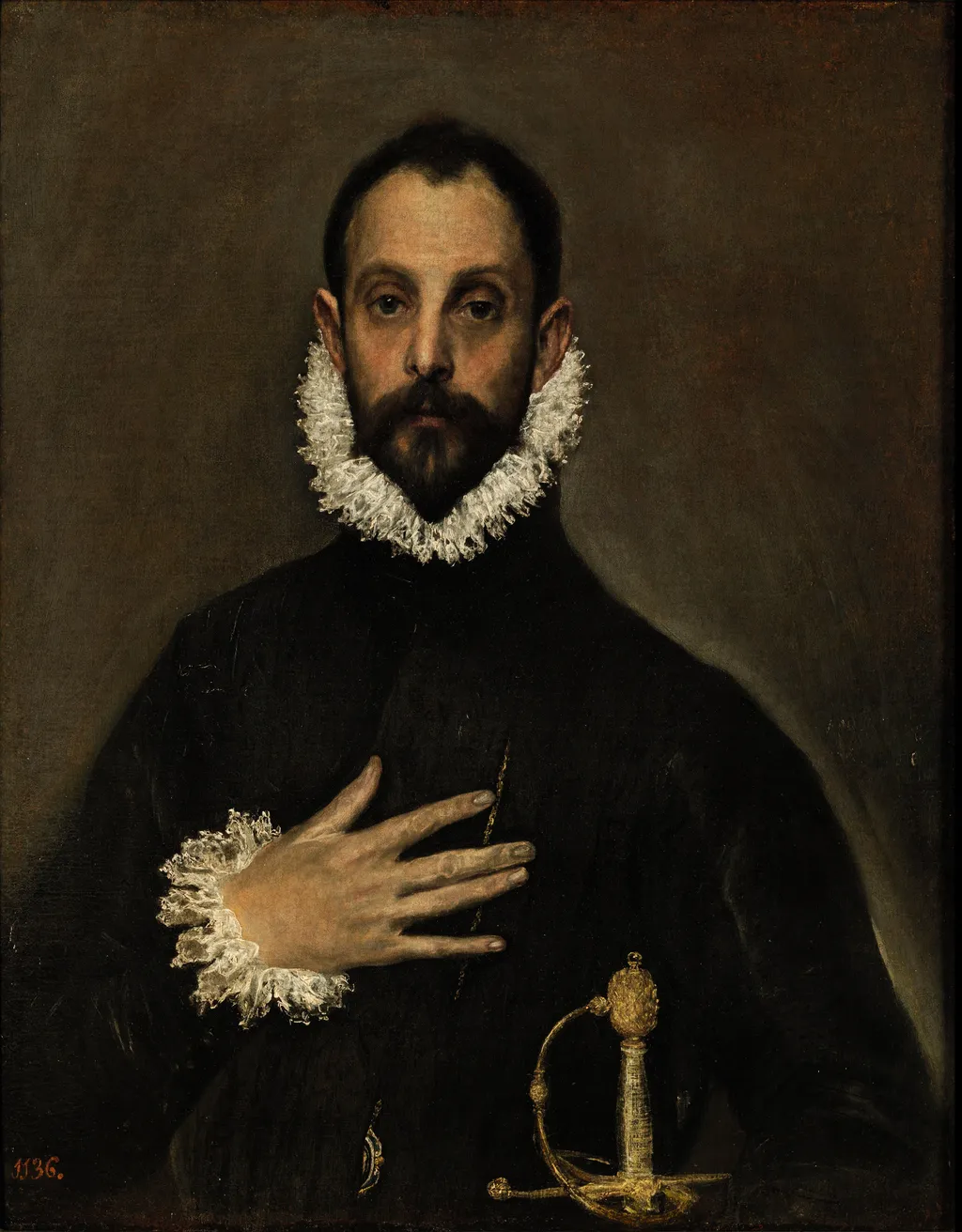
The Nobleman with his Hand on his Chest is an oil painting by the Mannerist artist El Greco. It dates from 1590 and is held in the collection of the Museo del Prado.
About this work
El Greco painted *The Nobleman with his Hand on his Chest* early in his time in Spain. It’s oil paint on canvas, made between 1580 and 1614. This work counts as one of his first pieces done in Spain.
The hand-on-chest pose often showed honor or oaths in portraits then. El Greco later became known for his dramatic style, but this early piece looks plainer.
Look up the artist next: El Greco.
Overview
It belongs to a small group of secular portraits that depict unknown gentlemen in solemn black attire with white ruffs, set against a dark backdrop.
The painting known as *The Nobleman with his Hand on his Chest* is an oil on canvas created by Doménikos Theotokópoulos, better known as El Greco, during his early years in Spain. Executed around 1580 in Toledo, the work now belongs to the collection of the Museo del Prado. It belongs to a small group of secular portraits that depict unknown gentlemen in solemn black attire with white ruffs, set against a dark backdrop.
Subject & Meaning
The figure is presented in a dignified pose, his right hand resting on his breast—a gesture traditionally associated with loyalty, oath‑taking, or personal honor in late‑sixteenth‑century portraiture. The sitter’s identity remains unidentified, and the painting offers no narrative beyond this emblematic representation of gentlemanly virtue, emphasizing status through clothing rather than individual biography.
Technique & Style
Rendered in oil on canvas, the work displays a restrained palette of deep blacks, muted whites, and shadowed tones, lacking the elongated forms and vivid chromatic contrasts that later characterize El Greco’s mature style. The brushwork is relatively tight, focusing on the precise rendering of fabrics and the subtle modeling of the hand, suggesting a transitional phase between his Venetian training and his later, more expressive approach.
History & Provenance
After its creation in Toledo, the portrait entered private collections before being acquired by the Spanish state in the nineteenth century. It has been on permanent display at Madrid’s Museo del Prado since that time, where it serves as a key example of El Greco’s early Spanish period and of the courtly portrait conventions of the era.
Own this work as a print
Artist & collection
Artist
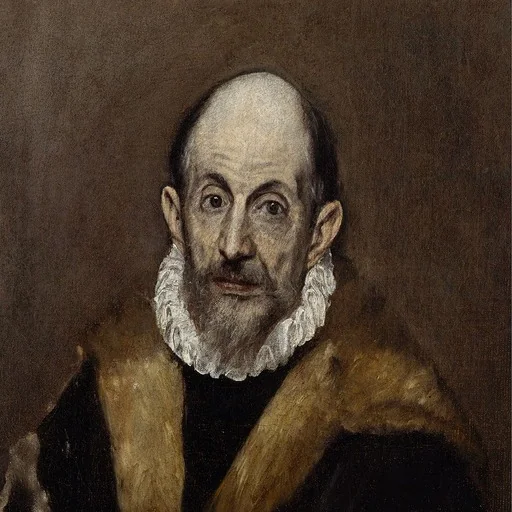
Doménikos Theotokópoulos was born in 1541 in Candia (modern Heraklion), the capital of Venetian-ruled Crete, where he was trained in the post-Byzantine tradition of icon painting.

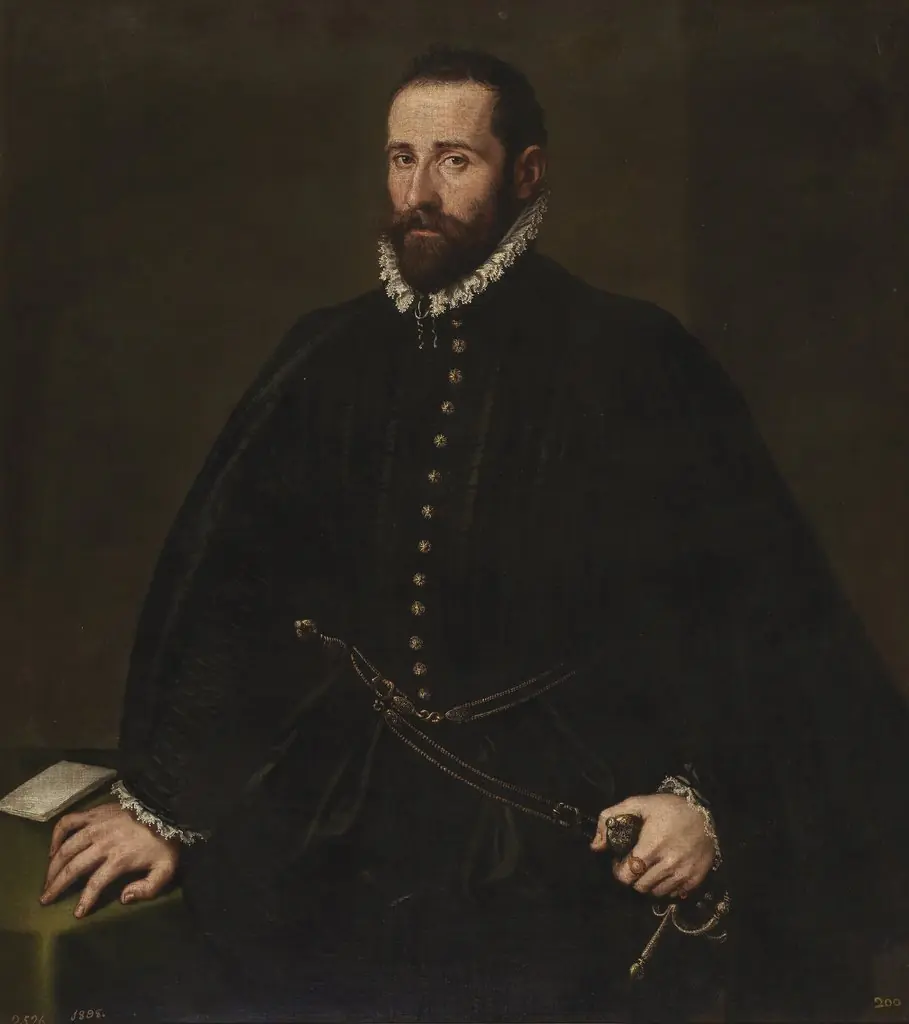 Portrait of a Gentleman
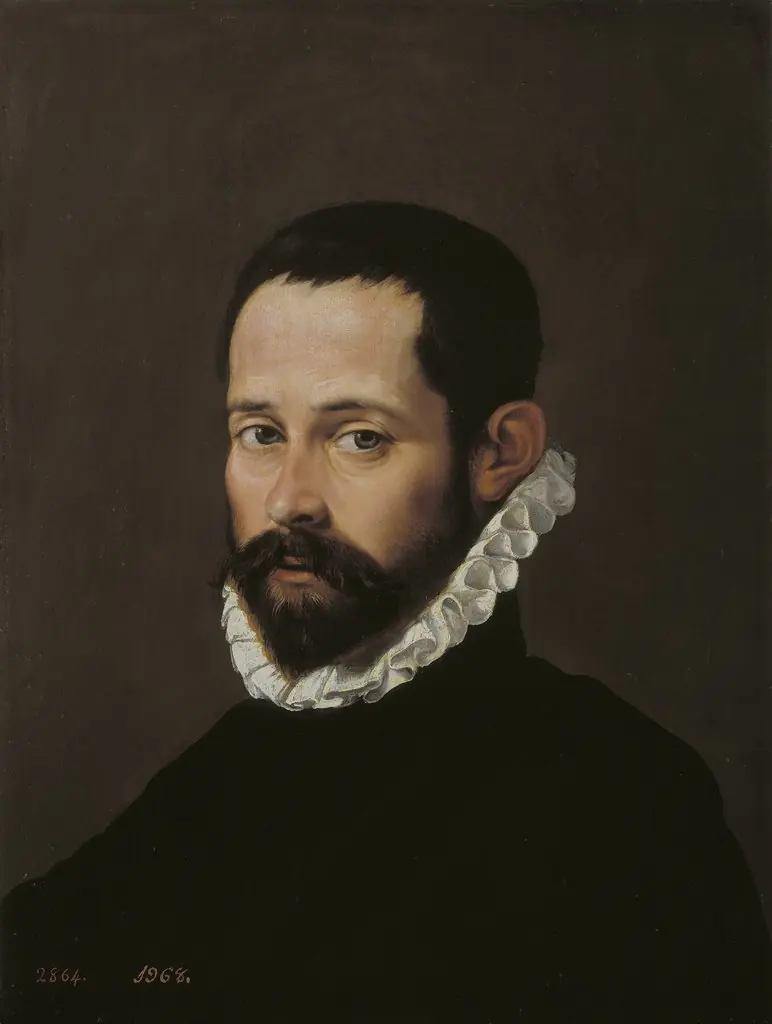 Portrait of Diego Hurtado de Mendoza
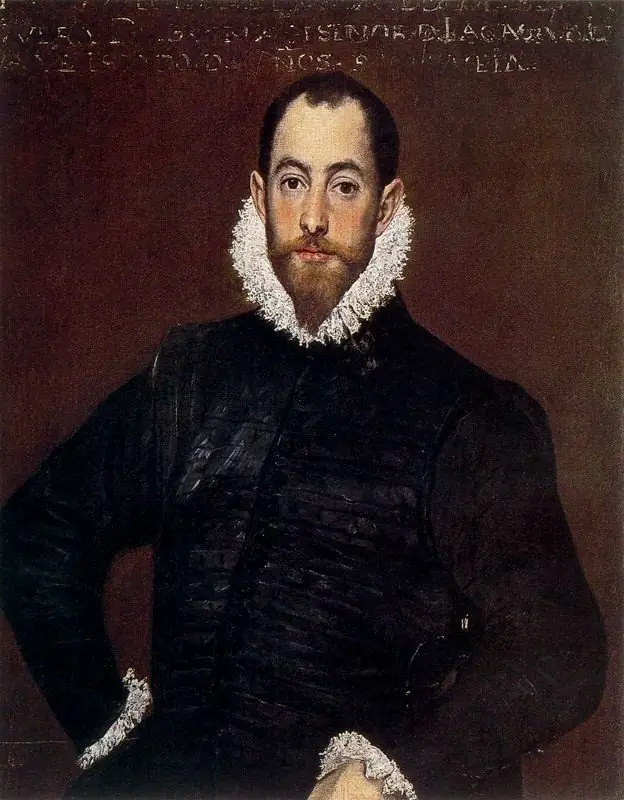 Portrait of a Gentleman from the Casa de Leiva
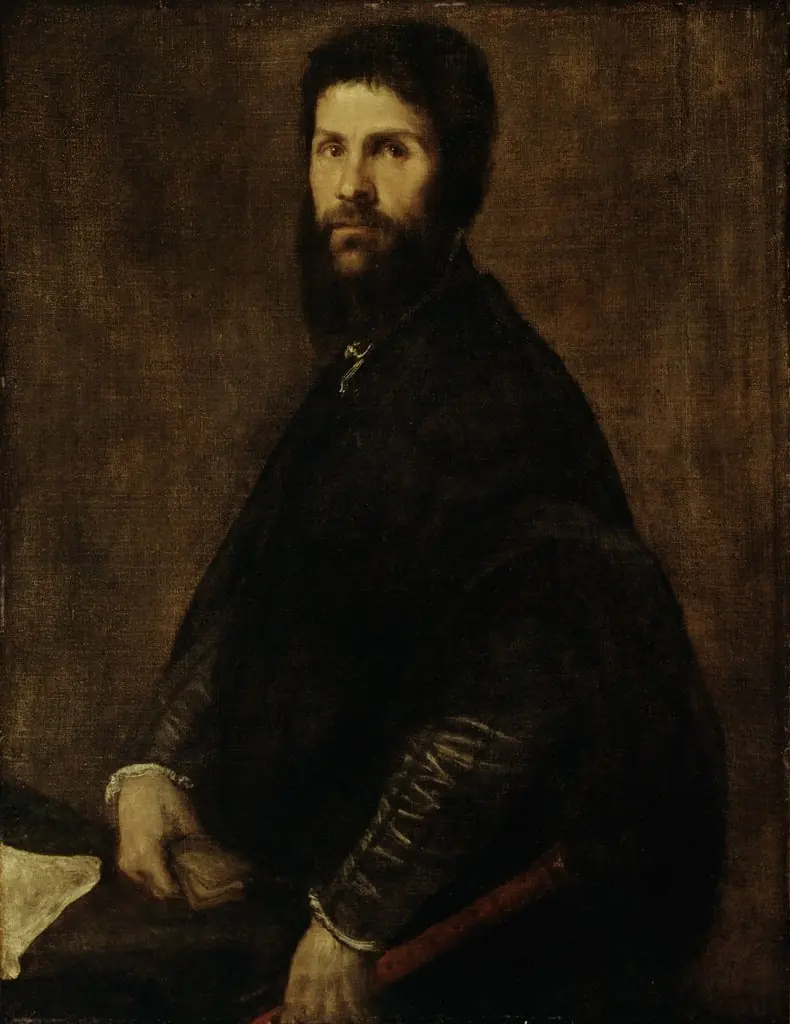 Man Holding a Flute
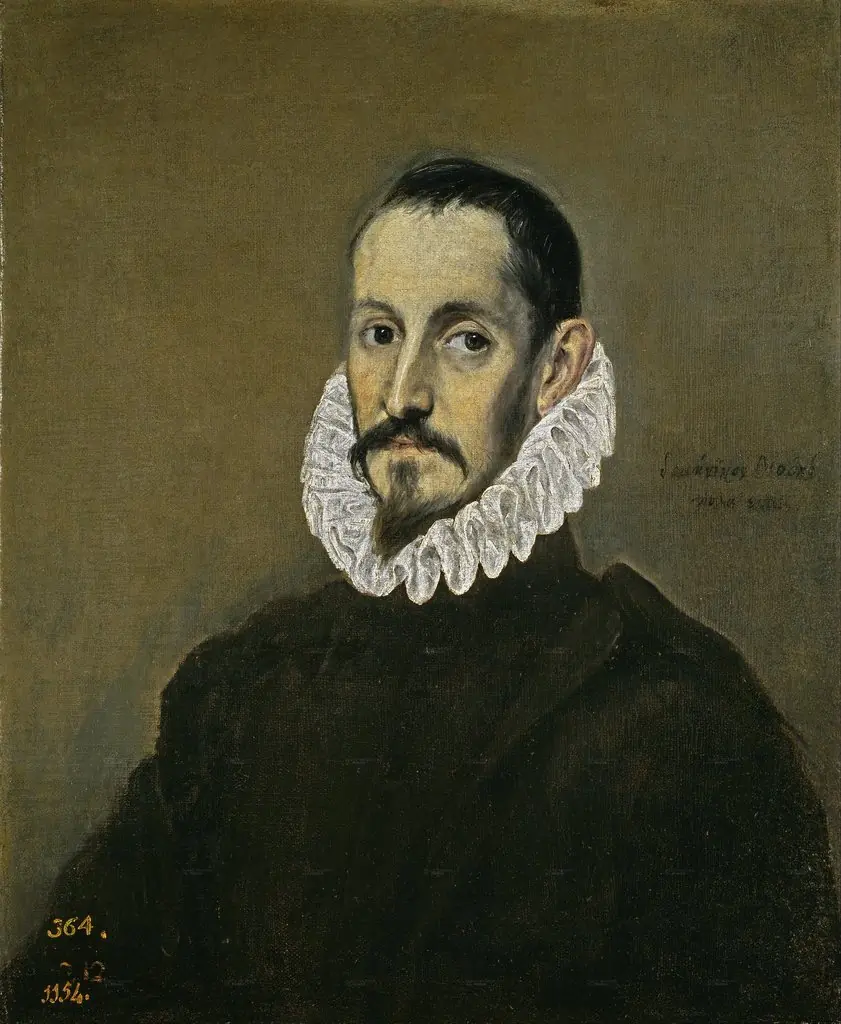 Portrait of a gentleman
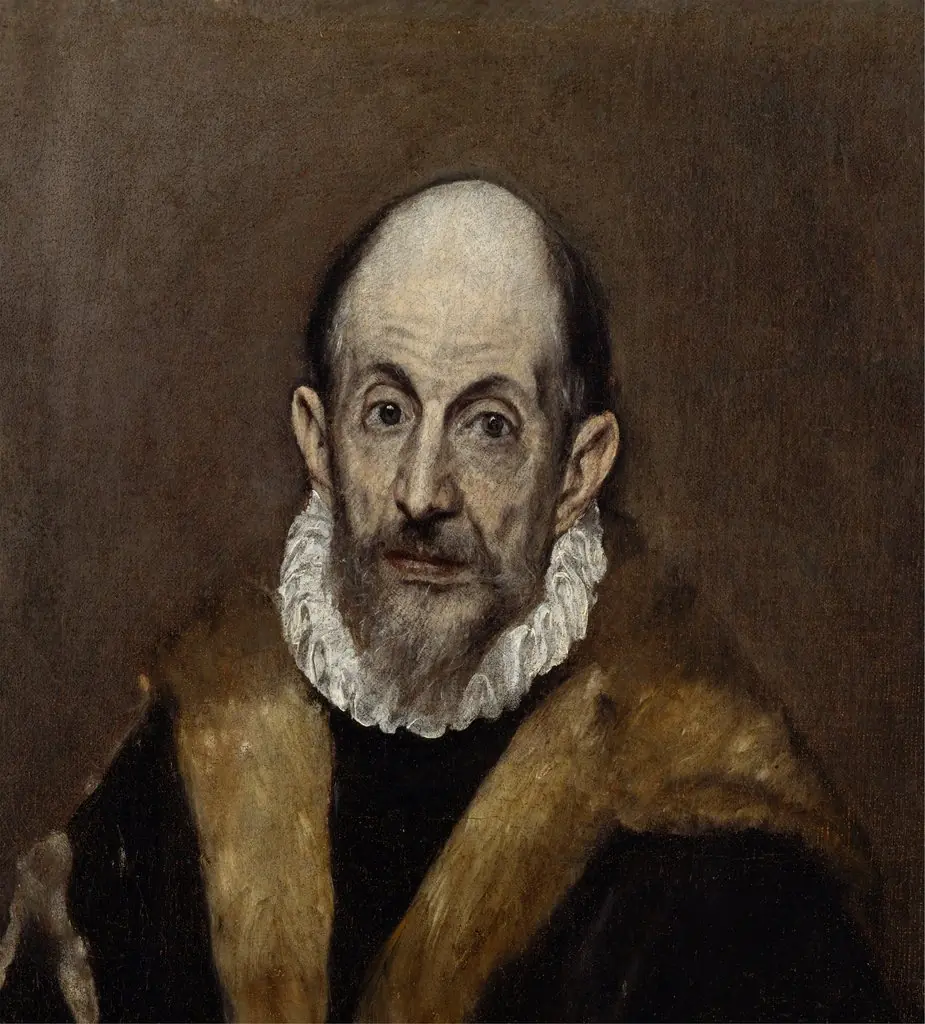 Self-Portrait (?)
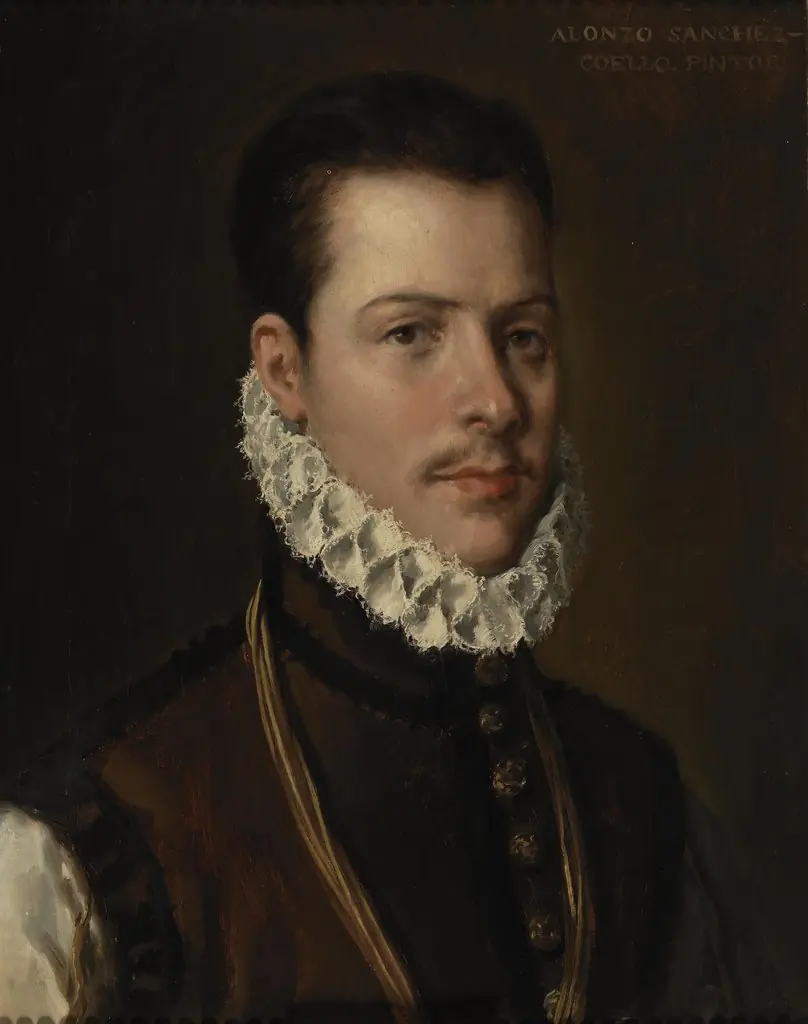 Fernando de Aragón y Borja duque de Villahermosa y conde de Ribagorza (copia)
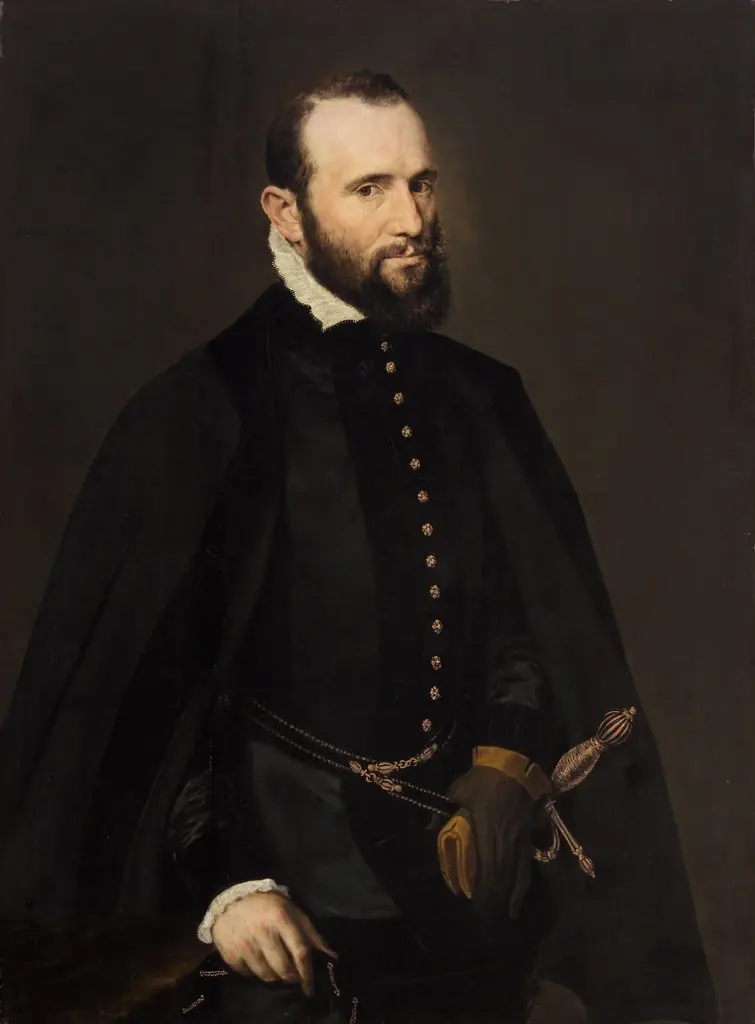 Portrait of a man
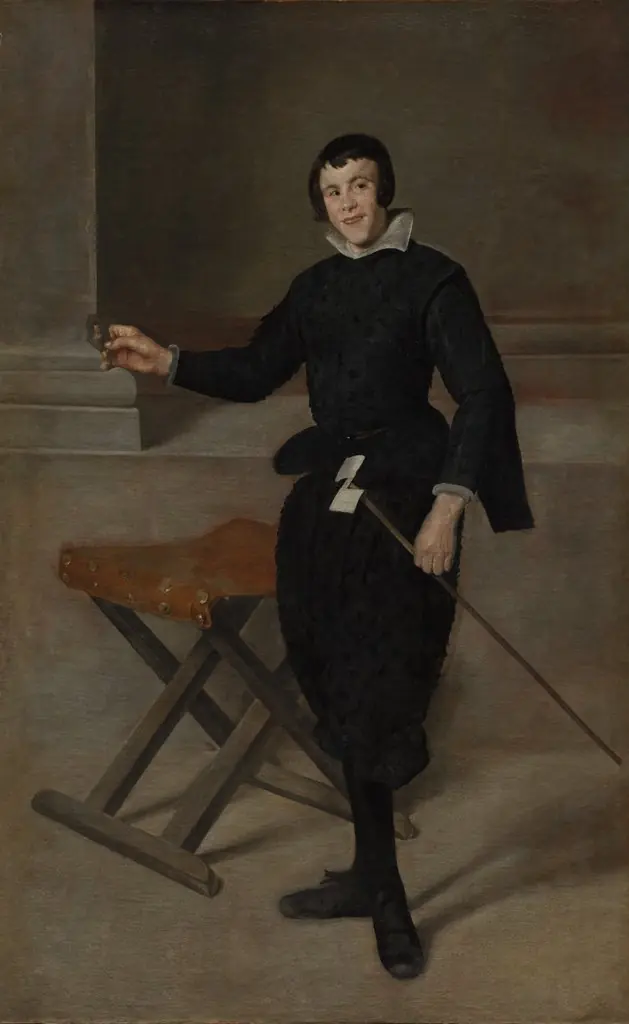 Portrait of the Jester Calabazas
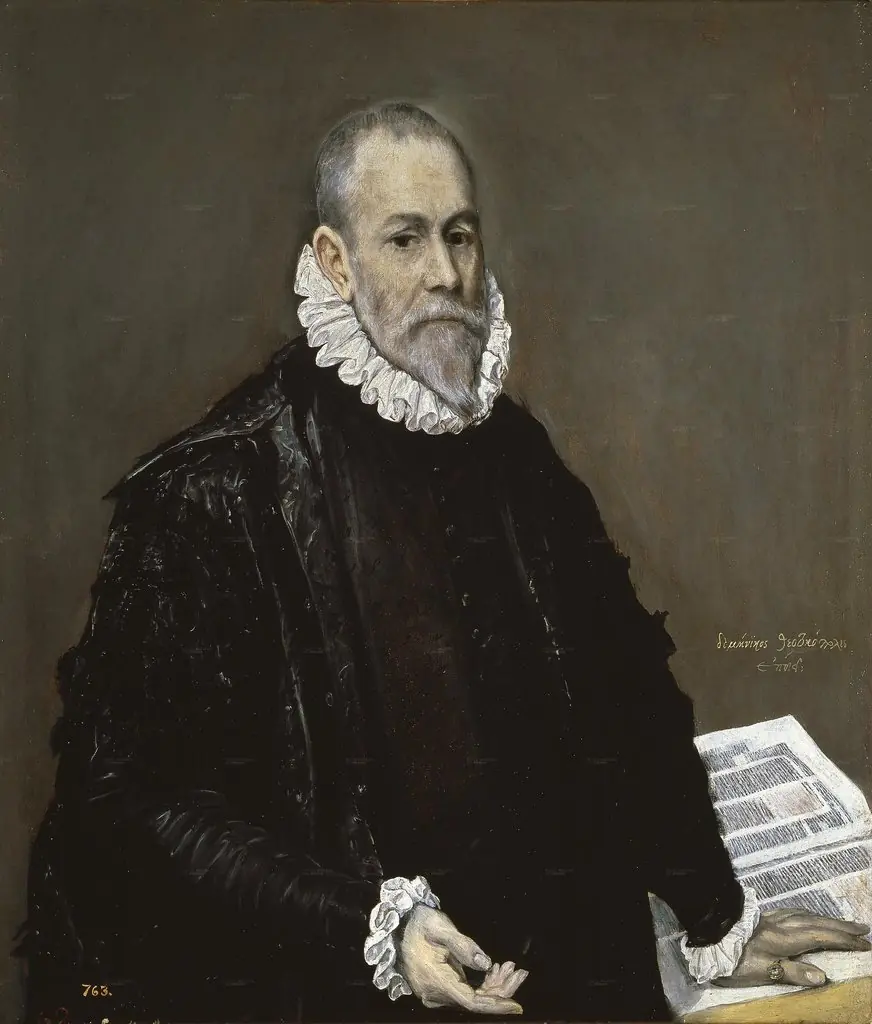 Portrait of Rodrigo de la Fuente
 Portrait of a man
 Portrait of a Gentleman