Artwork
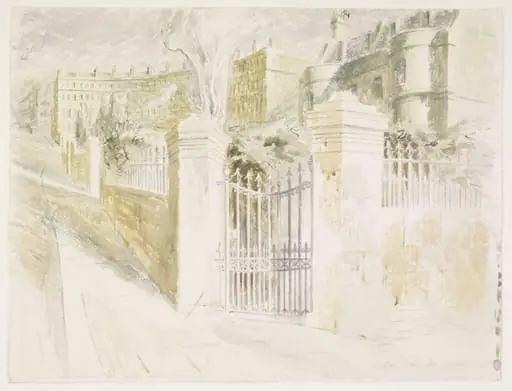
Gates at the Hermitage, Lansdown, Bath
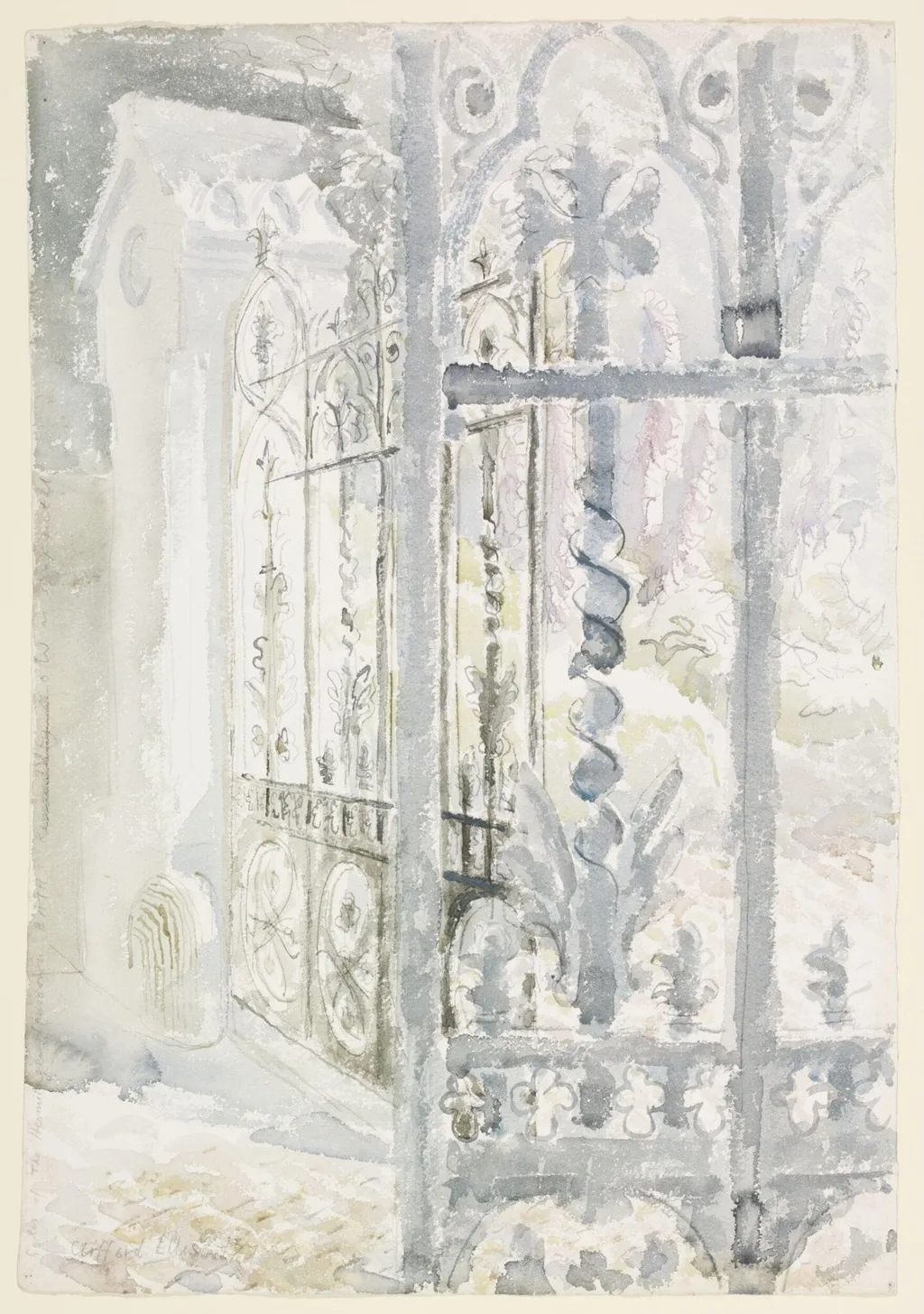
Gates at the Hermitage, Lansdown, Bath is a watercolor work on paper by the British Romanticist artist Clifford Ellis. It dates from 1943 and is held in the collection of the Victoria and Albert Museum.
About this work
Overview
Its modest scale and quiet composition reflect the project’s goal of preserving everyday architectural heritage rather than grand monuments.
Clifford Ellis created this watercolour in 1943 as part of the Recording Britain project, a wartime effort to visually archive vulnerable aspects of the British landscape. The work captures a wrought-iron gate at the Hermitage in Lansdown, Bath, rendered with delicate washes and restrained detail. Its modest scale and quiet composition reflect the project’s goal of preserving everyday architectural heritage rather than grand monuments.
Subject & Meaning
The subject is an ornate iron gate, its intricate swirls and arches suggesting craftsmanship from an earlier era. Positioned as a threshold, the gate frames a blurred, indistinct background—perhaps overgrown trees or distant structures—hinting at neglect or quiet decay. The focus on this modest entryway, rather than the building behind it, underscores the project’s interest in overlooked details of national character.
Technique & Style
Ellis employed thin, layered watercolour washes to suggest texture and light without heavy definition. The gate’s ironwork is rendered with precise, fine lines, contrasting with the soft, faded background where pigment has thinned or lifted. The effect is one of atmospheric distance, emphasizing the gate’s form while allowing the surrounding space to recede, evoking a sense of time passed.
History & Provenance
Commissioned under the Recording Britain initiative, this work was produced between 1940 and 1943 by artists funded by the Pilgrim Trust and overseen by Sir Kenneth Clark. The project sought to document structures at risk from wartime damage or urban change. Ellis’s watercolour entered institutional collections following its completion, contributing to a broader archive now held by the Victoria and Albert Museum and other repositories.
Context
During the Second World War, the Recording Britain project responded to fears of cultural loss by turning artists’ eyes toward vernacular architecture and rural scenes. This work reflects a national effort to preserve identity through observation rather than heroism. The Hermitage’s gate, though unremarkable to many, was deemed worthy of record as part of Britain’s accumulated visual history.
Legacy
Ellis’s watercolour remains part of a significant collection that continues to inform historical and architectural studies. Its quiet documentation of a modest structure exemplifies the project’s enduring value: not as grand spectacle, but as a thoughtful record of ordinary places that once shaped daily life. The work endures as evidence of art’s role in cultural preservation during times of upheaval.
Artist & collection
Artist
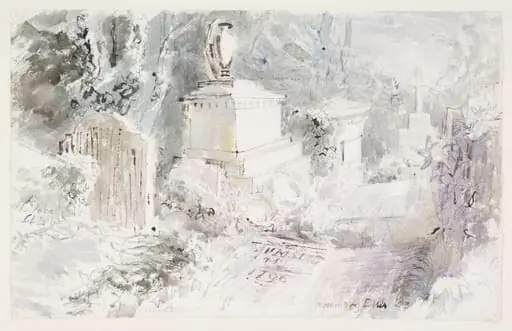
Clifford Ellis painted delicate watercolours of early-1940s Bath landmarks. In 1943 he recorded the wrought-iron Gates at the Hermitage in Lansdown and the quiet churchyard tomb of Miss Ann Nelson, sister of Horatio…

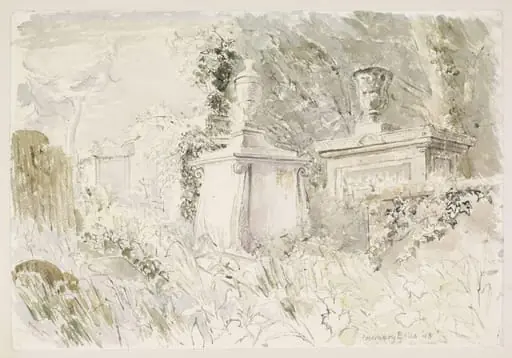 Tombstones, Bathampton Cemetery, Bath
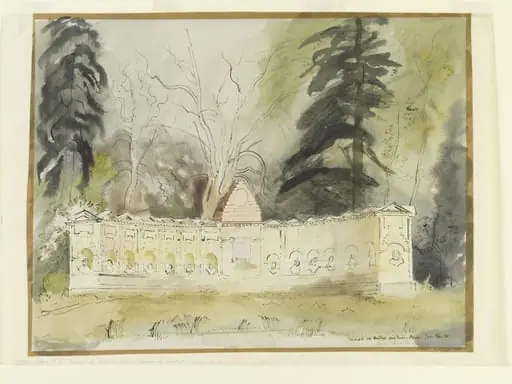 The Temple of British Worthies, Stowe, Gloucestershire
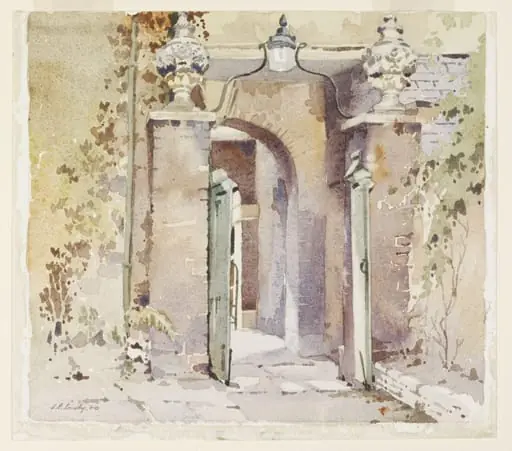
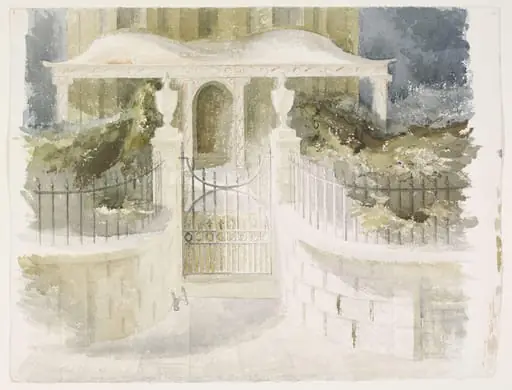 Gateway, Cedar Lodge, Lambridge, Bath
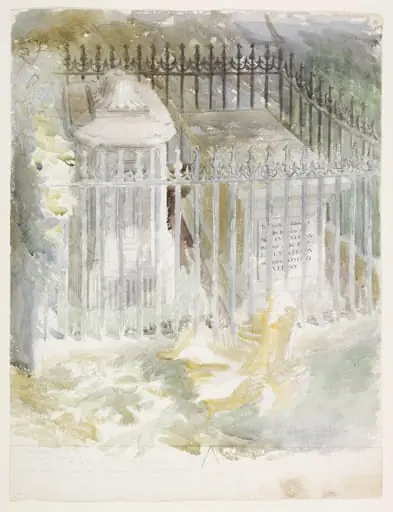 Tomb of Miss Ann Nelson, sister of Horatio Nelson, Bathford churchyard, Bath
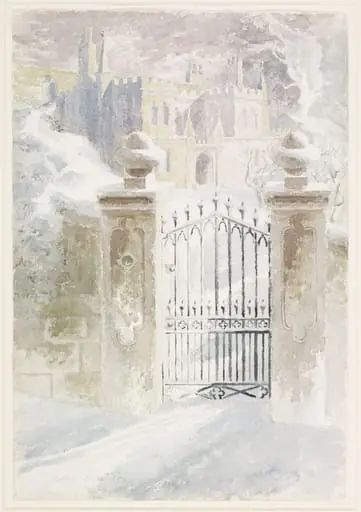 Sion Cottage, Sion Hill, Bath
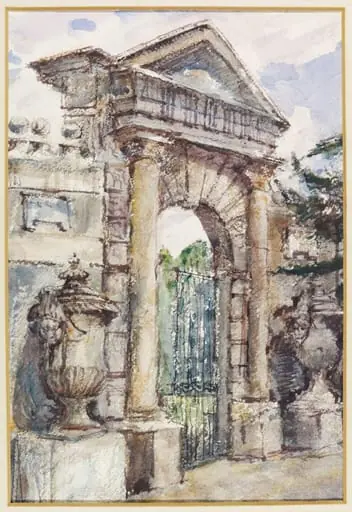 The Inigo Jones Gate, Chiswick House
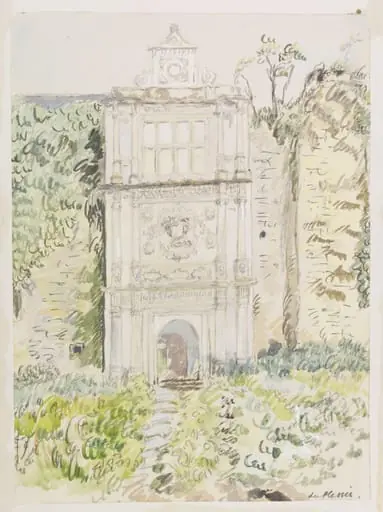 Gateway, Beaupre, Glamorganshire
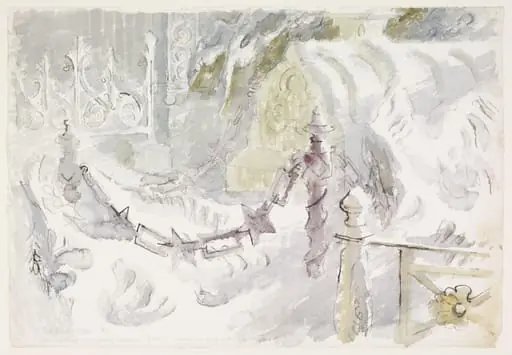
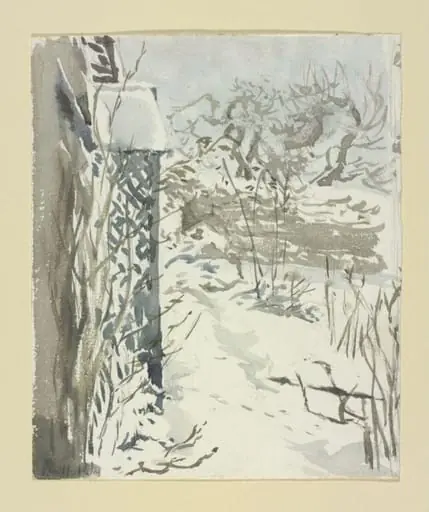 The former porch of Castle Cottage in snow