Artwork
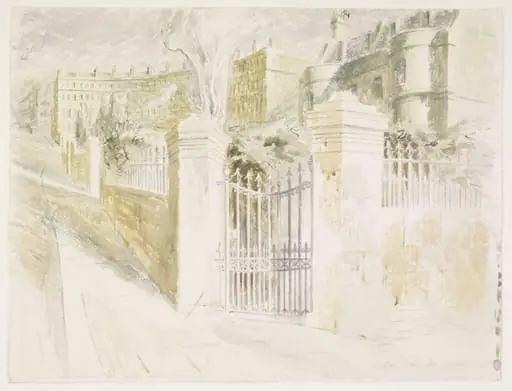
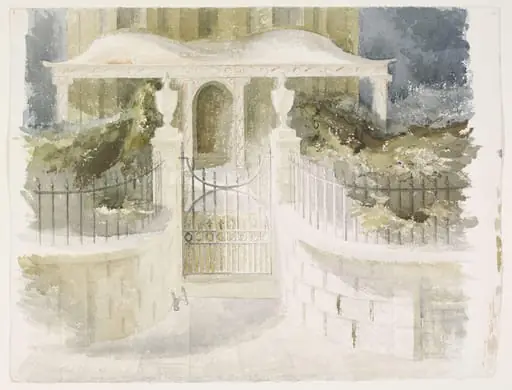
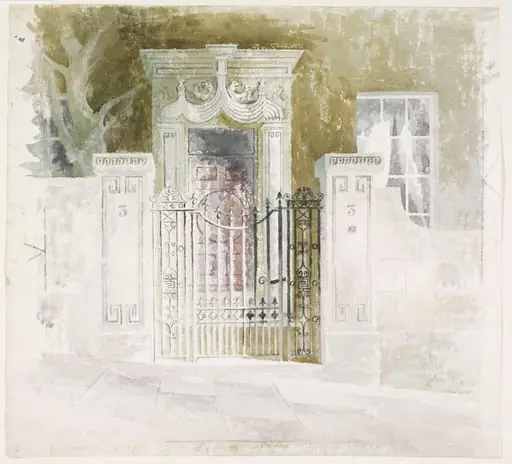
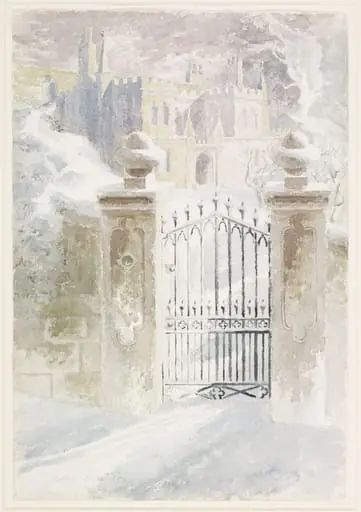
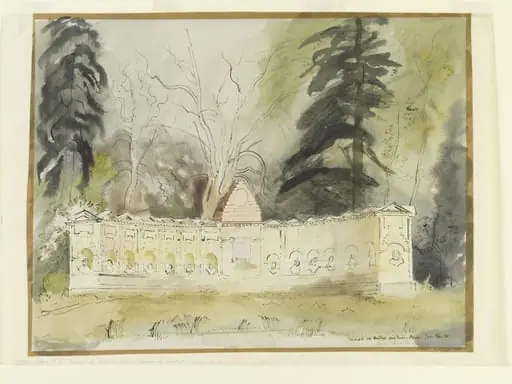
Ironwork at Lansdown Cemetery, Bath
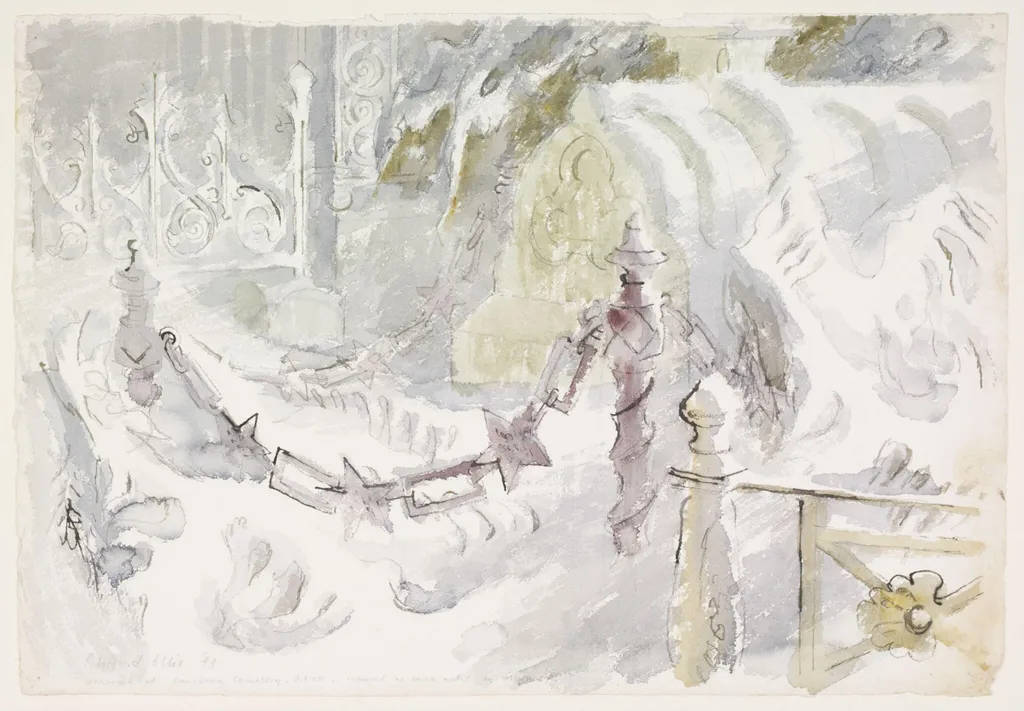
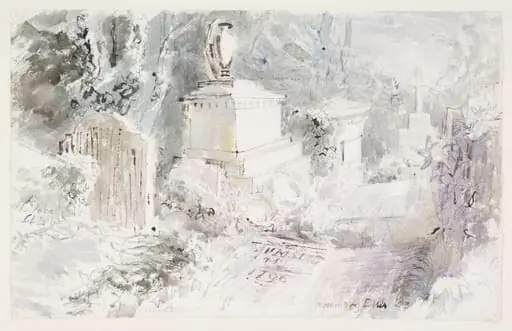
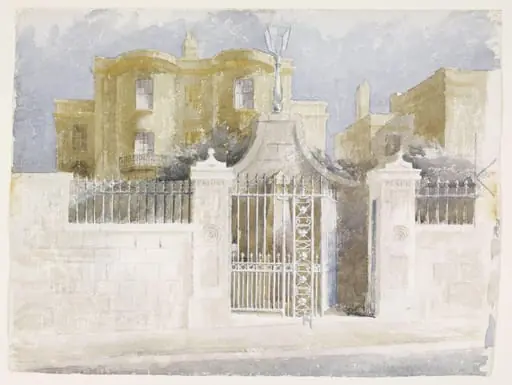
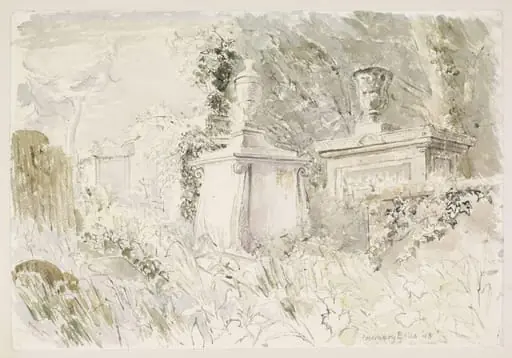
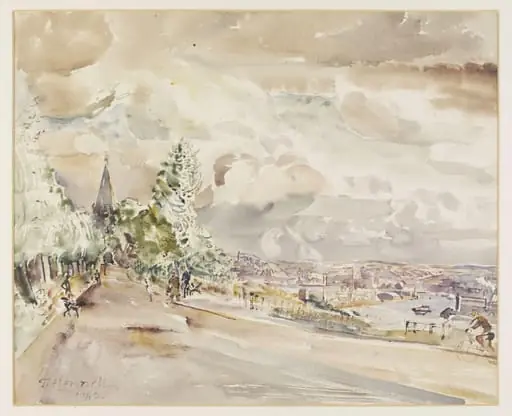
Ironwork at Lansdown Cemetery, Bath is a watercolor work on paper by the British Romanticist artist Ellis. It dates from 1943 and is held in the collection of the Victoria and Albert Museum.
About this work
The ironwork on the fence is detailed with swirls and shapes, while the background has faint outlines of trees and a cloudy sky.
This sketch shows a person walking through a cemetery gate. The ironwork on the fence is detailed with swirls and shapes, while the background has faint outlines of trees and a cloudy sky. The colors are mostly pale—soft grays, whites, and a few browns—with the person’s coat and hat standing out slightly.
The artist focused on the gate’s design, making it the clearest part of the drawing. The rest feels loose and quick, like a rough draft. This was made in 1943 as a watercolor study.
Look up Ellis to see more of their work.
Overview
Created in 1943, this watercolour by Ellis is one of over 1,500 works produced for the Recording Britain project, a wartime initiative to document the nation’s visual heritage. Commissioned by the Pilgrim Trust and directed by Sir Kenneth Clark, the project sought to capture landscapes and architectural details at risk from conflict and modernization. Ellis’s piece focuses on a cemetery gate in Bath, rendered with quiet precision amid a broader effort to preserve a sense of place during uncertain times.
Subject & Meaning
The scene centers on a wrought-iron gate at Lansdown Cemetery, its intricate scrollwork rendered with careful attention while a solitary figure passes through. The figure, minimally defined, suggests quiet human presence amid the stillness of the burial ground. The gate becomes both a physical threshold and a symbolic one—marking the boundary between life and death, and between preservation and loss, themes resonant during wartime Britain.
Technique & Style
Ellis employed a restrained watercolour technique, using pale washes of gray, white, and muted brown to suggest atmosphere rather than define form. The ironwork is the most detailed element, drawn with fine lines and deliberate texture, while the background trees and sky are loosely indicated. The composition feels spontaneous, as if captured in a moment of observation, balancing precision in the subject with the fluidity of the medium.
History & Provenance
The work was produced during Ellis’s participation in the Recording Britain project, which ran from 1939 to 1943. It was part of a systematic effort to record vernacular architecture and rural scenes before they disappeared. The watercolour entered the Victoria and Albert Museum’s collection alongside other project works, where it remains accessible as part of a larger archive documenting Britain’s cultural landscape during the Second World War.
Context
The Recording Britain project emerged amid fears that wartime bombing and social change would erase historic sites. Artists were sent across the country to sketch churches, gates, cottages, and marketplaces—elements seen as emblematic of English identity. Ellis’s focus on a cemetery gate reflects the project’s interest in overlooked, everyday structures, elevating them as worthy of preservation through art.
Legacy
Ellis’s watercolour contributes to a significant visual archive that continues to inform historical and architectural research. Its modest scale and unembellished style reflect the project’s ethos: documentation over decoration. Today, works like this serve as quiet testaments to the resilience of place and the role of art in safeguarding collective memory during periods of upheaval.
Artist & collection
Artist
This British artist left a quiet record of Bath in the early 1940s, painting watercolors of iron gates, gateways, and front doors.