Artwork
Tombstones, Bathampton Cemetery, Bath
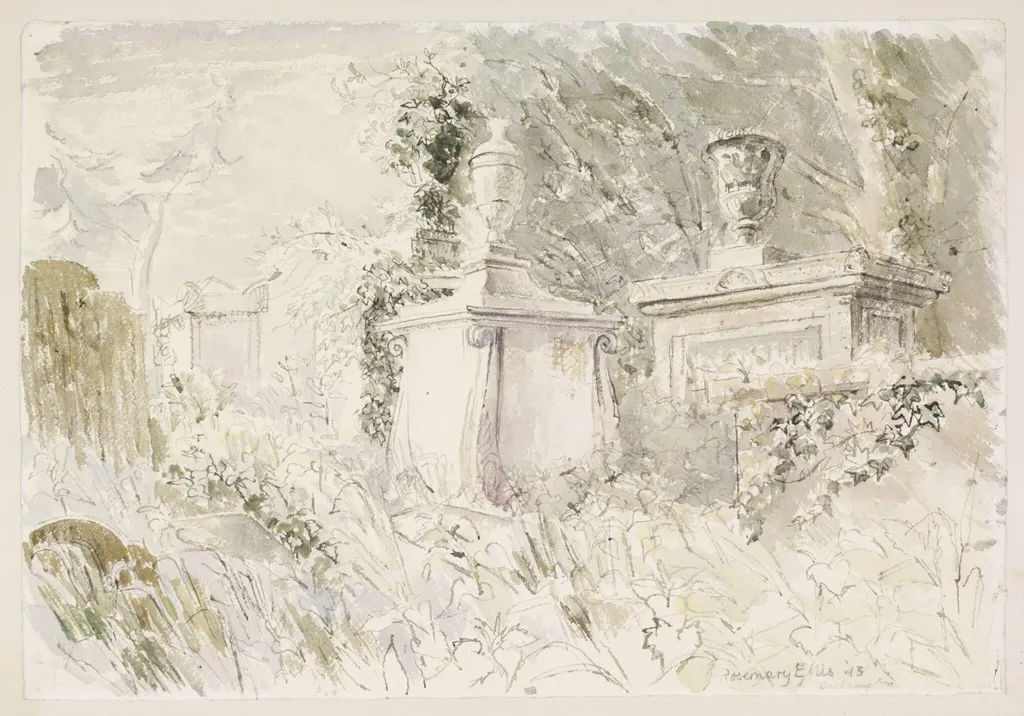
Tombstones, Bathampton Cemetery, Bath is a watercolor work on paper by the British Romanticist artist Ellis. It dates from 1943 and is held in the collection of the Victoria and Albert Museum.
About this work
Overview
Created in 1943, this watercolour by Ellis captures a quiet corner of Bathampton Cemetery during wartime Britain. Part of the 'Recording Britain' project, it was one of over 1,500 works commissioned to document the nation’s changing landscapes. The piece reflects a deliberate effort to preserve visual records of places perceived as vulnerable to neglect or destruction during the war years.
Subject & Meaning
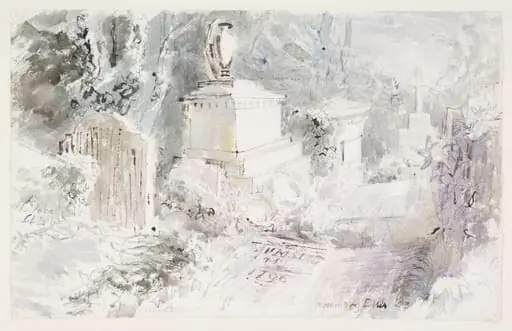
The painting centers on two weathered tombstones adorned with vases, surrounded by dense, untended vegetation. Rather than emphasizing mourning, the scene conveys quiet endurance—the interplay of stone and growth suggests time’s quiet passage. The overgrown plants imply abandonment, yet also resilience, aligning with the project’s aim to capture fading aspects of British life.
Technique & Style
Ellis employed soft, muted washes of grey and brown to evoke a subdued, contemplative mood. The brushwork is delicate, allowing layers of pigment to suggest texture in stone and foliage without sharp definition. The composition directs attention to the tombstones through central placement and subtle contrast against the surrounding greenery, reinforcing their quiet prominence.
History & Provenance
Commissioned by the Pilgrim Trust under Sir Kenneth Clark’s direction, the work entered the Victoria and Albert Museum’s collection as part of the 'Recording Britain' archive. The project, active from 1940 to 1943, gathered works by 97 artists to create a visual inventory of Britain’s topography during a period of national uncertainty. This piece remains part of that enduring record.
Context
During the Second World War, fears of cultural loss—due to bombing, urban expansion, and rural decline—spurred efforts to document Britain’s heritage. 'Recording Britain' focused on ordinary, often overlooked sites: cemeteries, lanes, and vernacular architecture. Ellis’s depiction of an overgrown cemetery reflects this mission, valuing quiet decay as historically significant.
Legacy
The 'Recording Britain' collection endures as a vital archive of mid-20th-century British topography. Ellis’s watercolour contributes to a broader understanding of how artists responded to wartime anxieties through observation rather than drama. Its restrained tone and attention to detail offer a quiet testament to the persistence of place amid upheaval.
Artist & collection
Artist
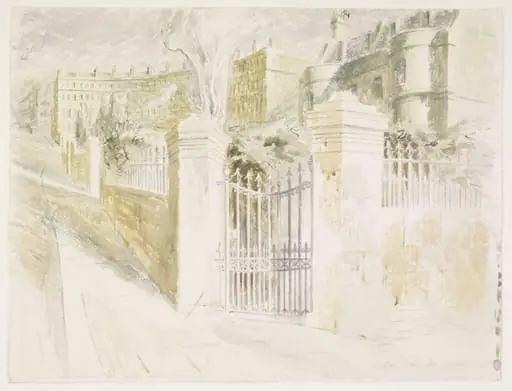
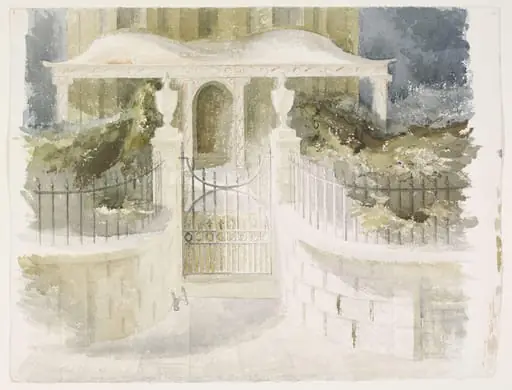
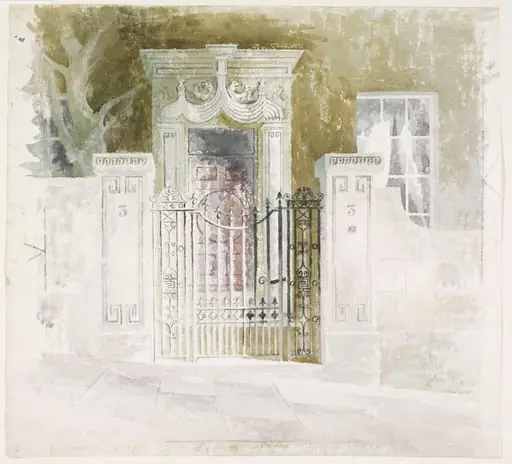
This British artist left a quiet record of Bath in the early 1940s, painting watercolors of iron gates, gateways, and front doors.

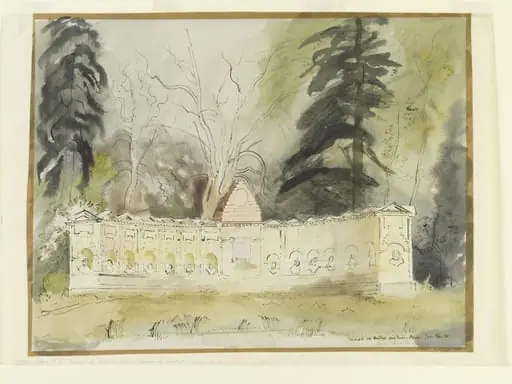 The Temple of British Worthies, Stowe, Gloucestershire
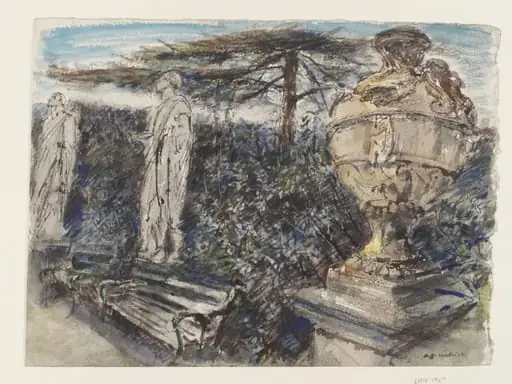 Chiswick House Garden, with statues of Caesar and Cicero, and Vase from Hadrian's Villa
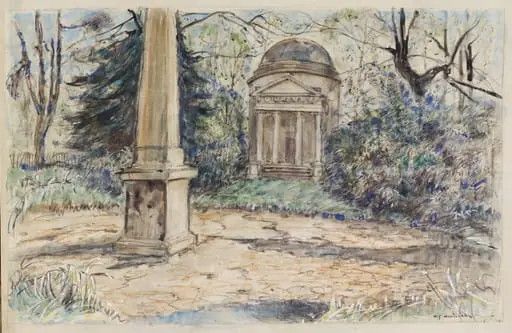 The Temple and the Obelisk, Chiswick House
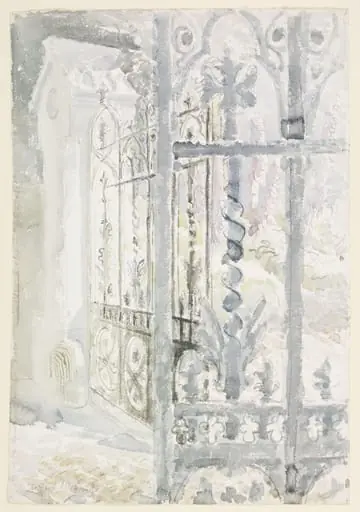 Gates at the Hermitage, Lansdown, Bath
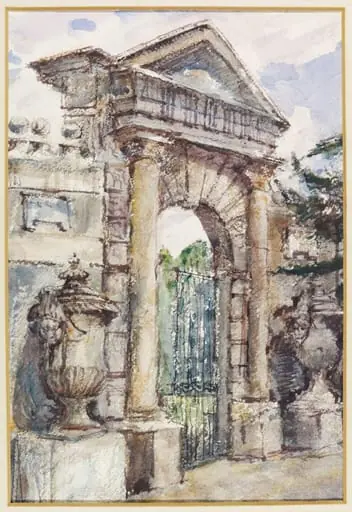 The Inigo Jones Gate, Chiswick House
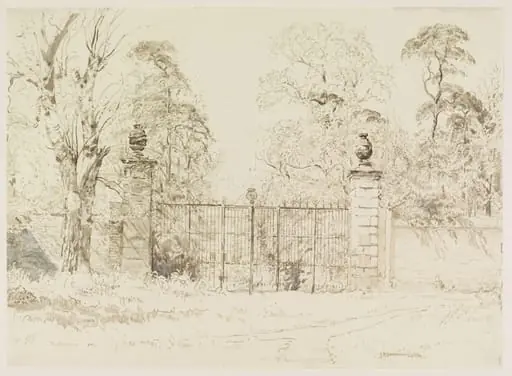 The Old Gates, Ham House
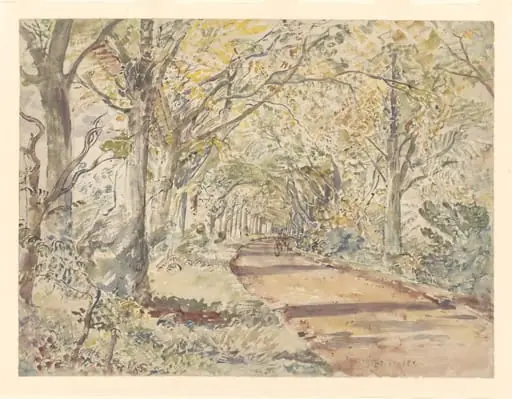 The Beech Avenue, Lasham, Hampshire
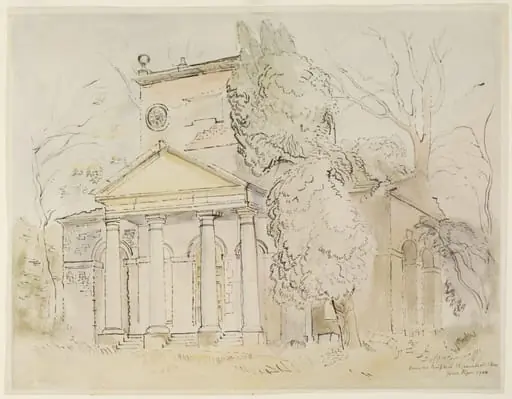 The Ruined Temple of Friendship in the Grounds at Stowe