Artwork
Priory Place, Lyncombe Hill, Bath
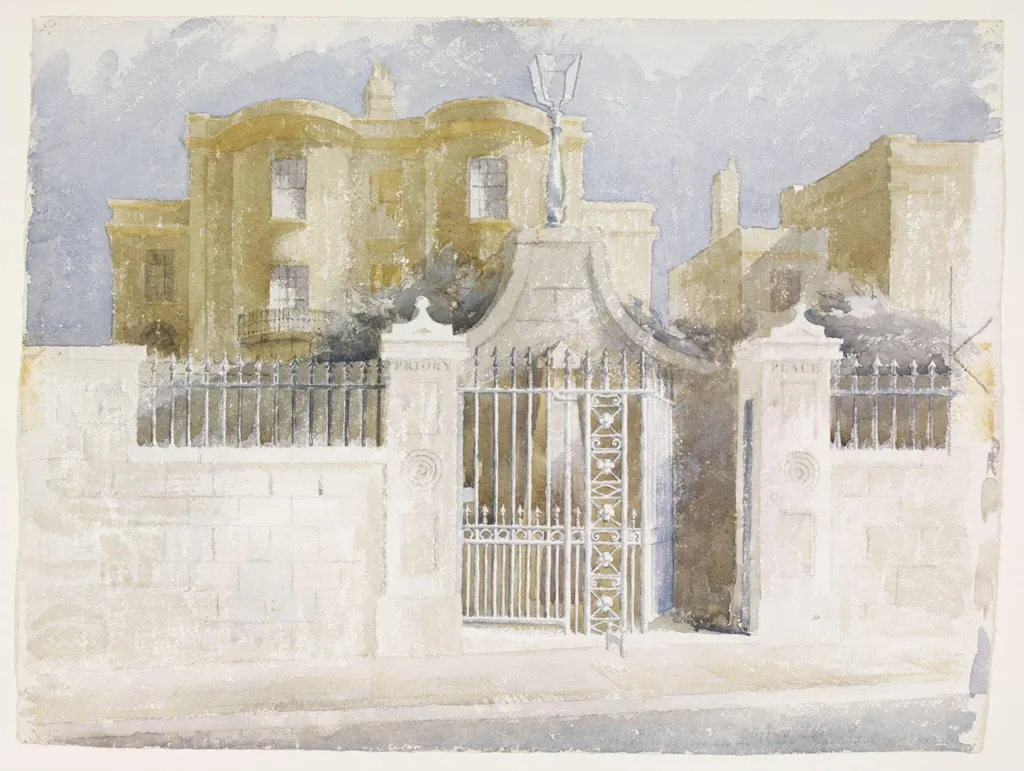
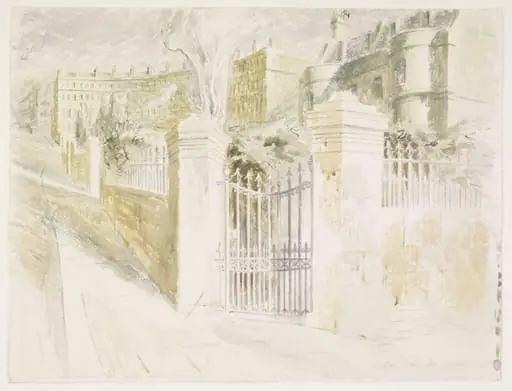
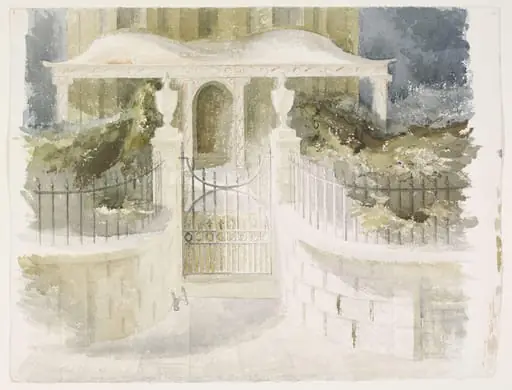
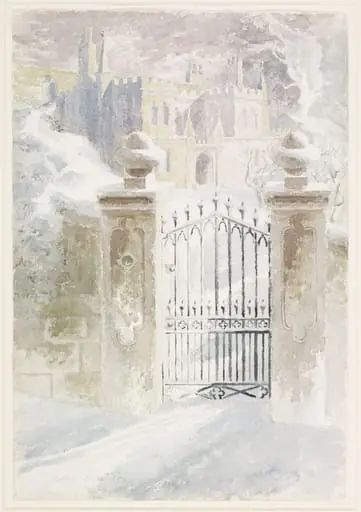
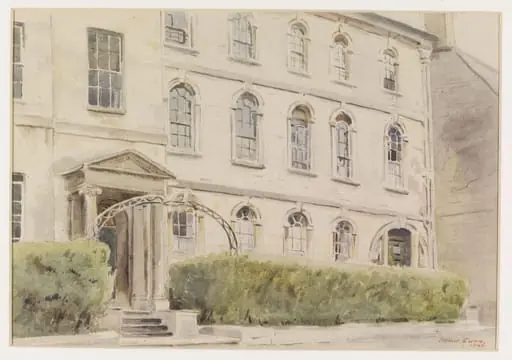
Priory Place, Lyncombe Hill, Bath is a watercolor work on paper by the Social Realist artist Ellis. It dates from 1943 and is held in the collection of the Victoria and Albert Museum.
About this work
Overview
Painted in 1943 by Ellis, this watercolour captures the entrance to a residential property on Lyncombe Hill in Bath. It was created as part of the Recording Britain project, a wartime initiative to document the nation’s architectural and landscape heritage. The work is signed and dated, reflecting its role in preserving everyday scenes during a period of national upheaval.
Subject & Meaning
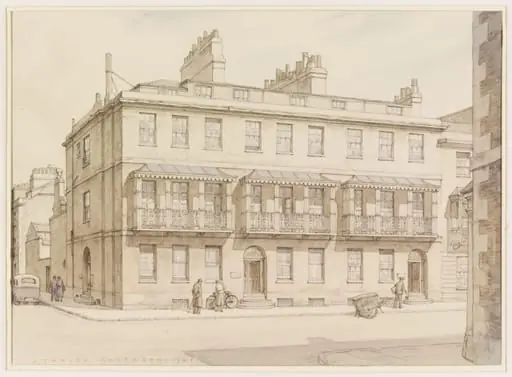
The scene centers on a wrought-iron gate and stone railing leading to a curved-front townhouse, typical of Bath’s Georgian architecture. The quiet, unoccupied entrance suggests a pause in daily life, subtly evoking the stillness of wartime Britain. The focus on ordinary domestic architecture underscores the project’s aim to honor the resilience of ordinary places amid conflict.
Technique & Style
Ellis employs a restrained palette of soft blues, greys, and off-whites, enhancing the painting’s tranquil mood. Delicate washes define the building’s facade and the textured stone wall, while subtle shifts in tone suggest light filtering through a clear sky. The precision of the ironwork contrasts with the fluidity of the watercolour, balancing structure and atmosphere.
History & Provenance
The painting was produced for the Recording Britain collection, commissioned by the Pilgrim Trust during the Second World War. It was intended to create a visual archive of Britain’s built environment, anticipating potential loss from bombing or neglect. The work entered the Victoria and Albert Museum’s holdings as part of this national effort.
Context
Created during the height of wartime Britain, the piece reflects a cultural impulse to preserve the familiar. While cities faced destruction, artists like Ellis turned to quieter, unthreatened corners of the country. This watercolour stands as a quiet counterpoint to wartime imagery, emphasizing continuity rather than disruption.
Legacy
As part of the Recording Britain archive, the painting remains a key document of mid-20th-century British topography. Its inclusion in major collections ensures ongoing access for scholars and the public. Ellis’s restrained approach exemplifies how watercolour, often seen as modest, could serve serious documentary purposes during a critical historical moment.
Artist & collection
Artist
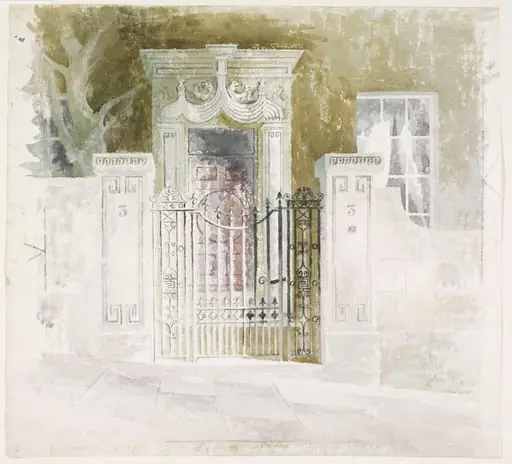
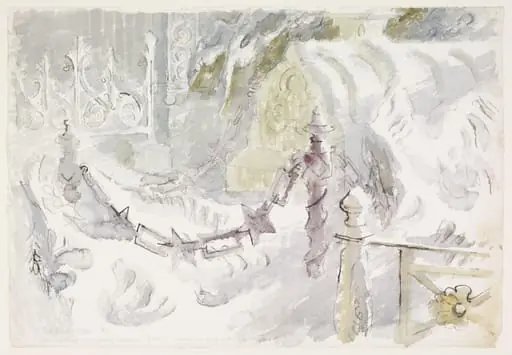
This British artist left a quiet record of Bath in the early 1940s, painting watercolors of iron gates, gateways, and front doors.