Artwork
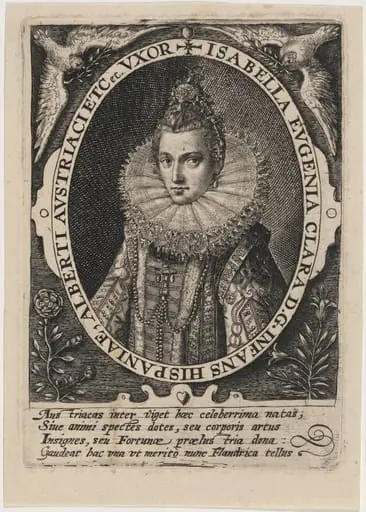
Isabella Clara Eugenia, Infanta of Spain, wife of Archduke of Austria
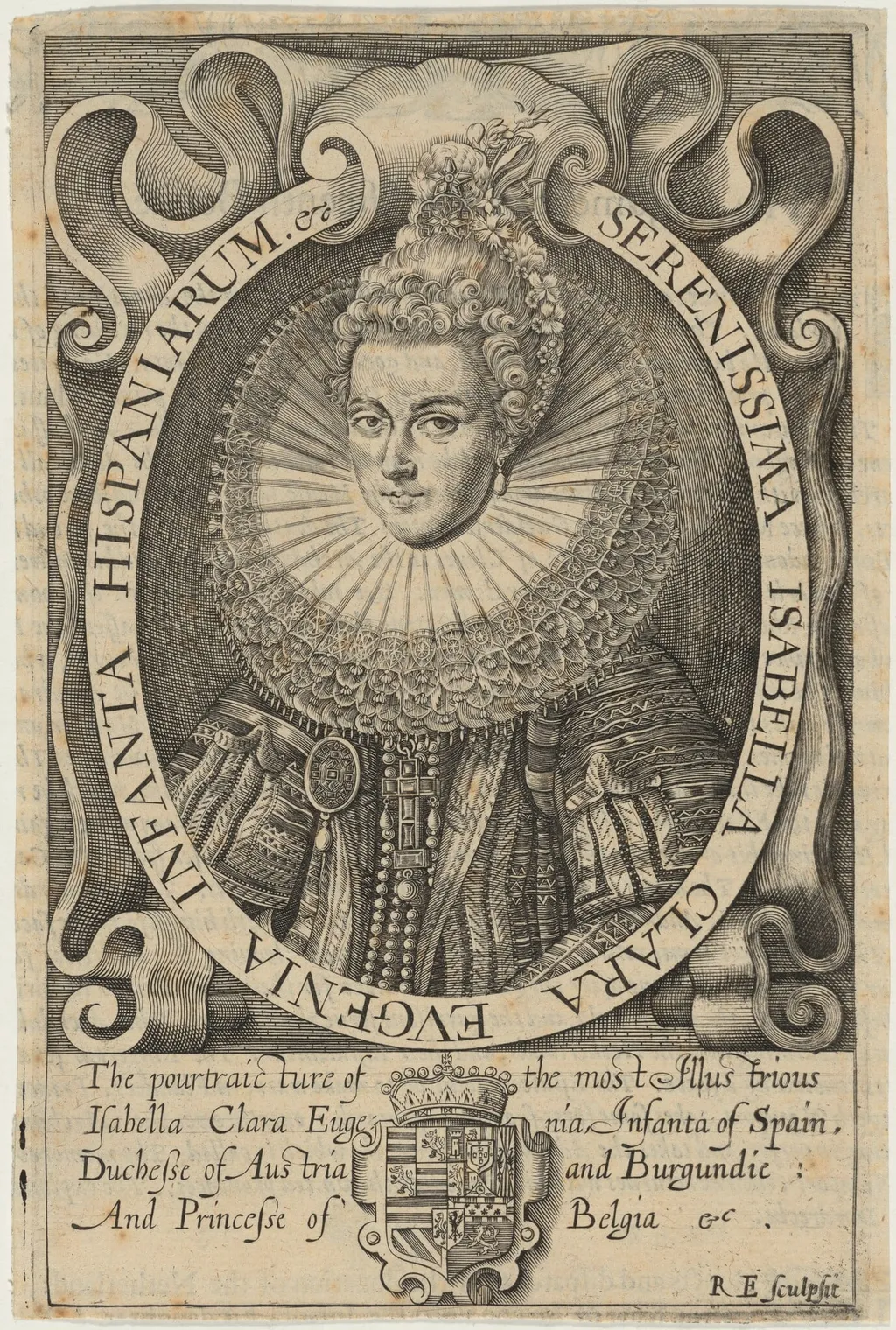
Isabella Clara Eugenia, Infanta of Spain, wife of Archduke of Austria is an ink print by the Baroque artist Renold Elstrack. It is held in the collection of the National Gallery of Art.
About this work
Overview
The composition follows the conventions of early 17th-century print portraiture, intended for dissemination among elite audiences across Europe.
This 1627 engraving by Renold Elstrack depicts Isabella Clara Eugenia, daughter of Philip II of Spain and wife of Archduke Albert of Austria. Rendered in monochrome, the portrait emphasizes her noble status through symbolic elements and meticulous line work. The composition follows the conventions of early 17th-century print portraiture, intended for dissemination among elite audiences across Europe.
Subject & Meaning
Isabella is portrayed with a leaf crown, suggesting classical or divine association, and a pearl necklace symbolizing purity and wealth. A small cross at her chest underscores her piety, while radiating sunbeams imply divine favor. Inscriptions such as 'Serenissima' reinforce her high rank, framing her not merely as a royal consort but as an embodiment of virtuous, God-sanctioned authority.
Technique & Style
Elstrack employed fine, controlled engraving lines to model form and texture, particularly in the intricate folds of her attire and the layered complexity of her headdress. The use of cross-hatching creates subtle gradations of tone, enhancing the three-dimensionality of her features. The precision of the lines reflects the technical rigor expected in portrait prints of the period, designed for clarity and reproducibility.
History & Provenance
Created in 1627, the engraving was likely produced to commemorate Isabella’s role as governor of the Spanish Netherlands alongside her husband. As a printed image, it circulated among diplomatic and aristocratic circles, reinforcing her political presence. Its survival in institutional collections suggests early recognition of its historical and artistic value.
Context
In the early 17th century, engraved portraits of royalty served as tools of political communication, especially when the subject could not be seen in person. Isabella’s image, distributed across Habsburg territories, helped maintain her public persona. Elstrack, an English engraver active in the Low Countries, worked within a transnational network of printmakers serving European courts.
Legacy
The engraving remains a documented example of how Habsburg women were visually represented in print media. While not widely known today, it contributes to the study of early modern portraiture and the role of print in shaping political identity. Its technical execution reflects the enduring influence of Northern European engraving traditions in courtly imagery.
Artist & collection

 Isabella Clara Eugenia, Infanta
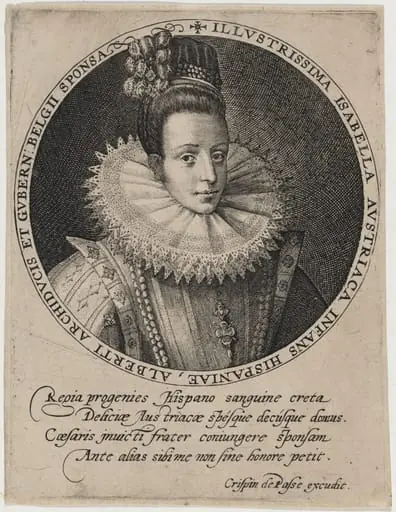 Isabella Clara Eugenia, Infanta
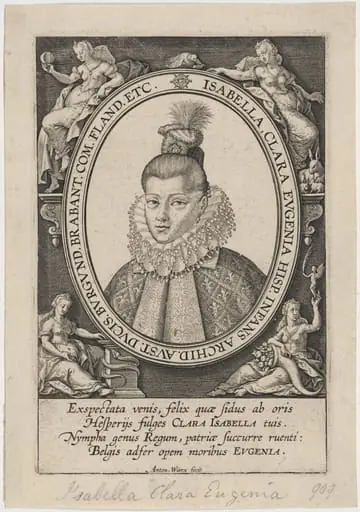 Isabella Clara Eugenie of Spain, Archduchess of Austria
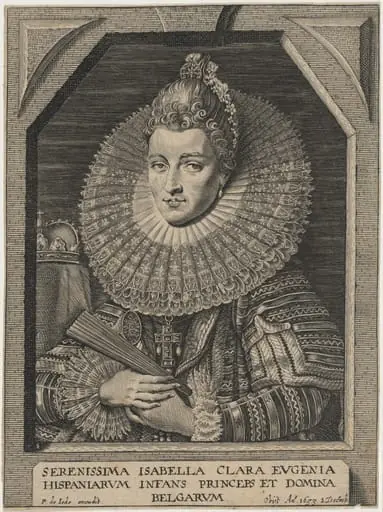 Isabella Clara Eugenia
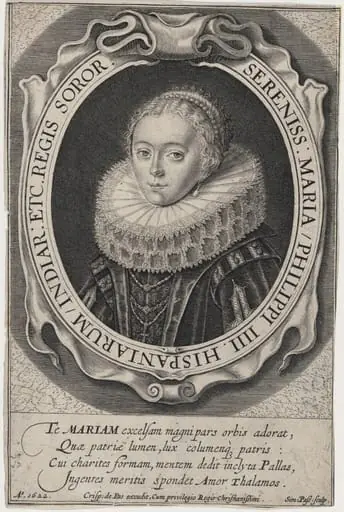 Maria of Austria, Infanta of Spain
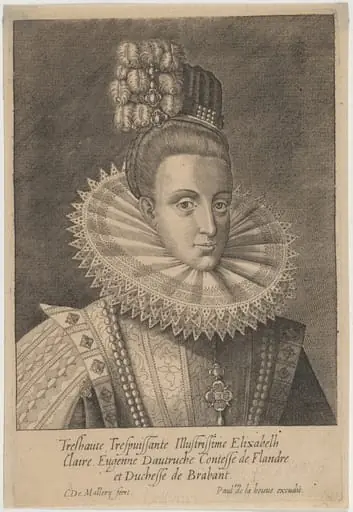 Isabella Clara Eugenie of Austria, Spain and Countess of Flanders
![Maria of Austria, Infanta of Spain [top half], by Simon van de Passe](https://artifactworldgallery.com/img/simon-van-de-passe--maria-of-austria-infanta-of-spain-top-half--b728f947eb0b34d7-w320.webp) Maria of Austria, Infanta of Spain [top half]
Maria of Austria, Infanta of Spain [top half]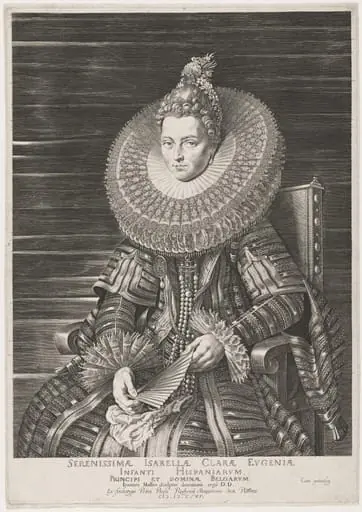 Isabella Clara Eugenia, Infanta of Spain
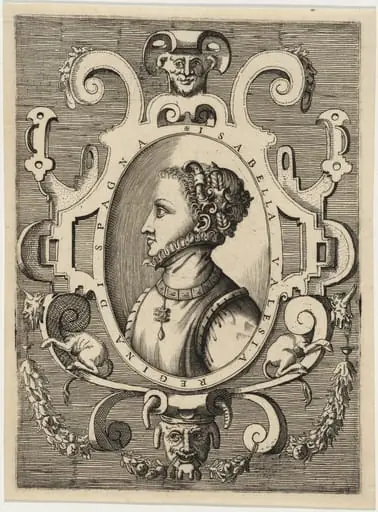 Isabella, Wife of Philip IV of Spain
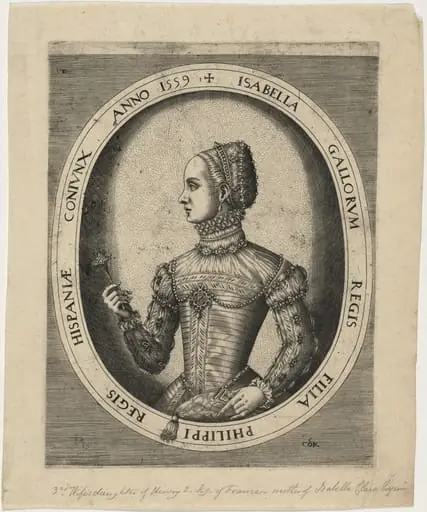 Isabella, Third Wife of Philip II of Spain