Artwork
Isabella Clara Eugenia, Infanta
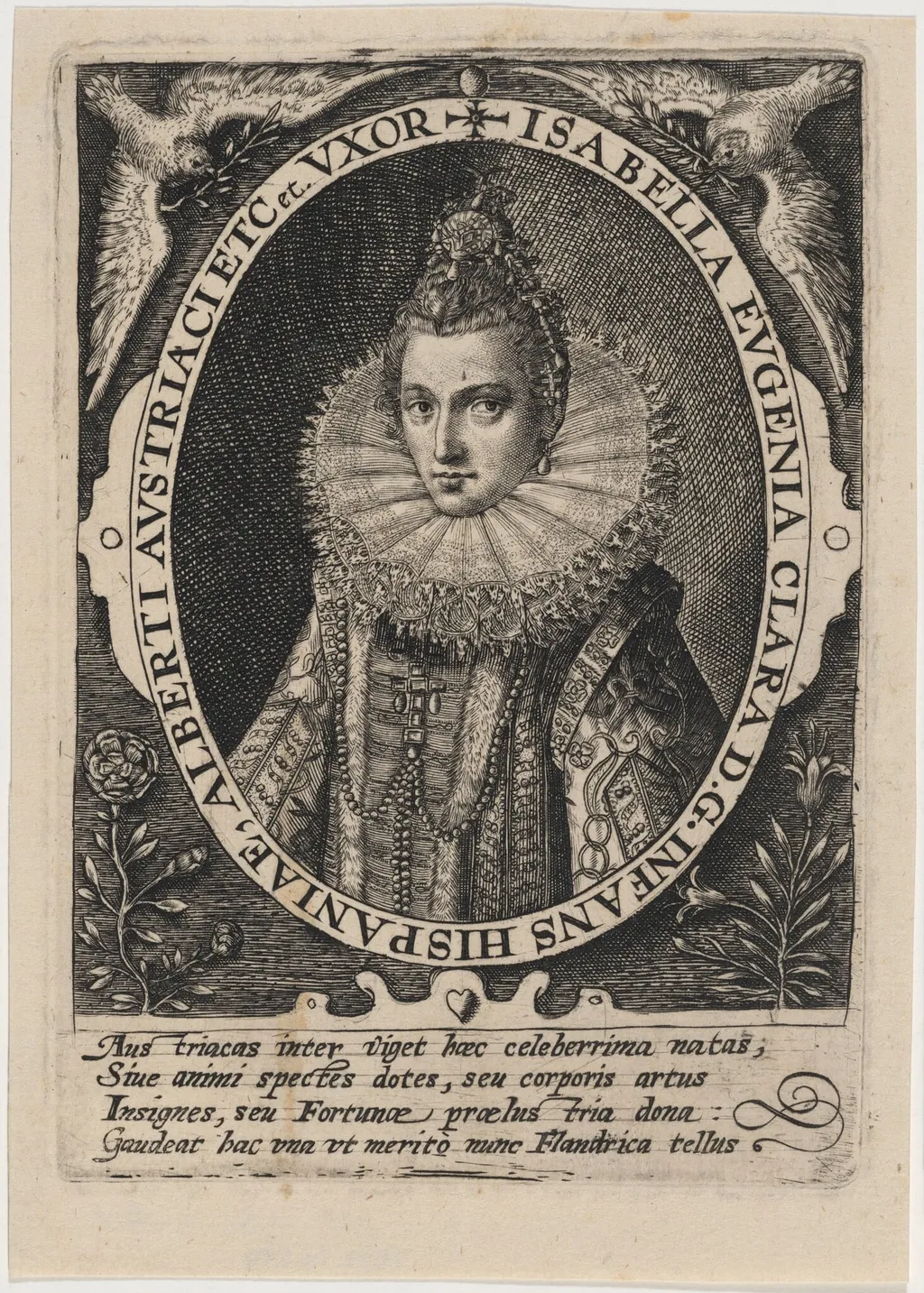
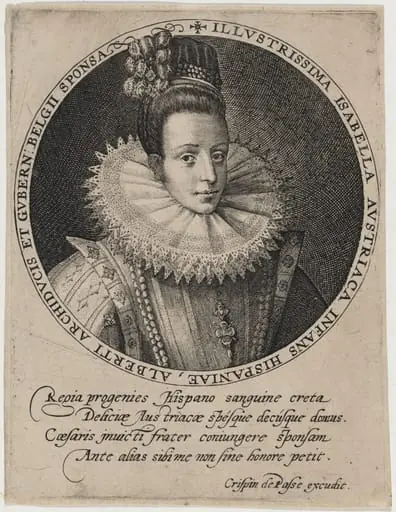
Isabella Clara Eugenia, Infanta is an ink print by the Renaissance artist Crispijn van de Passe I. It dates from 1601 and is held in the collection of the National Gallery of Art.
About this work
Overview
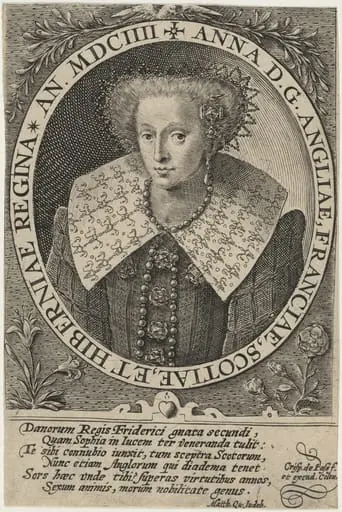
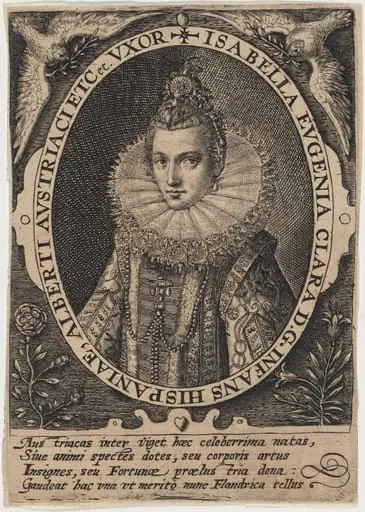
Crispijn van de Passe I’s 1601 engraving presents the Infanta Isabella Clara Eugenia in a richly ornamented portrait. Rendered in black ink on paper, the image is confined within an oval frame that carries Latin inscription. The composition balances a dark, atmospheric backdrop populated with stylized birds and floral motifs against the illuminated figure.
Subject & Meaning
The work depicts the Spanish princess, Isabella Clara Eugenia, attired in an opulent gown and ruff, her hair lifted in a high coiffure. Her solemn expression and dignified pose convey the status and decorum expected of a royal woman in the early seventeenth century, while the surrounding emblematic flora and fauna hint at courtly virtues and allegorical associations.
Technique & Style
Executed with fine line work and cross‑hatching, the engraving achieves delicate texture in the fabric’s intricate patterns and the softness of the ruff. Van de Passe’s handling of light and shadow creates a three‑dimensional effect within the flat medium. The ornate detailing and realistic rendering align the piece with late Renaissance portrait conventions.
History & Provenance
Created in 1601, the print was likely intended for circulation among European courts as a visual record of the Infanta’s appearance. Copies of the engraving have survived in several museum collections, indicating its distribution as a collectible portrait print during the period.
Context
The portrait emerges at a time when portraiture served diplomatic and dynastic purposes, reinforcing alliances through visual representation. The inclusion of Latin text and symbolic natural elements reflects contemporary humanist interests and the practice of embedding moral or political messages within portraiture.
Legacy
Van de Passe’s portrait contributed to the visual canon of the Spanish Habsburg family, influencing subsequent engravings of royal figures. Its meticulous craftsmanship continues to be studied as an exemplar of early modern printmaking and the transmission of courtly imagery across Europe.
Artist & collection

Artist
Crispijn van de Passe I (1564–1637) was an artist, born in Arnemuiden.

 Isabella Clara Eugenia, Infanta
 Isabella Clara Eugenie
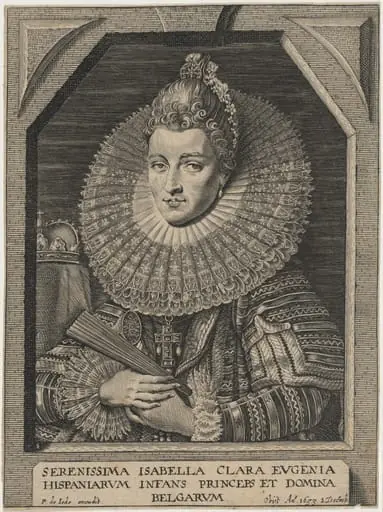 Isabella Clara Eugenia
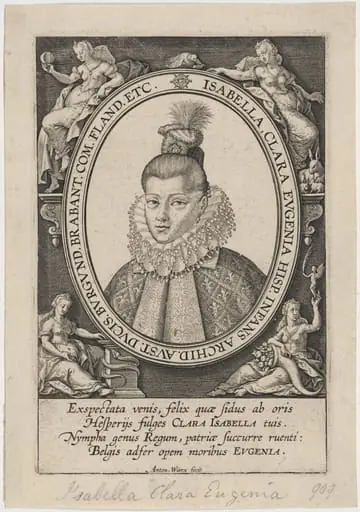 Isabella Clara Eugenie of Spain, Archduchess of Austria
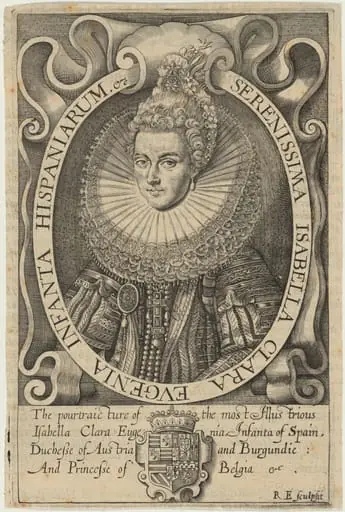 Isabella Clara Eugenia, Infanta of Spain, wife of Archduke of Austria
![Maria of Austria, Infanta of Spain [top half], by Simon van de Passe](https://artifactworldgallery.com/img/simon-van-de-passe--maria-of-austria-infanta-of-spain-top-half--b728f947eb0b34d7-w320.webp) Maria of Austria, Infanta of Spain [top half]
Maria of Austria, Infanta of Spain [top half]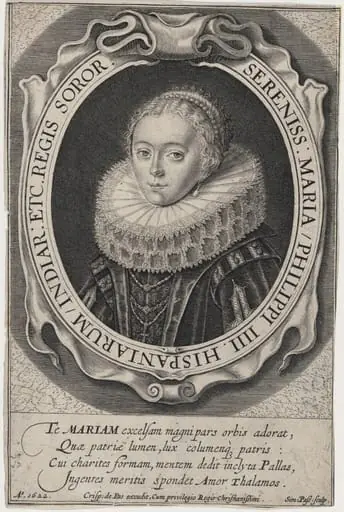 Maria of Austria, Infanta of Spain
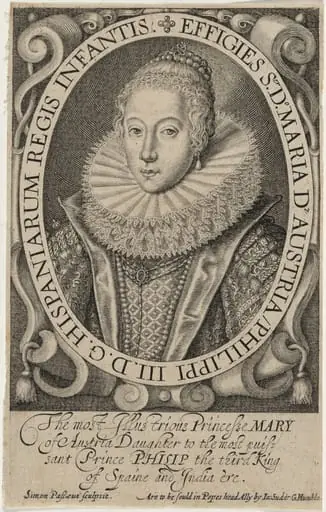 Maria of Austria, Infanta of Spain
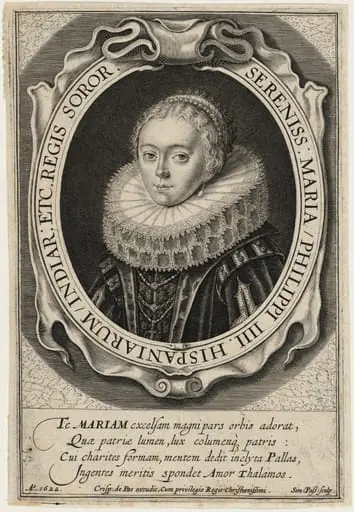 Maria of Austria, Infanta of Spain